
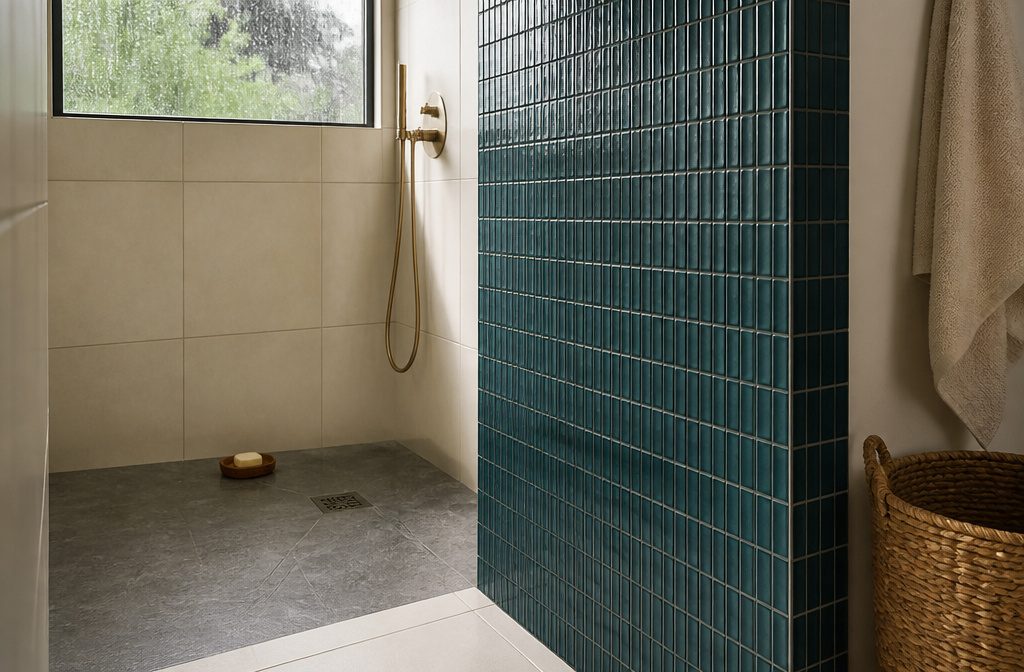
Shower tile choices split on the grout question: big squares mean few seams to clean, small mosaics give you traction and pattern but multiply the joints.
Scale shifts the look too—18-by-18-inch porcelain opens a small stall, 1-by-2-inch glass mosaic turns a single wall into the room’s focal point—and the difference sits in whether you want the space to read larger or whether you want something to look at while the water runs.
1. Classic Subway Tile
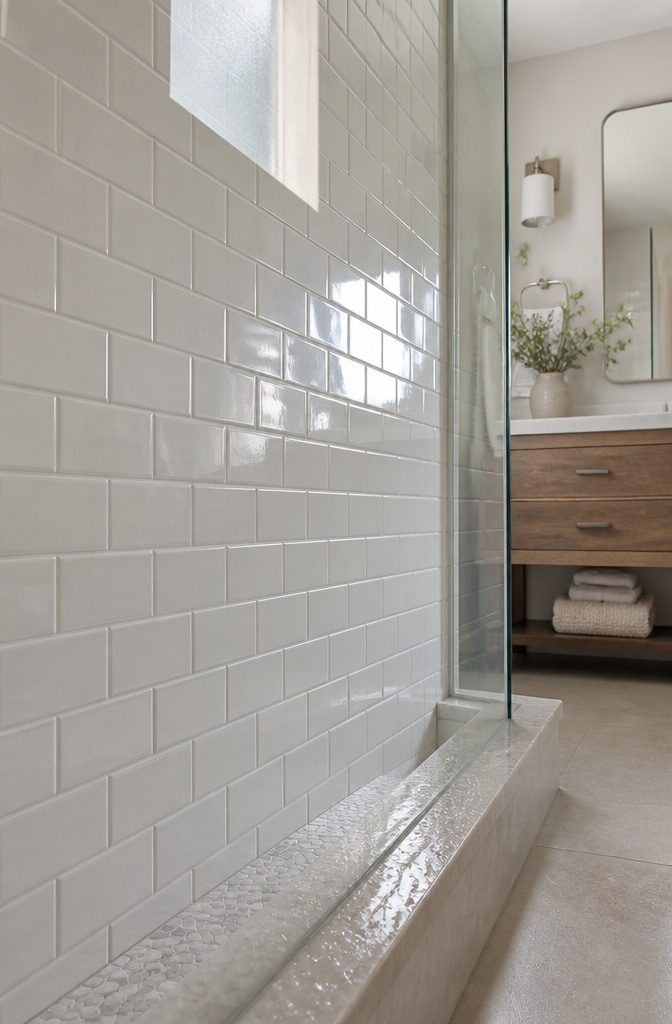
Subway tile earned its name from the white rectangles lining New York’s first subway stations in 1904, and that clean grid still anchors modern showers.
The standard 3-by-6-inch rectangle stacks horizontally with offset joints, giving you a surface that reads as orderly without pattern fatigue.
White subway tile with white grout keeps the look minimal and opens up small showers. Switch to dark grout and the grid becomes visible structure, a rhythm of lines that works in industrial and farmhouse schemes alike.
Black subway tile with white grout flips the contrast and brings drama to a stall that might otherwise fade into neutrality.
The format itself is neutral enough to take on whatever tone the finish and color provide: glossy white recalls the original transit tile, matte charcoal softens the same grid into something quieter, and pale gray splits the difference when pure white feels too stark against your bathroom’s existing palette.
2. Marble and Marble-Look Tile
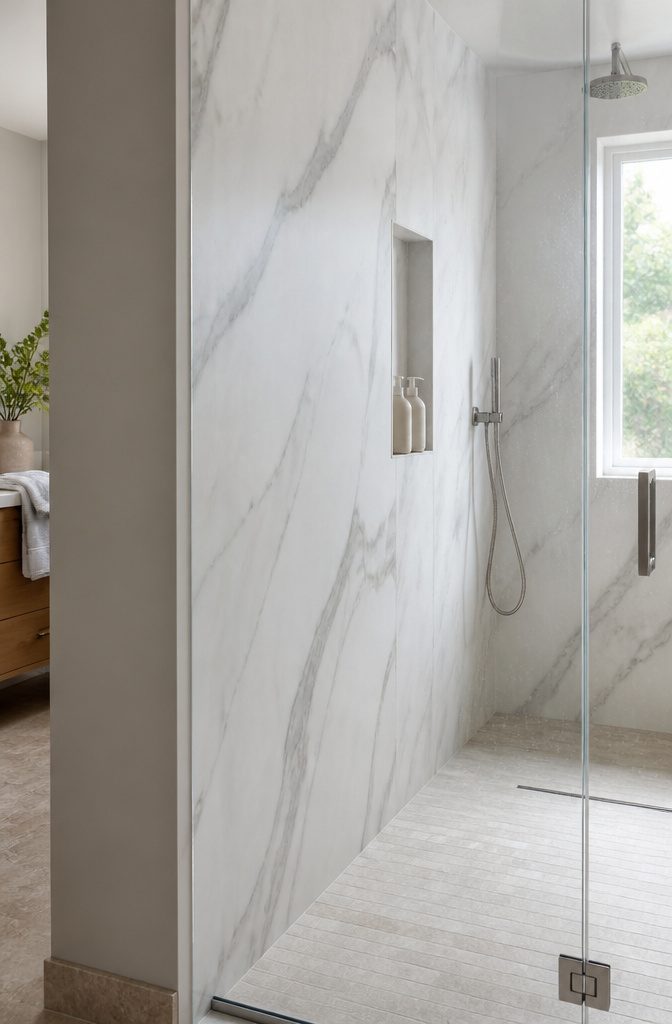
Natural marble brings veining that runs through the stone and never quite repeats.
Carrara shows gray veins on white; Calacatta tends toward bolder, warmer tones. Both need sealing every six months to a year to keep water and soap from staining the surface, and marble etches when acidic cleaners touch it.
Porcelain that mimics marble skips the maintenance. The pattern sits in a printed glaze rather than running through the slab, but manufacturers now match the depth and variation closely enough that most people can’t tell from arm’s length.
A porcelain marble-look tile like the ones from Reside USA gives you the same visual weight without sealing or worrying about your body wash leaving a mark.
The grout still needs attention, but the tile itself holds up to daily use without a routine.
3. Mosaic Tile
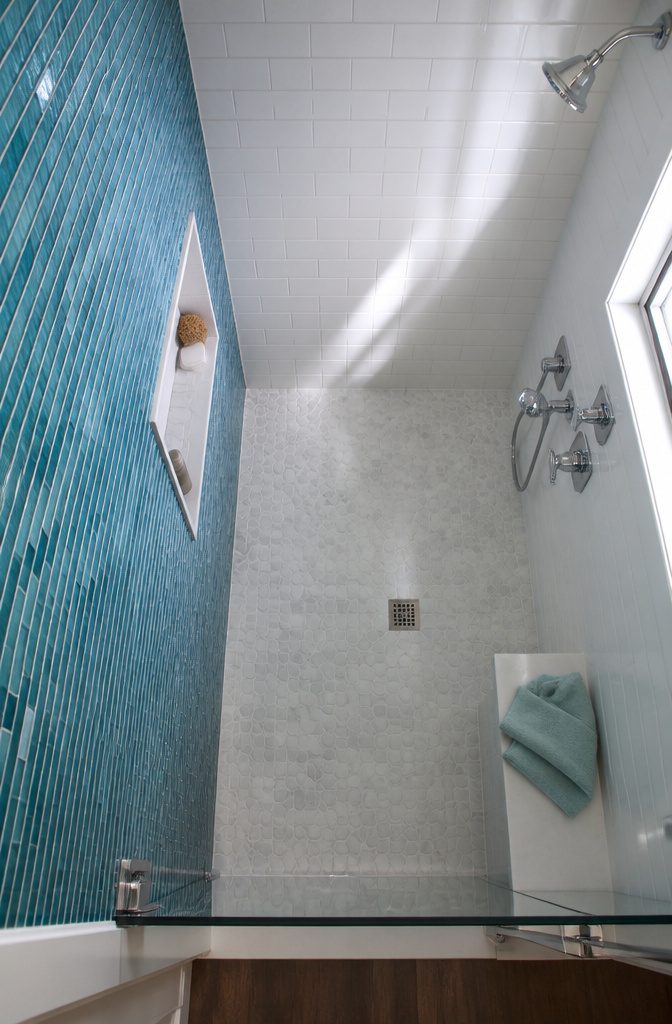
Mosaic tile puts small pieces of glass, stone, or ceramic to work as focal walls, shower niches, or accent bands, and the variety runs wide enough to match almost any style.
Most come on mesh-back sheets that interlock edge to edge, so what looks like hand-set work goes up like any other tile.
MSI’s Georama marble mosaic, for instance, arrives in 11-by-13-inch sheets that cover 9.9 square feet per carton, with polished hexagon strips already assembled and ready to mount.
A 1-by-2-inch turquoise glass mosaic on a single shower wall pulls the eye and sets the room’s color without tiling the whole enclosure.
Pair it with plain subway tile on the other three walls and the niche, and the glass reads as the feature it is.
The same approach works with stone-and-glass blends or metal-flecked mosaics: use them where they count, back them with something quiet, and the shimmer stays intentional rather than busy.
4. Glass Tile
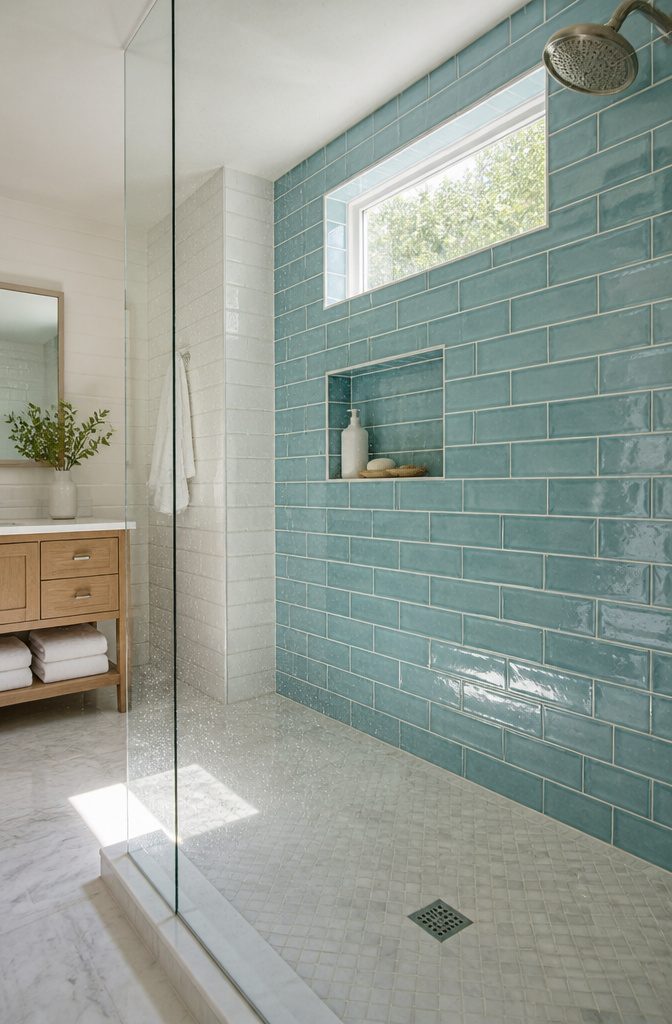
Glass tile catches light in a way ceramic and porcelain never do, and that shimmer can turn a single accent wall into the focal point of the whole bathroom.
Giorbello glass subway tile measures 3 by 6 inches and comes in an array of crystal clear colors—turquoise, blue, green—that look luminous when wet.
One wall in glass mosaic paired with plain white subway tile on the rest gives you the spa look without tiling the entire shower in a material that costs more and demands more care during installation.
The translucent quality that makes glass tile glow also means uneven adhesive will show through the face of the tile, so professional installation matters here more than it does with opaque materials.
Unsanded grout is the only option; sanded grout scratches glass.
Coverage runs 5 square feet per carton, and you can mix glass with stone or use two colors of the same mosaic pattern to outline different zones in the shower without overwhelming the space.
5. Pebble Tile
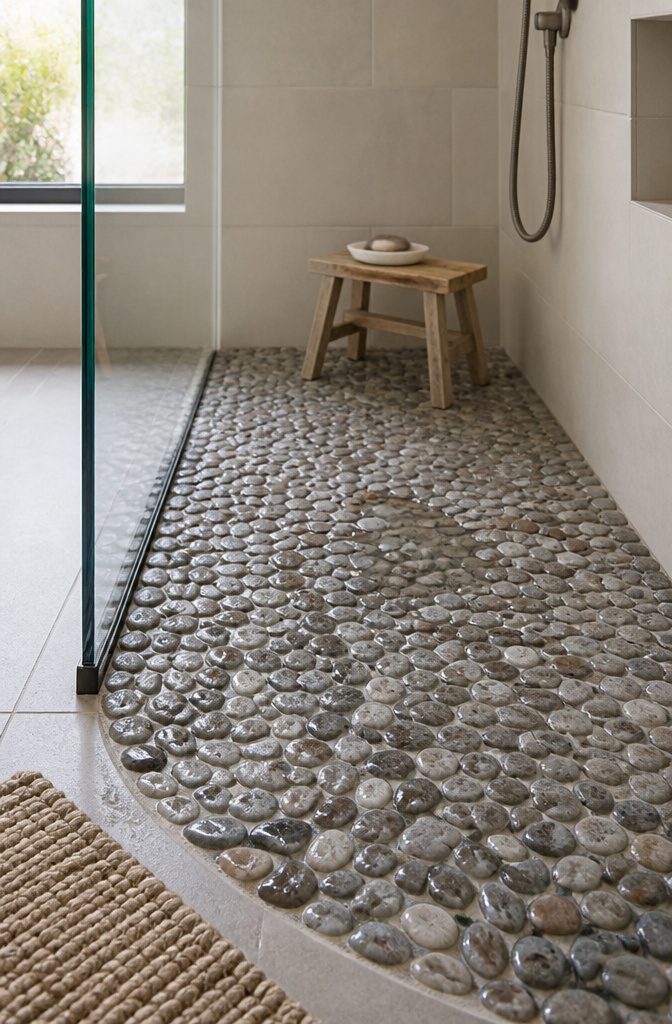
Pebble tile brings the irregular shapes and rounded edges of stream stones straight into the shower, and the result reads as unmistakably natural.
The texture varies with the stone—some sheets land smooth and flat, others stay bumpy enough that you feel the surface underfoot—so the look shifts from clean spa floor to something closer to a creek bed depending on which finish you pick.
Tile Connection’s pebble sheets measure 11.25 inches square and 0.38 inch thick, with one carton covering just under ten square feet, and the stones interlock on mesh backing so the seams disappear when you set them side by side.
You can run pebbles across the floor only or carry them up the wall for a waterfall effect, and they work in marble as well as river stone if you want polish over roughness.
Plan to reseal once or twice a year; the grout lines multiply fast with small stones, and water finds its way in without regular maintenance.
6. Large-Format Tile
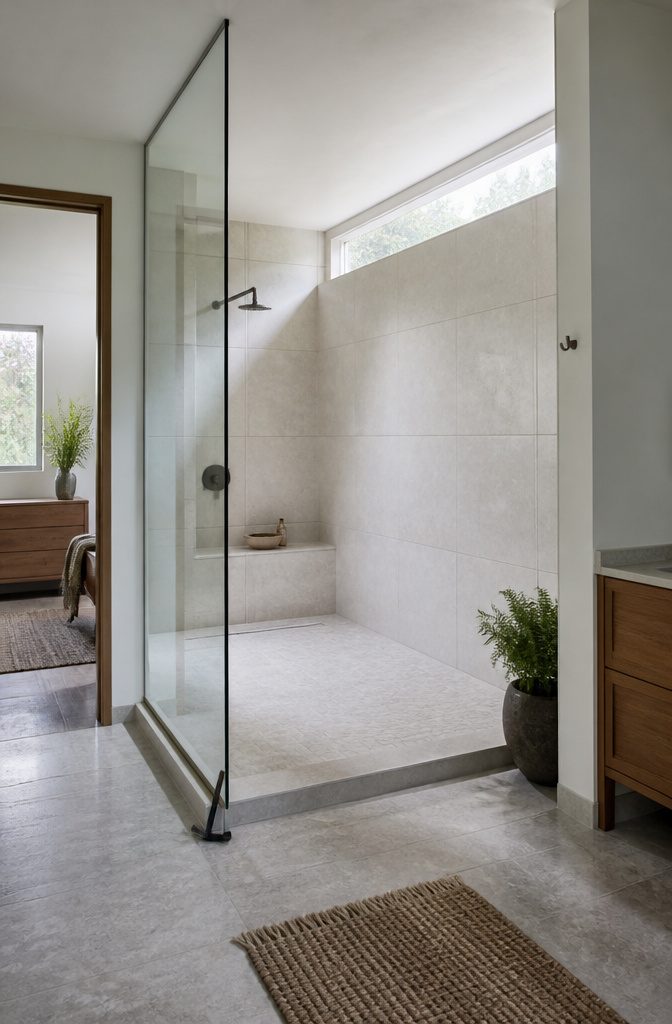
Large-format tiles—18 inches square or bigger—cut the grout lines down to a few long seams instead of a grid, and the result reads cleaner and more open.
The Marazzi Travisano porcelain squares measure 18 by 18 inches, 0.35 inch thick, and one carton covers 17.6 square feet. You can run them wall to wall or drop in smaller accent tiles where you want a break.
They work indoors and out, wipe down with a squeegee after each shower, and take a pH-neutral cleaner when soap film builds up.
The scale can backfire in a tight stall where you see only part of each tile at once; save large-format layouts for walk-ins and frameless enclosures where the full sweep shows.
7. Patterned and Decorative Tile
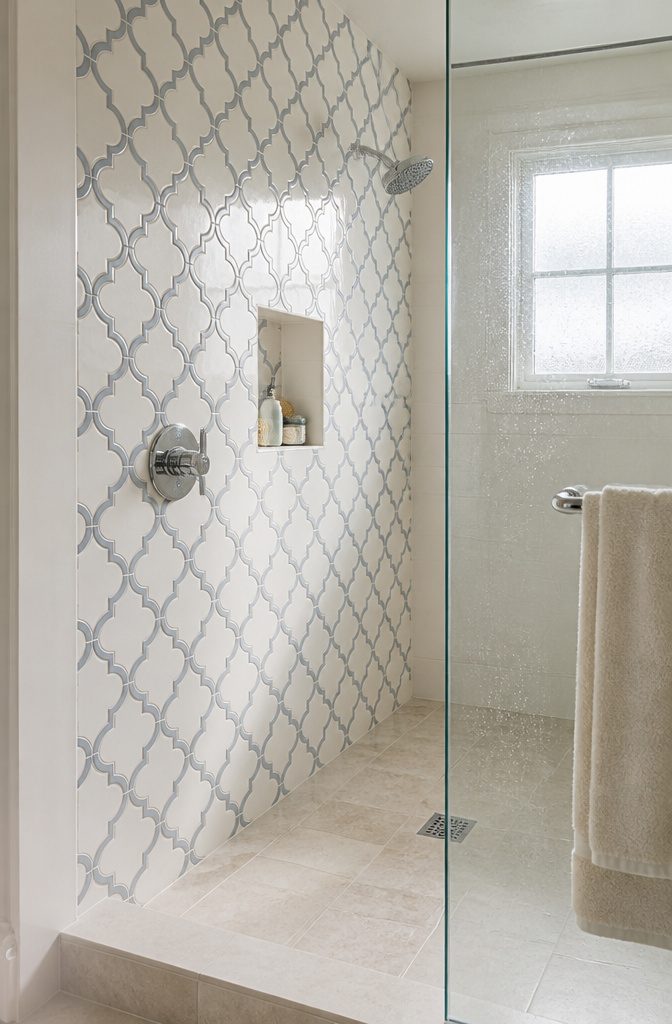
Patterned tile puts a design onto the shower wall in one move rather than building it piece by piece.
EliteTile’s Hudson Tangier mosaic arrives as 12.38-by-12.5-inch sheets of interlocking 2-inch porcelain squares, already aligned on mesh backing, so you skip the fiddly work of setting each small tile by hand.
The arabesque pattern reads as hand-laid Mediterranean mosaic without the hours that would cost. One carton covers 11 square feet, enough for a feature wall or a full surround in a standard stall.
Floral and geometric prints work as accent strips behind a shampoo niche or across an entire wall, depending on how much pattern the room can take.
A bold design on one surface leaves the other three clean; covering everything turns the shower into wallpaper, which works in a powder bath but tires faster in a primary bathroom you see twice a day.
The tiles are 0.25 inch thick, so check that your wall surface and setting bed will keep them flush with any plain field tile running next to them.
8. Herringbone and Other Layouts
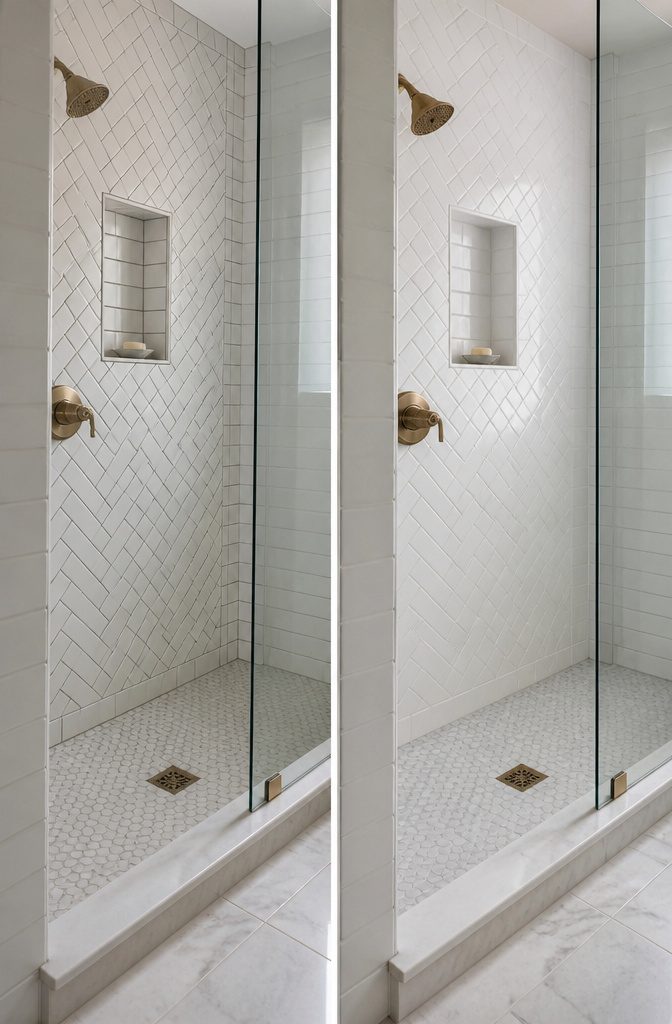
Herringbone pulls the eye on a diagonal and makes a plain tile feel deliberate.
The same subway or brick mosaic that reads neutral in a running bond turns graphic when you rotate it forty-five degrees, and that shift costs nothing but the few extra cuts at the edge.
Vertical stack does the opposite work: it stretches the wall and keeps things calm, which matters in a narrow stall where too much pattern closes the space in.
Diagonal layouts eat more tile—plan on ten percent extra to cover the angled cuts—but the movement they add can justify the waste if the shower is the room’s only feature.
Fish-scale mosaics shift character depending on whether the scales point up or sideways, so mock up both directions on the wall before you commit to one.
The grout lines are what the layout actually changes, and in a small shower those lines either organize the space or chop it into pieces.
9. Hexagon and Other Geometric Shapes
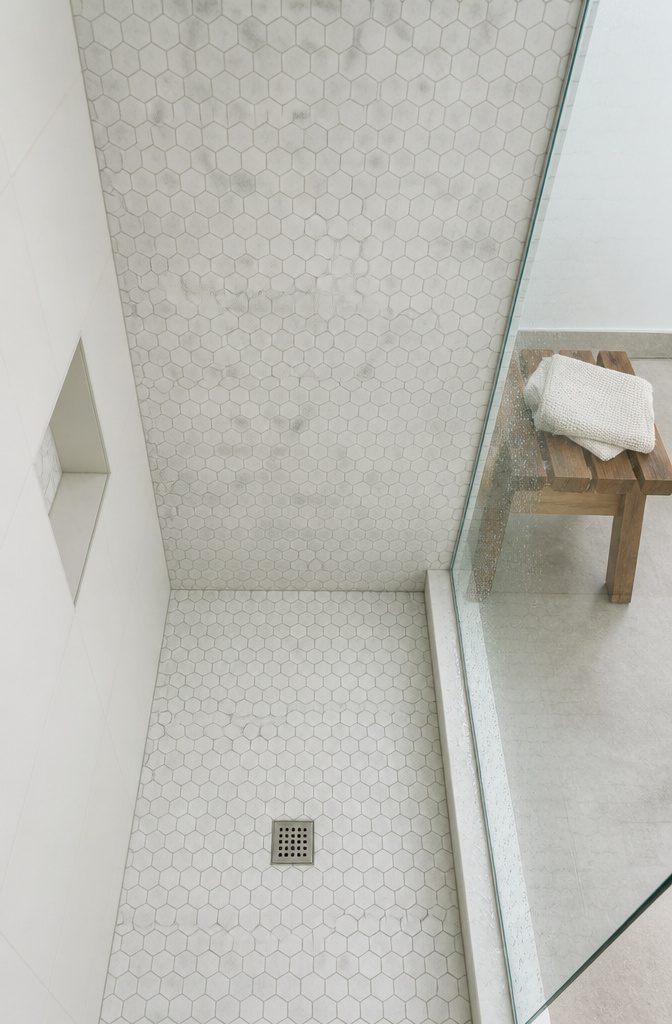
Hexagon tiles bring a honeycomb pattern to the wall, and the shape does most of the design work on its own.
Lifeproof’s Carrara ceramic hexagon mosaic comes preset on mesh backing in 10-by-12-inch sheets, each covering 9.5 square feet, with a marble-look surface that reads soft rather than busy.
The interlocking sheets make full-wall installation straightforward, and you can run them floor to ceiling or stop them at shoulder height if you want the pattern contained to where you actually see it while standing in the shower.
Octagons paired with dot inserts give you a bolder grid, the kind that pulls your eye across the surface rather than letting it rest.
Black floor tile sharpens that contrast. Lanterns, fish scales, and brick-shaped mosaics work the same way—the geometry becomes the focal point, so grout color and surrounding tile need to step back.
I’d use geometric shapes as an accent band if the full-wall look feels like too much pattern in a small shower.
10. Fish-Scale Tile
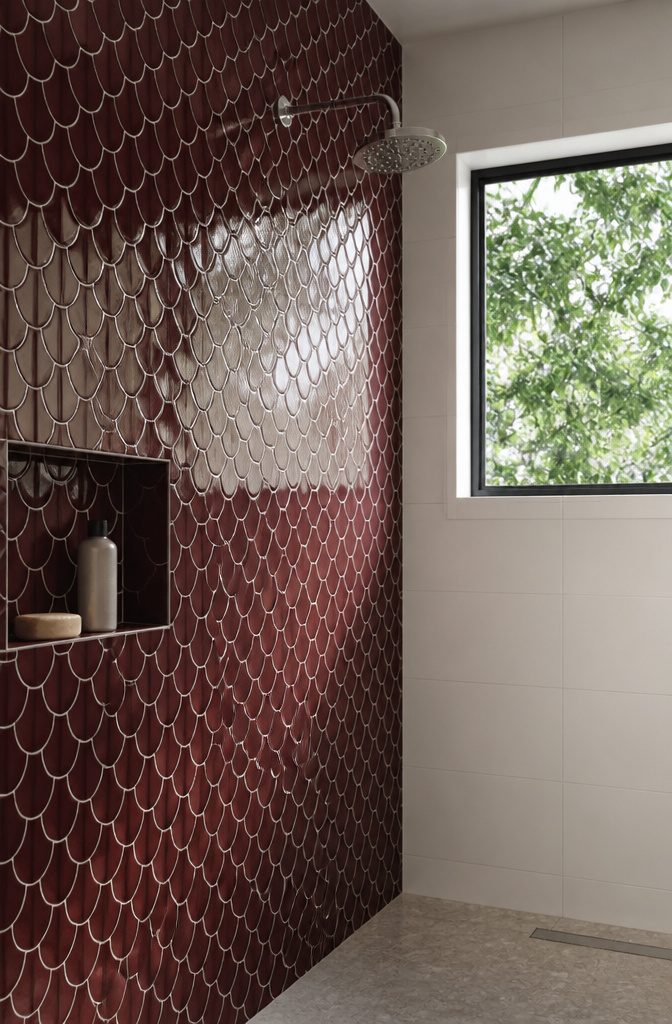
Fish-scale tile gets its name from the way each curved piece overlaps the next, and that shape does something flat tile cannot: it catches light at different angles across the surface.
The effect is most visible when you work with a bold color like burgundy or red, where the shadows between scales give the wall depth and movement rather than sitting as a single flat plane.
White or light-colored grout sharpens the pattern and makes each individual scale stand out; a matching grout softens the look if the color alone is doing enough work.
The pattern works floor to ceiling or as a feature section behind the showerhead.
Installing the scales in different directions changes the flow — vertical reads formal, horizontal more relaxed — and the ceramic glaze most versions carry reflects enough light to keep a small shower from feeling closed in.
11. Natural-Look Tile
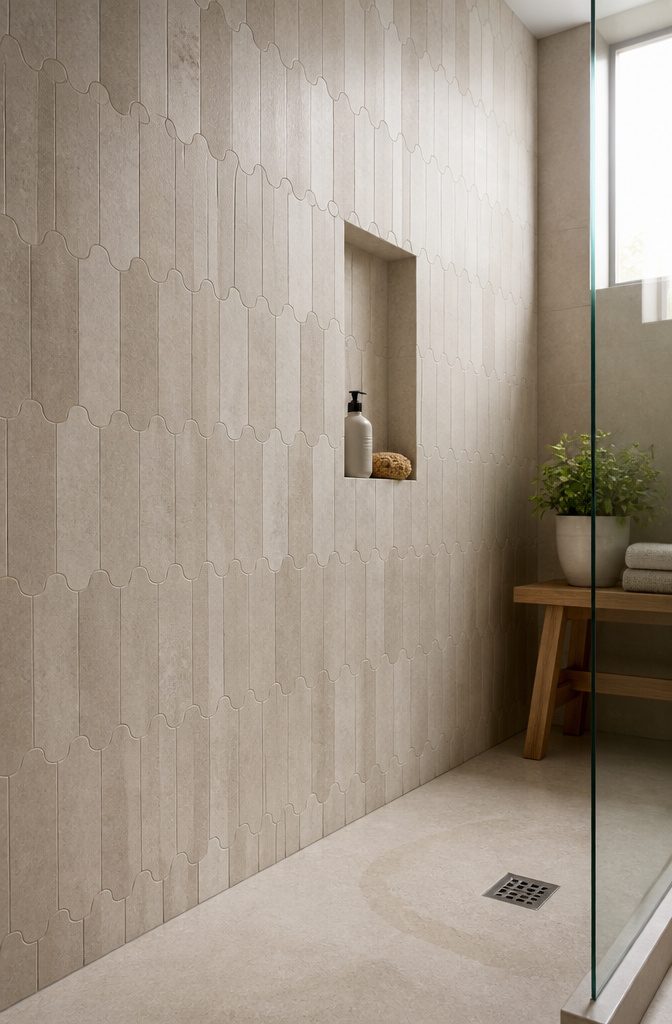
Porcelain that mimics stone gives you the warmth of natural material without the sealing work real stone demands.
EliteTile’s Alhama line runs 6.25 by 12.75 inches in an elongated baroque shape, 0.39 inch thick, and the tiles interlock in staggered rows that read more interesting than a straight grid.
The finish is satin rather than high-gloss, so the pattern sits quietly instead of competing with everything else in the room.
One carton covers 8.8 square feet. These work indoors or out, and maintenance is a squeegee after each shower plus a pH-neutral cleaner when soap scum builds.
I like this approach when you want texture on the wall but your grout tolerance is low — porcelain needs far less babying than travertine or slate.
12. Colorful or Contrasting Tile
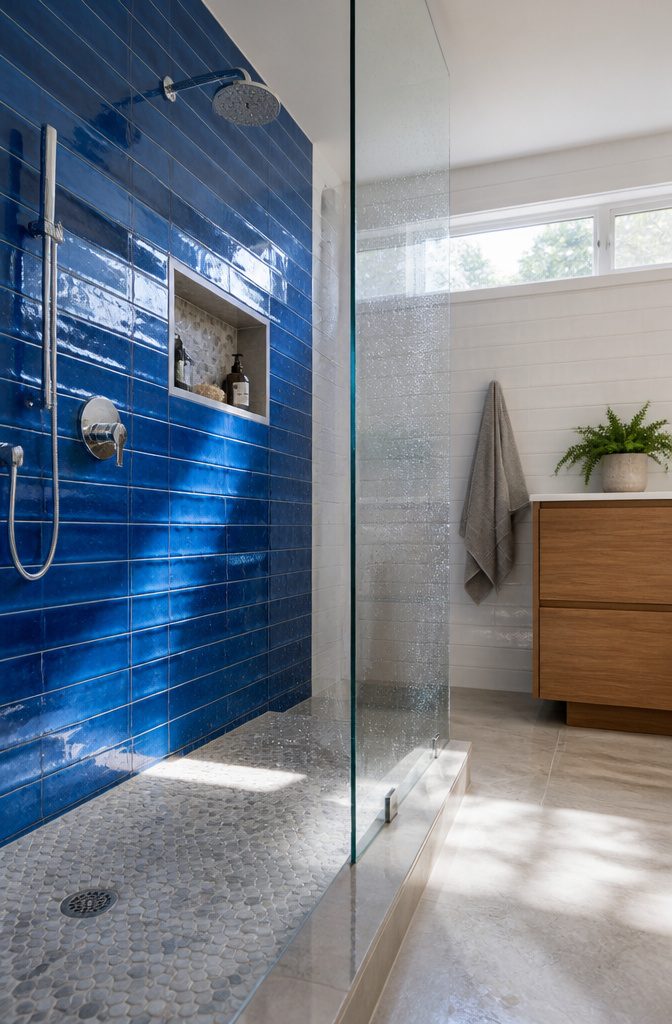
A single bold wall in turquoise or cobalt glass tile turns the shower into the room’s visual anchor without requiring full coverage.
The contrast between a saturated accent wall and neutral field tile—white subway or marble—gives you the impact of color where water highlights it most, and the restraint keeps the look from tipping into theme-bathroom territory.
Full-color treatments work when the shower is large enough to carry the saturation, but most showers under 40 square feet read better with color on one wall and a calming neutral on the others.
Contrasting the ceiling works the opposite way: dark or colored walls against a white ceiling make the space feel taller, while matching the ceiling to the walls closes the box and suits a moody, enclosed look.
Pick ceiling contrast when height matters more than drama at eye level.
13. Black-and-White Tile
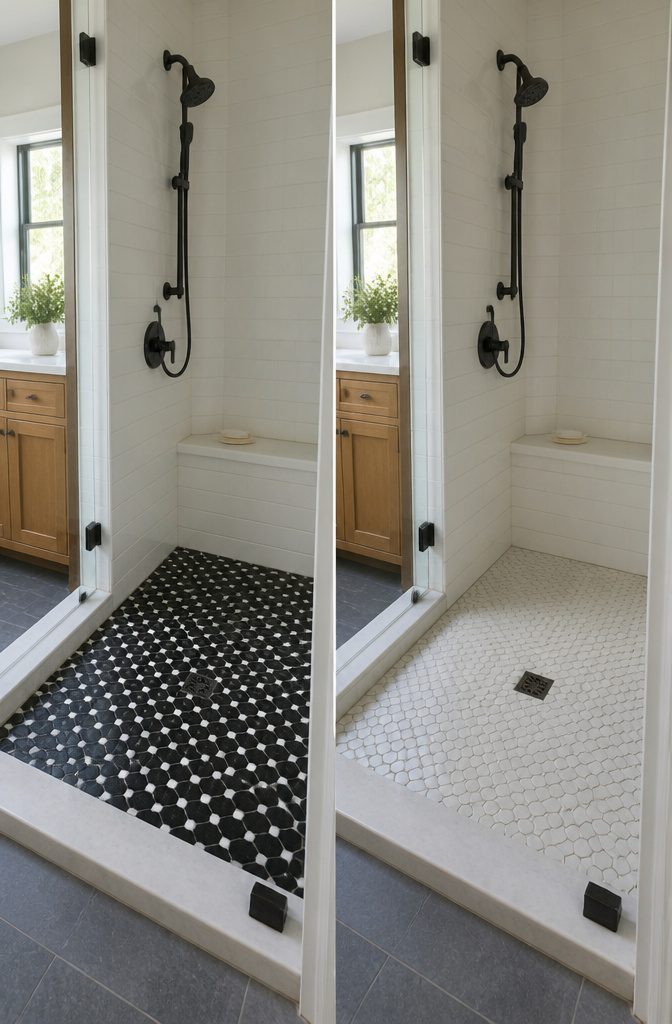
Black and white reads as formal when you tile it in larger squares—12 by 12 inches or bigger—and the fewer grout lines keep the pattern clean.
Smaller mosaic tile in the same palette feels busier, with more joints pulling the eye, but it holds traction better underfoot and suits a vintage look if that is where the rest of the room is headed.
A geometric pattern—hexagons, basketweave, chevron—lets you work the same two colors into something less expected without adding a third shade or changing the material.
The large format makes a small shower feel more open; the mosaic anchors it and gives you more places to clean grout, which matters if you are short on time or the shower sees heavy use.
14. Mixed Sizes and Formats
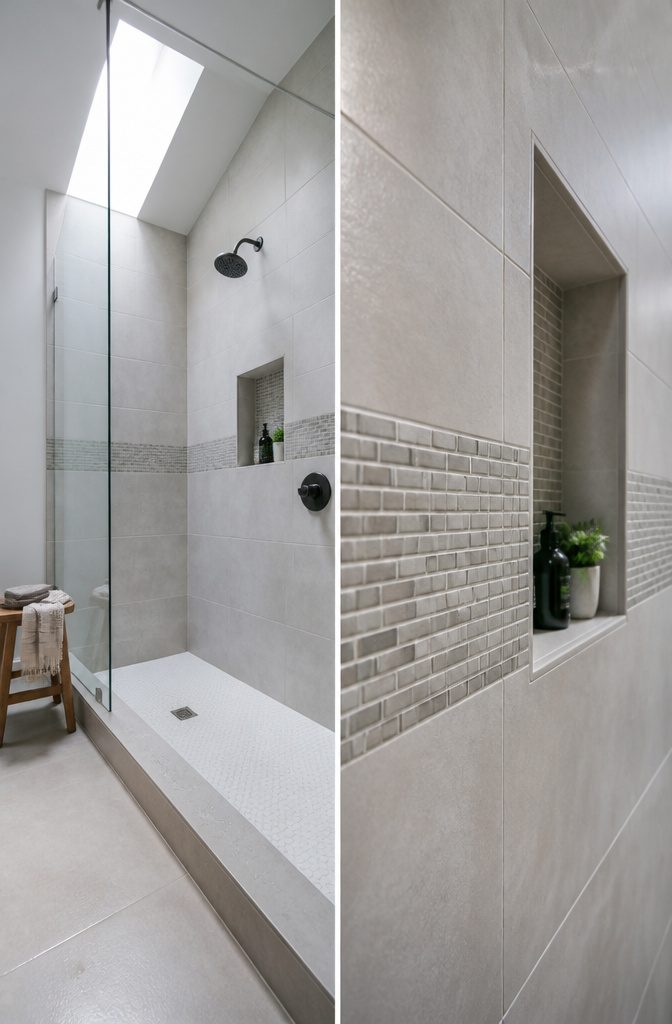
Pairing a large-format tile on the walls with a mosaic accent separates the visual weight without chopping the space into equal parts.
A 15×30 inch wall tile keeps grout lines spare, and a mosaic band at chest height or inside the niche gives the eye somewhere to land.
The same tile in different formats holds the palette together: matte mosaics on the floor, polished larger pieces on the walls, and the shower reads as one idea instead of three.
Tiles for shower walls are available in various sizes, from about 1 inch by 1 inch for mosaic tile installations up to 18 inches by 18 inches or larger.
— Bob Vila
Smaller tiles mean more grout lines to keep straight during install, so save the 1×2 inch mosaics for a feature wall or the back of the niche rather than covering every surface.
Wood-plank tile runs floor to ceiling in some designs, but mixing a plank floor with subway walls or brick tile in the shower itself breaks up the grain and still keeps the warm look.
15. Textured or Dimensional Tile
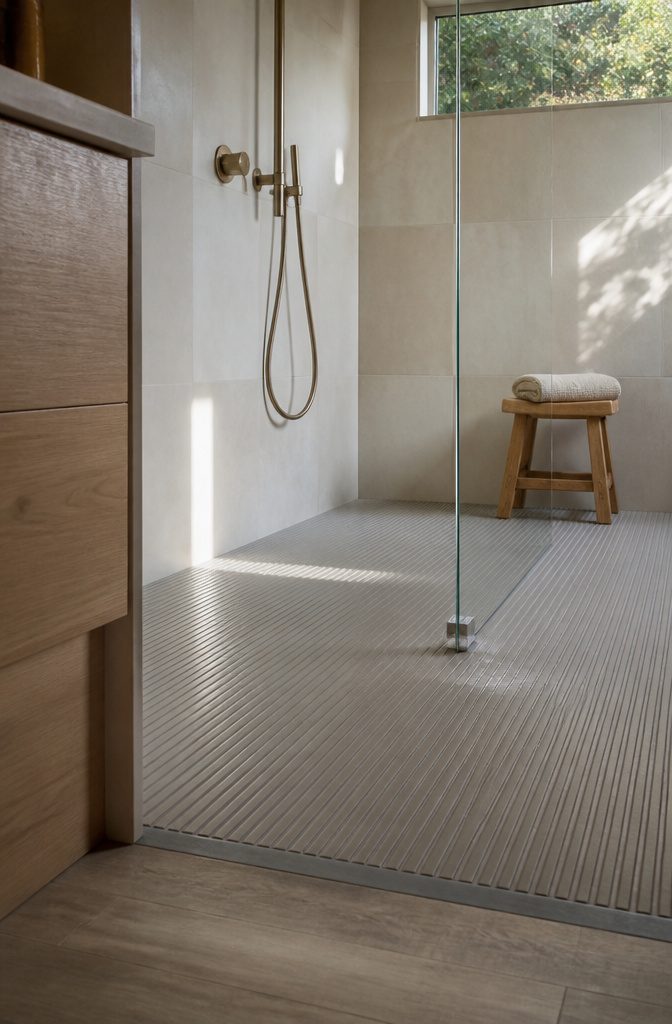
Ribbed, fluted or wavy surfaces bring dimension you can see and feel. The grooves catch light differently than flat tile, so the wall shifts as you move past it.
Textured finishes also improve grip underfoot — R11 Finish Tile, for instance, has a tactile surface engineered to reduce slipping on wet floors without changing the visual, which makes it a practical choice for shower pans and zero-threshold entries where standing water is part of the territory.
The trade-off sits in the cleaning. Those same grooves that add visual interest collect soap scum faster than a smooth surface, and getting into the recesses means a brush rather than a quick wipe.
Porcelain versions hold up well to scrubbing and need no sealing, so maintenance stays manageable even with the added texture.
I would use textured tile where slip is a concern and save flat surfaces for walls where cleaning speed matters more.
Frequently Asked Questions
What type of tile is best for shower walls?
Porcelain works best for most showers because it resists water without sealing and holds up to daily scrubbing. Natural stone like marble brings visual warmth but needs sealing every 6 to 12 months to prevent staining.
Glass tile creates a spa look on accent walls but shows adhesive through the surface if installation is uneven, so professional work matters more with that material.
How do I clean shower tiles?
Wipe tiles with a squeegee after each shower, then use a pH-neutral cleaner when soap scum builds up.
Textured surfaces need a soft-bristle brush to reach into grooves. Grout lines require separate attention with baking soda and water, and sealing them once or twice a year keeps water from working its way in.
Can I use large tiles in a small shower?
Yes, if the shower is open enough to show the full tile.
An 18-by-18-inch format cuts grout lines down and makes the space read cleaner, but the scale backfires in a tight stall where you only see part of each tile at once. Save large formats for walk-ins and frameless enclosures.
Are bathroom tiles slippery when wet?
Some are.
Textured finishes like R11-rated porcelain improve grip underfoot without changing the look, which makes them practical for shower pans and zero-threshold entries. Matte and pebble tile also hold traction better than polished surfaces.
Do shower tiles need to be sealed?
Natural stone does.
Marble needs sealing every 6 months to a year to keep water and soap from staining the surface. Porcelain skips that step entirely, but grout lines still need sealing once or twice a year regardless of tile material.
Can I install shower tiles myself or should I hire a professional?
You can install most tile yourself if you measure carefully and use spacers to keep joints even.
Glass tile and anything requiring waterproofing behind the surface benefits from professional work, since uneven adhesive shows through translucent materials and leaks are harder to fix after the fact.
What size tile should I use for shower walls?
Tiles for shower walls range from 1-by-1-inch mosaics up to 18-by-18-inch or larger formats.
Smaller tiles mean more grout lines to install and clean, so save 1-by-2-inch mosaics for feature walls or niches. Large formats work best in walk-ins where you see the full tile sweep.
What are some popular shower floor tile designs?
Pebble tile brings rounded stream stones to the floor and holds traction underfoot, though the bumpy surface varies depending on finish.
Hexagon and mosaic tiles create pattern without requiring custom work, since they arrive preset on mesh backing. Textured porcelain gives grip in a modern look that cleans faster than stone.