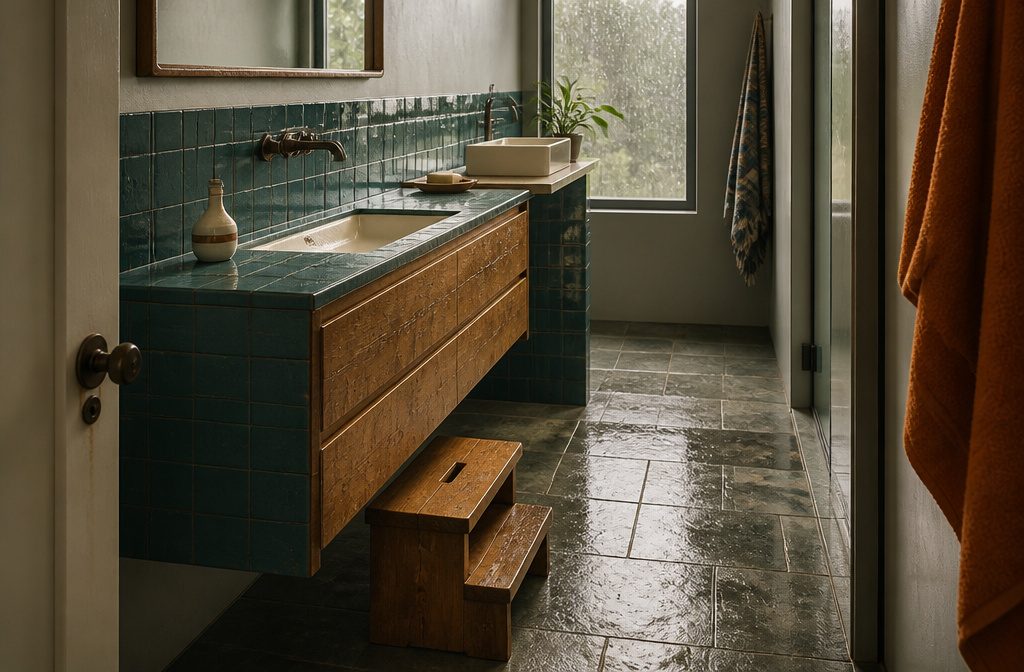
A kids’ bathroom vanity can run from a 40-inch wall-mount unit that tucks into a corner to a 72-inch double-sink setup that stops the morning fight over counter space.
The right choice depends on how many children share the room and whether the vanity needs to last through a decade of growth.
Teak and bamboo resist standing water better than most materials, and a standard 32-to-36-inch height paired with a step stool works longer than a low vanity that becomes awkward in two years.
1. Use a Double or Multiple-Sink Setup
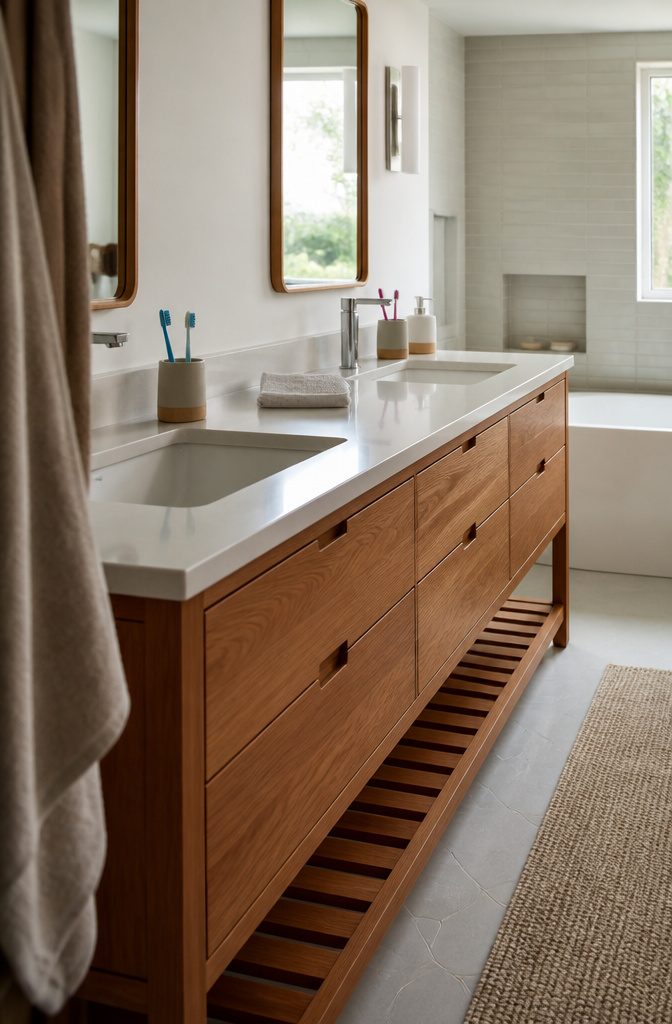
A double or triple sink vanity stops the morning traffic jam when siblings are getting ready at the same time.
A 48-to-60-inch vanity gives enough counter space for two kids to brush teeth, wash hands, and spread out their things without elbowing each other out of the way, and if you can fit a 72-inch model you get even more breathing room between the basins.
The 72" Novak Double Teak Vanity and the 72" Burfield Bamboo Double Vanity both work well here—teak and bamboo hold up to water and wear, and the double-sink layout means one child is not waiting on the other before school.
Pair either one with drawers that let each kid claim their own section, and mornings get a lot calmer.
2. Choose a Durable, Neutral Vanity That Can Last as Children Grow
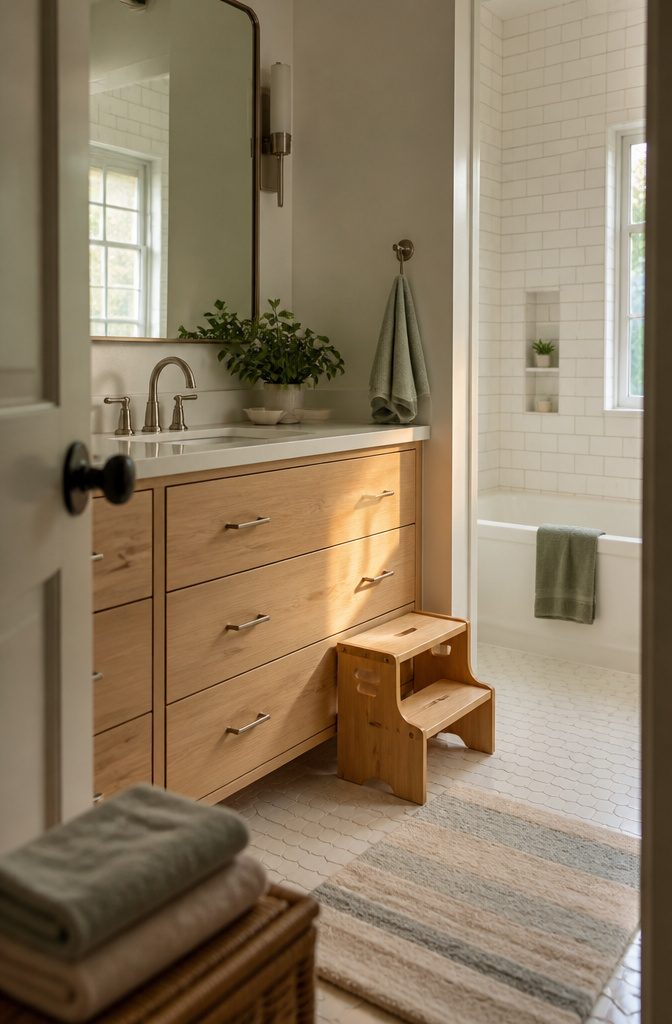
The vanity base you pick should outlast the superhero phase and the next three after it.
Teak and bamboo both resist the standing water and splash that come with kids at a sink, and a well-sealed painted or natural-wood finish holds up just as well if the construction underneath is solid.
Soft-closing hinges help, but the real work is done by keeping the vanity itself neutral—white, natural wood, gray—so the room can shift personality with new hardware, a different mirror, or paint on the wall instead of replacing the biggest fixed piece in the space.
On height: most families stick with standard 32- to 36-inch vanity height and add a sturdy step stool.
A shorter vanity works for maybe two years before a growing child finds it awkward, and a wall-mount unit you can raise later still locks you into one spot on the wall.
The stool moves when you need it to and disappears when you don’t.
3. Use Accessible Storage, Including Drawers or Separate Storage for Each Child
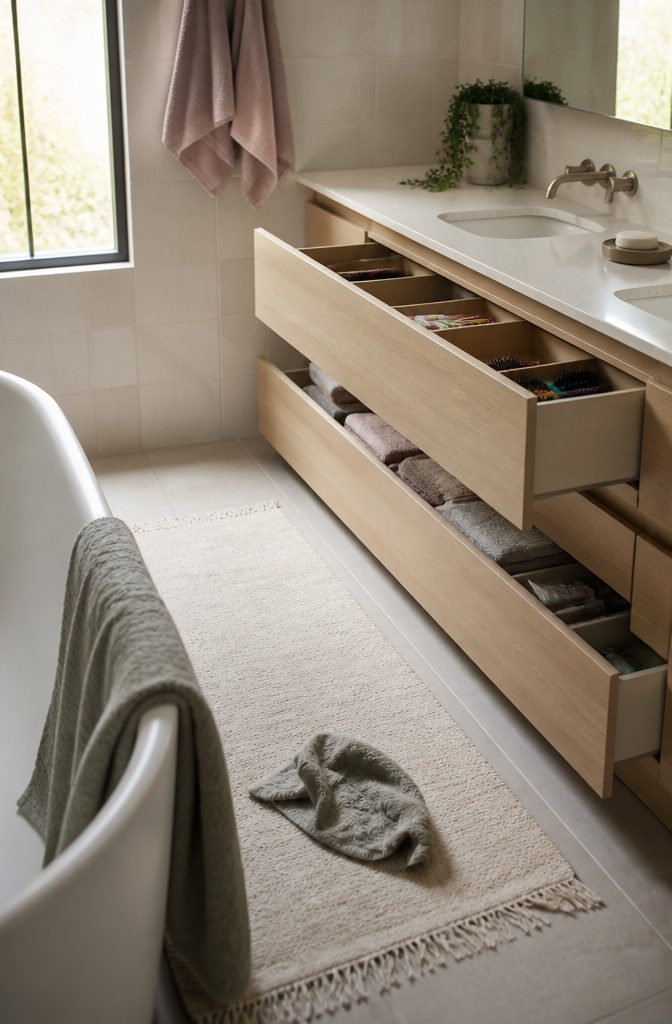
Drawers beat cabinets in a children’s bathroom because they pull all the way out — a child can see what’s inside and grab it without crouching or reaching into a dark space.
Lower drawers are particularly useful: they put toothpaste, hairbrushes and washcloths at a height where children use them without help.
Separate storage for each child, whether that means one drawer per person or clearly divided sections within a shared drawer, cuts down on the daily negotiation over whose towel is whose and keeps belongings from migrating into a shared pile.
I’ve found that children actually use designated storage when it’s obvious which space is theirs — a simple label or colour-coded knob is often enough.
Drawer-forward vanity designs, where drawers make up most or all of the storage rather than a cabinet with a single drawer on top, give children more reach and less frustration.
4. Add Tall or Floor-to-Ceiling Storage
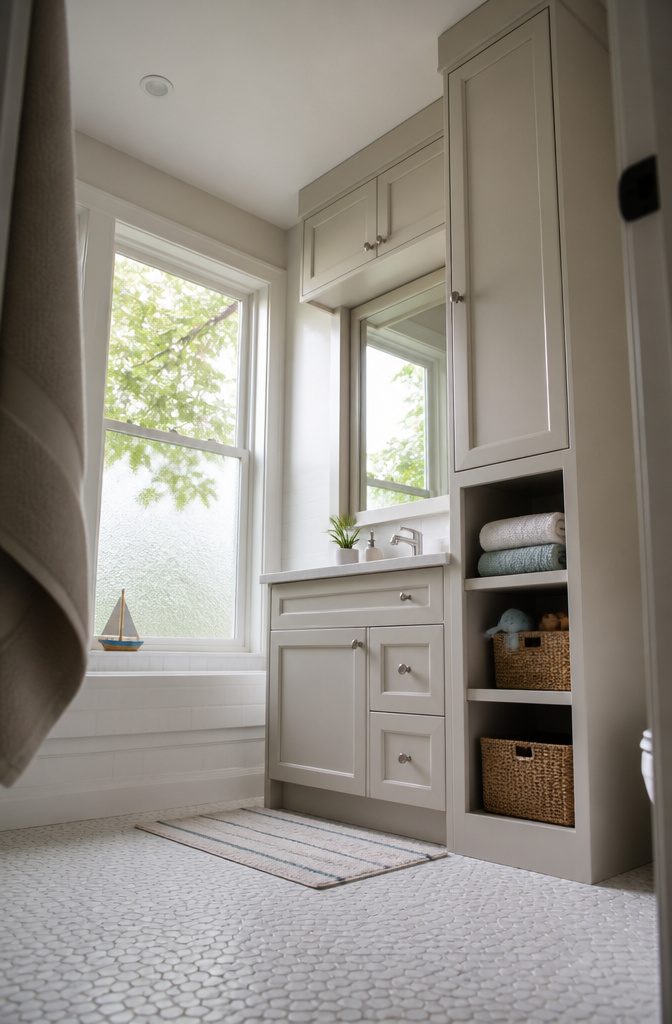
A floor-to-ceiling cabinet pulls storage off the counter and uses the height you already have. Towels, bath toys, toiletries — all of it goes vertical without eating another square foot of floor.
That matters in a small bathroom where you need the counter clear and the floor open for a wet child who just stepped out of the tub.
Upper cabinetry borrowed from kitchen design fills the dead space above the vanity mirror. The closed doors keep clutter out of sight, which is half the work in a kids’ bathroom.
If you want the storage looser, a tall open shelf unit works the same way and costs less, but you lose the ability to hide the mess behind a door.
The cabinet option wins if the bathroom shares a wall with a bedroom — those doors also mean one less surface broadcasting chaos into the next room when someone forgets to close the bathroom door.
5. Provide a Step Stool or Built-In Step
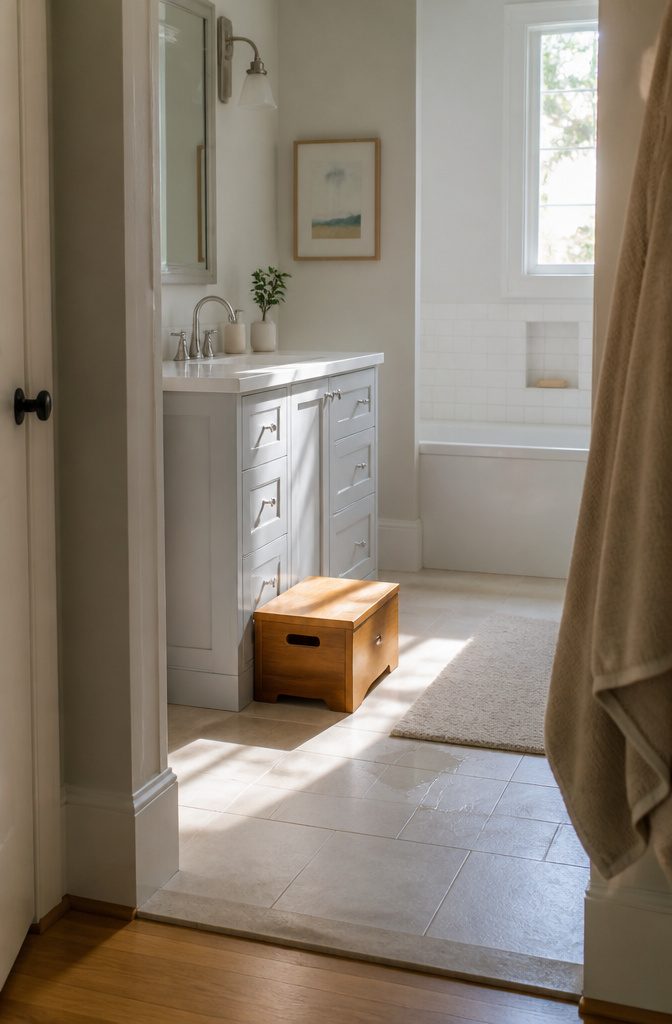
A sturdy step stool lets children reach the sink and faucet without stretching on tiptoes, which gets uncomfortable fast and can turn brushing teeth or washing hands into something they avoid.
Standard-height vanities paired with a stable stool work better than a shorter vanity — the low counter helps for a year or two, then becomes awkward as the child grows, while the stool keeps working from toddler years straight through.
Collapsible stools save floor space in a tight bathroom.
If you have about 4 inches of clearance under the vanity, a small wooden box with a handle slides in and out instead of sitting in the middle of the floor where you kick it twice a day.
Teak step stools hold up well to splashes and humidity.
6. Create a Mini Vanity Area
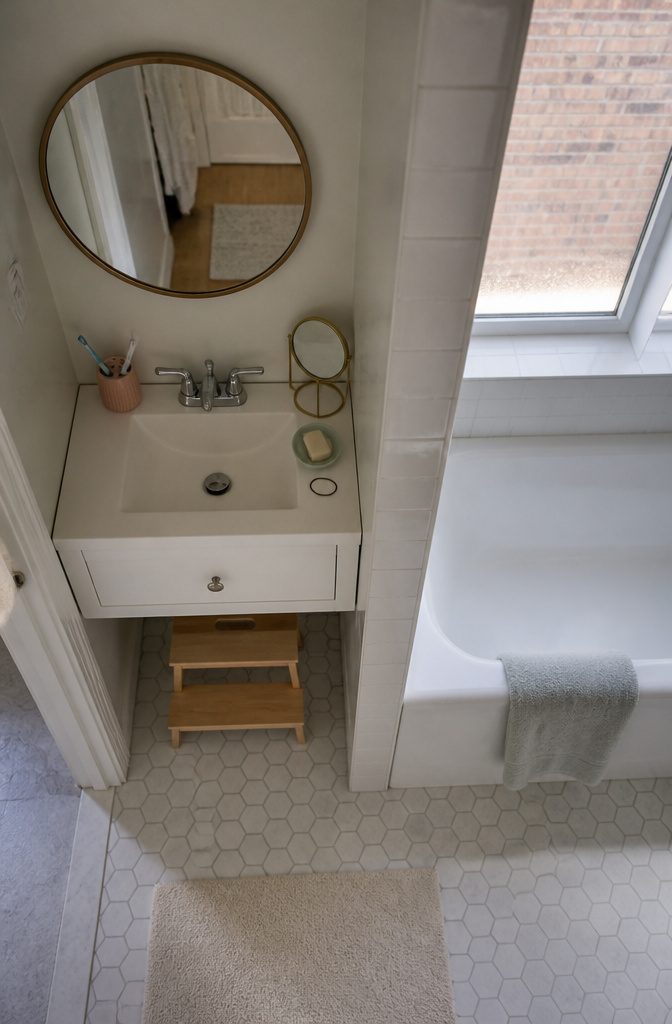
A small corner or unused nook can turn into a child’s own vanity spot without claiming much floor space.
The 40" Kiah Wall-Mount Vanity and 40" Varina Wall-Mount Vanity both free up room underneath—helpful when you need to tuck a step stool below or just want the floor clear for cleaning.
A narrow depth works here; you are after a surface wide enough for a toothbrush cup and a hand mirror, not a full grooming station.
Mount the vanity at a height the child can reach now, or plan to adjust it in a year or two as they grow.
A single drawer holds hair ties and soap without looking cluttered. Pair it with a small round mirror above and you have a functional setup that fits where a full-size vanity would not.
7. Use Colorful or Playful Wallpaper
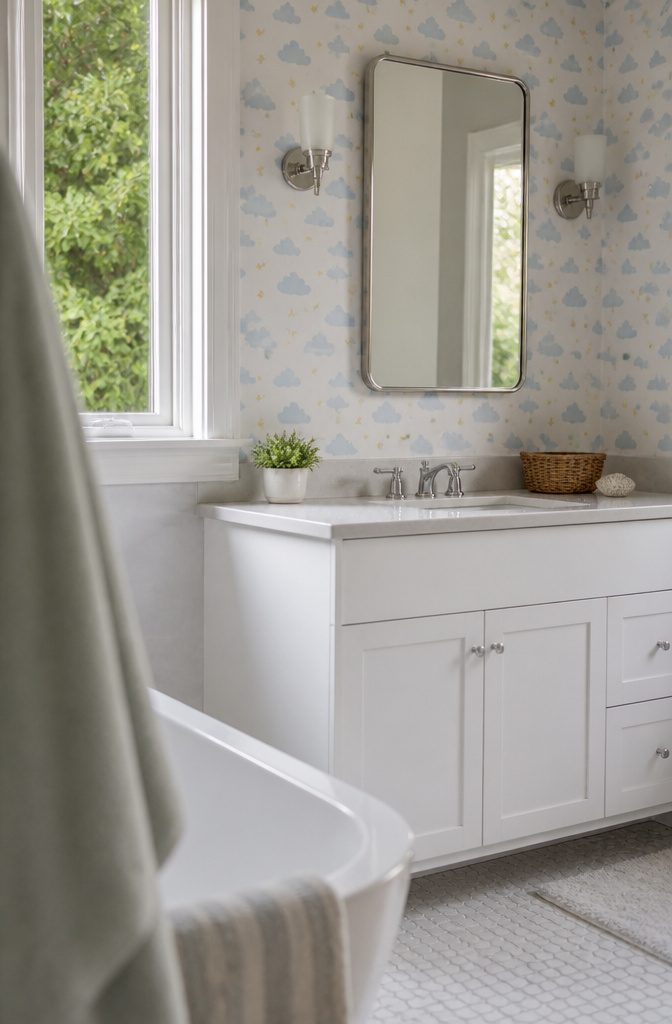
Wallpaper brings personality into a kids’ bathroom without committing to something permanent.
I’ve seen it turn a builder-grade vanity wall into the room’s best feature, and when your seven-year-old decides dinosaurs are out and space is in, you can swap it in an afternoon.
That flexibility matters more here than in any other room.
The cheerful pattern in the Digs Design Co bathroom does the work of three design decisions at once: it sets the mood, it defines the style, and it lets the vanity stay simple.
Keeping everything else warm and neutral means the wallpaper can change without redoing the whole room.
Just make sure you choose something wet-room approved — standard paper curls and peels the first time steam hits it, and a kids’ bathroom gets plenty.
Bold mosaic tile makes a statement too, but tile is a ten-year commitment. Wallpaper gives you the option to grow with them.
8. Use a Stencil Instead of Wallpaper
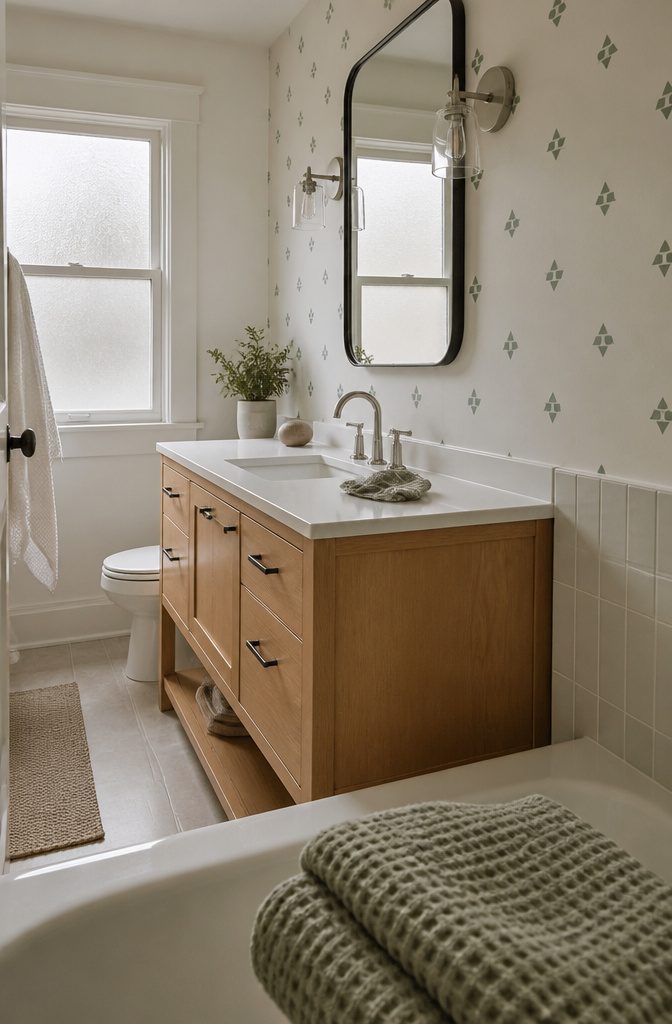
Wallpaper can trap moisture behind the paper in a bathroom and peel over time, and you’re stuck with it until you scrape it off.
A stencil gives you the same pattern — florals, geometric repeats, even something playful like polka dots or clouds — but you paint it directly on the wall with washable paint, so moisture has nowhere to hide and cleaning is just wiping down a painted surface.
If your six-year-old decides stars are babyish two years from now, you prime over the stencil and start fresh in an afternoon.
Stencil patterns online now cover every style, from classic damask to modern shapes, and the upfront work is about the same as hanging paper: tape the stencil, roll or dab the paint through, move it down the wall.
The difference shows up later, when the room needs to grow with them and you’re not peeling anything.
9. Add a Decorative or Playful Mirror
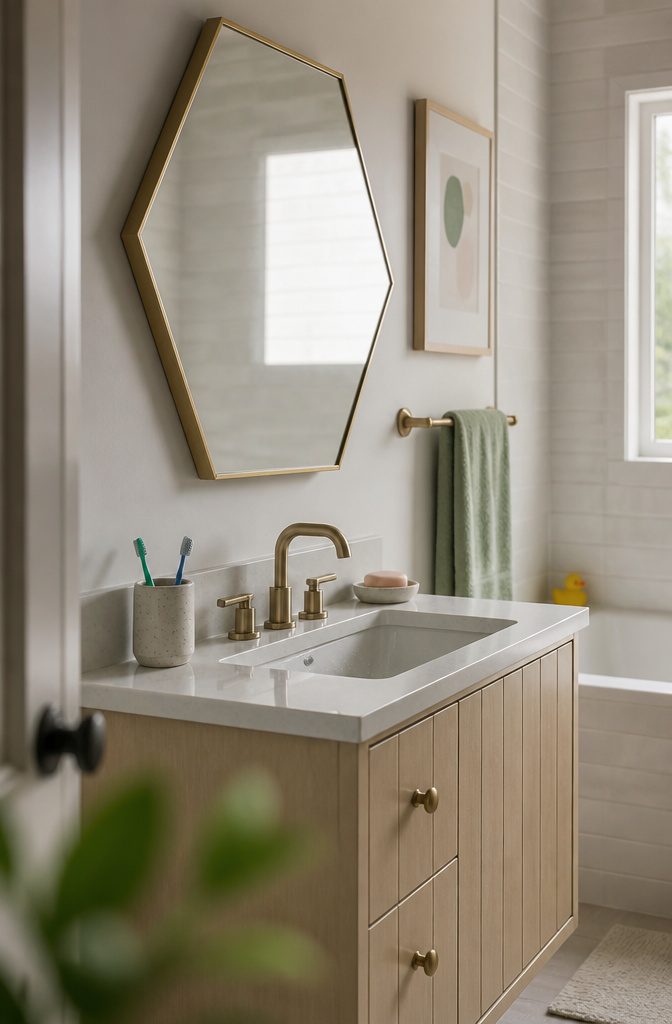
A mirror with some character turns the vanity from purely functional to something your child actually wants to use. Asymmetrical shapes, hexagonal frames, scalloped edges — any of those make the space feel intentional without adding work to your day.
The Seren Lighted Medicine Cabinet with Tunable LED gives you mirror, storage, and a ring of adjustable light in one piece, which matters when a seven-year-old is brushing teeth before school and the overhead fixture isn’t quite enough.
The touch controls usually end up being more appealing to kids than they strictly need to be, but that’s not a problem if it gets them to the sink.
A pivot mirror lets shorter children angle it down on their own, skipping the need for a second mirror mounted lower.
Lighted mirrors improve visibility across the board, and in a bathroom where the user’s height keeps changing, that extra light around the edges closes the gap that bad angles and dim corners leave open.
10. Choose Fun Cabinet or Drawer Hardware
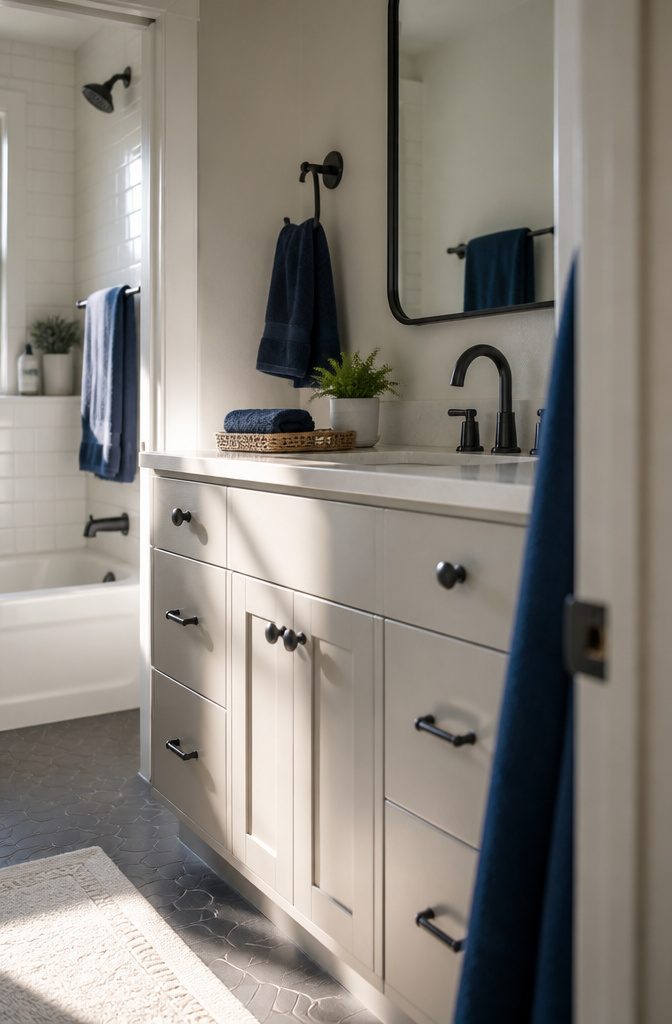
Cabinet hardware is where personality walks into a shared bathroom without taking over.
Knobs and pulls are small enough that kids can have a say in the choice, and when styles change in a few years, swapping them out takes twenty minutes and a screwdriver.
Matte black and brushed metal finishes hide fingerprints and water spots better than polished chrome or brass, which means less wiping down after every sink trip.
When you pick towel bars and hooks, look for collections that include cabinet hardware in the same finish.
The cohesion is already worked out, and raising a towel bar as children grow taller takes one screw adjustment instead of hunting for a new piece that matches what is already on the wall.
11. Use Patterned or Mosaic Tile
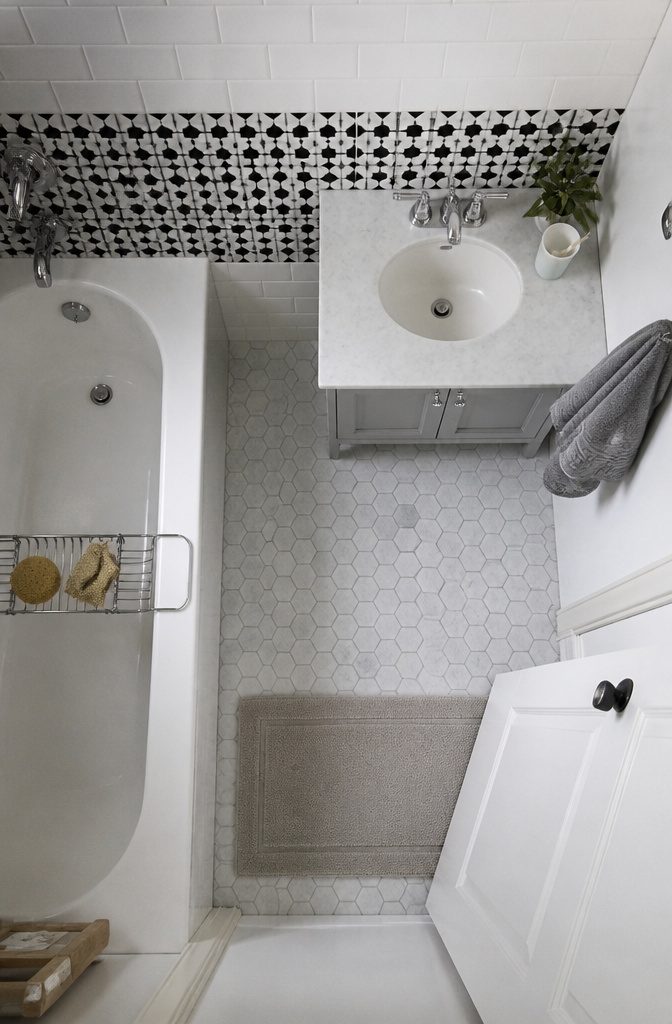
Tile brings pattern and texture without locking you into something your kids will outgrow.
Ann Sacks’ black and white mosaic tile gives you graphic punch that reads modern rather than juvenile—pair it with a honed marble hex floor and the contrast keeps the room grounded.
For the walls, 3×6 honed Italian white Bianco subway tile in a classic brick lay stays neutral enough to work through grade school and beyond.
The key is choosing a pattern that feels permanent in a good way.
Hexagons and geometric mosaics age better than cartoon motifs, and a less juvenile permanent pattern means you replace towels and accessories as tastes change, not the tile itself.
Honed finishes over polished ones hide water spots better—worth it when you’re wiping down surfaces twice a day.
12. Add Playful Details Such as Wall Art, Towel Hooks, or Colorful Accessories
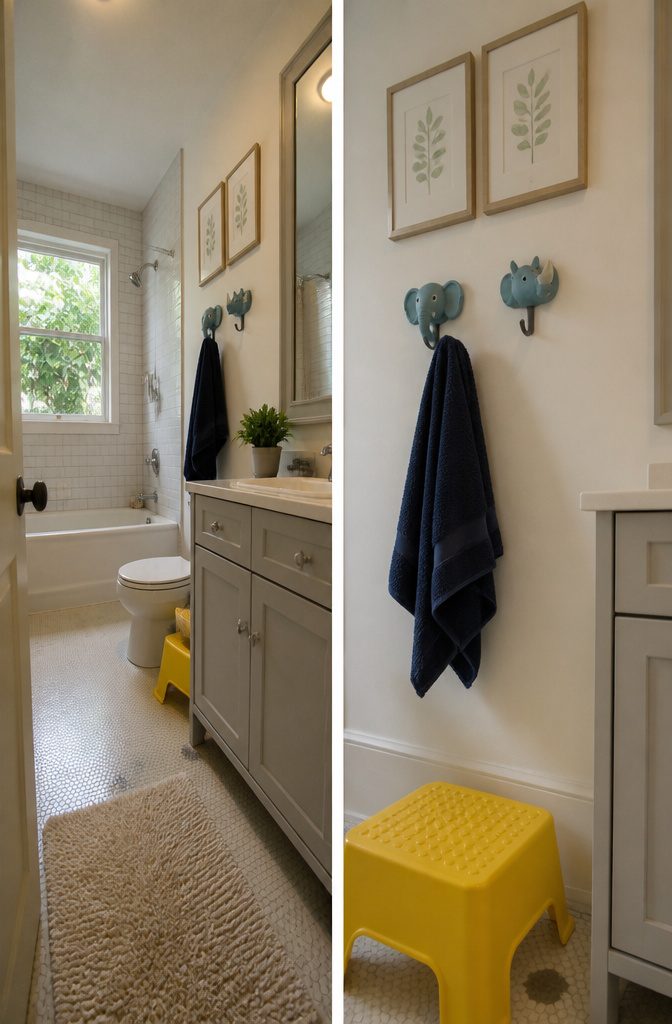
Wall art, colorful towel hooks, and bright accessories are where childhood personality belongs—not locked into the vanity.
A nautical mirror, sea-themed prints, and navy towels work beautifully at six; at twelve, they swap out for band posters and charcoal gray in an afternoon. The vanity itself stays neutral and keeps working.
Removable wall decals cost under $20 and peel off cleanly when tastes shift. Towel hooks shaped like animals or painted in favorite colors give function a playful edge without permanent commitment.
A step stool in bright yellow or patterned with dinosaurs does its job now and gets replaced with something plain later, no regret and no wasted money.
This approach lets one bathroom grow through phases without a gut renovation every few years.
The durable pieces—vanity, mirror frame, tile—stay put. The inexpensive, changeable details do all the adapting.
13. Add a Storage Cabinet
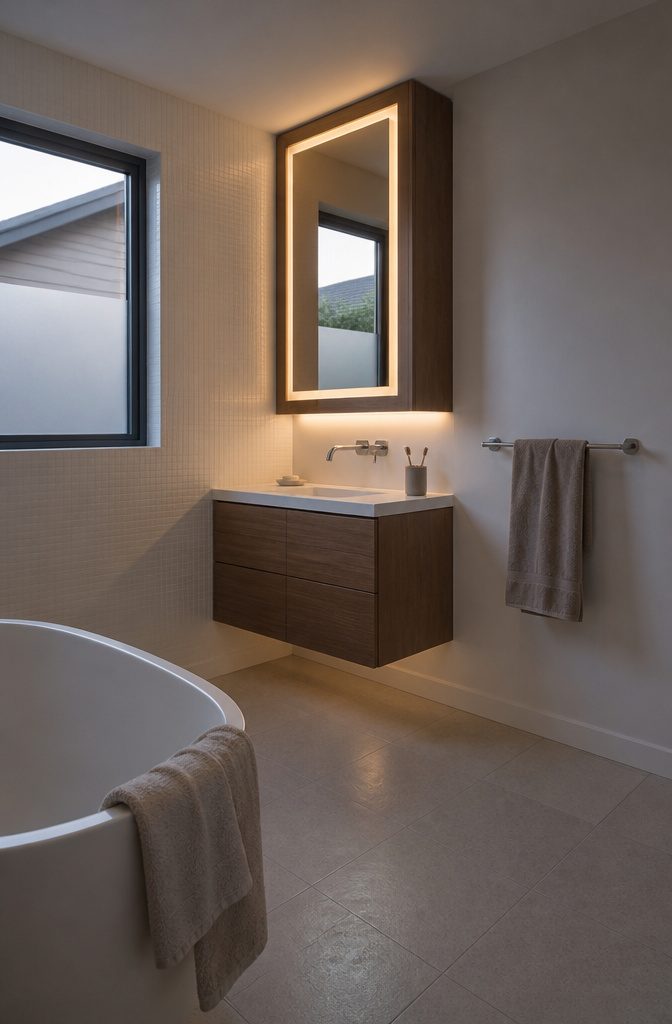
A storage cabinet does more than hold toothpaste—it sets the tone. The Robern Uplift medicine cabinet brings integrated LED lighting along with shelves, so the whole upper wall works instead of just sitting there.
Mount it above the Elmdale Vanity and you’ve built a full storage column without eating into floor space, which matters when three people are trying to brush their teeth at once.
The cabinet itself reads as furniture rather than a box with a door.
Pick one with a finished frame or a color that plays off the vanity below, and it pulls double duty: the storage you need and the vertical line that makes a low-ceilinged bathroom feel taller.
A plain white medicine cabinet disappears; a cabinet with a walnut frame or matte black edges becomes the thing that holds the design together.
Safety Measures Worth Adding
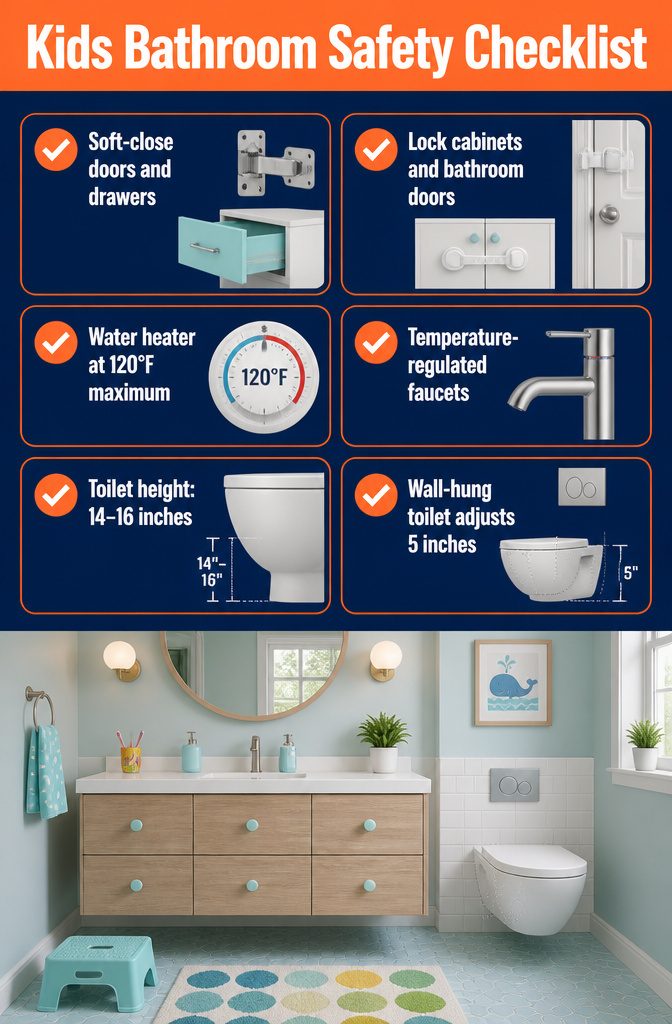
A kids’ bathroom needs more than soft corners and bright colours. Three safety moves reduce most of the common injuries, and none take more than an afternoon to install.
- Soft-close hinges and slides on vanity doors and drawers prevent slammed fingers and protect the frame when small hands shove a door shut. Toilet seats with the same feature stop lids crashing down on hands or heads.
- Childproof locks on cabinets keep cleaning supplies, razors, and medications out of reach. Door locks on the bathroom itself prevent unsupervised access for toddlers.
- Water temperature control matters more than most builders assume. Set your water heater to no more than 120°F to prevent scalding; a child’s skin burns faster than an adult’s. Temperature-regulated faucets or thermostatic valves add a second layer of protection, and single-handle levers let small hands adjust flow without wrestling a knob.
When it comes to height, opt for a toilet with a 14" to 16" height. Anything taller may be a bit tricky, and potentially unsafe, for your young one to reach even with a step stool.
Wall-hung toilets offer about a 5" range for customizing height, so you can drop the seat lower now and raise it in two years without ripping out the fixture.
What Holds Up Best in a Kids’ Bathroom
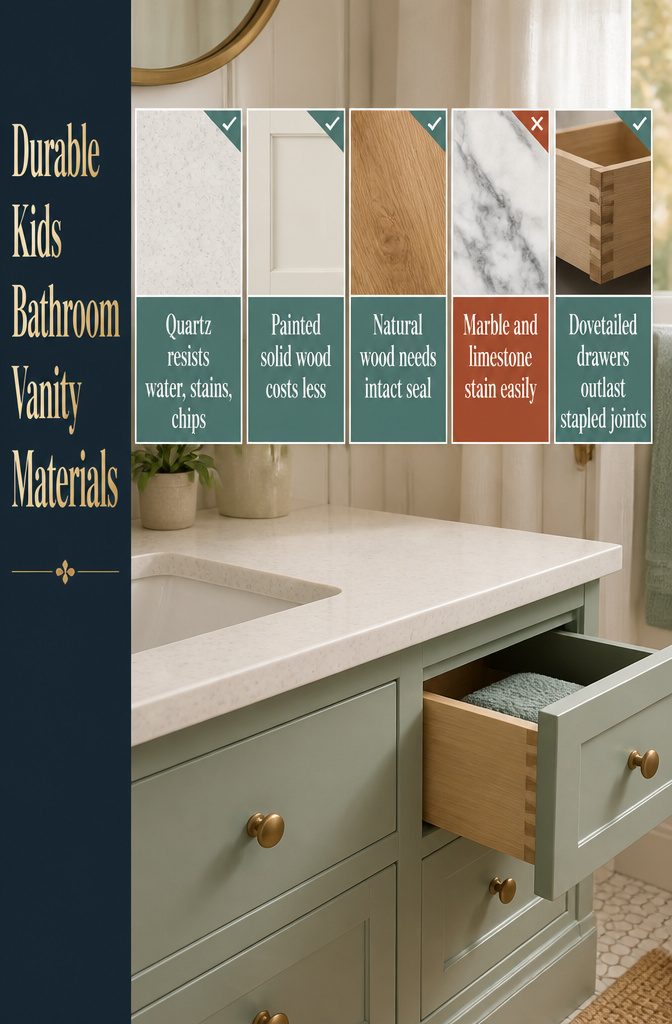
Quartz countertops handle everything a kids’ bathroom throws at them — water sits on the surface instead of soaking in, toothpaste wipes off without staining, and the material doesn’t chip when a shampoo bottle tips over.
A quality painted finish on solid wood construction runs a close second: sealed correctly, it cleans as easily as quartz and costs less, though you’ll want to touch up nicks every few years.
Natural wood with a hard topcoat works just as well if you keep the seal intact — water damage only starts when the finish wears through.
Skip porous stone like marble or limestone; they stain, and kids’ bathrooms collect more toothpaste splatter and soap scum than any other room in the house.
The vanity base matters as much as the top: solid construction with dovetailed drawers holds up under daily yanking better than particleboard with stapled joints.
Frequently Asked Questions
Should a kids’ bathroom vanity be shorter than standard?
No.
A standard 32- to 36-inch vanity with a sturdy step stool works better long-term. A shorter vanity helps for a year or two, then becomes awkward as children grow, while the stool keeps working from toddler years through.
What finish holds up best in a kids’ bathroom?
A well-sealed painted or natural-wood finish on solid construction holds up best. Teak and bamboo resist standing water and splashes, and quality sealed finishes on solid wood clean easily without staining.
How do I keep a kids’ bathroom from looking dated as they grow?
Keep the vanity neutral in white, natural wood, or gray, then put personality into changeable pieces like towels, mirrors, wall decals, and accessories. When tastes shift, swap the small things instead of replacing the vanity.
Are drawers or cabinets better for a kids’ bathroom?
Drawers work better because they pull all the way out so children can see and reach everything inside without crouching. Separate drawers for each child, or clearly divided sections within shared drawers, reduce daily conflict over belongings.
What size vanity suits a shared kids’ bathroom?
A 48- to 60-inch vanity with a double sink stops the morning traffic jam when siblings get ready at the same time. A 72-inch model gives even more counter space and breathing room between basins.