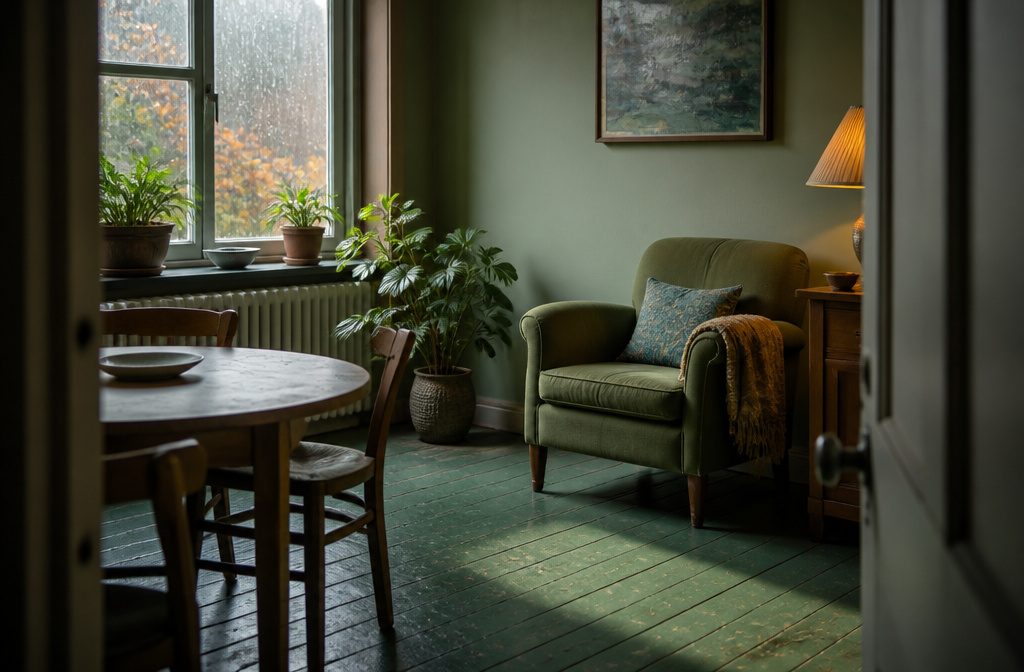
Green works as wall paint, furniture upholstery, throw pillows, artwork, or living plants, and the version you pick depends on whether you’re painting four walls or dropping a single cushion on a beige sofa.
The commitment scales with the surface area: a feature wall in sage or a set of emerald velvet cushions changes the room in an afternoon, but covering all four walls in forest green or buying a vintage green sofa anchors the space before you add anything else.
1. Use Green on Walls, Paint, or Wallpaper
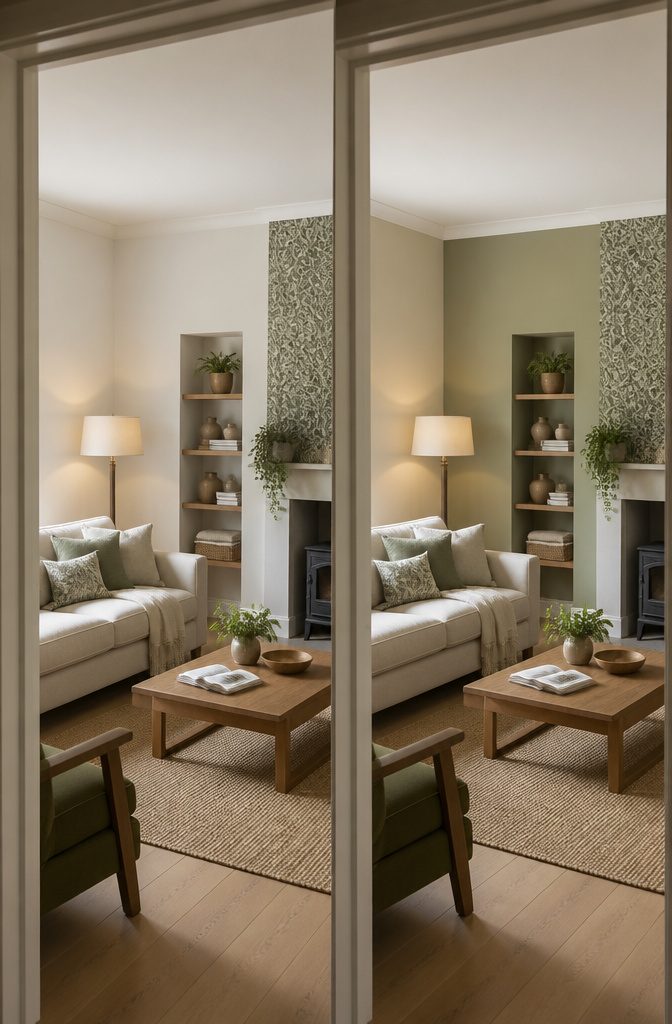
Paint or wallpaper sets the tone for everything that follows.
Pale green creates breathing room — the kind that makes a room feel larger without shouting about it — while deeper shades like olive or forest green pull the walls closer and add weight.
A light sage works when you want the green present but not dominant; a moody hunter green makes the room feel finished before you add a stick of furniture.
A feature wall keeps the commitment small. Paint the wall behind the sofa or use a botanical wallpaper on the fireplace wall, and the rest of the room can stay neutral.
Covering all four walls works when the shade is soft or when you want a room that reads as green the moment someone steps in.
Dark green on every surface lands somewhere between a library and a den, and it needs enough light — natural or lamp — to keep it from closing in.
Current Mood by Clare and other deep greens handle vintage furniture without a fight. Tropical wallpaper pushes bolder, and a plain minty green disappears enough that the plants do the talking.
2. Bring Green in Through Furniture
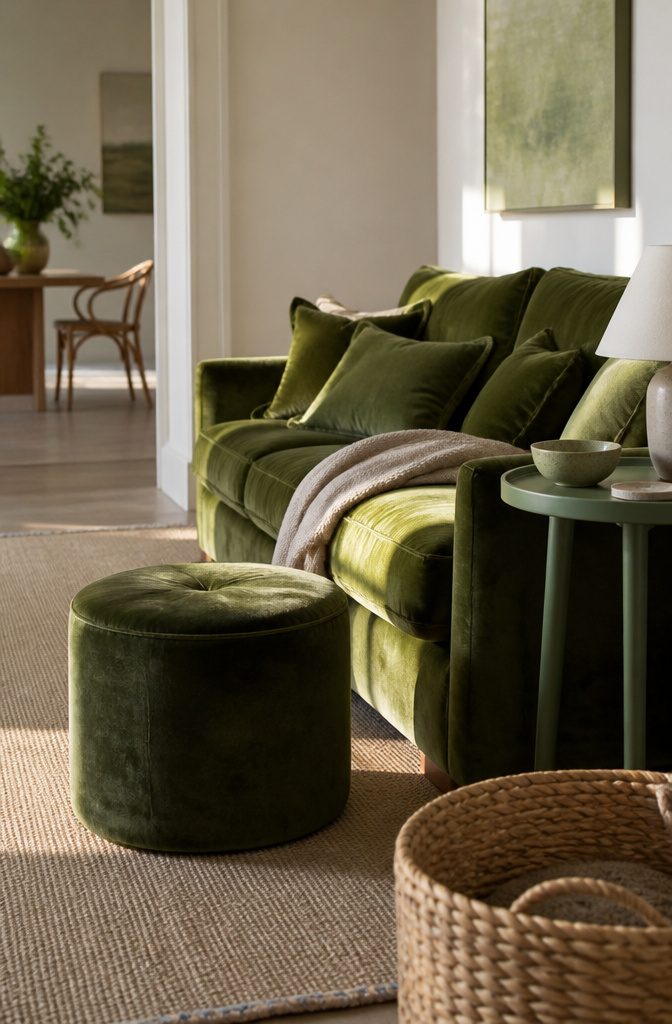
A green sofa or chair does the same work as painted walls but leaves the rest of the room open.
A 1940s green sofa and stool work as a focal point against white or neutral walls, and bold green seating paired with green throw pillows brings the color in at eye level where you notice it first.
Green furniture sits well against most wall colors — pink, gray, white, purple — because the sofa becomes the anchor instead of competing with the backdrop.
Olive green, sage green, and emerald green all hold up as upholstery choices, and a mint green vanity or accent table brings the same refresh to a corner without filling the room.
You skip repainting and get a piece you can move.
3. Add Green Through Textiles, Rugs, or Slipcovers
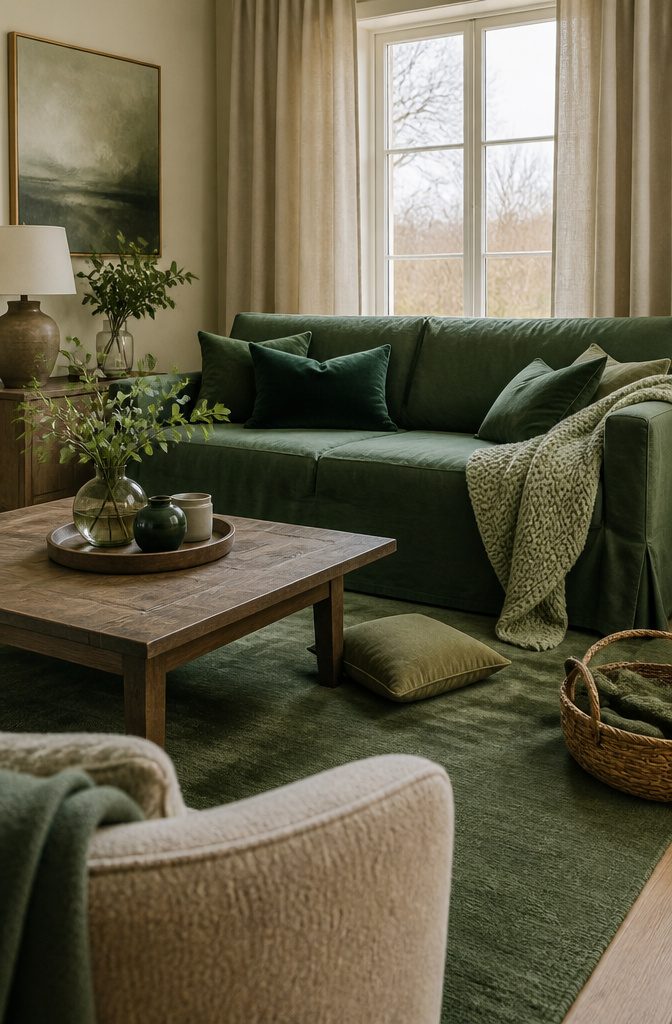
Cushions and throws bring green into a room without touching a wall or swapping out furniture.
A few matcha-toned pillows on a sofa that started out beige, or a sage throw draped over the arm of a chair, shifts the palette in an afternoon.
The fabric choice matters more than you might think: a plush knitted throw in pistachio holds texture that keeps the color from reading flat, and a set of emerald velvet cushions catches light differently than cotton would in the same shade.
Slipcovers let you change a sofa’s entire color when you already own the frame but want a different look.
A fitted cover in olive or forest green replaces upholstery work with something you pull on and zip, and most run $80 to $200 depending on the size and fabric weight.
Rugs work the same way—lay down a green area rug and the room registers as green even when the walls stay white.
4. Use Green Artwork or Decorative Objects
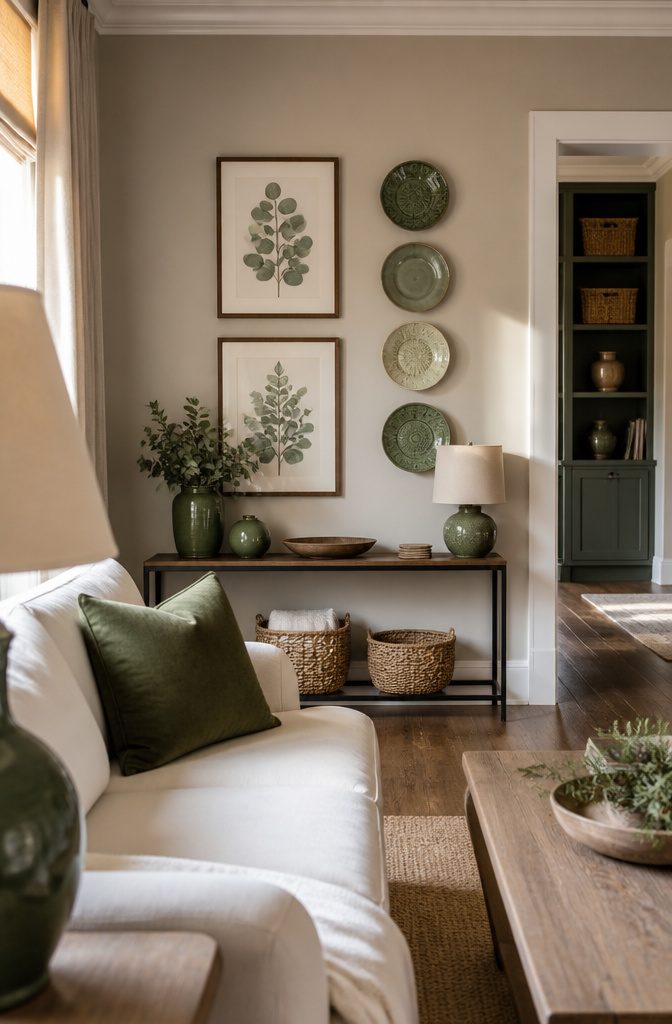
A print with eucalyptus branches or a row of green plates on the wall gets the color in without committing to it everywhere else. If you’re not ready to paint or reupholster, green artwork is where you start.
Botanical prints work in any frame you already own, and mounting a few vintage plates—thrift stores carry them for a couple of dollars each—turns an empty stretch of wall into something people actually look at.
The frame-and-plate approach also lets you test how much green you want before you buy a couch in it.
Pair the art with one other green piece so the room reads as deliberate rather than accidental. A throw pillow in the same shade ties it together without adding another furniture decision.
5. Bring in Houseplants and Greenery
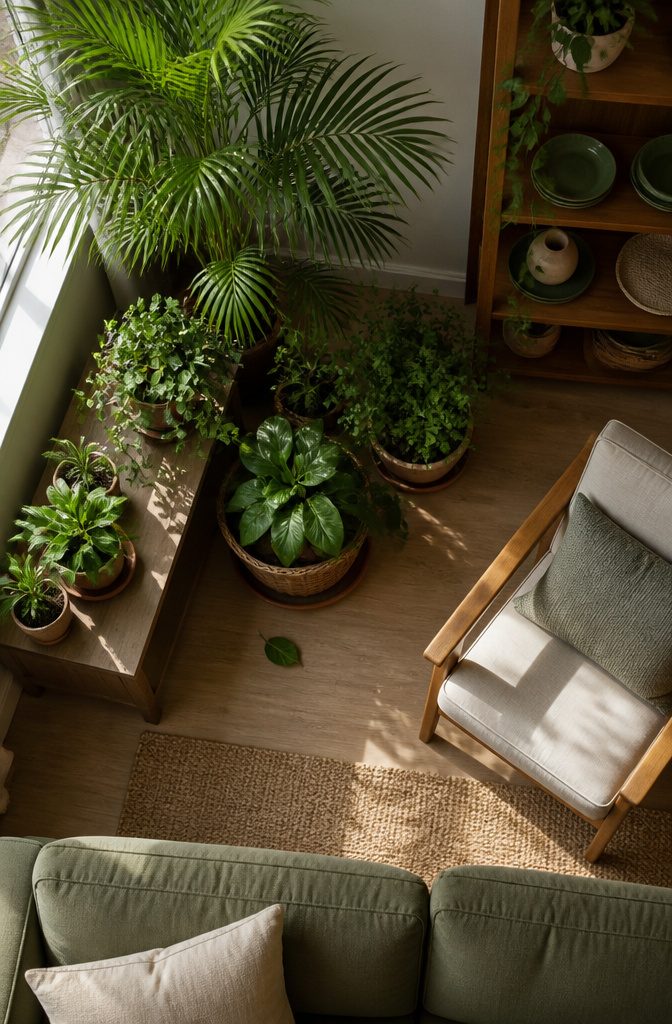
Living plants are the most direct way to get a natural feel into a green room.
Towering palms or trailing ivy add height and texture, and styling them in terracotta pots or woven baskets keeps the look grounded. A cluster of houseplants in one corner reads richer than scattering single stems around the room.
If live greenery does not fit your routine or light conditions, plant-themed wall art substitutes the green without the watering schedule.
A three-dimensional leaf installation takes that further — designer Maryline Damour and fiber artist Sienna Martz built one that reads as sculpture rather than flat decoration, and it pairs cleanly with green walls the way real plants do.
Green plates mounted on the wall or set on open shelving bring botanical shapes into a dining area or entryway without claiming floor space, and they coordinate with furniture that already leans botanical.
6. Mix Multiple Shades of Green
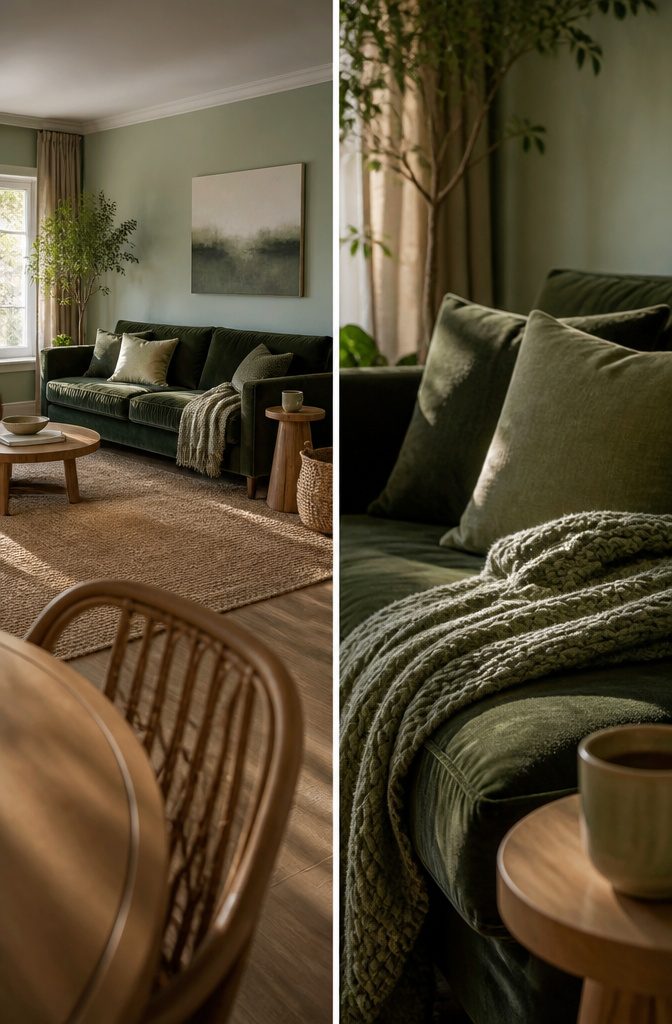
Pistachio walls, forest green furniture, and olive accents build a room that reads as one color family rather than a patchwork.
The tonal approach works because the eye travels across similar values without stopping hard at edges, which makes even a small living room feel larger and calmer than it would with high contrast.
Start with the lightest shade on the largest surface—sage or pistachio on walls—and anchor it with a deeper piece, like an emerald sofa or forest green armchair.
Then scatter the middle tones through cushions, throws, or a rug. A pistachio cushion on an olive wall ties the room back to itself.
Texture keeps a monochrome scheme from flattening. Pair a plush velvet sofa with a jute rug, linen curtains, or a knitted throw, and add wood furniture to break up the green without introducing a competing hue.
Beige or rattan accessories lighten the load if the room starts to feel too heavy.
7. Pair Green with Blue
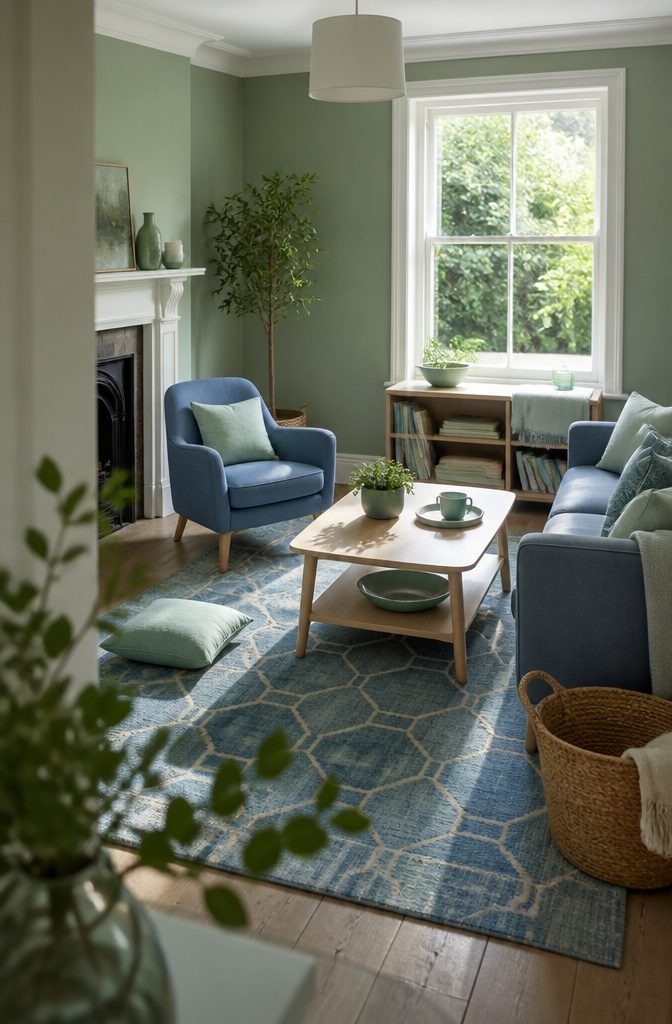
Blue works with green because both sit on the cool half of the wheel, so the combination reads as calm rather than jarring.
A neutral green on the walls paired with blue furniture or a geometric blue rug keeps the room grounded without losing personality.
If you want more contrast, try navy blue walls with seafoam green furniture — the depth of the navy makes lighter greens feel fresher by comparison.
The pairing also handles bright greens better than most other colors.
Lime green walls can feel loud on their own, but adding crisp white trim and touches of blue pulls the scheme together. The blue gives the eye a place to rest between the brighter surfaces.
Balance the cool tones with a natural material somewhere in the room. Wooden flooring or a beige coffee table warms the palette just enough to keep blue and green from reading too sterile.
8. Pair Green with Brown or Wood
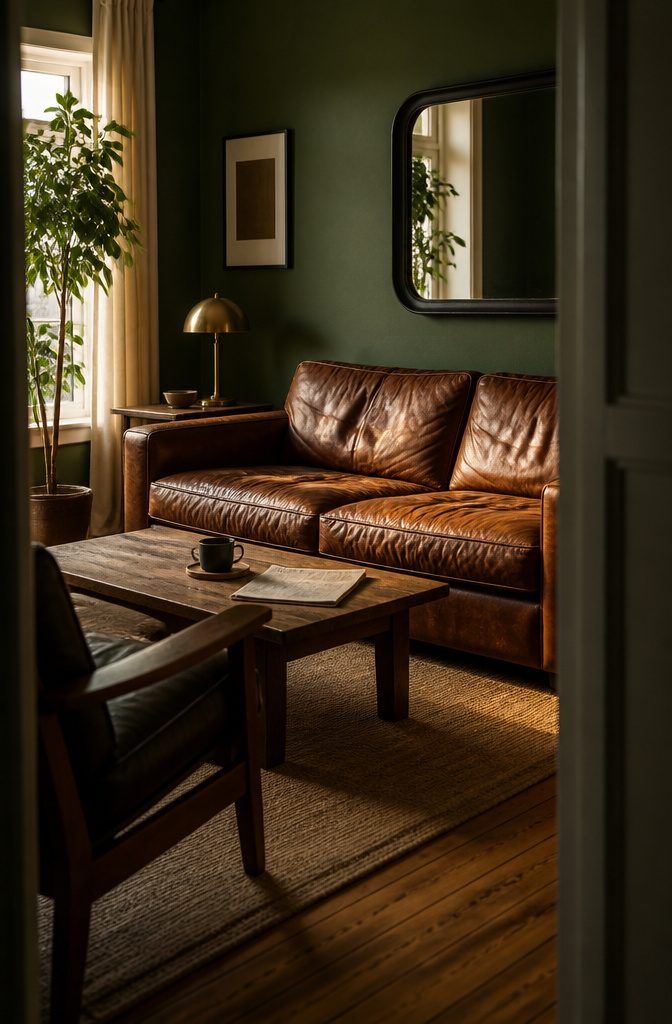
Wood furniture and brown leather ground a green living room in an earthy warmth that feels natural without much effort.
Mossy greens like Sherwin-Williams’ Evergreen Fog sit well against brown leather couches, dark wood armchairs, and wood beam ceilings — the pairing keeps the room from feeling too cool or clinical.
Soft umber brown works alongside green if you want the color below a chair rail or in wallpaper, especially with leaf prints that run green on top and brown below.
Light brown leather armchairs and black-framed mirrors add a modern edge when the walls are green, and owners mention that brown picture frames, wood floors, and polished brass or copper hardware pull the whole scheme together.
The combination balances warm and cool tones in a way that reads as grounded rather than decorated.
9. Pair Green with Gold or Metallic Accents
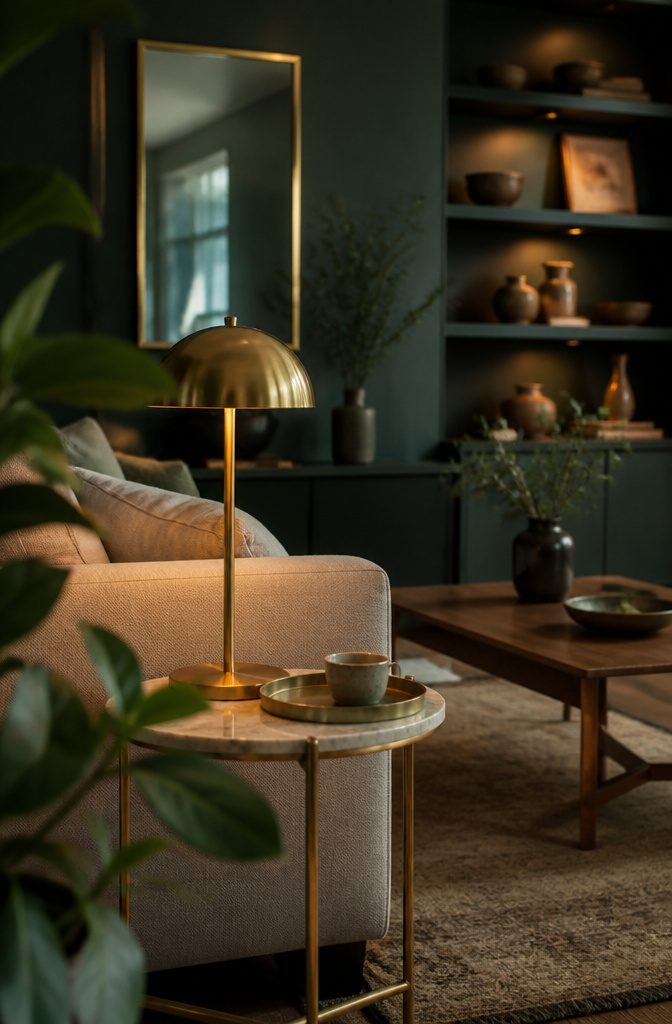
Gold or brass pulls green away from flat and brings in a layer that catches light.
I reach for it when the room already has enough texture but still reads quiet — metallic accents add contrast without competing for attention the way a second color would.
A gold table lamp next to a dark green wall does more work than you’d expect: it lifts the green instead of disappearing into it, and the warmth keeps the space from feeling cold even when the green leans blue.
The pairing works across finishes. Brushed brass on cabinet pulls or picture frames sits comfortably in a casual room; polished gold on a mirror frame or lighting fixture pushes the look toward formal.
Dark greens take metallic better than light ones — something about the depth makes the shine feel intentional rather than busy.
If the green is already light or bright, I’d keep metallics to one or two pieces and let them be small: a tray, a candle holder, the legs on a side table.
10. Pair Green with White or Light Neutrals
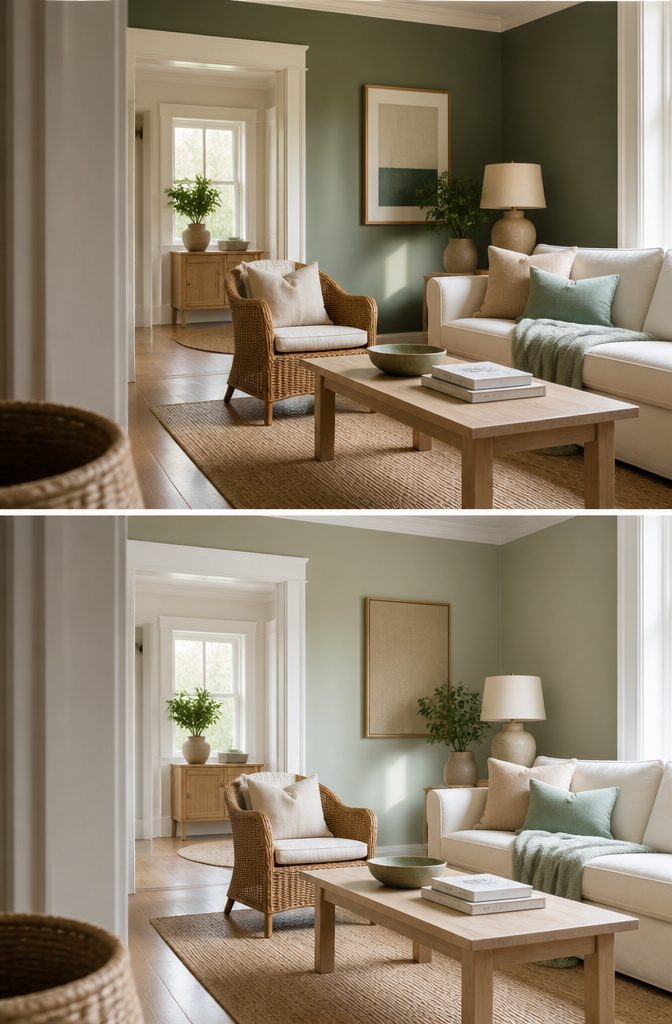
White trim and creamy neutrals stop a green living room from reading too dark or too saturated.
The walls in that Beverly Hills cottage use Pratt & Lambert Accolade in Solitary—a soft, muted green—with Farrow & Ball Estate Emulsion in Clunch on all the trim.
Clunch is a warm neutral, not stark white, so the contrast supports the green instead of fighting it.
Beige and cream work the same way. Pair a cool teal or blue-green with crisp white accents if you want the green to feel sharper and more awake.
Pair a warmer, olive-leaning green with cream or sand tones if you want the room to settle instead of pop.
The wicker furniture in that cottage stays natural rather than painted, which lets the green hold the room without competing for attention.
11. Use Green Stripes
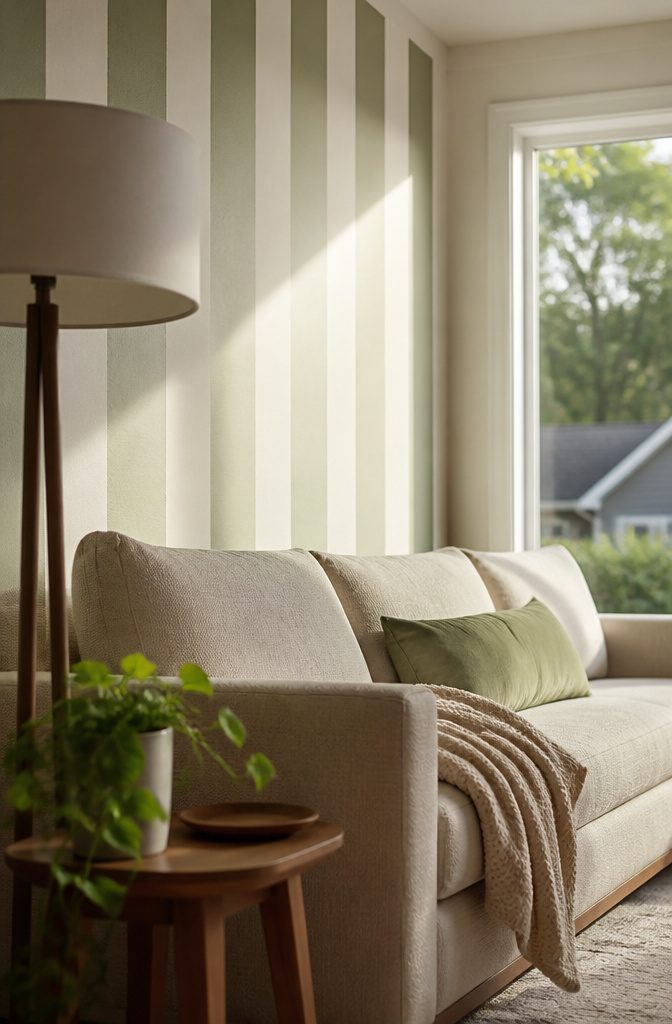
Painted stripes pull the eye up and make the ceiling feel taller — which matters in a standard 8-foot room where a sofa already claims half the wall.
Mask off vertical bands in two widths, paint the narrow ones a crisp hunter or sage, and leave the wide ones white or cream. The contrast does the work; every stripe can be a different width.
Wallpaper handles the pattern for you if taping feels like too many steps. Look for a stripe that alternates a soft green with white or off-white rather than two saturated tones fighting each other.
The green reads as the feature, the lighter stripe keeps it from closing in. One wall is usually enough — wrap all four and the room starts to feel like a tent.
12. Use Green Wall Paneling or Panel Effects
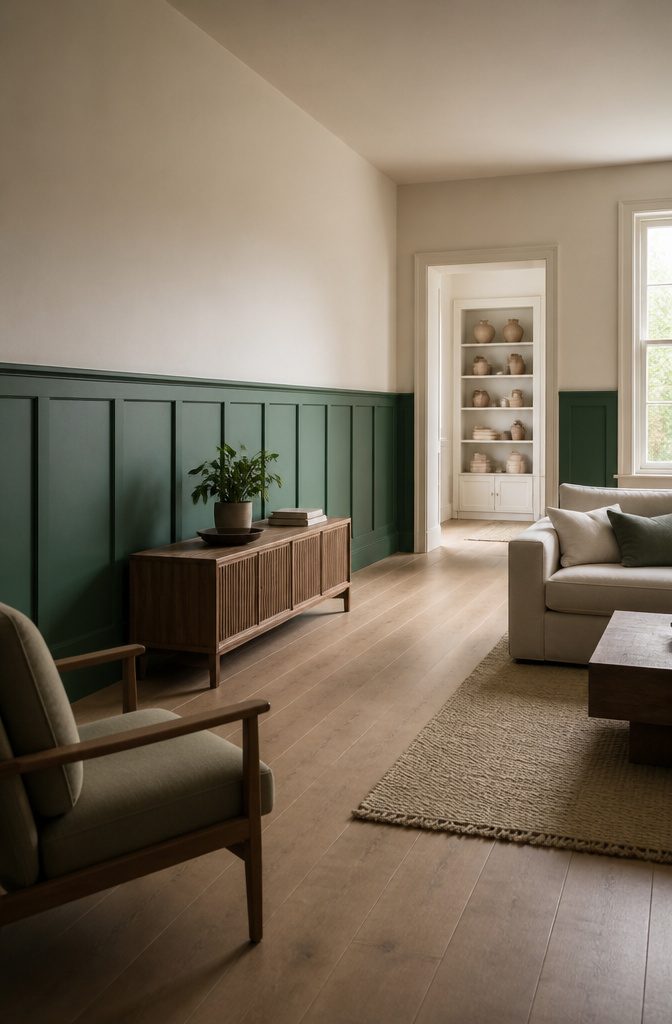
Wood paneling gives a green wall physical depth, and you have three ways in: actual panels, shiplap, or panel-effect wallpaper that mimics the look without the carpentry.
The wallpaper route takes an afternoon and zero cuts; real paneling delivers the texture people want to run their hand along but costs you a weekend and a compound miter saw.
Paint existing wood panels a bright green-blue and leave the upper wall neutral beige — the split keeps the green from closing in while the panels add the dimension flat paint never will.
Or reverse it: keep wood panels natural and run green floor to ceiling everywhere else, breaking the color with the warmth of bare wood.
Extend green to the ceiling when you do that; stopping at the picture rail wastes half the impact.
13. Make the Fireplace or Mantel a Green Focal Point
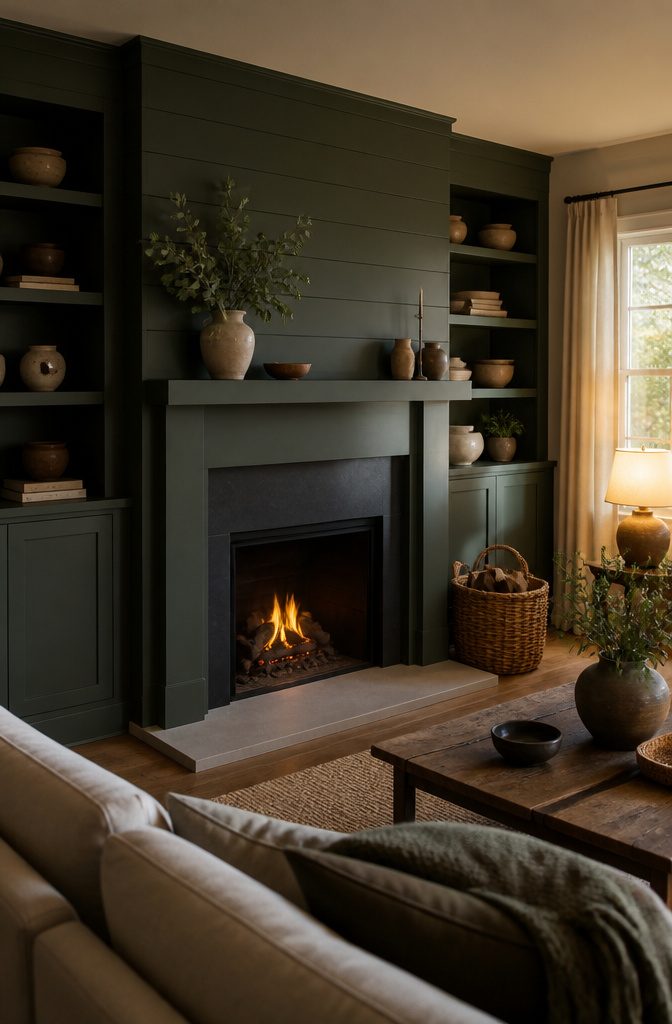
A fireplace already pulls the eye, so painting the mantel surround or the shiplap above it in a deep green puts color exactly where people look first.
Studio Green by Farrow & Ball is the shade one blogger used on her shiplap — dark enough to read moody, light enough that it doesn’t close the room in.
If the fireplace itself is brick, a faux concrete finish smooths the texture before you add painted shiplap in an earthy green; the contrast between the concrete base and the green wood reads cleaner than green over red brick.
Extend the treatment to built-ins flanking the fireplace if you have them.
Painting the shelving the same green ties the whole wall together and lets you layer in natural wood tones and a bit of eucalyptus without the space feeling busy. The green becomes the frame, and everything else sits inside it.
14. Use a Monochrome Green Scheme
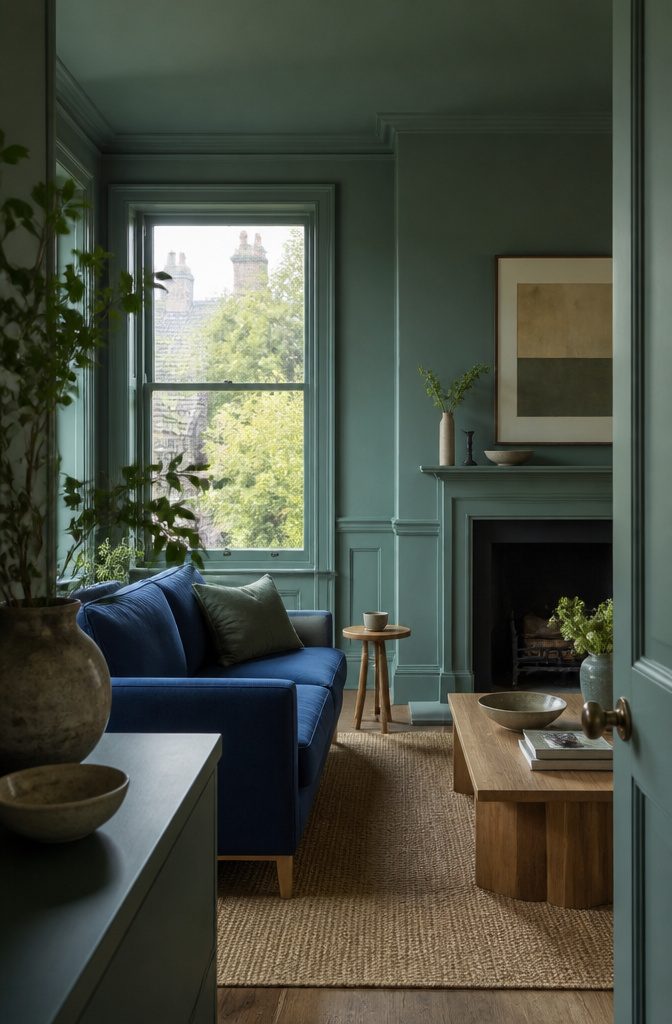
Carrying the same green across walls, trim, and even architectural details like a fireplace creates a monochrome effect that reads as restful rather than flat.
Rookwood Shutter Green by Sherwin-Williams, with its hint of blue, works especially well in small rooms—the continuous color actually makes tight square footage feel bigger instead of closing it in.
Benjamin Moore’s Knoxville Gray takes the monochrome route in a gray-green direction, running from walls onto trim and fireplace brick for a look that feels cohesive without needing a second accent color to make it work.
What works is committing fully. Stopping the green at the baseboard or leaving the trim white breaks the effect and pulls the room back into ordinary contrast.
A blue sofa or gold lamp still has room to land against a monochrome backdrop; the uniformity gives those pieces more weight, not less.
15. Use a Dark, Moody Green Scheme
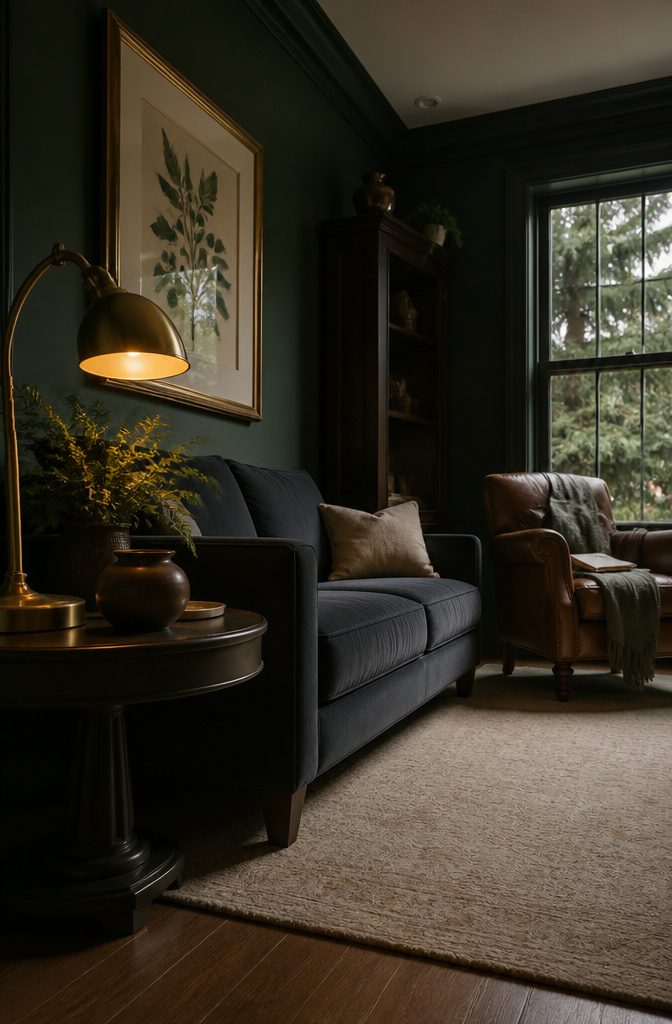
Deep green turns a living room moody and grounded, the kind of space you want to settle into with a book on a winter afternoon.
Farrow & Ball’s Green Smoke No. 47 is the smoky, soft version — it reads warm rather than stark, and it pairs well with black furniture and dark artwork without tipping the room into cave territory.
For something with more blue in it, Rookwood Shutter Green by Sherwin-Williams works in small rooms because the monochrome approach actually pushes the walls back rather than closing them in.
A blue sofa picks up the undertone, and gold lamp bases or picture frames add the contrast the room needs to stay interesting.
Current Mood by Clare Paint leans scholarly — the kind of green you’d find in an old library. It takes vintage furniture easily: a record cabinet, a worn leather chair, anything with some age to it.
Studio Green No. 93 by Farrow & Ball and Essex Green by Benjamin Moore sit in the same range, and Chard by Behr is another option if you’re working with a tighter budget.
The trick with any of these is to layer in enough light-toned or reflective surfaces that the room doesn’t go flat.
Frequently Asked Questions
What color goes with green in a living room?
Blue, white, brown, and gold all pair well with green in a living room.
Blue and green sit on the cool side of the color wheel, so they feel calm together; white or cream keeps the green from overwhelming the space; brown or wood furniture adds earthy warmth; and gold or brass accents catch light and lift the green without competing for attention.
Is green a good color for a living room?
Yes. Green creates a calming, natural feel and works across a range of shades, from soft sage that makes a room feel larger to deep forest green that adds weight and warmth.
It pairs easily with most other colors and can be introduced through paint, furniture, textiles, or plants, so you can control how much green the room gets.
What shade of green is trending right now?
Deep, moody greens like Farrow & Ball’s Green Smoke, Studio Green, and Sherwin-Williams’ Rookwood Shutter Green are trending for 2026.
These shades lean warm or smoky rather than bright, and they pair well with vintage furniture, black accents, and gold or brass details for a grounded, sophisticated look.
What are some ideas for a green living room in 2026?
Paint walls in a soft sage or deep forest green, bring in a green sofa or accent chair, layer green cushions and throws over neutral furniture, or add houseplants and botanical prints.
You can also use green wallpaper on a single feature wall, pair green with blue or gold accents, or paint wood paneling or a fireplace surround in a rich green to create a focal point.