
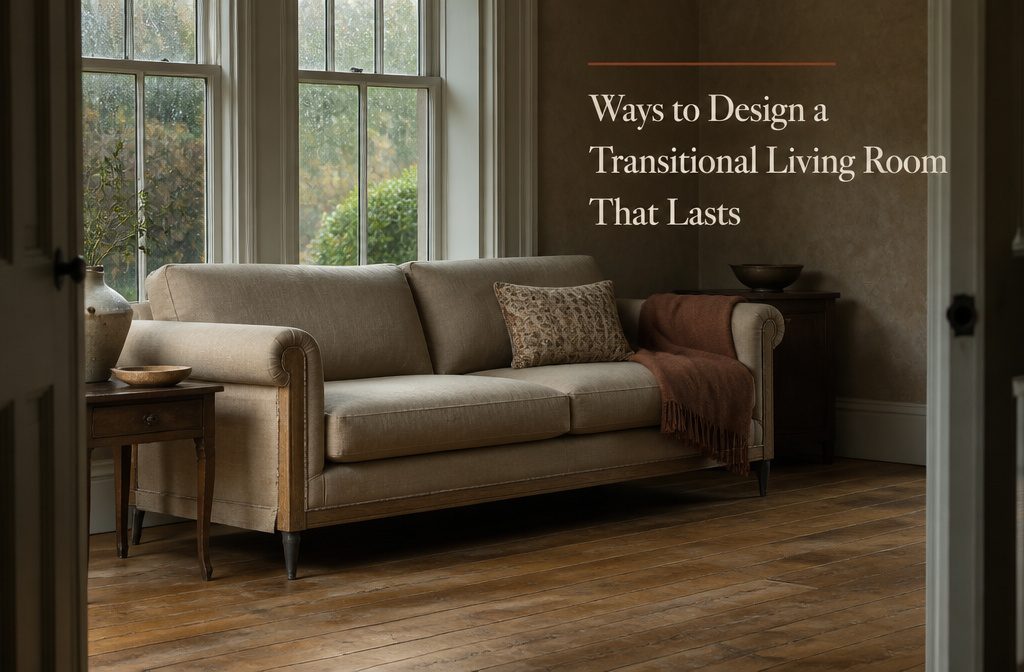
Neutrals on the large pieces let you shift accents and patterns later without replacing furniture.
The catch: those neutrals have to be warm enough that the room doesn’t read cold, which means beige, taupe, and greige over stark gray or white.
Pair a classic sofa shape with a modern finish—linen on a rolled arm, wood against metal legs—and the style holds for a decade without looking dated.
1. Build a Calm, Flexible Color Base
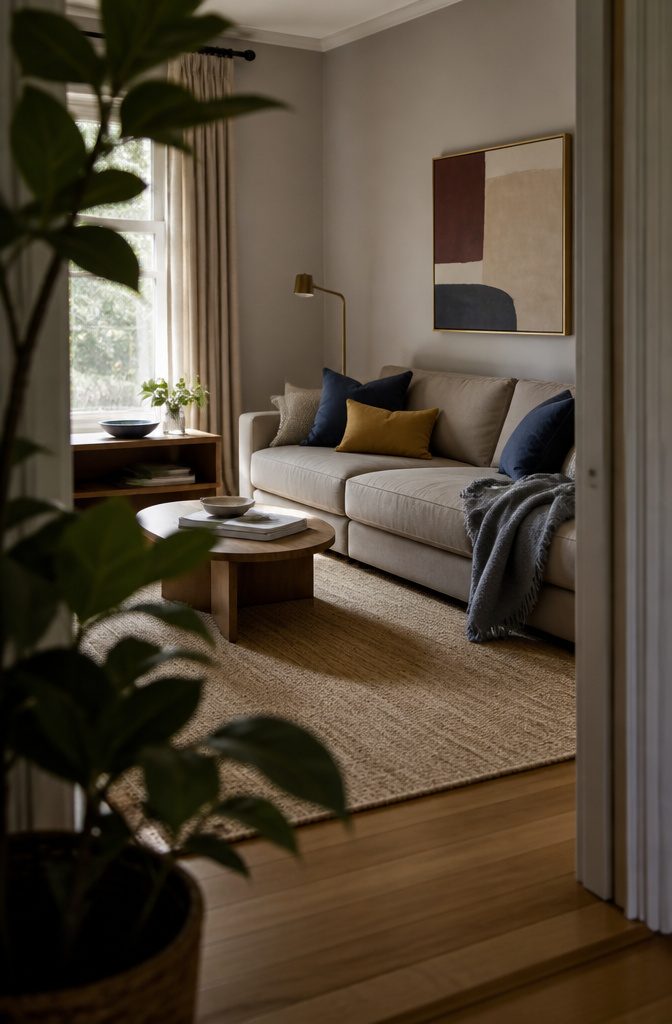
Start with neutrals — beige, gray, taupe, ivory — on walls and large furniture.
They calm the room down and give you room to shift pieces later without repainting or replacing a sofa. A soft blue works the same way if you want one step past beige without committing to pattern.
Once the big pieces are neutral, add color through pillows, rugs, and artwork.
Sapphire blue, mustard yellow, and burgundy all hold up as accents because they read rich rather than trendy, and you can swap them seasonally without the room losing its backbone.
Keep the palette tonal: if the sofa is taupe, let the rug pick up that warmth rather than jumping to a cool gray that fights it.
Recommended Products

Chic Design: Designed with neutral elements and rustic accent inspired fabrics, these Cozoomy decorative pillow covers will add a touch of comfy to your home. Enjoy a cozy home with Cozoomy throw pillow covers!

All-Season Comfort: This 50x60 inch brown throw blanket is perfect for use in spring, summer, fall, and winter. Lightweight but warm, it provides year-round comfort, making it ideal for any season
2. Blend Traditional and Contemporary Furniture
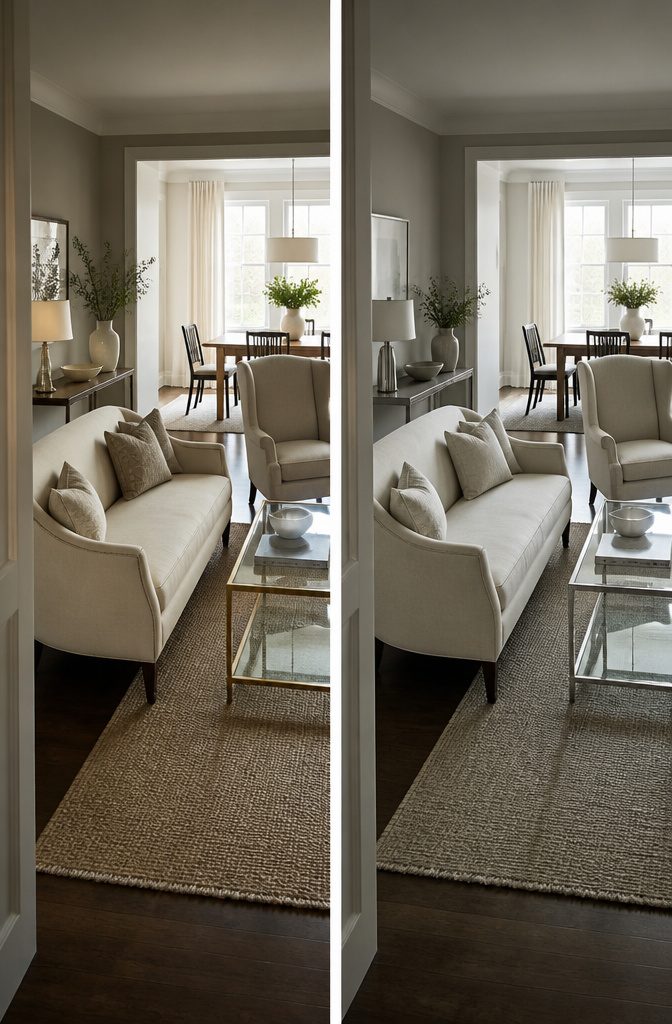
Pair a traditional silhouette with a modern finish to get the balance right.
A classic sofa with clean lines sits comfortably next to a streamlined coffee table, and a wingback chair works when it’s upholstered in something smooth rather than patterned.
The shape carries the weight of the traditional side; the finish keeps it from tipping into formal.
Balance heavier traditional pieces with lighter, more streamlined modern ones so the room doesn’t feel anchored to one era.
A substantial wood dining table holds its own against metal-framed chairs, and a curved settee offsets the straight geometry of a glass console.
Modern Tudor pulls this off by mixing classic forms with contemporary materials—wood against steel, upholstery against metal, curves against straight edges.
Look for furniture in wood, steel, metal, and glass. The material choice matters as much as the shape: a traditional form in glass or brushed metal reads modern, and a contemporary silhouette in wood warms up fast.
Recommended Products
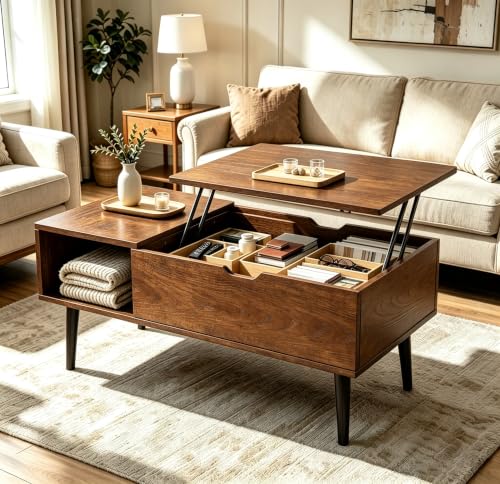
Lift Top Design: The tabletop smoothly lifts to 6.3 inches, transforming this coffee table into a versatile piece for everyday use. Whether you need a temporary dining surface, a convenient computer desk, or a raised workspace, the elevated floating design adapts to your needs while adding modern functionality to your living space

Style Reigns: Discover the MAEZO Collection—a furniture line featuring streamlined designs, tapered legs, and smooth, curved transitions. Each piece adds a touch of mid-century modern flair to your home
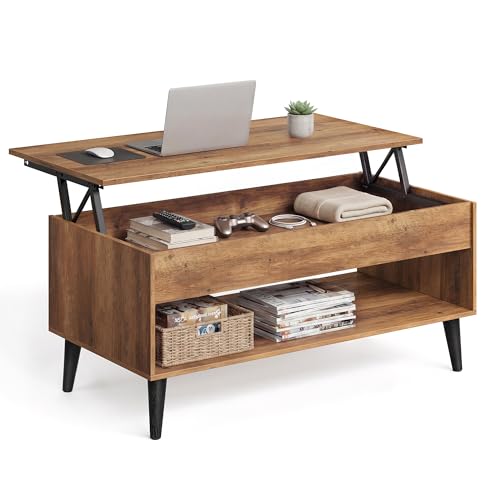
Versatile Mid-Century Charm: The refined finish and crisp lines give this center table a mid‑century modern vibe that fits beautifully in apartments, dorms, and other small spaces
3. Layer Textures and Materials
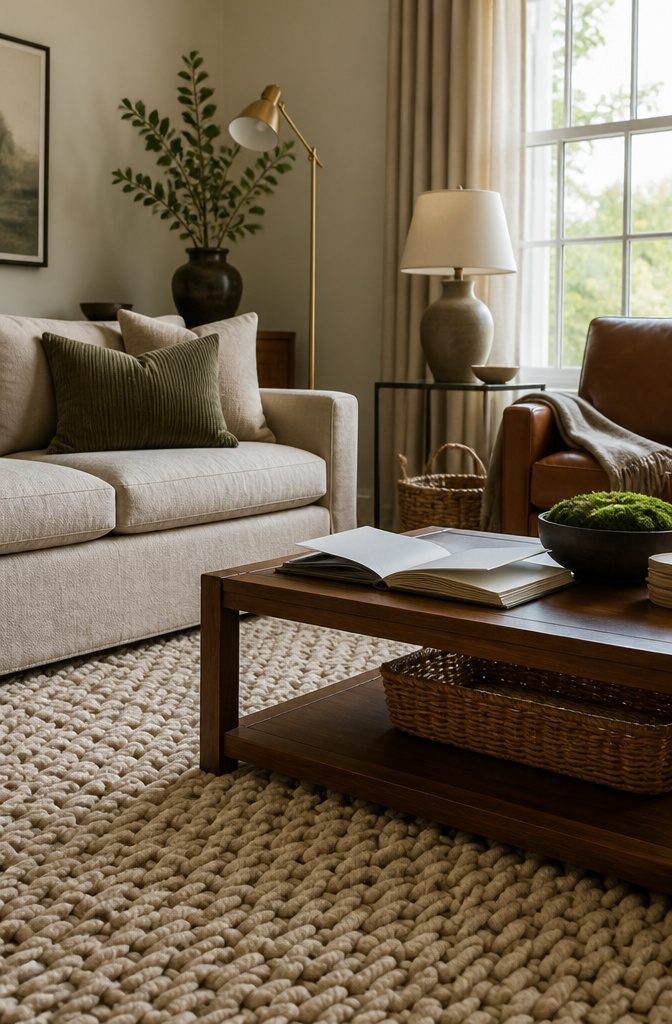
Mixing materials is where transitional style finds its warmth.
Pair an upholstered sofa in a soft neutral fabric like chenille or suede with a wood coffee table and metal lighting, or place a leather armchair next to a glass side table.
The contrast between textures—plush against smooth, woven against polished—gives the room visual weight without adding pattern or color.
A nubby corduroy pillow on linen upholstery, or a thick textured rug under sleek furniture legs, layers in comfort while keeping the look clean.
Rattan and cane bring an organic feel that softens harder materials like dark wood or steel. Throw blankets add dimension when draped over chair arms, and pillows in varied fabrics break up large expanses of solid upholstery.
You want a room that looks composed but still feels lived-in, where every surface offers something different to the hand.
Recommended Products

Flexible Modular Sofa-3 Seats+1 Ottoman: This modular sectional sofa with ottoman set includes three independent seats (each 35"W x 22.5"D x 19"H) and one matching ottoman. When arranged as a 3-seater with ottoman attached to create an L-shape, or turn it into a chaise lounge for relaxing, the overall dimensions are 111.42" wide x 57.4" deep x 33" high. The ottoman can also be used separately as a footrest or extra seat. Detachable armrests with soft pillows allow armless or armed setup. Perfect for living rooms, apartments, or home theaters.

【Comfortable & Supportive Seating】Designed for everyday relaxation, this comfy accent chair features high-resilience foam and a spring-supported seat for a soft, comfortable feel with reliable support. The spacious design gives you room to settle in and relax, whether you’re reading, enjoying a cup of coffee, or unwinding after a long day.

Oversized Comfort For Every Body Type: Measuring 39.37" W × 30.31" D × 34.64" H with a generous 30.7-inch wide seat and a 350 lbs weight capacity, this oversized accent chair is designed to comfortably accommodate users of all body types and sizes. The deep, roomy seating area lets you stretch out cross-legged, curl up with a book, or tuck a throw pillow beside you — no matter how you like to sit, there's plenty of room to settle in, without squeezing or edge-hanging.
4. Keep Decor Intentional and Limited
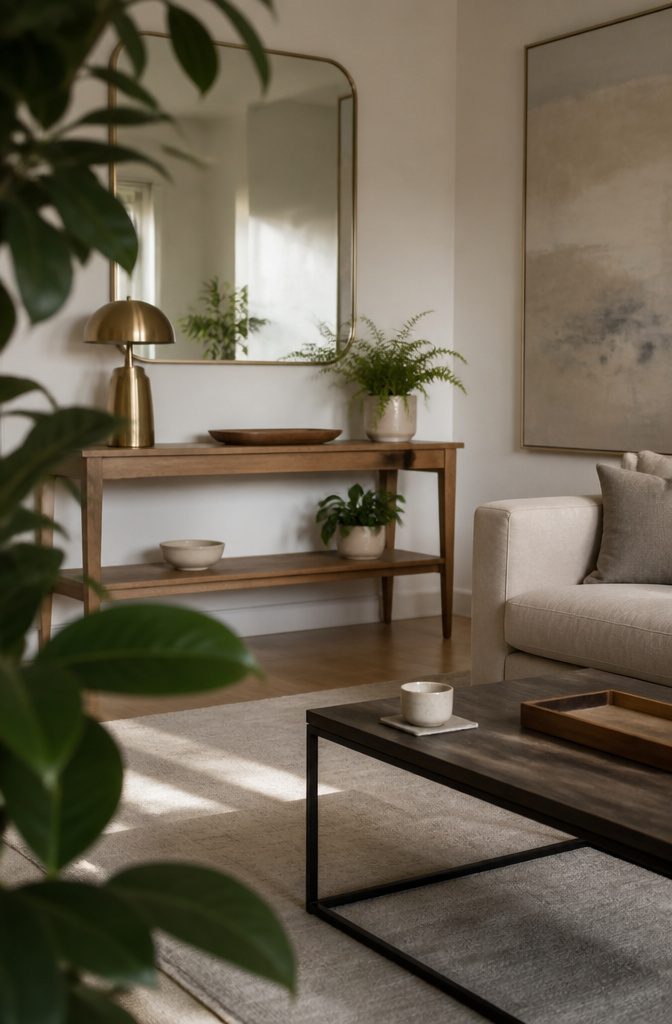
A few large pieces hold a transitional room better than a crowd of small ones.
I’d pick an oversized mirror or a single piece of abstract art over spreading decorative objects across every surface — the clean look is half of what makes the style work, and too many accessories pull it back toward traditional clutter.
Limit yourself to 3 or 4 statement pieces per room rather than filling the shelves.
Metallic table lamps, a wooden tray, and a handful of plants cover most of what the space needs without competing for attention.
Geometric patterns and contemporary lighting work the same way: one fixture does the job, and adding a second rarely improves it. The room should feel chosen, not collected, and that means leaving more empty space than feels comfortable at first.
Recommended Products

Luxurious Velvet Fabric:Crafted from premium velvet,both sides feature a soft, plush texture that feels cloud-like to the touch;this versatile aesthetic adds an elegant look to home decor,complementing both modern minimalist and classic luxury styles

HANDPICKED FABRIC: Made of ultra-soft faux fur, bringing you cozy feeling with soft tactile and a fun, stylish look to a couch, lounge chair, or bed.

QUALITY MATERIAL: The pillow cover is composed of a soft and comfy corduroy which is a kind of polyester fabric, features a cute and elegant boho stripe design. Our pillow covers are of good workmanship, they are tightly sewn without loose threads.
5. Add Modern Accents
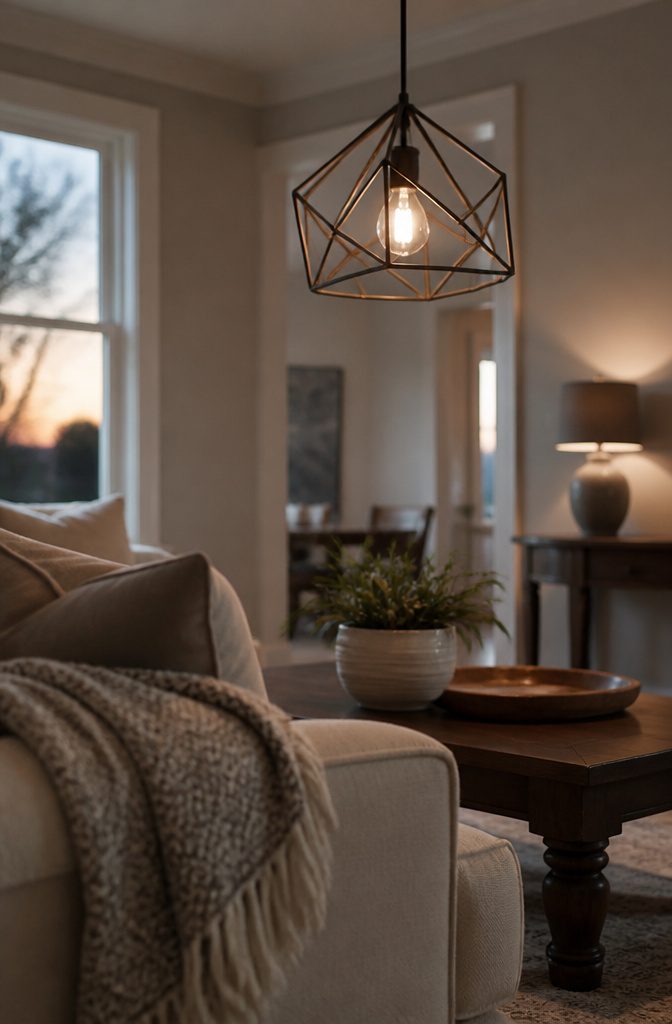
A pendant with a geometric cage or a floor lamp in brushed nickel adds a modern edge without competing with classic upholstery.
Metallic finishes—brass, chrome, or matte black—show up best on lighting and hardware, where a single contemporary fixture can reset the whole room’s tempo.
Keep it to one or two pieces; more than that and the balance tips away from transitional into showroom modern.
Geometric patterns work the same way: a single pillow in a bold print, a rug with clean lines, or art framed in a sleek metal rather than carved wood.
Restraint matters. Modern accents sit against the traditional backdrop, not beside a dozen other modern pieces.
A wooden tray on the coffee table, a metallic table lamp on the console, and a plant in a simple ceramic pot are enough to tie contemporary details into the room without announcing them.
Recommended Products

This Western Cowboy Wall Decor channels retro Western charm with a humorous edge: a distressed matchbox graphic features a stylized cowgirl in a rose-patterned outfit, accented by the bold, sassy text “COOL IT COWBOY”. The matchbox panel rests on a deep burgundy backdrop, and the ornate gold frame amplifies its classic, playful appeal—turning it into a cheeky statement piece for lovers of retro design, Western decor, and humorous wall art.

Long Lasting Metal Wall Art: the leaf metal wall art is made of painted metal material, not easy to break, corrode or fade, no bad smell and reliable to use; The side and edge contact is smooth, without burr or sawdust, bringing you a nice using experience; Note: Products tend to stack together, please take care to unpack all packages when receiving

【Vintage Floral Wall Art】Vintage botanical wall art showcases a dramatic arrangement of blooming peonies, romantic roses, and burgundy flowers set against a dark antique background. Inspired by victorian still life oil paintings, the layered floral composition creates an elegant, moody
6. Arrange a Functional, Comfortable Layout
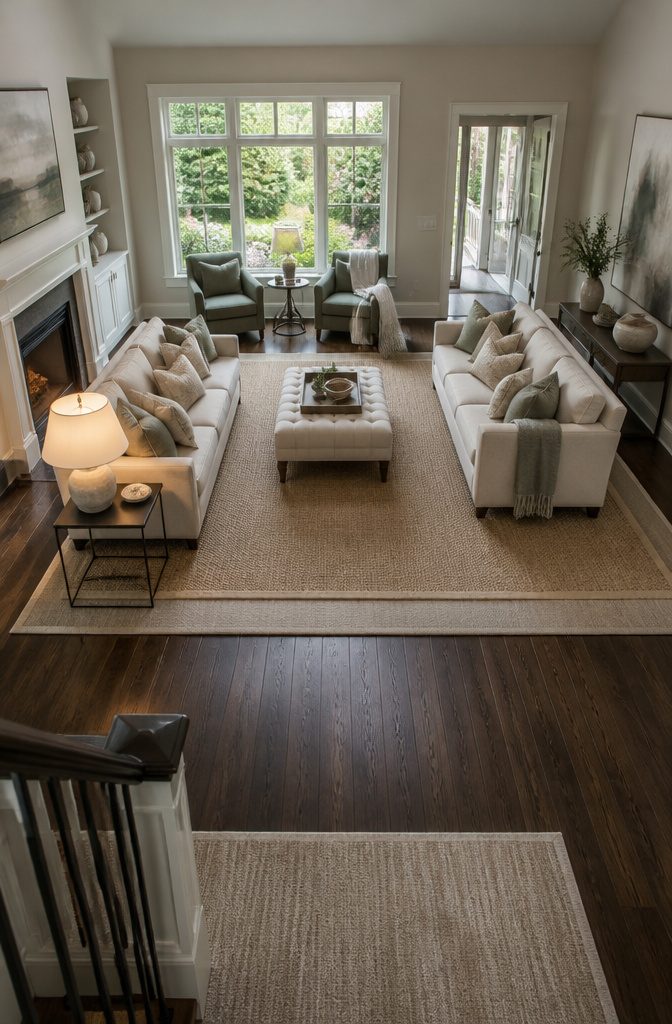
A transitional living room layout starts with the question of what you actually do in the space.
If the room doubles as a place for conversation and for reading, arrange seating so it faces inward toward a central point—a coffee table, a low ottoman, anything that anchors the group without blocking sightlines.
That arrangement pulls people together without forcing them shoulder-to-shoulder.
Leave enough clearance between furniture pieces that someone can move through without turning sideways. I aim for walkways that feel obvious, not paths you have to hunt for.
If the room serves more than one purpose, splitting it into zones makes each one work better: a pair of chairs angled near a window becomes a reading spot, while the sofa and loveseat handle the larger group.
The zoning keeps the room from reading as one undifferentiated blob of seating, and it means you can use part of the room without activating all of it.
7. Prioritize Quality and Timelessness
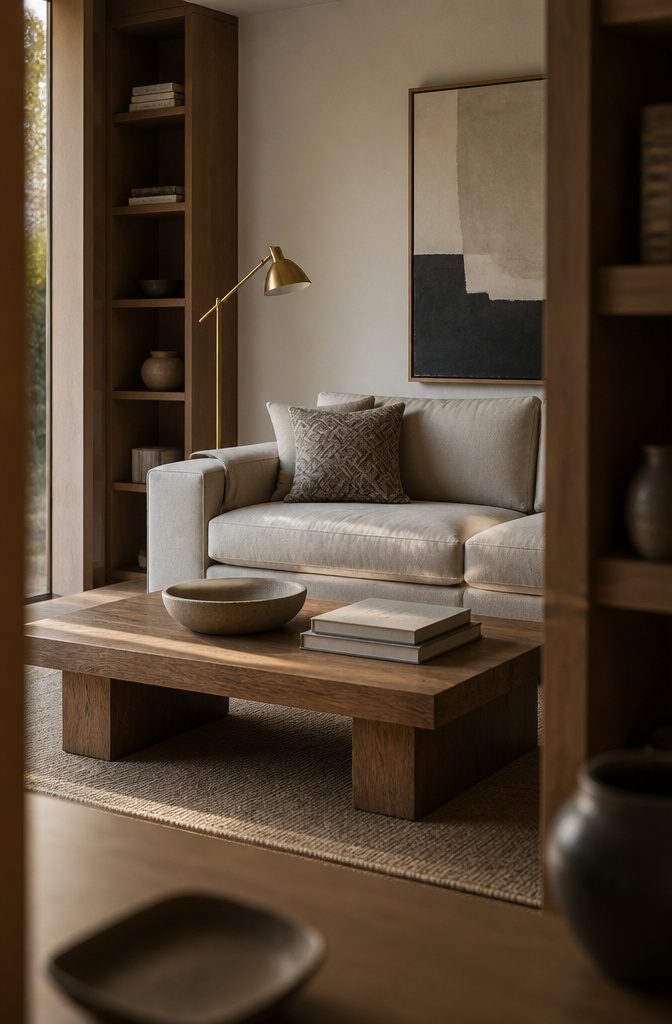
I put the sturdy pieces in first — a well-built sofa, a solid coffee table, wood shelving that will still look right in ten years — and treat them as the bones of the room.
Transitional living rooms work because the foundation stays neutral and classical, which means those pieces can carry you through plenty of smaller changes without looking dated.
The bolder moves live in the accessories: a geometric throw pillow, a brass floor lamp, art that shifts with the season.
Swapping those out costs less and risks less, and the room holds its shape because the furniture underneath was never chasing a trend to begin with.
8. Add Personal Touches
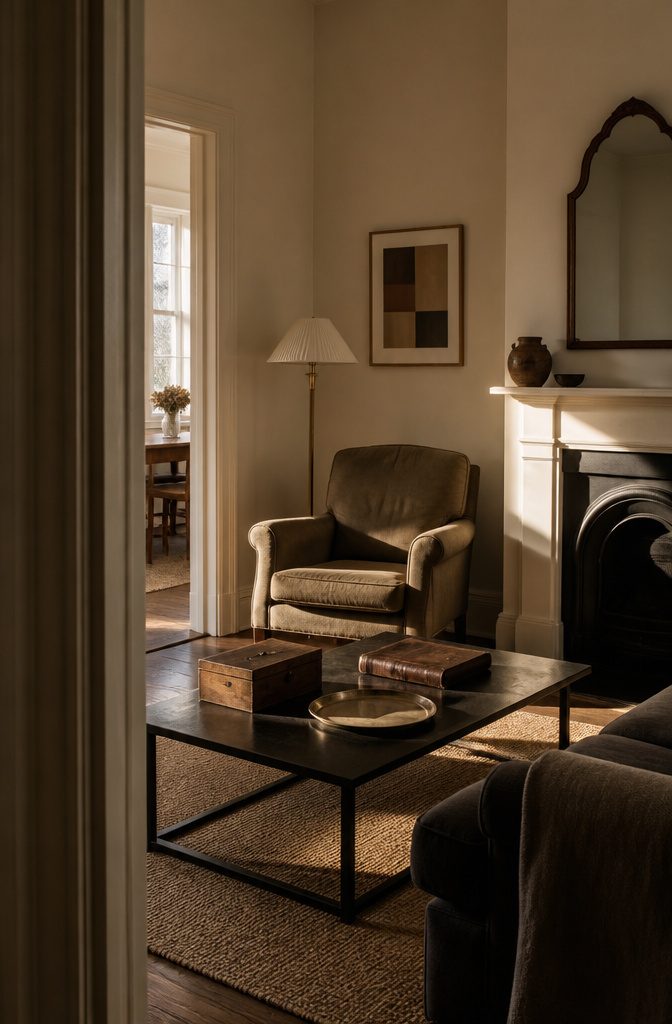
Family photos, heirloom pieces, and souvenirs from trips you’ve taken belong in a transitional living room as long as they match the room’s palette and the balance you’ve already set.
A framed black-and-white family portrait works next to a modern lamp; a vintage wooden box your grandmother passed down sits on a clean-lined coffee table. The personal items should feel like they were chosen, not collected by accident.
Etsy, flea markets, and thrift stores are good places to find vintage objects that fit the transitional framework without looking like obvious antique-store finds.
A mid-century brass tray or a worn leather-bound book adds character without pulling the room toward one style.
Mix those older finds with modern pieces—a sleek floor lamp next to an inherited armchair, a contemporary art print near a vintage mirror.
You want a room that reads as timeless because the old and new sit next to each other on purpose, not because you ran out of wall space.
Recommended Products

Sink-In Comfort Without Losing Support—Designed for true relaxation, this sectional combines a soft, sink-in feel with reliable support underneath. The layered cushioning system gently adapts to your body while maintaining structure — so you can lounge, binge-watch, or nap without feeling stuck or sagging.

Deep Seat Sofa with Armrests: Each Sectional sofa is thoughtfully designed with extra throw pillows and features a generous 25.2-inch seat depth, offering you enhanced comfort and support whether you're sitting, lounging, or taking a nap

Premium Chenille: The floor lounge sofa is swathed in soft chenille fabric featuring a delightful striped texture. Irresistibly comfortable to touch and lay on.
How Transitional Differs From Contemporary
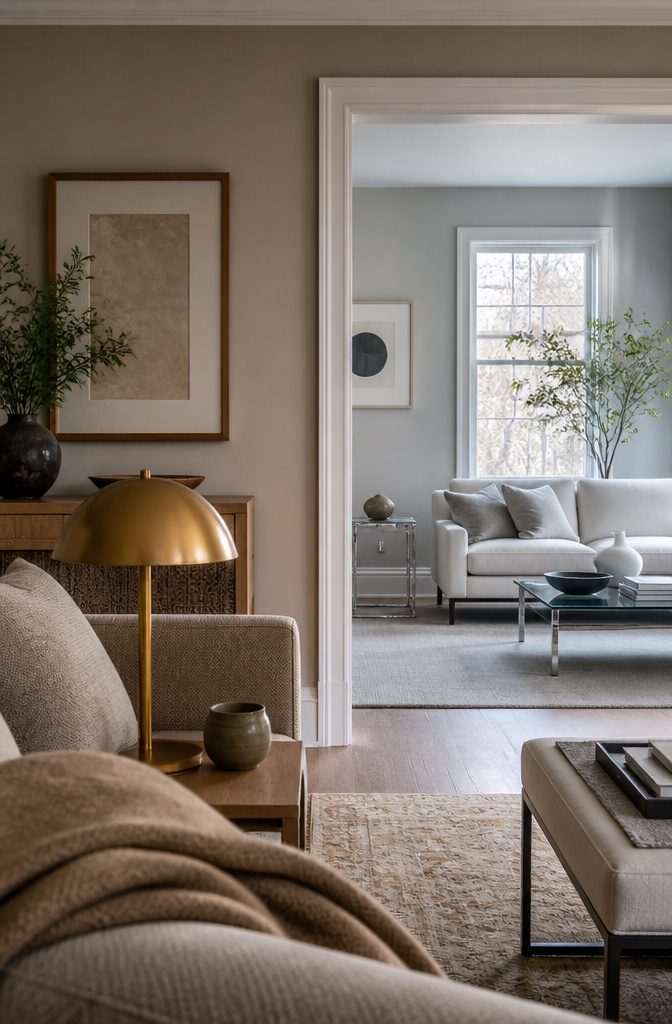
Contemporary design reflects what feels current at any given moment and keeps shifting with popular taste.
Transitional style aims for something that holds up regardless of the decade. The difference shows up in palette and finish: contemporary rooms lean cooler and more minimal, while transitional interiors run warmer, softer, and more layered.
A contemporary space might use polished chrome and a stark gray-and-white scheme; a transitional room is more likely to pull in unlacquered brass, greige walls, and textured neutrals.
Transitional interiors are a bit more warm, layered, and softer than a true contemporary interior.
That layering matters when you want a room that still feels inviting in 10 years. The contemporary look can date itself quickly; transitional design banks on restraint and warmth holding steady.
Recommended Products

[ Specifications ] Measuring 18 x 18 inches, made of 100% polyester. COVERS ONLY, without inserts for filling.

Velvet Fabric: Gold color with throw pillow covers is made of 280gsm thick premium velvet fabric - super soft and comfortable to use, durable long-lasting and fade-resistant shrink-resistant.The square pillow covers paired with gold chic solid color - suitable for spring, summer, autumn, and winter season, is luxury and minimalist - used for couch sofa decoration.

Premium & Soft: Our boho throw pillow cover is crafted from high-quality soft plush faux wool fur face with luxurious natural solid color fluffy velvet backing for extra comfort, skin-friendly, thick, and sturdy.
Start With What You Already Have
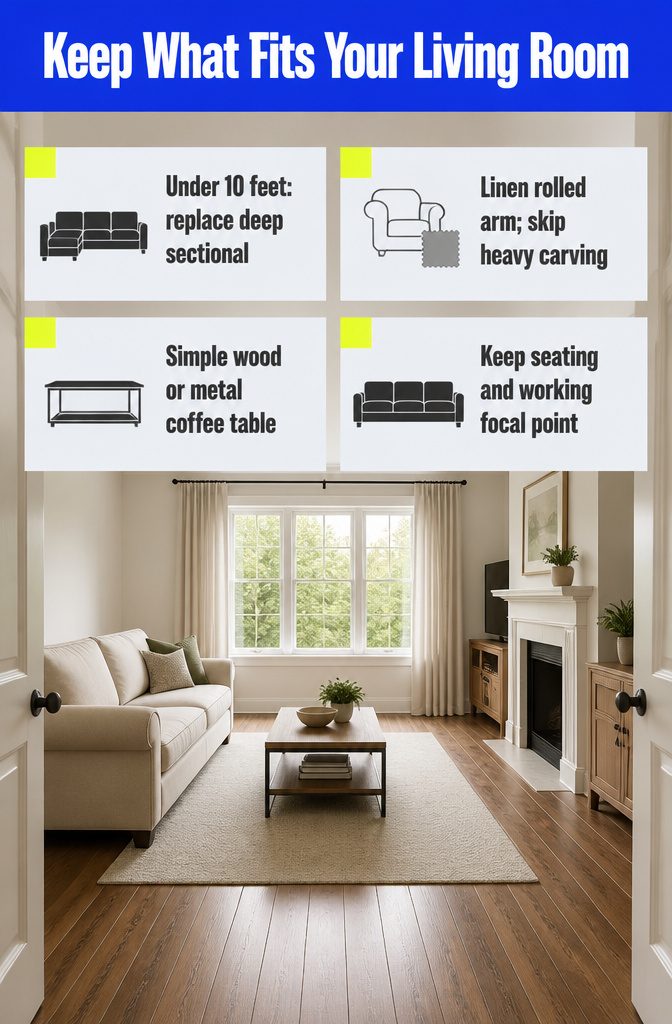
I measure the room before I decide what stays. Tape down the long wall, mark where the couch sits now, and note how much clearance the coffee table leaves for walking through.
If the space is under 10 feet wide, a deep sectional that worked in the last house will crowd this one, and replacing it beats working around it for the next three years.
Pull out anything that reads too ornate or too stark. Transitional style pairs a classic silhouette with a modern finish, so a rolled-arm sofa in linen holds but a heavily carved one fights the room.
Same logic for the coffee table: simple lines in wood or metal fit; anything with too much detail gets sold or moved to another room.
Keep what anchors the layout. Seating comes first, then a focal point that pulls the room together—a fireplace, a large window, or a media console.
If those pieces already support how you actually live in the space, they stay. Build the rest around them.
Recommended Products

Rustic Bathroom Decor: This set of 3 canvas wall art pieces features charming rustic designs with floral and butterfly motifs, perfect for adding a touch of nature to your bathroom.

Vintage Style: This round wall art brings character to your space with vintage-inspired imagery and decorative details, adding a lovely touch to everyday home wall decor.

Framed Burgundy Leopard Wall Art:Our products are available in 8x10,12x16 and 16x24 inch sizes.We include hook and loop tape for easy installation.
Refresh Accents Seasonally
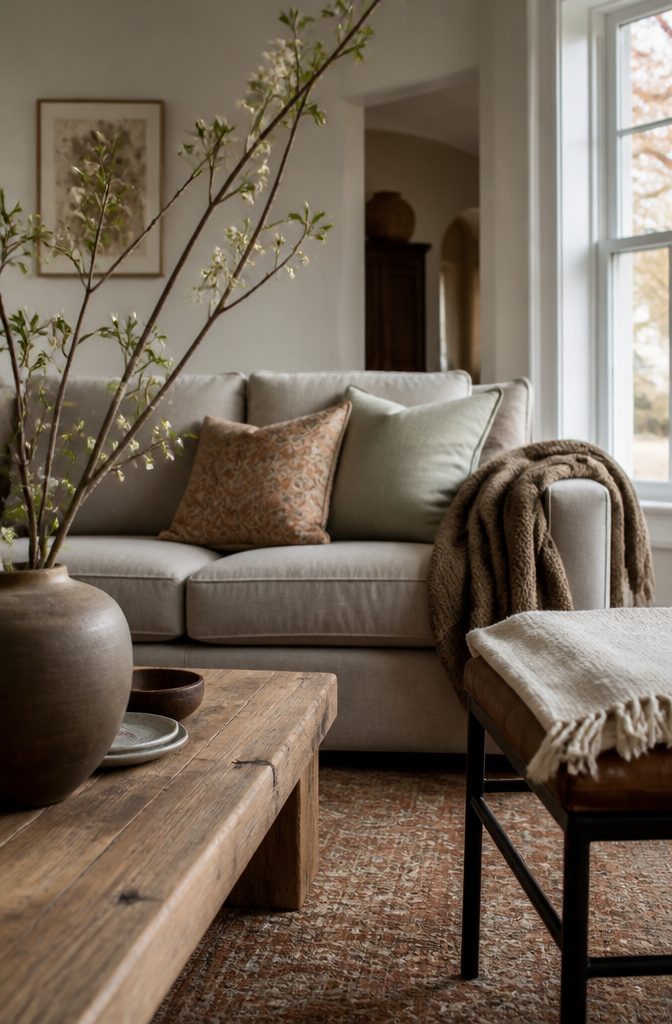
Throw pillows are the fastest way to shift the feeling of a transitional living room without touching the furniture underneath.
Swap them out every few months — lighter fabrics and cooler tones in warm weather, heavier textures and warmer neutrals when it gets cold — and the room reads differently even though nothing structural changed.
Pair solid sofas with patterned pillows in neutral tones so the pattern adds interest without shouting, and layer in a throw blanket or two for texture.
This is where you can take a risk: the pillows tie the room’s neutrals together or pull in a small amount of warmth through pattern, and if it doesn’t work, you’re out an afternoon and the cost of two pillow covers, not a whole sofa.
Frequently Asked Questions
What is a transitional living room?
A transitional living room blends traditional and contemporary design through neutral color palettes, simple furniture lines, and mixed textures.
The style pairs classic silhouettes with modern finishes (like a wingback chair in smooth fabric rather than heavy pattern) to create a space that feels both timeless and current.
It stays warmer and more layered than contemporary design while avoiding the formality of purely traditional rooms.
Can I mix different furniture in a transitional living room?
Yes, mixing furniture styles is central to transitional design. Pair a traditional silhouette with a modern finish (a classic sofa next to a streamlined coffee table, or a substantial wood dining table with metal-framed chairs) to get the balance right.
The shape carries the traditional weight while the finish or material keeps it from tipping into formal.
Can I use bold colors in a transitional living room?
Yes, but keep them as accents over a neutral base. Start with beige, gray, taupe, or ivory on walls and large furniture, then add color through pillows, rugs, and artwork.
Sapphire blue, mustard yellow, and burgundy all work as accents because they read rich rather than trendy, and you can swap them seasonally without losing the room’s foundation.
What are some examples of transitional style home decor?
A neutral linen sofa paired with a wood coffee table and metal lighting, a leather armchair next to a glass side table, or a wingback chair upholstered in smooth fabric rather than pattern.
Metallic table lamps in brass or brushed nickel, geometric throw pillows, and abstract art in sleek frames all add modern accents.
Rattan or cane pieces soften harder materials like dark wood or steel, while textured rugs and varied fabric pillows layer in warmth without adding pattern.