
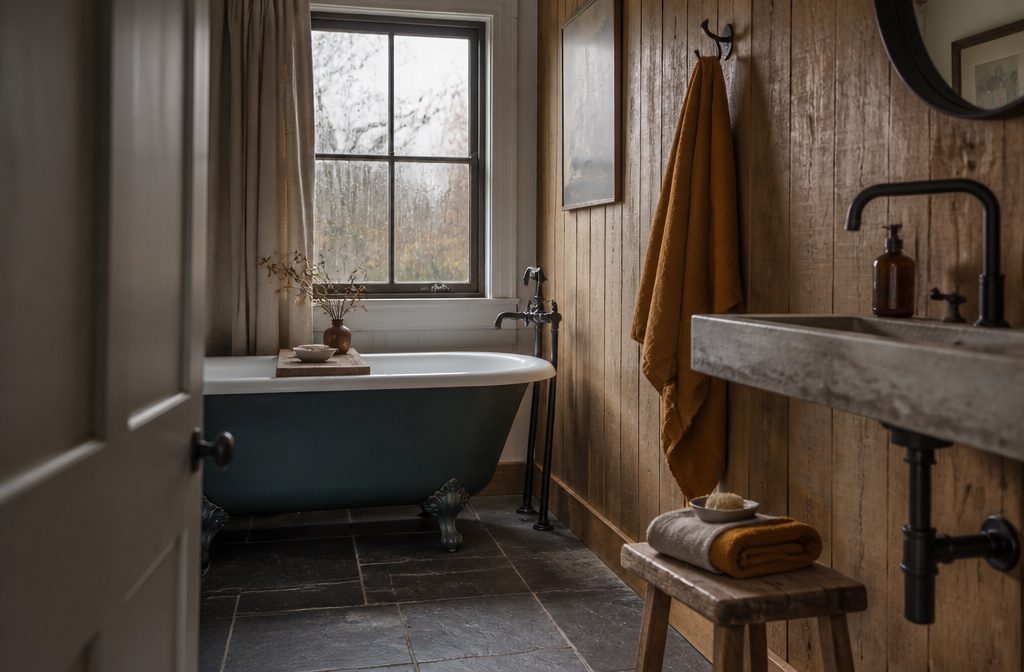
A modern farmhouse bathroom can run soft and rustic or lean industrial and polished, depending on what you pair with what.
The difference comes down to contrast: wood paneling works when black fixtures anchor it, and a clawfoot tub stays farmhouse when the tile around it runs clean and minimal.
Shiplap matters less than the gap between boards—3/32 inches keeps the lines visible without striping a small room into feeling smaller, and eight-inch boards read calmer than narrow planking.
1. Use Wood for Warmth
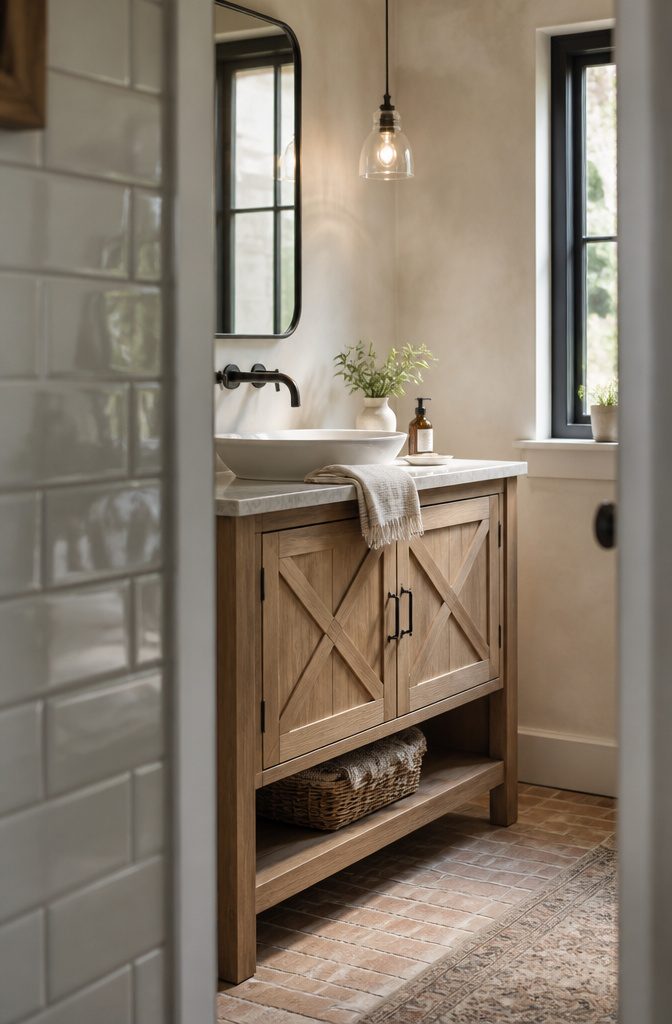
Wood softens a modern farmhouse bathroom the way nothing else can. A natural wood vanity paired with white marble and black fixtures feels organic without tipping into clutter—the grain gives you texture where tile and metal stay smooth.
Reclaimed wood takes it further: a salvaged sink base against limewashed walls reads rustic but stays balanced when the fittings are black and the lines stay clean.
Floating shelves in light-stained wood work above a tub or next to a vanity, holding towels and baskets where you can see them.
The open storage adds warmth and keeps the room from feeling too polished. In a powder room, a wood vanity with an ‘x’ detail or panel doors pulls the farmhouse look without needing shiplap on every surface.
The wood grounds finishes that would otherwise feel cold—subway tile, glass pendants, marble counters—and the contrast is what makes the style work instead of leaning too hard in one direction.
2. Use Shiplap or Other Paneled Walls
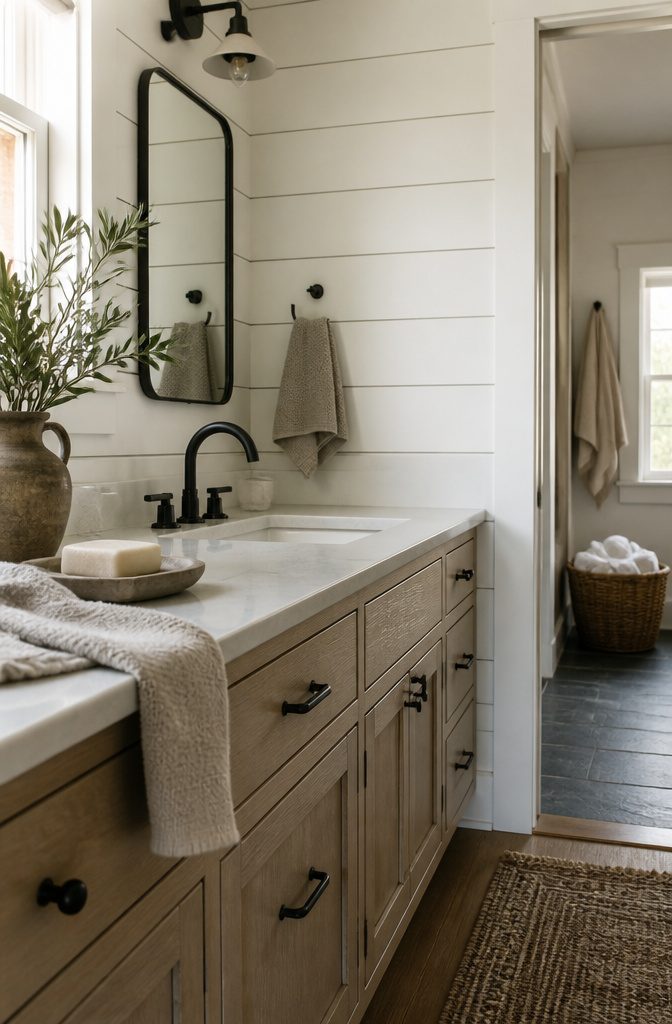
Shiplap brings farmhouse texture without weight.
The horizontal lines run clean, and when you paint them a soft neutral—Benjamin Moore Simply White holds up across multiple bathroom installs—the wall reads modern but still carries enough grain and shadow to feel warm.
Beadboard works the same way vertically, with narrower panels that suit tighter spaces or accent walls behind a vanity.
The gap matters more than you’d expect.
An eighth-inch reveals too much shadow; 3/32 keeps the lines visible without turning the wall busy. Eight-inch boards cover faster and read calmer than narrow planking, which can stripe a small bathroom into feeling even smaller.
Pair paneling with matte black hardware or a slate floor, and the contrast pulls it modern.
Leave it monochrome with pale cabinetry and brass, and it stays soft. Either way, the texture does the work—no need to layer more.
3. Choose Tile for Pattern, Texture, or Contrast
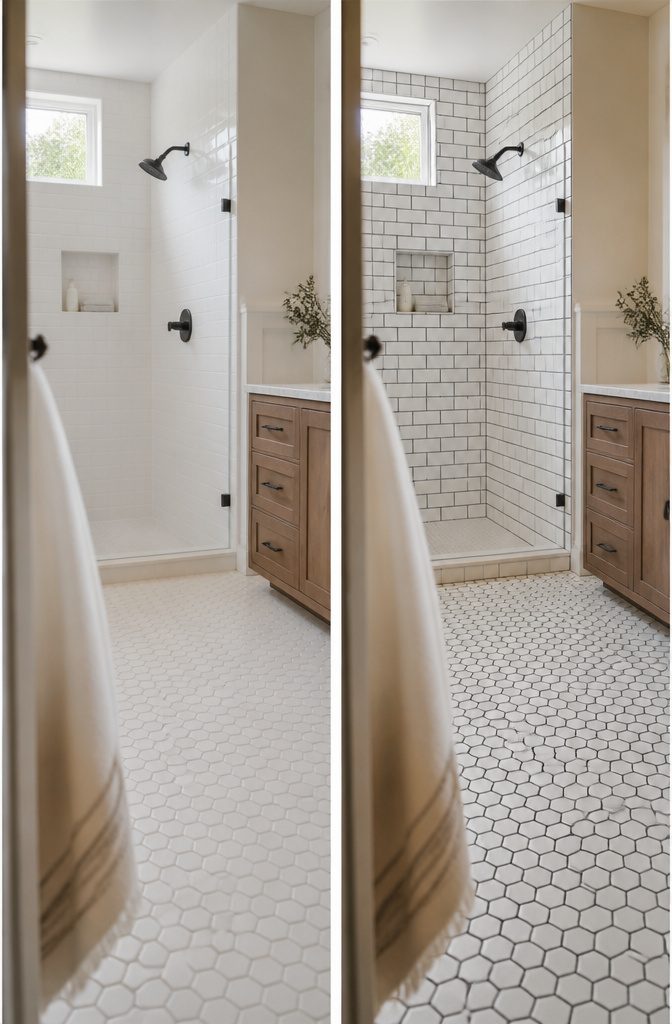
Subway tile in 3×6 inches holds the shower wall while hexagonal drops to the floor in 8×9 or one-inch formats, and that split gives you pattern where your eye lands and simplicity where water runs.
Black cement tile at 4×4 inches works the same way — dark grout on white tile or a black field pulls contrast into a space that might otherwise read too soft.
One owner on Reddit planning a small farmhouse bath considered white hex throughout but stopped short on maintenance; switching to a larger hex or a different field tile for the bathroom floor kept the design cohesive without doubling the grout lines to scrub.
Herringbone and chevron introduce diagonal movement without adding color, which matters when you want the sink or the tub to stay the focus.
Handmade tile with uneven edges softens the grid without going rustic, and textured matte porcelain mimics reclaimed wood if you want warmth underfoot but need something that survives a decade of wet mornings.
Patterned tile belongs in a niche, behind the vanity, or as a runner — anywhere you can see the repeat but not so much of it that the room feels busy.
4. Mix Rustic Materials with Polished or Industrial Details
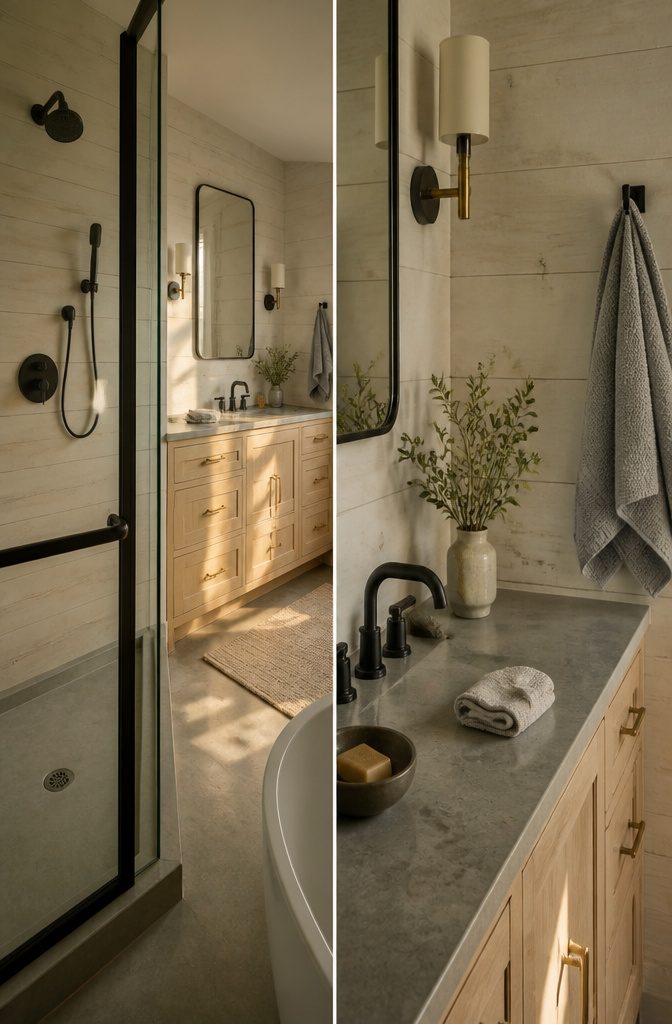
Wood beadboard against matte black fixtures, reclaimed lumber at a copper sink, white oak cabinets with brass pulls — the contrast is what keeps farmhouse from reading as purely rustic.
A limewashed wood wall paired with black fittings stays modern because the metal anchors it.
Gold shower hooks from Newport Brass or pulls from Schoolhouse add warmth without tipping into country kitsch, especially when the tile stays clean-lined and the palette runs neutral.
The trick works with brick and concrete, too. Exposed brick or a poured concrete vanity top needs polished hardware or sleek light fixtures to balance the texture.
I’ve seen solid wood paired with industrial metal finishes hold up better than wood alone, which can feel too casual or dated without a counterweight. The mix gives you both character and restraint, and that balance defines modern farmhouse.
5. Use a Soft Neutral Palette, with Selective Color
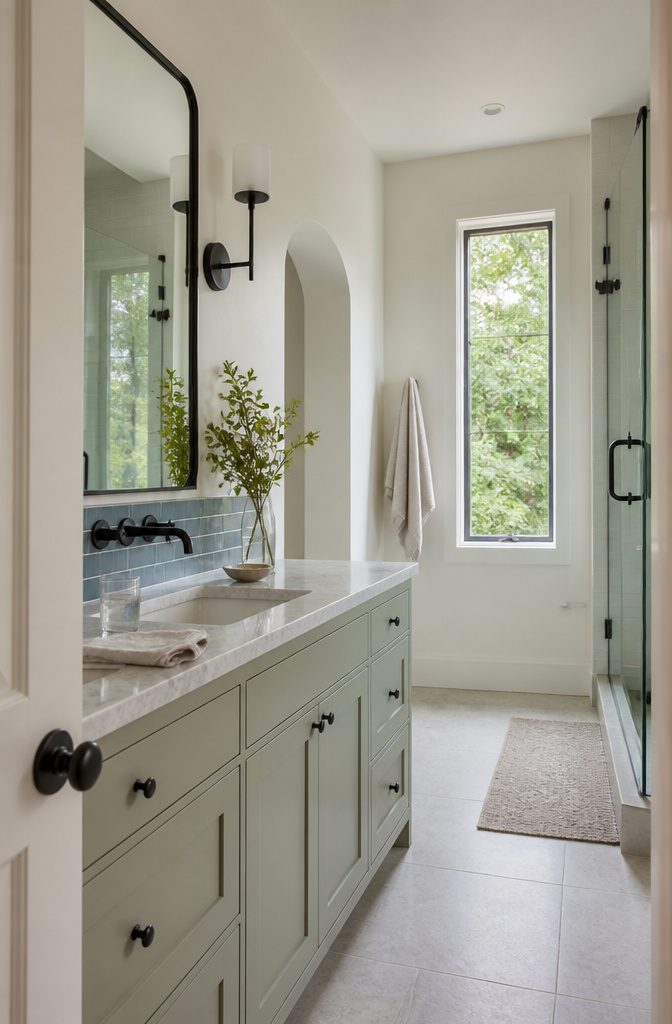
Soft neutrals set the calm foundation most modern farmhouse bathrooms start from. White, warm gray, and light gray work as the base, and they let the room breathe without competing for attention.
The look stays serene, not sterile, when you layer in natural wood, matte black fixtures, or textured tile rather than painting everything the same shade.
Color earns its place when it shows up selectively. Light blue or soft sage green on cabinetry or tile adds personality without overwhelming the space, and both read as relaxed rather than loud.
A pale green on walls and cabinets still feels approachable, and a blue ceramic backsplash against a white vanity brings movement to an otherwise minimal layout.
Creamy taupes and greige tones add depth when straight white feels too flat, and brass or marble introduces a polished contrast that keeps the neutral palette from fading into the background.
6. Add a Freestanding or Clawfoot Tub
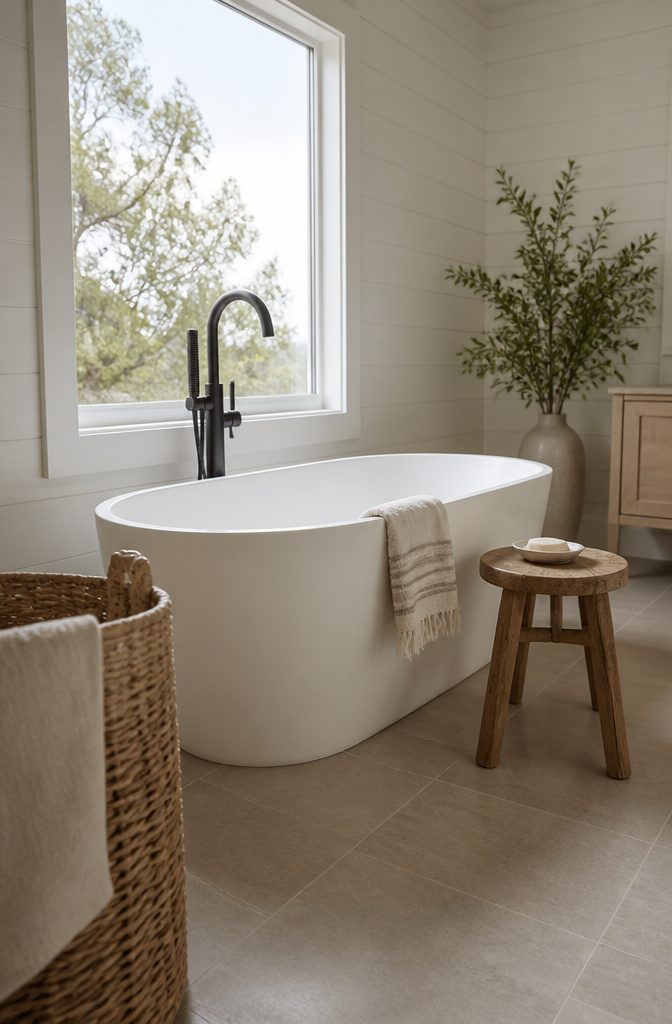
A freestanding tub anchors the whole room.
The shape you choose sets the feel: a clawfoot brings vintage warmth, while a smooth oval or rectangular silhouette reads modern. Either one pulls the eye the moment you step in, which makes it worth centering the layout around.
I like copper or cast iron for a farmhouse leaning—both age well and carry weight that acrylic can’t match. If the room skews modern, a matte white freestanding tub keeps lines clean without losing that sculptural presence.
Place it under a window or against shiplap to frame it, and leave enough clearance on all sides so it feels intentional rather than shoved in. The tub becomes the decision everything else answers to.
7. Use Mirrors to Reflect Light or Add Character
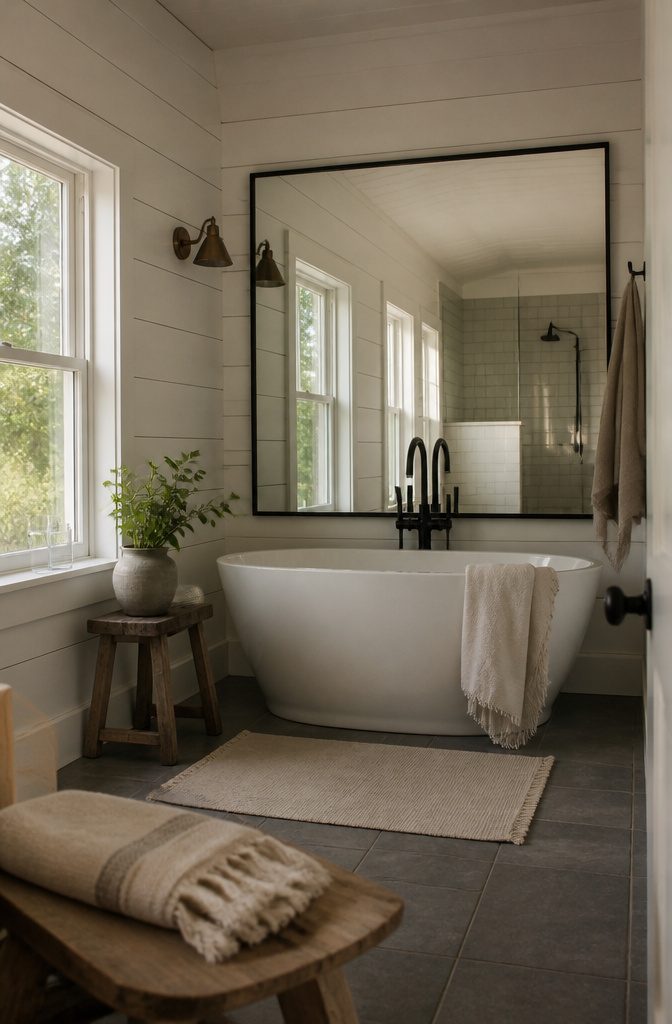
A mirror placed right pulls double duty: it bounces daylight around a small bathroom and makes the space read twice as wide, or it becomes the graphic anchor the room didn’t know it needed.
A large mirror above the tub creates a sense of grandeur without taking up floor space, and lining all four walls turns even a narrow room into a jewel box that feels intentionally compact rather than tight.
Black-framed mirrors bring symmetry and modern structure—especially in pairs flanking a double vanity—while a round mirror with a warm wood frame softens the clean lines of white subway tile and matte black fixtures.
The frame style decides whether the mirror reads vintage or architectural, so I pick based on what the rest of the hardware is doing. Satin-finished accents and streamlined sconces around the mirror keep the look polished without tipping into fussy.
8. Include Open or Decorative Storage
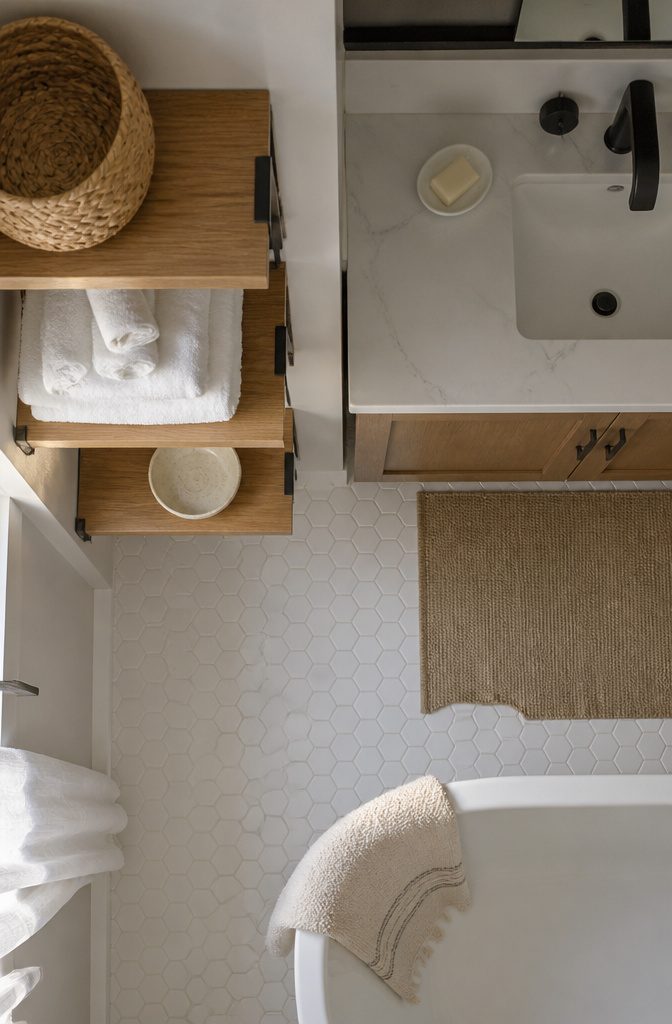
Open shelves and baskets keep what you reach for most within arm’s length while adding the texture a modern farmhouse bathroom needs to feel finished.
Wood shelves work best in natural or lightly stained finishes — the grain shows through, and the warmth balances out white tile or painted walls.
Float them above a tub to hold rolled towels and candles, or run them vertically in a narrow bathroom where floor space runs out fast.
Wicker baskets slot under the vanity or sit on those shelves, corralling toiletries, makeup, and spare rolls without the visual weight of closed cabinets.
Handwoven seagrass or water hyacinth baskets bring in natural material and a bit of handmade irregularity that plays well against clean lines.
Chunky baskets on lower shelves look deliberate, not messy, and they pull double duty as laundry holders in a bathroom tight on square footage.
9. Add Wallpaper or Botanical Patterns
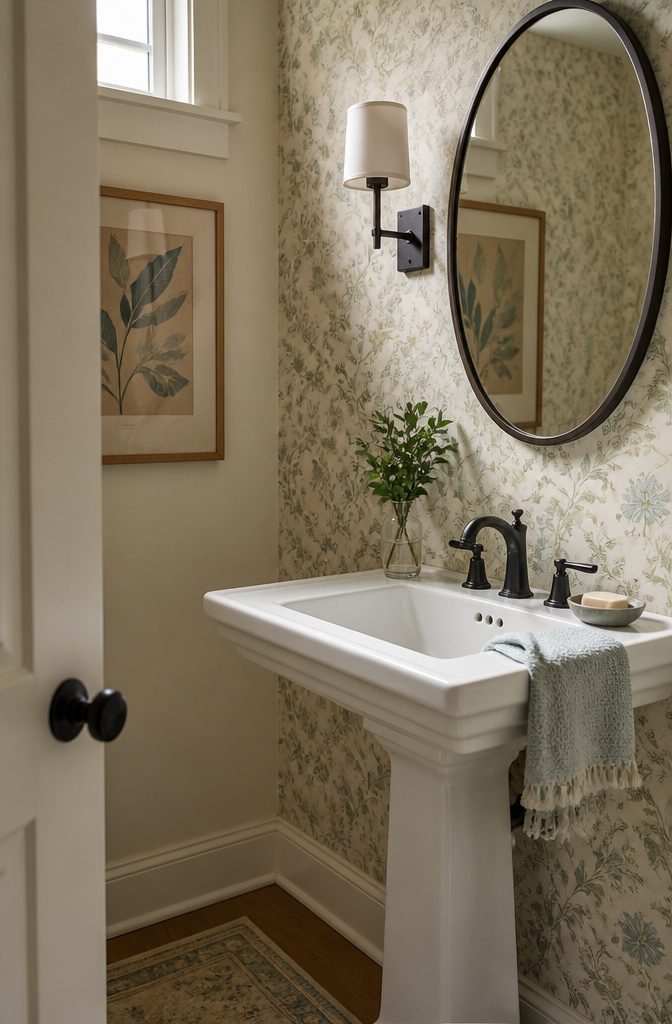
Wallpaper lets you bring pattern into a powder room or onto an accent wall without the cost or permanence of tile.
A botanical print or soft floral motif works especially well behind a vanity or inside a wall niche, where it reads as decoration rather than trying to cover the whole room.
The pattern adds depth without fighting the clean lines elsewhere.
Vintage botanical illustrations and nature-inspired prints bridge rustic warmth and polished surfaces better than most busy patterns, because they stay soft even when the scale is large.
If you’ve inherited a quirky vintage sink or an odd paint color on built-ins, a floral wallpaper in the same family can make the whole setup look intentional instead of like a leftover you couldn’t afford to replace.
Pedestal sinks pair especially well with pattern on the wall, since there’s no vanity cabinet to compete with the print.
10. Bring in Greenery or Flowers
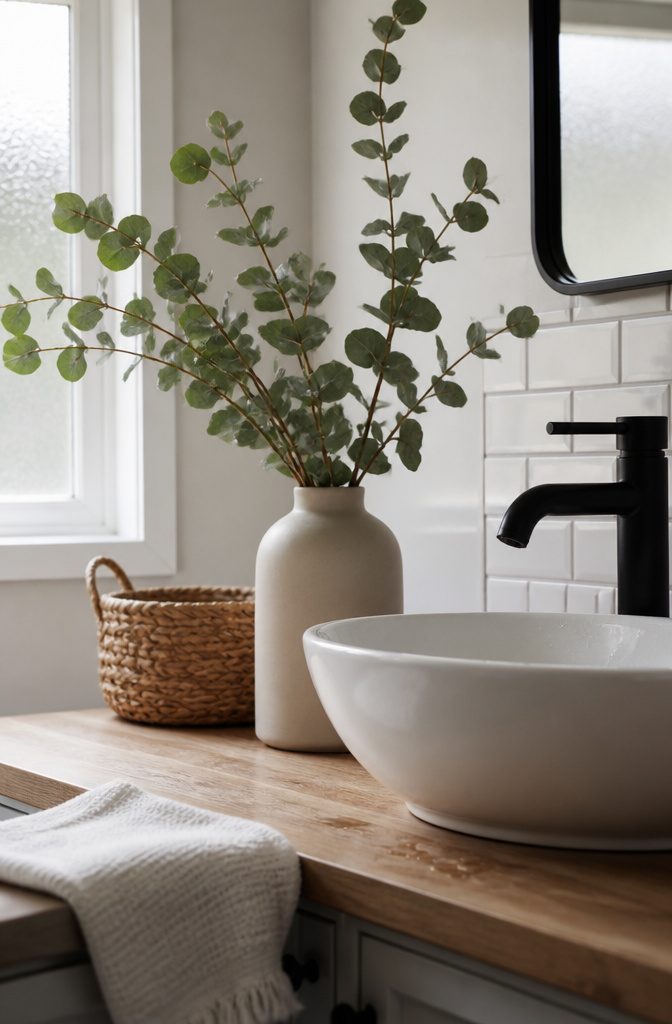
Plants bring instant life to a modern farmhouse bathroom and soften all those hard surfaces—tile, wood, metal—without adding clutter.
A large branch propped in the corner or laid across the tub deck works especially well in rooms with neutral walls, where the green becomes the only real color and pops against white or gray.
Eucalyptus, ferns, and succulents all hold up in bathroom humidity, and you can drop them into ceramic planters or woven baskets made from seagrass for a natural, organic feel.
Fresh flowers on the vanity add warmth without taking up counter space a toothbrush needs.
The greenery also purifies the air and acts as a natural mood booster, which matters more than it sounds when you’re getting ready on a Monday morning.
11. Use Vintage or Repurposed Pieces
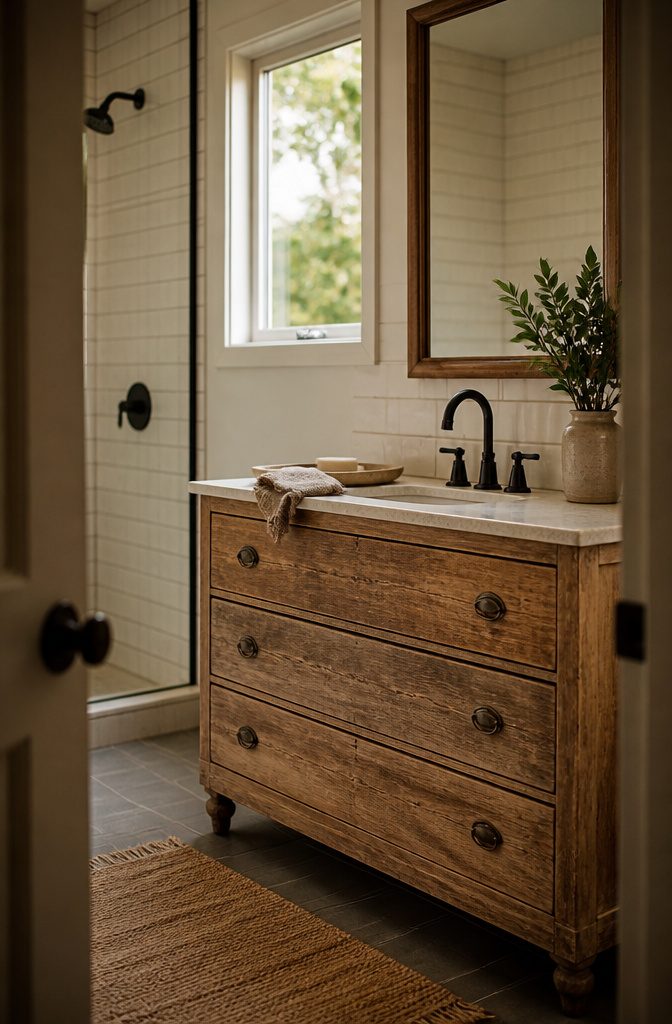
An antique dresser turned vanity or a distressed mirror frame brings the kind of history new pieces can’t fake.
The patina and woodgrain already carry decades of wear, and that texture reads immediately against clean subway tile or a matte black faucet.
Build the room around one piece—let a repurposed dresser anchor the vanity wall—and the rest of the design gets simpler, because the character work is already done.
A vintage tray or small table works the same way in a powder room, especially when the footprint is tight and you need one surface that feels collected rather than bought as a set.
Pair it with a mirror in a frame that shows age, and the combination lands somewhere between farmhouse warmth and the kind of restraint that keeps a small space from tipping into clutter.
The repurposed route also skips the sameness of catalog vanities, which tend to look identical across ten different bathrooms.
12. Choose Distinctive Lighting
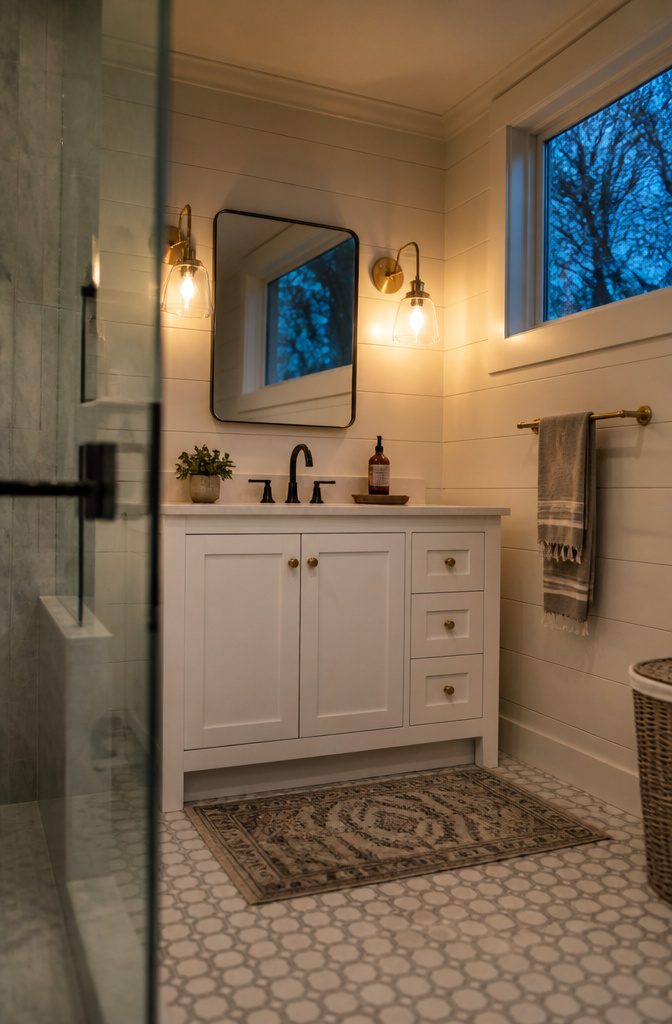
Industrial pendant lights and weathered metal sconces bring the contrast a soft farmhouse bathroom needs without fighting its warmth.
Black metal fixtures stand out against white shiplap and pale tile, while brass and gold finishes add shine that feels formal but never cold—the kind of detail that lifts a rustic space into something polished.
A caged pendant over the vanity or barn-style sconces flanking a mirror give you both task light and vintage character in one move.
The metal matters as much as the shape. Brass pairs well with wood grain and matte black hardware, and gold pulls the room toward elegance without losing the farmhouse base.
Vintage-inspired glass pendants work when the rest of the room leans clean and modern, keeping the look interesting rather than predictable.
Pick one metallic finish and repeat it in the lighting, faucet, and cabinet hardware so the room reads cohesive rather than cluttered.
13. Add Woven Accents or Textiles
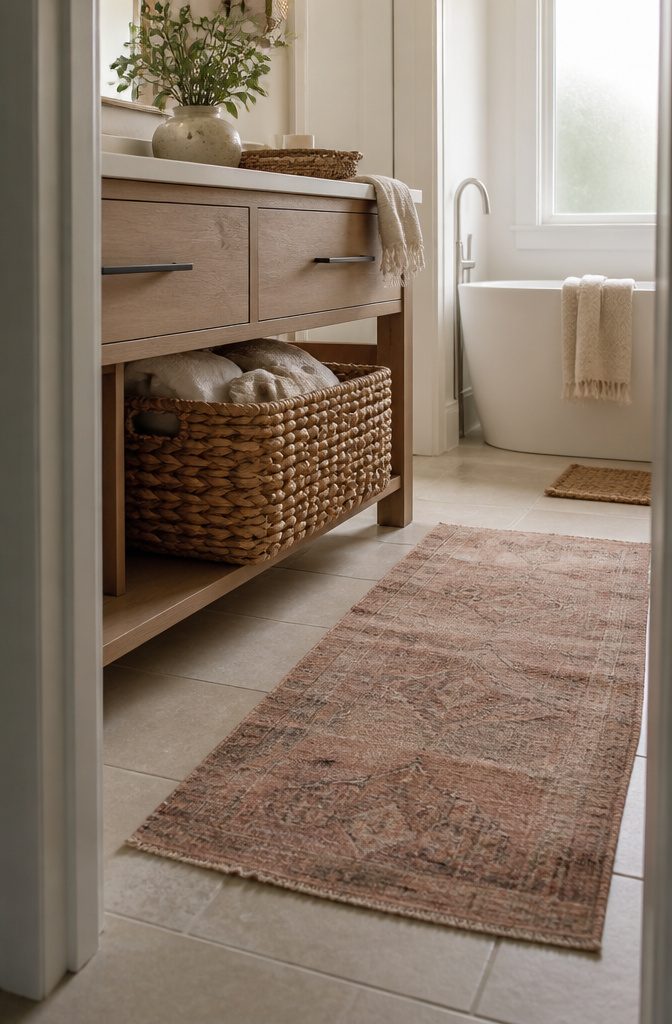
Baskets tucked under a vanity or stacked beside the tub give you a place to stash rolled towels or toiletries while keeping the room from feeling too polished.
Woven storage made from seagrass, rattan, or water hyacinth softens hard tile and countertops without cluttering the look.
A rug grounds the floor the same way. Natural fibers like jute, cotton, or handwoven seagrass bring warmth underfoot, and a vintage rug with faded pattern adds character against crisp white walls or subway tile.
Runner rugs work in narrow layouts; smaller accent rugs sit well near the vanity or tub.
Woven trays on the counter or an open shelf organize candles, soap, and hand towels while adding texture to sleek surfaces.
Curtains in gingham or a simple linen weave soften the harder materials around the tub and tie the room’s colors together without introducing another pattern that competes.
14. Make a Small Room Feel Brighter or Larger
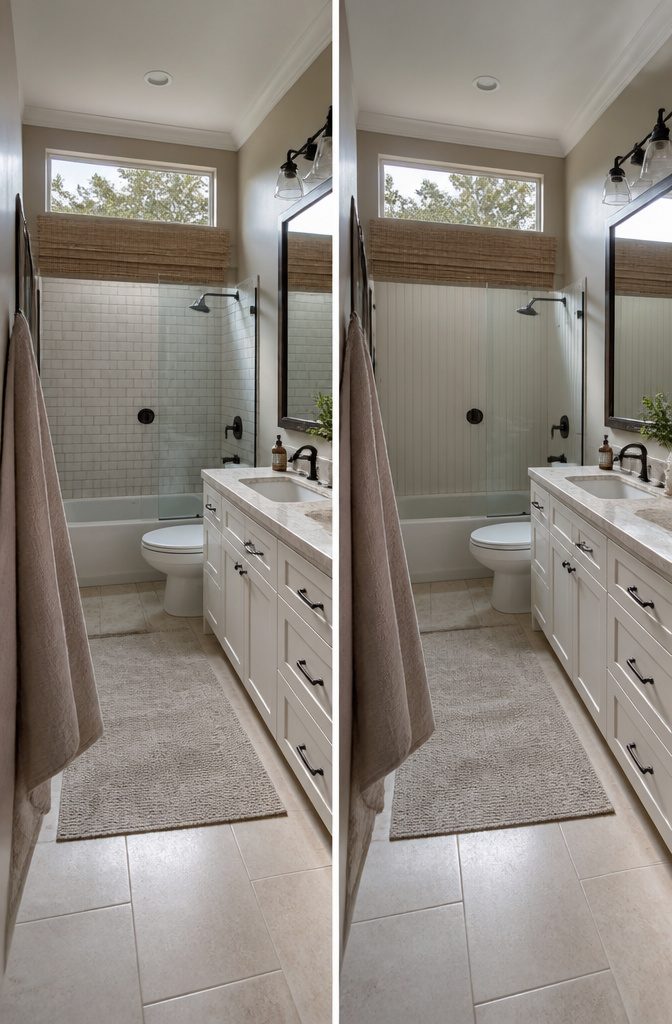
Light colors open up a compact bathroom faster than most other moves. White or warm taupe walls bounce what daylight you have instead of absorbing it, and the room reads larger before you add a single fixture.
A large window is the simplest way to flood the space with natural light—a skylight or transom works just as well in a bathroom where wall space is tight.
Where privacy matters, sheer linen curtains or woven shades let the brightness through without giving neighbors a show.
A big mirror above the tub or vanity doubles the light and stretches the sight line, making even a narrow bathroom feel less cramped.
Pair that with satin or matte finishes on hardware rather than high gloss, and the reflection stays soft instead of glaring.
The muted palette keeps the visual weight low, so the eye travels farther and the space feels calm rather than closed in.
15. Use a Sink Skirt or Other Personal Accent
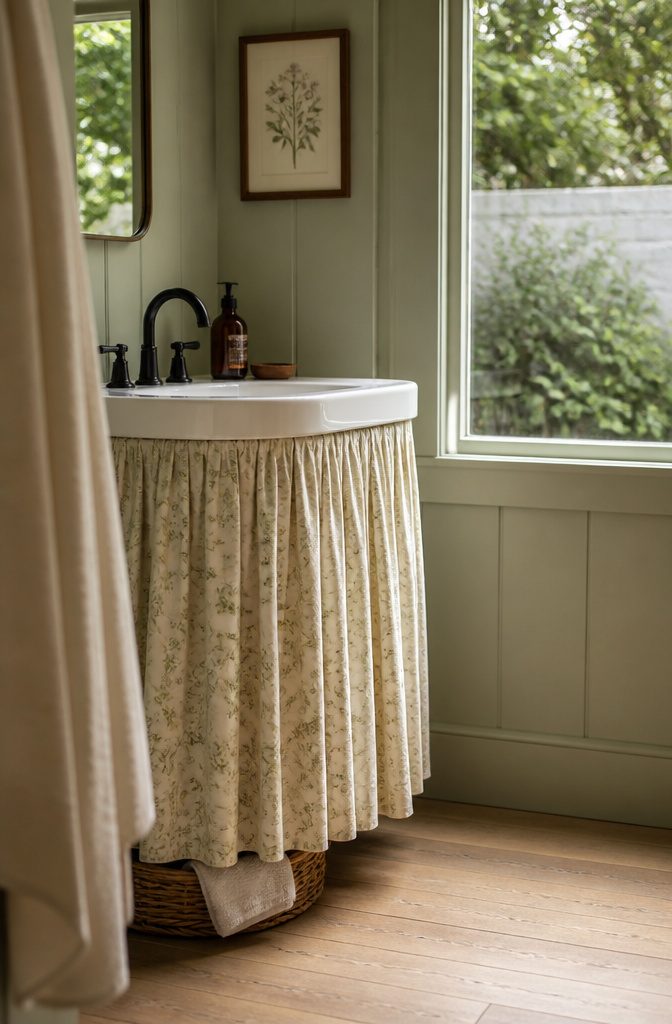
A skirted sink brings fabric into the room — pattern, color, and a softer line than you get from plumbing and cabinetry.
The pleated fabric wraps the base of a pedestal or wall-mount sink, hiding pipes and giving you a place to tuck extra towels or supplies.
In a two-tone powder room, a pleated sink skirt in a patterned fabric keeps the look grounded in farmhouse tradition while clean wall paneling and a fitted mirror handle the modern side.
Floral fabric works well against painted walls; one bathroom pairs a floral skirted vanity with green walls for a spring morning feeling, and because the sink sits under a wide window, small mirrors on the wall and shelf replace a single large one.
The skirt adds personality without construction, and you can swap it seasonally if the mood changes.
Frequently Asked Questions
What does a modern farmhouse bathroom look like?
A modern farmhouse bathroom pairs rustic materials like wood and shiplap with clean-lined fixtures in matte black or brass.
The palette runs soft and neutral—whites, warm grays, light blues or greens—while natural textures keep the space from feeling too polished. Vintage pieces, freestanding tubs, and open storage add character without clutter.
What colors are good for a modern farmhouse bathroom?
White, warm gray, and light gray work as the base, with light blue or soft sage green added selectively on cabinetry or tile.
Creamy taupes and greige tones bring depth where straight white feels too flat. Natural wood, brass, and marble introduce contrast that keeps the neutral palette from fading.
How do I make my bathroom look farmhouse?
Start with wood—a natural vanity or floating shelves—and add shiplap or beadboard for texture.
Pair those with matte black or aged brass fixtures, then layer in open storage like wicker baskets and a large mirror with a warm frame. A freestanding tub or vintage piece grounds the look without needing every surface covered.
Can you mix modern and farmhouse in a bathroom?
Yes. The contrast is what makes the style work: pair reclaimed wood or shiplap with sleek black fixtures, or set a rustic vanity against polished marble and clean subway tile.
Brass or copper hardware adds warmth while keeping lines sharp, and a soft neutral palette lets both elements coexist without competing.
Is modern farmhouse still in style in 2026?
Yes. The style remains current because it balances comfort with restraint, using natural materials and neutral palettes that feel calm rather than trendy.
Clean lines and polished details keep it from reading as purely rustic, and the warmth it brings suits bathrooms that need to feel serene without sacrificing character.