
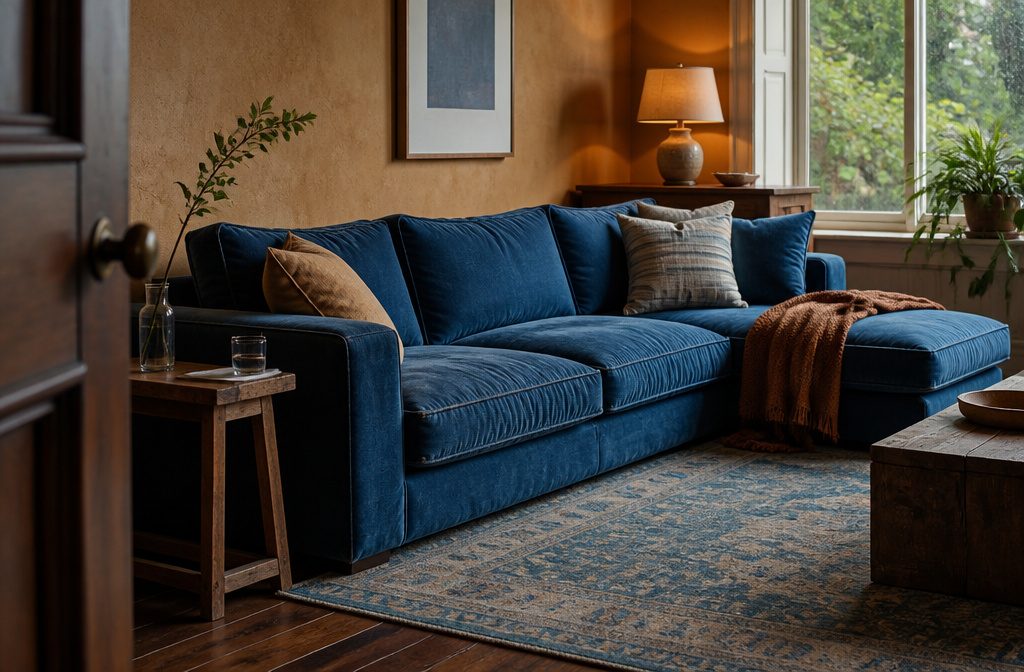
A blue couch can work as a quiet neutral or the room’s main event, depending on the shade and what you put around it.
Navy sits close enough to gray that it anchors a room without shouting, while brighter blues need either bold accents or soft neutrals to keep the balance right.
Velvet shows wear faster than denim, and that matters more on a sectional than a showpiece sofa.
1. Use the Blue Sofa as a Neutral or Focal Point
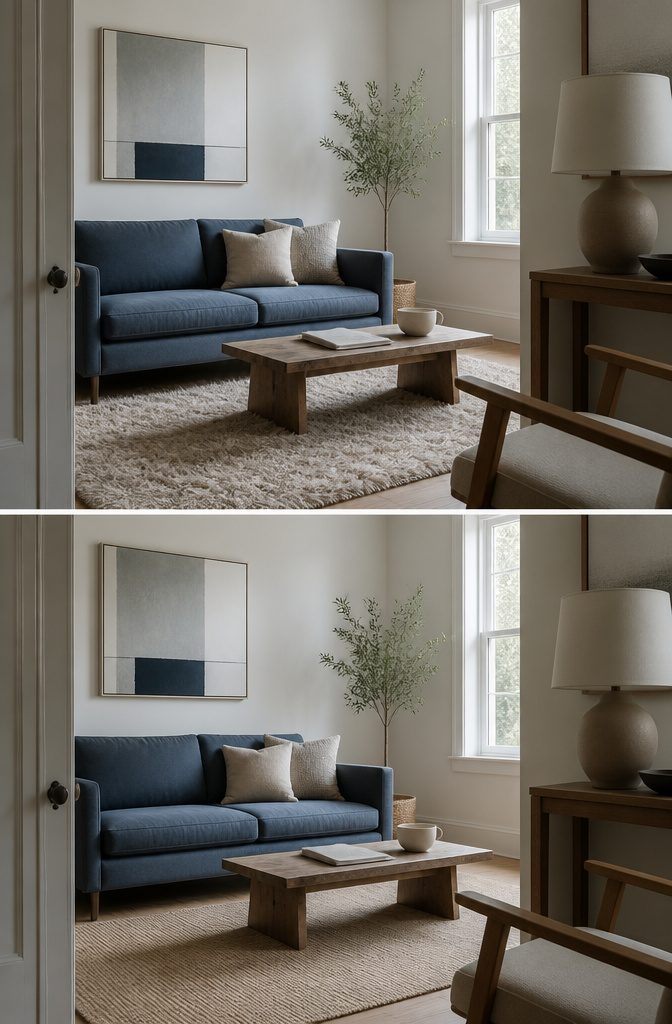
Navy and deeply muted blues sit so close to gray that they work as near-neutrals in a room scheme, pairing as easily with whites and tans as charcoal does.
A desaturated denim blue sofa can anchor a palette of five or six low-saturation tones without shouting for attention, especially in a room with strong natural light that keeps the cool tones from reading flat.
That approach suits renters and anyone after a calm base that won’t compete with art or rugs.
Brighter blues or sofas with tufting and carved legs are built to be seen.
Let them hold the focal point by keeping walls neutral and layering in either bold accent colors—orange pillows, fuchsia prints—or soft neutrals that step back.
A vivid blue sofa paired with equally vivid throws and artwork brings energy; the same sofa surrounded by beige and white linen reads sculptural. Both work, but the room changes character completely depending on which direction you lean.
2. Balance Blue with Neutrals
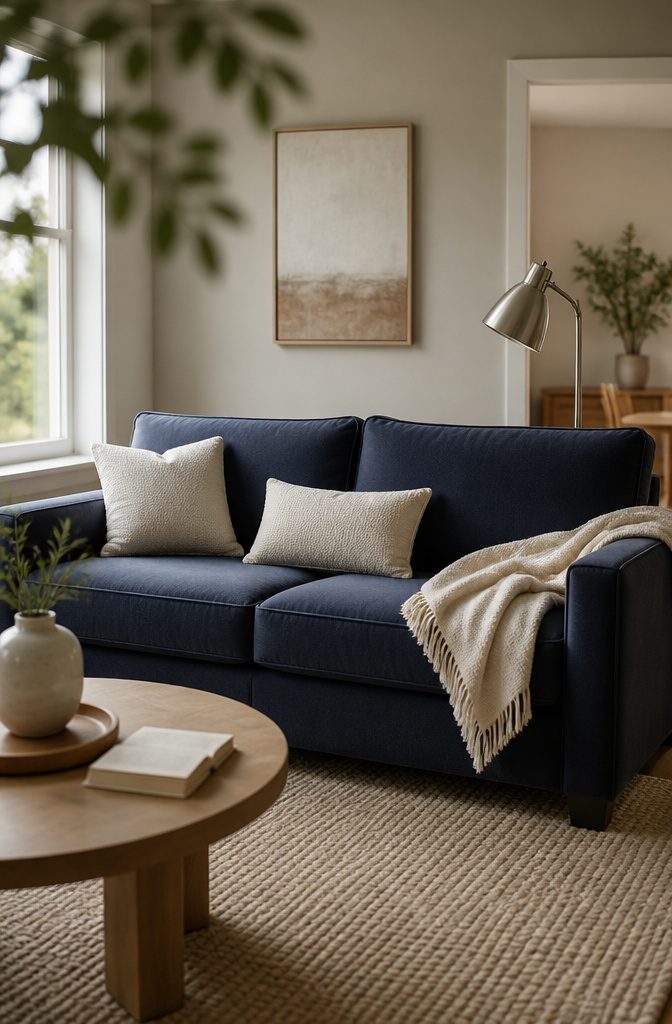
White, cream, and beige walls let a blue sofa hold the room without weighing it down.
Warm neutrals work especially well with navy: the cream softens the depth, and the sofa reads as the intentional color rather than the whole palette.
A light wood coffee table and a textured rug in oatmeal or ivory keep the warmth going without competing for attention.
Gray works when you want a cooler, polished look. Pale gray walls and a matching rug give slate or navy upholstery room to stand out, and silver lamps or glass tables add a refined finish.
The combination feels contemporary, though it can tip cold if you skip warmer textures—an ivory cushion or a wool throw in cream balances it.
Pair cushions in cream, white, and soft blue patterns to tie the sofa into the neutral backdrop.
Keep decorative pieces simple: ceramic vases, wooden trays, a small stack of books. The room feels coordinated without looking overly arranged.
3. Choose a Color Scheme Around Blue
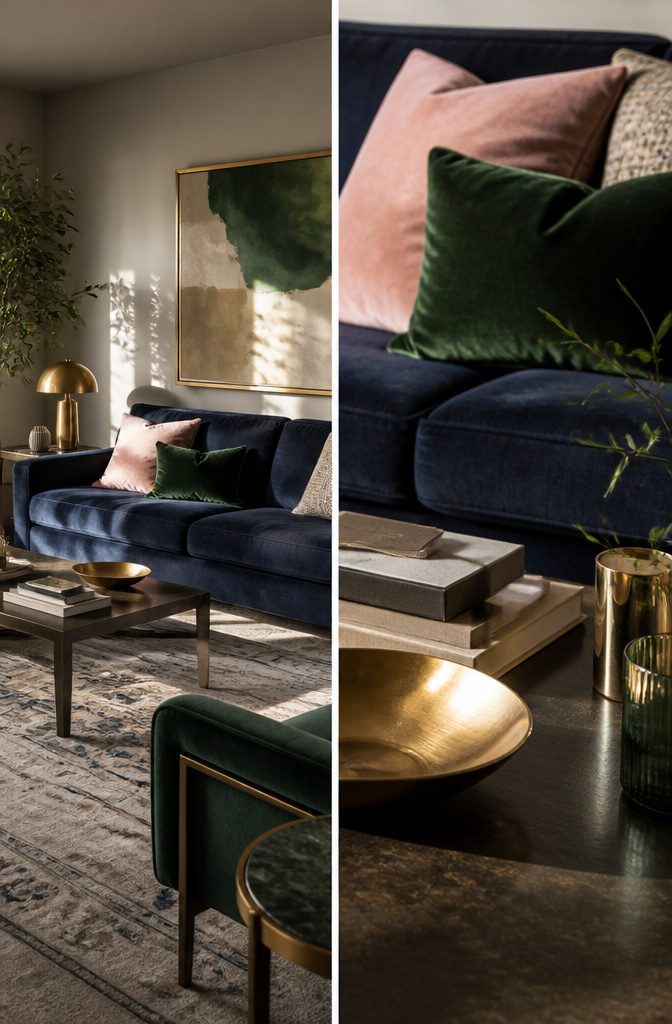
A blue couch pairs cleanest with five or six neutral colors including the muted blue itself, then one complementary accent pulled from across the color wheel.
Yellow, orange, and pink each lift the room differently: yellow reads cheerful, orange brings warmth without going tropical, and blush pink softens navy without tipping sweet if you keep it dusty rather than neon.
Red works when the blue leans royal or midnight. Green sits next to blue without fighting it, particularly in deeper shades like emerald paired with navy upholstery.
Jewel tones—emerald, burgundy, muted plum—add depth to a royal or navy base.
Start with one secondary jewel tone and add a second only when the balance holds. Brass ties the deeper colors together without competing for attention.
Neutral schemes stay tonal: grays, whites, beiges layered with different blues. Texture does the lifting here, since monochrome without it flattens fast.
4. Add Texture and Pattern
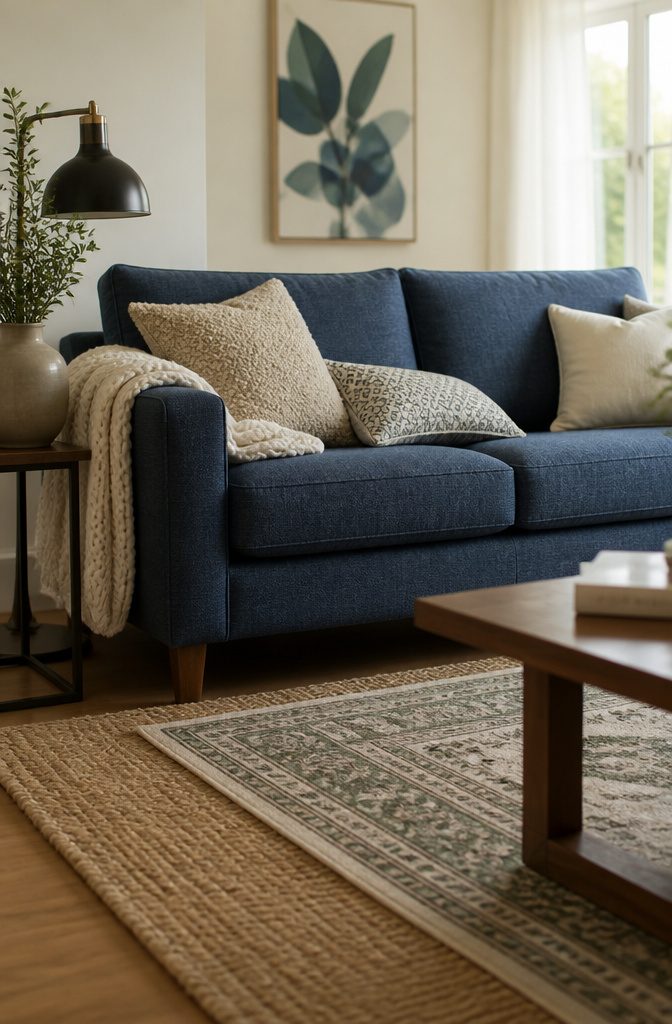
A blue couch pairs well with two or three distinct textures in the same room.
Nubby wool pillows, matte ceramic vases, dark metal lamp bases, and a jute or sisal rug under a smaller patterned layer all register as separate surfaces, and that separation keeps a tonal room from flattening out.
Glossy paint on the walls makes upholstery texture more obvious by contrast, and wood flooring does the same for a plush rug.
Patterned throw pillows tie the textures together when they share at least one color with the rest of the room.
Mix one larger pattern with a smaller print and a solid cushion so the arrangement reads as layered rather than busy. Stripes, small geometrics, and botanical prints work if cream, beige, or muted green runs through all three.
Vary the pillow sizes—larger cushions at the ends, smaller patterned ones near the center—and drape a knit throw over one arm to break up the pattern density.
5. Style with Pillows, Throws, and Other Accents
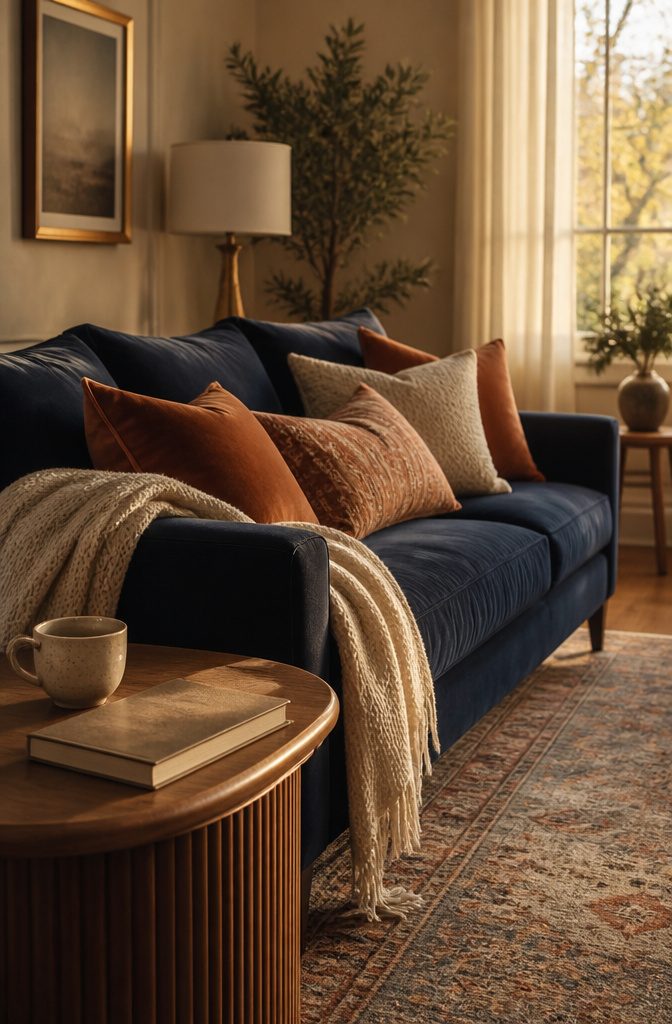
Pillows and throws let you shift the mood of a blue couch without reupholstering it. A navy sofa picks up warmth from rust or terracotta pillows; a pale blue one gets definition from charcoal linen or a chunky ivory knit.
Repeat an accent color in two or three places rather than scattering it everywhere—gold pillows on the sofa, gold frame on the wall, gold base on one lamp, then stop.
More than that and the room starts to feel coordinated instead of collected.
Texture matters as much as color. Velvet, bouclé, and woven cotton all catch light differently, and mixing them keeps a monochrome setup from going flat.
I keep throws within arm’s reach of the sofa rather than folded for display, because a room people actually use looks better than one staged to photograph.
6. Use Rugs to Ground or Connect the Seating Area
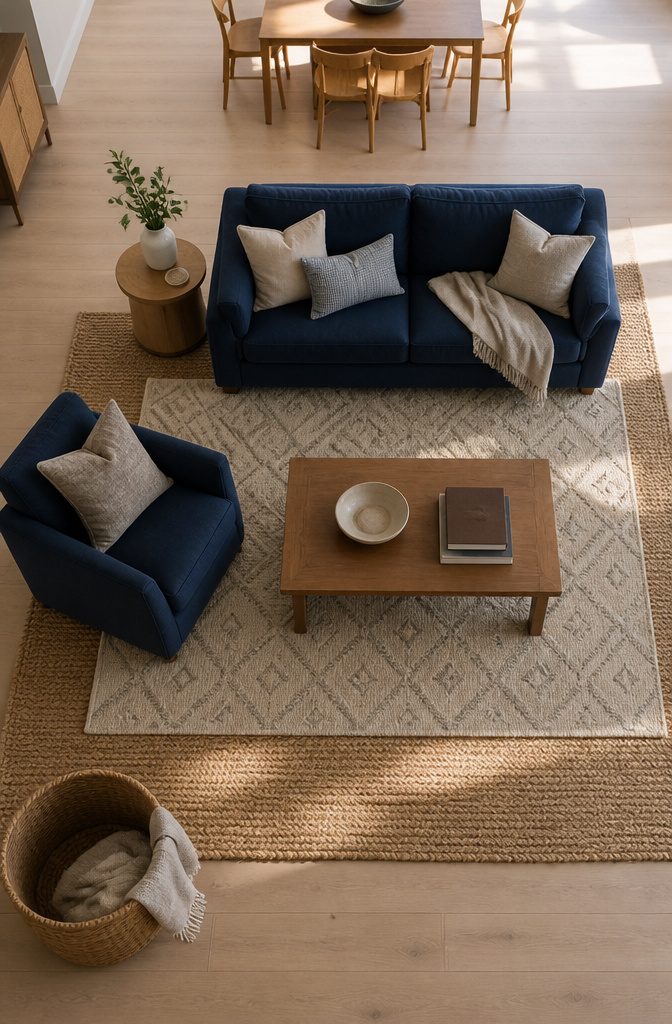
A rug links your blue sofa to the rest of the room, or it sets the seating apart when the space runs open.
Start with a natural-fiber base—jute or sisal—and layer a smaller patterned or wool rug on top if you want depth without clutter.
Cream, oatmeal, and light gray sit quietly under most blues; subtle geometric patterns add interest without fighting the sofa for attention.
Measure the seating area before you buy. A rug that stops short makes even good furniture look like it wandered in from separate rooms.
Extend it under the front legs of the sofa and nearby chairs so the grouping reads as one zone, not a collection of pieces that happen to share a room.
In open-plan homes, that boundary matters more—the rug is what tells you where the living room ends and the next space begins.
If your blue leans dark, the rug can pull in colors from accent pieces or walls and tie them back to the sofa.
Think of it as the visual anchor: the thing that makes the room feel intentional rather than assembled.
7. Bring in Wood and Natural Elements
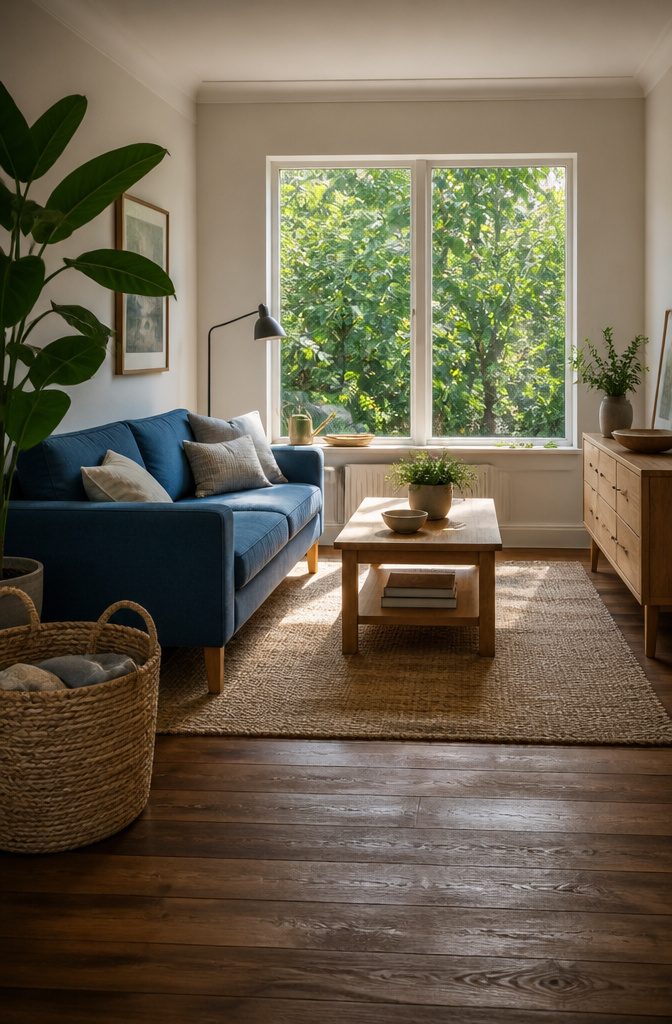
Wood furniture pulls blue seating away from the cool end of the scale and back toward something lived-in. Walnut brings warm brown against navy or cobalt; lighter oak softens powder blue or denim.
A wooden coffee table or sideboard makes the room feel grounded rather than showroom-still, and repeating the same wood finish in at least two places ties the look together without forcing a matched set.
Plants do the same work from a different direction.
Blue and green sit next to each other on the wheel, so leafy foliage reads as a natural companion rather than a color argument. A tall floor plant fills an empty corner; smaller ones work on shelves or side tables.
Broad-leaved varieties look especially good beside teal or denim upholstery, and the combination feels connected to the outdoors without turning the room into a conservatory.
Woven baskets, jute rugs, and linen cushions add texture that keeps natural materials from reading as a single note. The effect is relaxed rather than arranged, modern without tipping into cold minimalism.
8. Choose a Look or Style for the Room
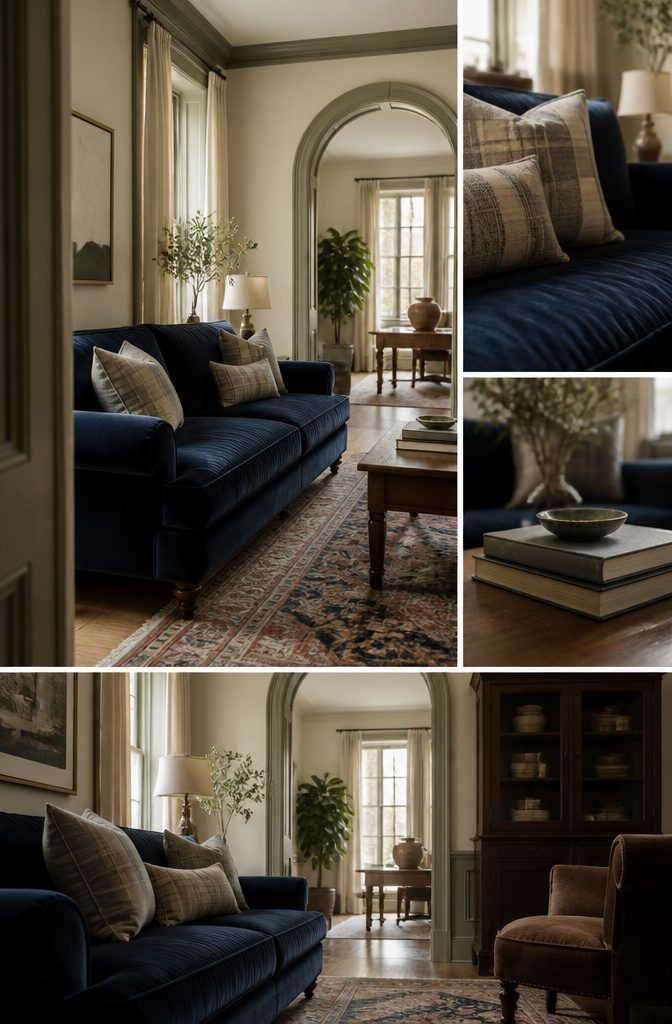
A navy velvet sofa anchors a traditional room the way few other pieces can—deep enough to ground the space, formal enough to hold its own against moldings and arched doorways.
Pair it with sage trim or cream walls, add a few linen pillows in soft plaid, and the result feels both polished and lived-in. The couch isn’t fighting for attention; it’s doing the work of tying everything together.
Coastal rooms want a lighter hand. Powder blue or soft chambray works better than navy when you’re building around white walls and pale wood.
Striped cushions and a jute rug keep it fresh without tipping into beach-house kitsch. If your sofa is darker, bring in more sand tones and keep the space bright.
Scandinavian minimalism suits a streamlined couch in dusty blue or muted denim.
Surround it with pale wood, a neutral rug, and white walls that reflect light. Natural linen and wool cushions add warmth without clutter.
Boho and midcentury modern treatments layer in pattern and color—think yellow throw pillows against blue velvet—but the same principle holds: the sofa takes center stage, and everything else supports it.
9. Use Art, Lighting, or Wall Treatments to Complete the Look
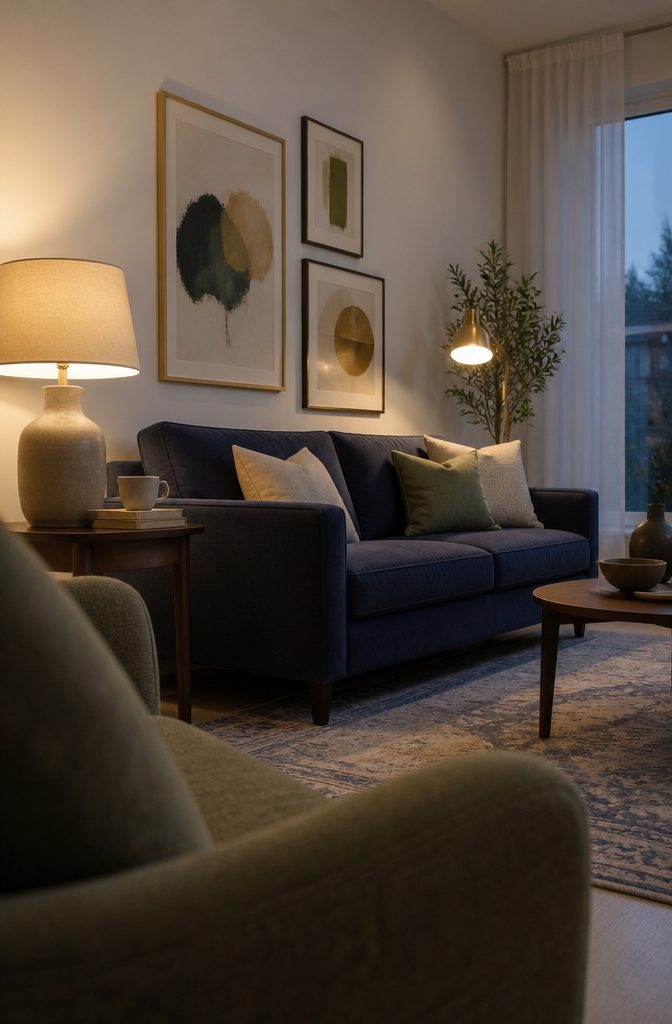
Artwork above the sofa pulls the room together when the colors inside the frame echo what’s already in the space.
A piece with cream, beige, muted green, or soft gold connects the wall to the rest of the room without fighting the blue.
Navy works well beneath colorful abstract prints or simple black-and-white photography. Arrange frames in two or three finishes to keep variety without making the display feel disorganized.
Pair the sofa with a lamp and you add both light and another layer of color. Table and floor lamps make the seating area look intentional rather than like furniture dropped in place.
If the room already has bold cushions or a patterned rug, quieter artwork keeps the walls from competing. For a simpler room, larger prints introduce movement without requiring many accessories.
White walls, like Benjamin Moore Chantilly Lace, let the blue sofa stay center stage.
Neutral paint, pale flooring, and simple window treatments minimize the impact if the couch feels too strong. Wallpaper works the same way in reverse: pattern on the wall lifts a plain blue sofa into something more finished.
Consider Upholstery Choice and Wear
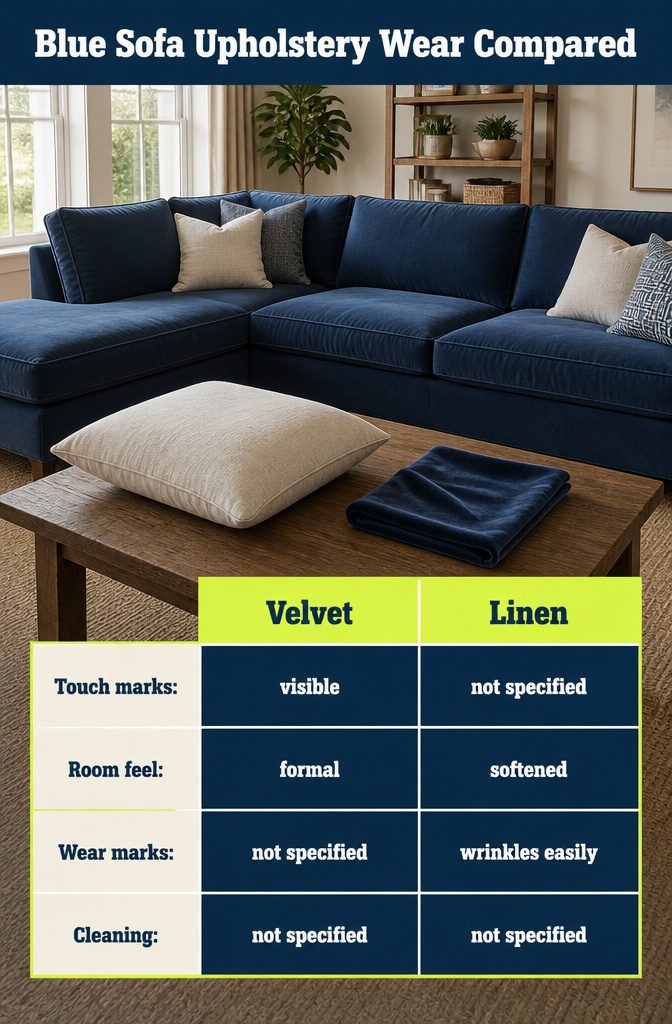
Fabric choice matters more when the sofa is large or lives in a high-traffic room.
A deep denim shade works well on a sectional because it hides handprints and spills better than lighter blues, and the color itself does some of the camouflaging that pale linen cannot.
Velvet shows every touch but reads formal.
Linen wrinkles and marks easily but softens a room in a way tighter weaves do not. Slipcovers let you pull the cover and wash it, which matters if the sofa sees daily use from kids or pets.
I would pick based on how the room gets used: a showpiece sofa in a formal living room can handle velvet, but a family-room sectional needs something that forgives wear without looking worn.
Frequently Asked Questions
What colors go with a blue couch?
Neutrals like white, cream, beige, and gray work with any blue sofa.
For accent colors, pair navy with yellow, orange, or blush pink; royal blue with red or emerald; and lighter blues with charcoal or terracotta. Stay within 5 or 6 colors total to keep the room from feeling busy.
How can I tone down my blue couch?
Use neutral walls in white or cream, add cushions and throws in beige or ivory, and choose a light rug in oatmeal or pale gray.
Keep decorative pieces simple with ceramic vases, wooden trays, and soft textures that pull attention away from the sofa itself.
What are the best rug colors for a navy blue couch?
Cream, oatmeal, and light gray sit quietly under navy and let the sofa stand out.
Jute or sisal works as a neutral base, or layer a smaller patterned rug on top. Subtle geometric patterns add interest without competing with the upholstery.
Should your sofa be lighter or darker than the walls?
A darker sofa against light walls reads as the intentional focal point, which works well for navy or cobalt upholstery.
If the sofa is pale blue, neutral or slightly darker walls keep it from disappearing. Either direction works as long as the contrast is clear enough to define the seating area.