
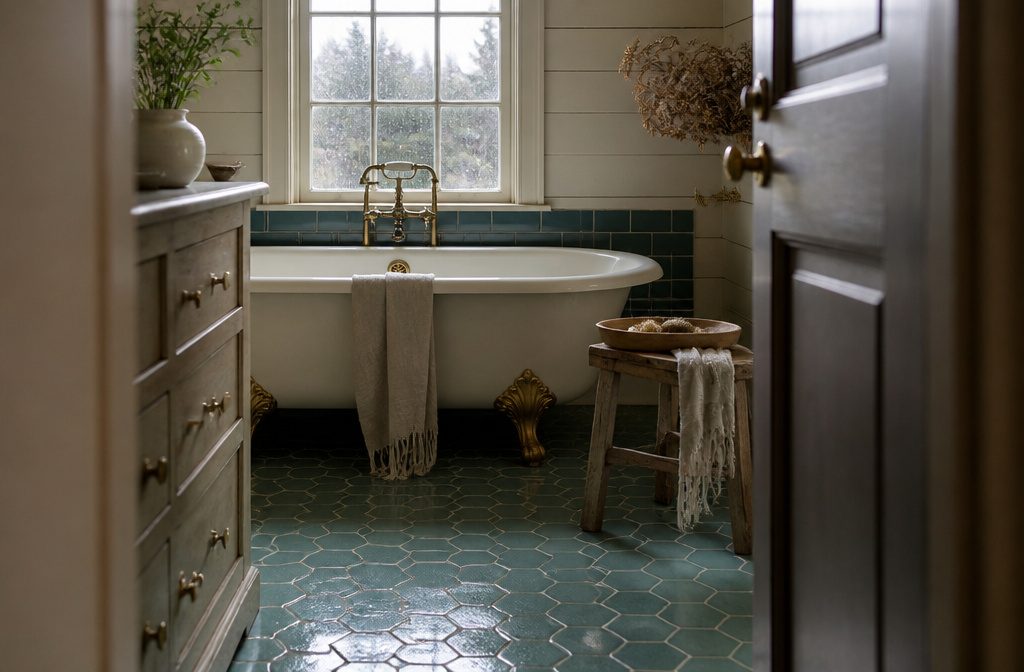
Coastal farmhouse bathrooms run from cool blues with white shiplap to warm beiges with aged brass, and the choice comes down to whether you want the room to feel like midday at the beach or late afternoon.
The palette matters less than the finishes—weathered wood, woven texture, and glass tile do the work of making a bathroom feel coastal without turning it into a beach theme.
BM Boothbay Gray reads blue-gray and pairs cleanly with marble or chrome, while sea-glass green in a hexagon mosaic brings color that stays subtle.
1. Choose a Coastal Palette
Blue and white show up in most coastal bathrooms, but the palette can move in other directions without losing the beach feel.
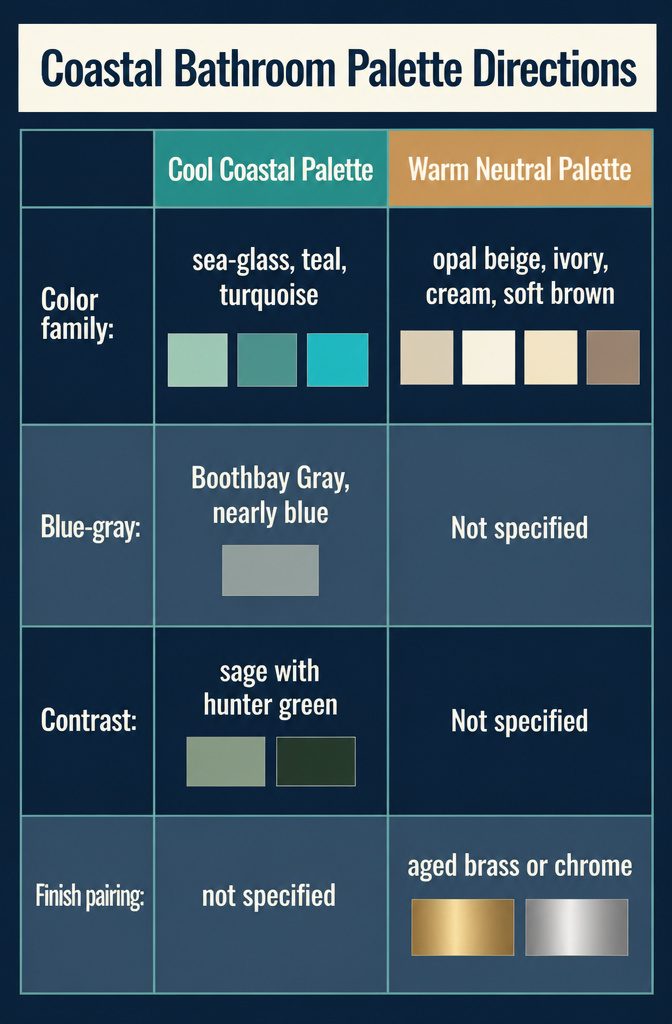
Sea-glass green, muted teal, and turquoise work just as well as ocean blue, especially in glass tile where the reflective surface gives the color more depth.
I’ve seen sage green paired with hunter green on a vanity, and the darker shade gives you contrast without needing the usual bright-and-light beach look.
Rather than choose the obvious coastal bathroom color palette, designer Chenault James opted to look to the sunset instead. These warm tones remind us of golden hour on summer nights.
Warm palettes pull from the beach at a different hour. Opal beige, ivory, cream, and soft brown can feel coastal when you keep the rest of the room light with white wainscoting or an open-shelf vanity.
BM Boothbay Gray reads almost blue but stays in the gray family, which gives you flexibility with the rest of the finishes.
Neutral palettes hold up if you add texture through the tile or wood accents, and they pair cleanly with aged brass or chrome without competing for attention.
Recommended Products

Has the look of sea glass tile

Value Pack - The package contains 9 oz mosaic tiles in various colors

Value Pack - 1.1lb/500g Dazzling Glitter Crystal Glass Mosaic Tiles in Various Shapes & Colors, such as triangles, squares, circles, and unique shapes for mosaic craft projects.
2. Use Natural Materials and Woven Texture
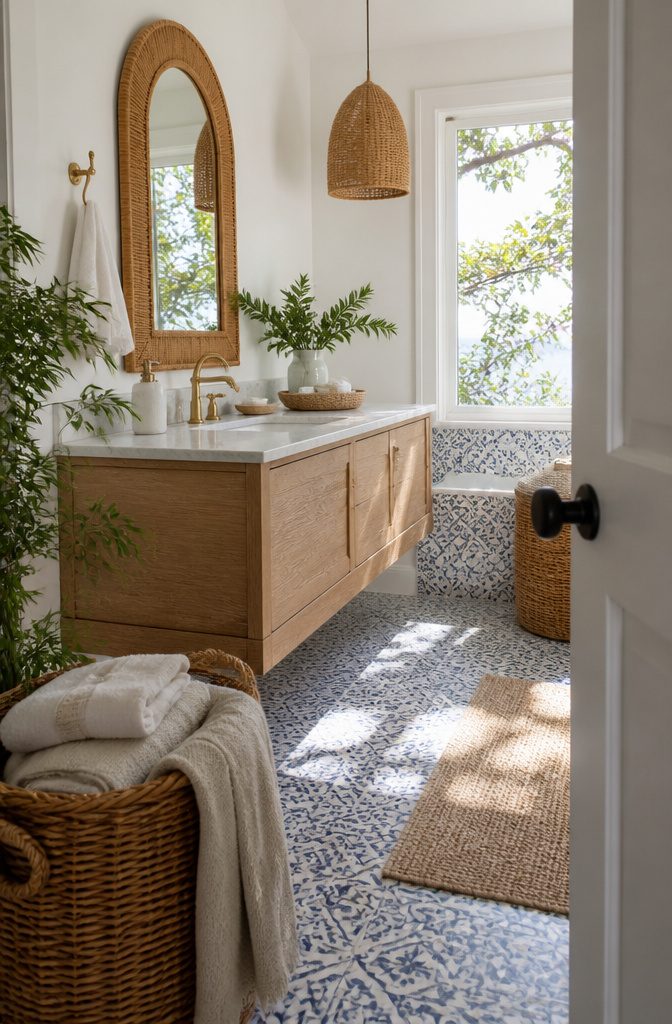
Wood vanities, rattan mirrors, wicker baskets, and woven pendant lights bring the warmth that keeps a blue-and-white coastal bathroom from feeling cold.
The natural tones run beige to honey, and the texture itself does half the work — a jute-framed mirror or a woven planter softens stark tile and crisp paint in a way flat materials never do.
I’ve seen arched rattan mirrors paired with light wood floating vanities, and the combination keeps the lower half of the room grounded while the walls stay bright.
Stone works the same way: beige stone tile or a marble countertop introduces another organic layer without darkening the space. Brass fixtures add a third natural finish, especially against blue glass tile or white subway.
Woven pendant lights in a bell or drum shape loosen up cleaner lines and give the ceiling something besides a can light. The result feels relaxed without looking unfinished, which is exactly where coastal farmhouse sits.
Recommended Products

Handcrafted Rustic Wall Mirror: The rectangular solid wood frame pairs dark antique iron corner brackets with decorative rivet accents, giving a vanity or entry wall a collected farmhouse look

Handcrafted Wood-and-Iron Statement Mirror: The substantial rectangular solid wood frame pairs dark antique iron corner brackets with decorative rivet accents, creating balanced presence above larger furniture without looking overly ornate
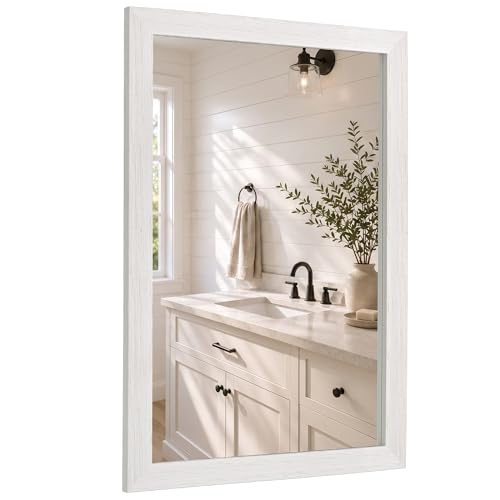
Coastal Farmhouse Charm: Bring the vacation vibe home. The whitewashed, weathered finish feels sun-kissed and authentic. It instantly makes a bathroom or bedroom feel more relaxed, fitting perfectly with Shabby Chic or French Country decor.
3. Make Tile a Color or Pattern Feature
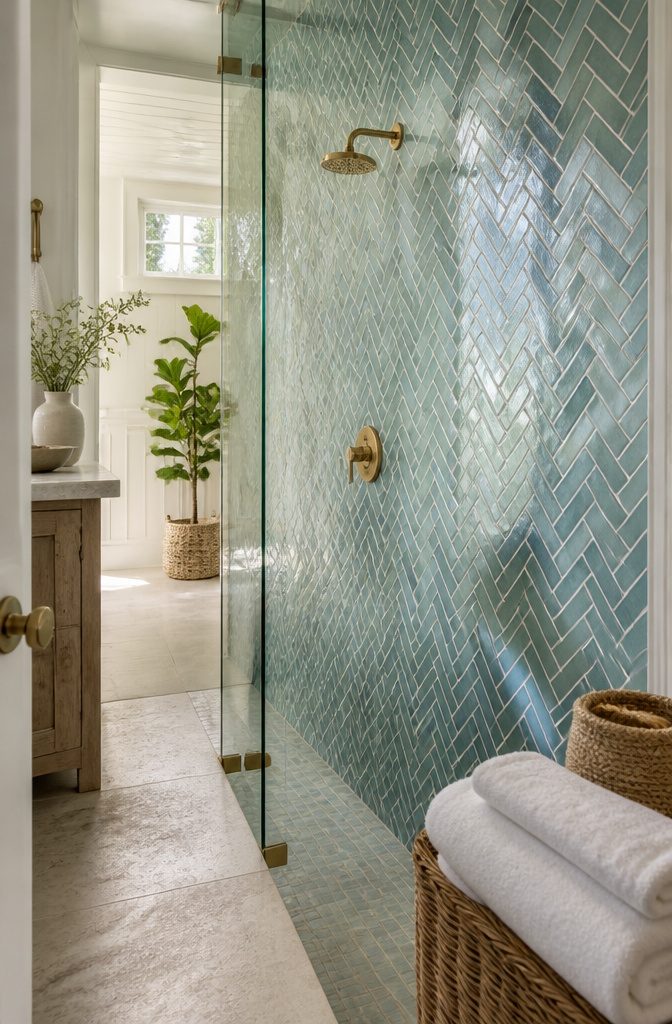
Tile can carry the coastal palette or add texture where paint alone falls flat.
White penny tile with gray grout gives you a classic subway grid that reads farmhouse, while glass tile in watery blues and greens brings the coastal side without fighting the rest of the room.
Herringbone and chevron layouts add movement—white marble chevron tile BA631613 works if you want pattern that stays neutral, and blue glass subway tile BA5507-LOT-A or BA8010 delivers color in a layout that still feels rooted in farmhouse proportion.
Mosaics let you go bolder. Green glass metal hexagon tile BA6203 pulls in sea-glass tones that feel coastal without defaulting to blue, and opal beige glass hand-cut artisan mosaic BA7015 adds craft and shimmer in a warmer register.
Fish-scale and geometric patterns bring texture to a shower wall or backsplash, and glass catches light in a way porcelain does not, which matters when you are after that reflective, sun-on-water effect.
Recommended Products

A Mirror That Whispers Romance – Wrapped in woven rattan and kissed with soft wooden beads, this arched mirror captures the quiet poetry of slow mornings and sunlit spaces.

【Farmhouse-Boho Fusion】 Elevate your space with this exquisite rattan wall mirror, seamlessly blending farmhouse and boho styles. Its versatile design harmonizes with various home decor themes, offering a perfect fusion of rustic charm and eclectic elegance. Transform any room into a haven of style and sophistication with this captivating piece.

Handwoven Natural Rattan - Each frame is crafted from real rattan, so variations in color, tone, and weave pattern are expected. These natural inconsistencies are part of the material’s character and are not considered defects.
4. Add Farmhouse Details
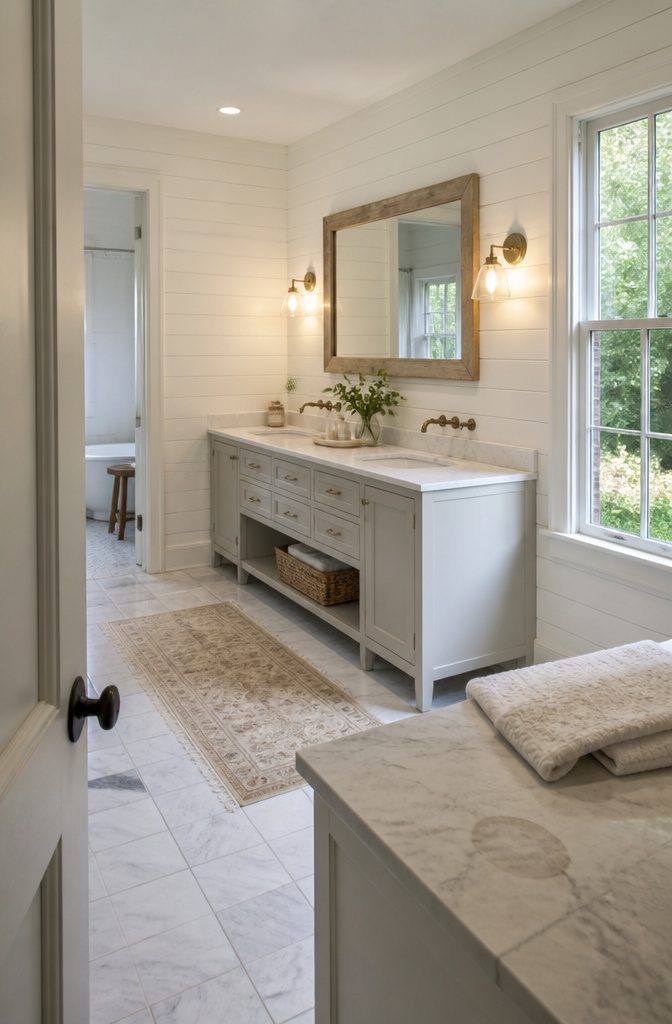
Shiplap brings the farmhouse side in without fighting the coastal palette.
White shiplap walls read clean and minimal, which lets beach details like rope mirrors or woven baskets hold attention without the room feeling busy. The horizontal lines add texture but stay quiet enough to work as backdrop rather than feature.
Beadboard and wainscoting do similar work—both give you that cottage detail farmhouse rooms lean on, and both take white paint well enough to keep the walls bright.
Rustic wood shows up in mirrors more often than anywhere else in a coastal farmhouse bathroom.
A weathered wood frame around the mirror, or a pair of them over a double vanity, pulls in warmth the white walls alone won’t give you.
The grain and the worn finish tie back to driftwood and dock boards without needing literal beach salvage. Wood countertops and open shelving work the same way, though they ask for more upkeep in a wet room.
5. Use Fixtures and Hardware for Contrast or Warmth
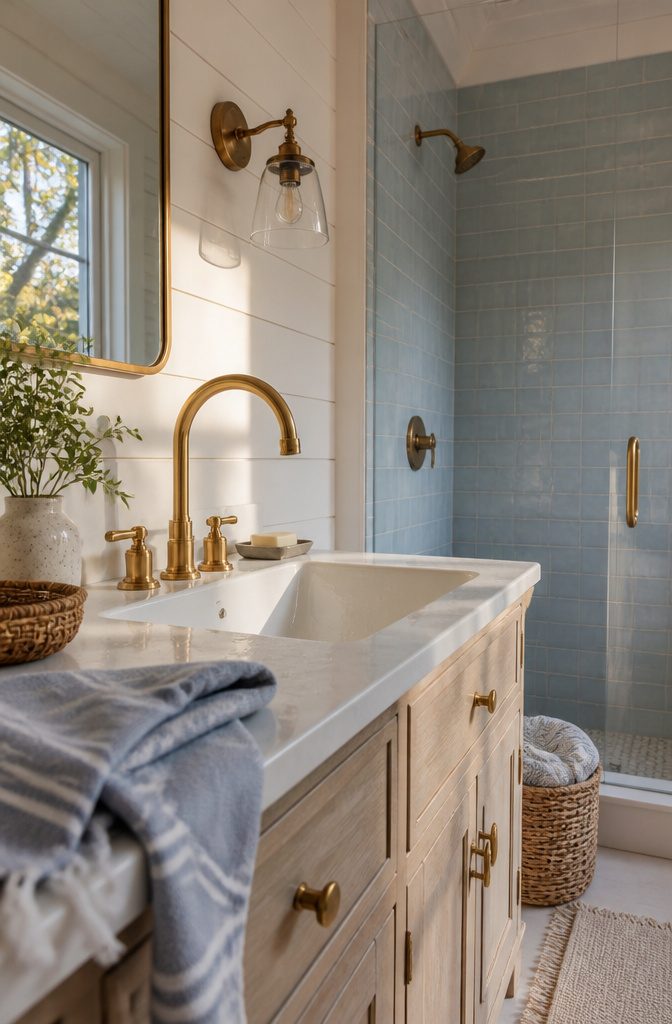
The fixture finish you choose either ties the room together or sets up a clean visual break.
Chrome works across both styles without demanding attention—the Delta wide-set vintage faucet in chrome brings period shape but stays neutral enough to let tile or wood carry the room.
Brass adds warmth that plays well against white shiplap or pale blue walls, especially when you want the metal to feel like part of the palette rather than an accent.
Matte black creates sharper contrast and reads more contemporary, which works if the rest of the room leans minimal or if you’re pairing it with bold tile.
Brass and nickel both darken over time, which gives them that naturally aged look you see in older beach houses. If you want the patina, plan for it; if you don’t, chrome or stainless steel stay consistent.
6. Use Mirrors, Lighting, and Daylight to Shape the Room
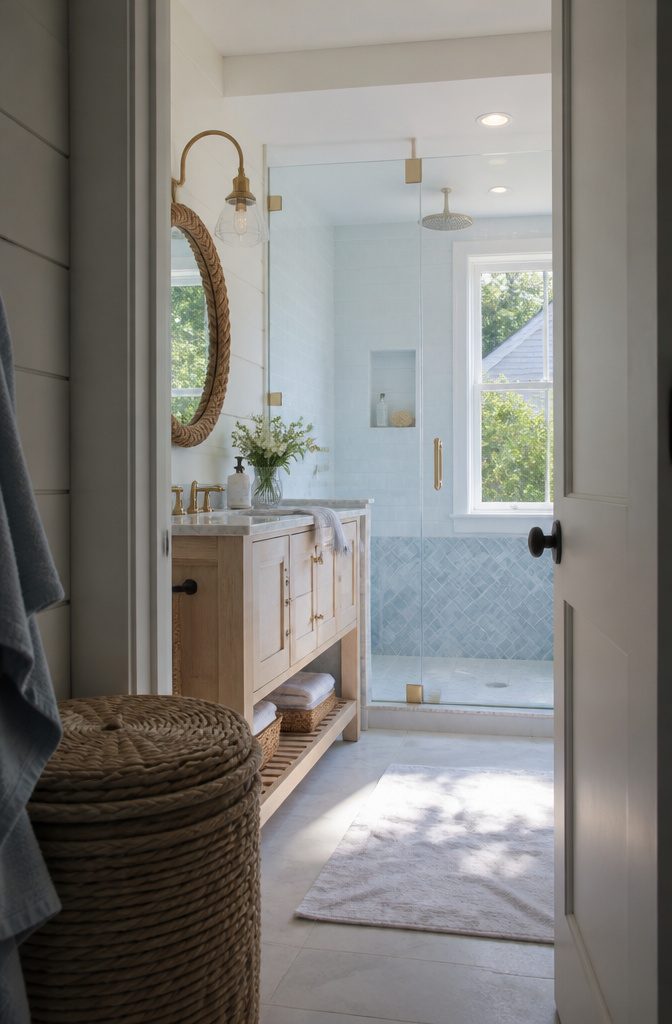
A mirror framed in jute or woven rope reads farmhouse against white shiplap and coastal when the room opens to blue tile or a water view.
Round mirrors with rope detail work beside gooseneck sconces or dock-style wall lights—the frame supplies texture, the fixture brings metal warmth, and together they anchor a wall without closing it in.
Windows and skylights matter more than wired lighting. If you can add a second window or a skylight, the money goes there first.
Where you cannot, keep existing windows unobstructed and swap a shower curtain for a frameless glass shower door so sight lines stay open across the room.
Mirrors and a light palette push the effect further, but the glass barrier is what keeps a small bathroom from reading as two smaller ones.
Woven pendant lights over a vanity loosen cleaner lines the way arched brass mirrors polish them—one brings natural texture down, the other frames the wall in metal.
I would use pendants where the vanity runs long and sconces where it does not, because a pendant needs width under it to look proportional.
7. Add Artwork or Smaller Coastal Accents
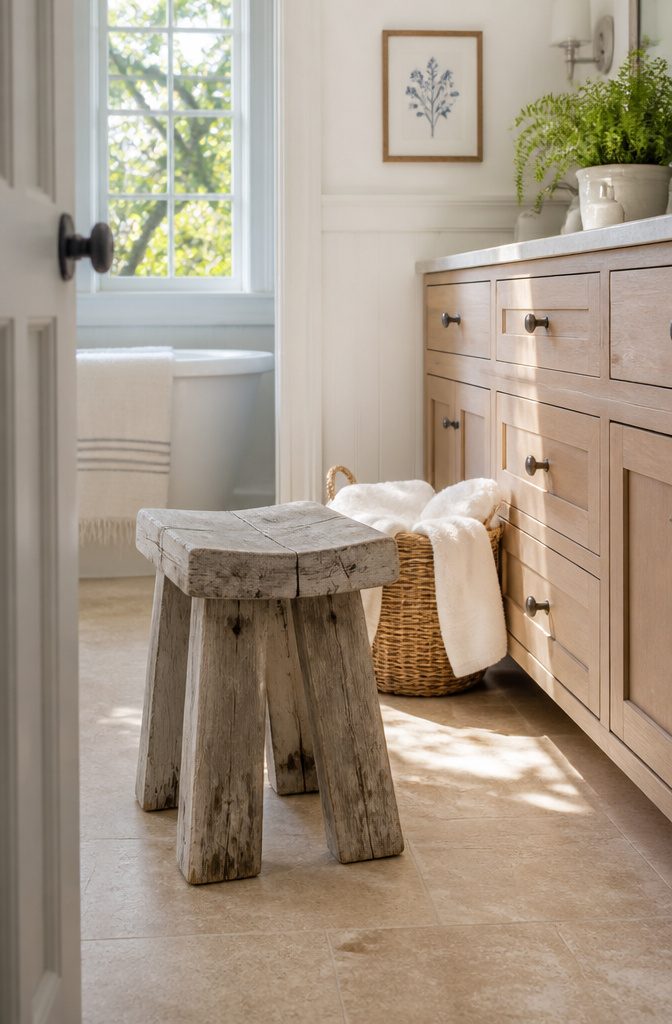
Artwork makes the coastal side read without shouting it.
The driftwood-textured stool in the Seattle bathroom shown in House Beautiful does it with shape and finish alone—no shells, no rope, just the bleached gray grain of a piece that spent time near water.
Coastal character comes through materials and color rather than nautical motifs, and that leaves room for the farmhouse half to balance it.
Plants work the same way.
A potted fern or a stem of eucalyptus suggests green and organic without putting a sailboat on the wall. Small framed prints in soft blues or sandy neutrals add coastal mood; botanical line drawings lean farmhouse.
A woven basket holding rolled towels gives texture that fits both sides. The block stool approach—something functional that looks like it came from the beach—keeps the reference subtle enough that the room stays calm.
8. Use Wallpaper or Mixed Patterns Selectively
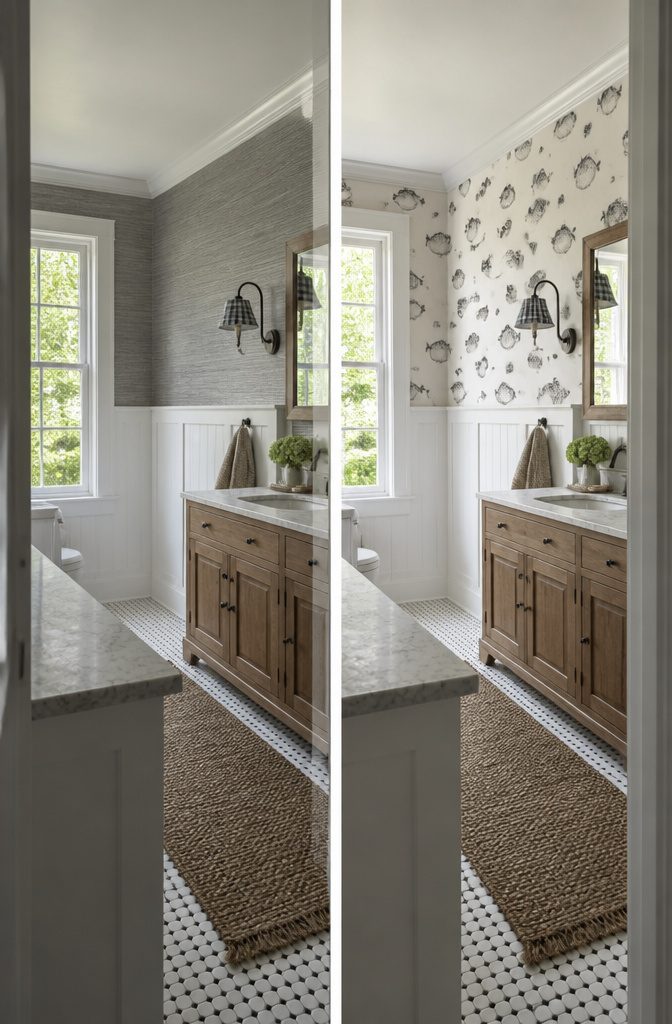
Pattern gives a bathroom personality without the commitment of tile.
Limiting wallpaper to the upper half of the walls keeps it from taking over the room—the setup in one bathroom pairs pufferfish wallpaper in charcoal and white above white wainscoting, and the split keeps the motif playful instead of busy.
The wooden vanity grounds it.
Mixing pattern scales helps them sit together.
Blue and white wallpaper in a large print works beside lampshades in a small blue and white check, because the color ties them and the scale difference keeps either one from competing. The repetition registers as harmony, not clutter.
9. Choose a Vanity That Helps Set the Palette
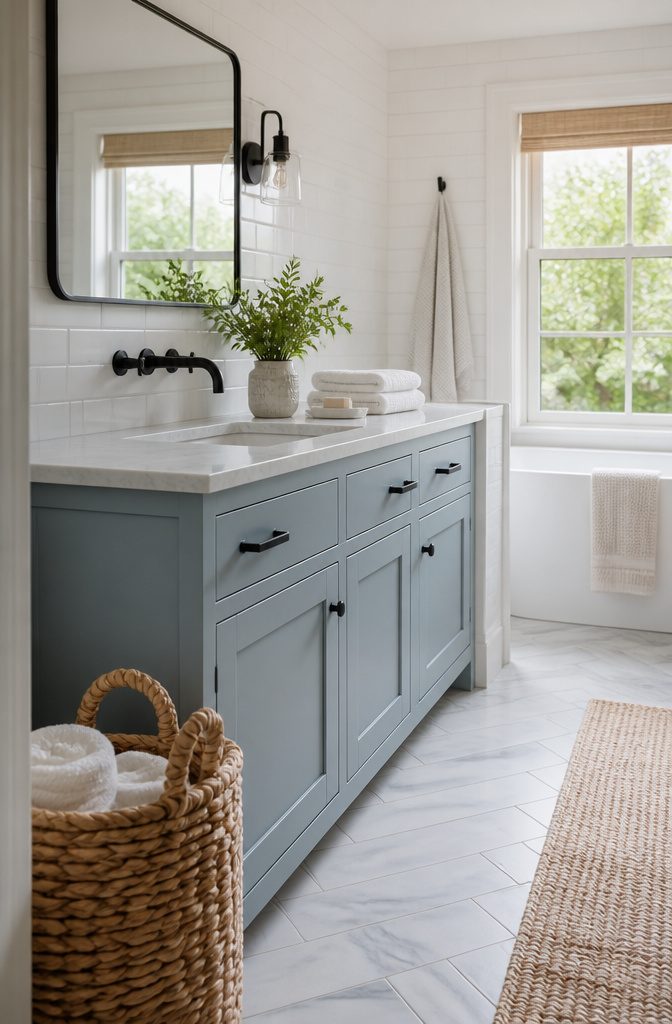
White vanities stay safe and pair with nearly anything, but a painted cabinet in pale blue, blue-gray, or soft green gives the room more character without fighting the coastal palette.
BM Boothbay Gray reads as a muted blue-gray and works especially well when the rest of the room keeps things simple—a marble-look countertop, white tile, black hardware.
The color carries the design, so surrounding surfaces should stay neutral enough to let it stand out.
Light wood brings warmth instead of color. A floating vanity in natural oak or pale wood with a white countertop keeps the look clean and works particularly well when you want to balance cooler tile or wall colors.
Caned door fronts or rustic wood mirrors reinforce the farmhouse side without adding bulk. If the vanity itself stays quiet, you have more room to bring pattern or texture in elsewhere.
10. Make the Bathroom Fit Its Use and Mood
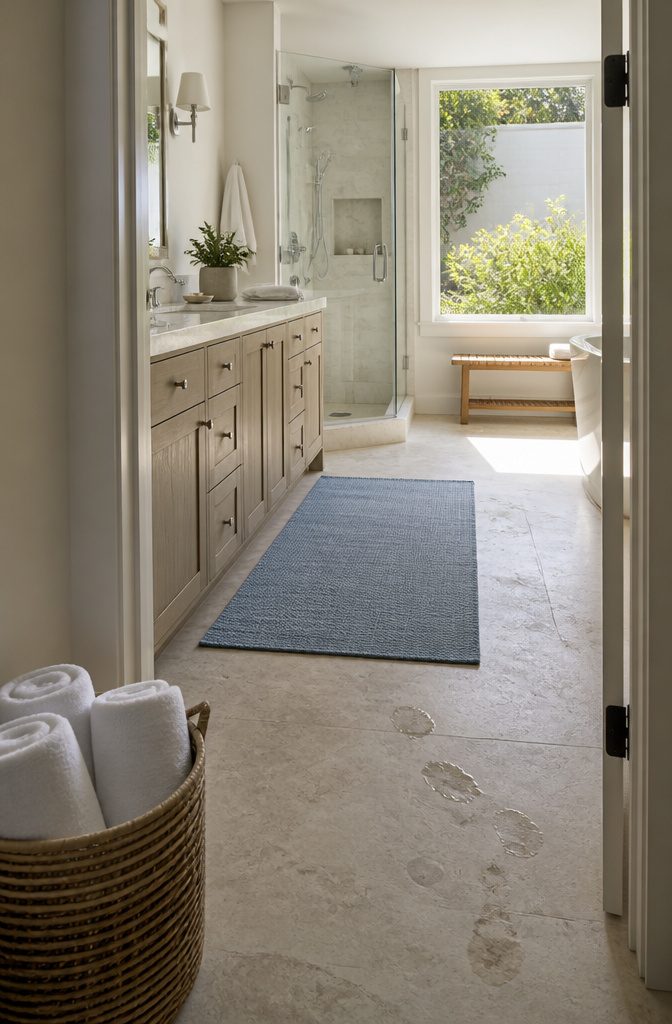
A coastal farmhouse bathroom works as a calm space by default, but the design still has to match how the room gets used.
A dual-purpose bathroom that serves both pool traffic and overnight guests needs finishes that read as casual enough for wet feet and formal enough for company.
A muted blue indoor/outdoor rug near the sink handles both: it sets a relaxed tone and survives the moisture a pool bath brings in.
The same balance shows up in fixture choices—chrome faucets and marble-look surfaces keep the look classic without tipping into stiff.
The serene reputation of coastal bathrooms comes from their palette and the way natural light moves through them, but serenity still depends on whether the layout fits what you actually do in the space.
A bathroom that doubles as a changing room after a swim needs storage within arm’s reach and flooring that dries fast, not just ocean blues and soft whites.
A Relaxed Coastal Mood
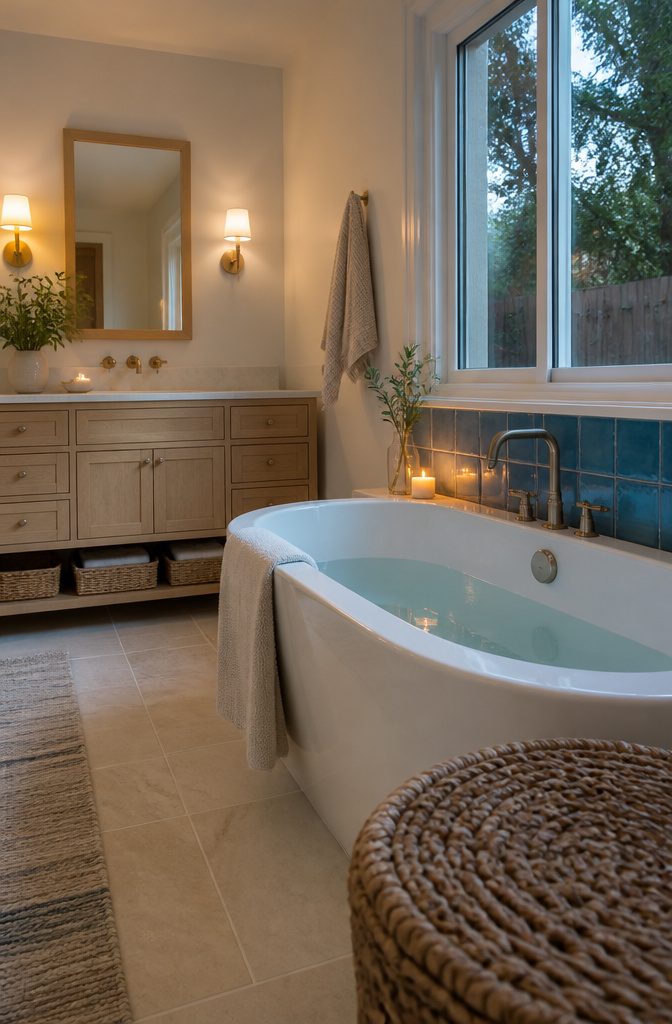
The coastal farmhouse bathroom works because it feels unforced.
Blue-gray, teal, sea-glass green, sandy beige, and fresh white sit together without announcing themselves, and light wood and warm metal finishes soften the palette into something you can live with rather than a themed room.
Beige stone flooring, natural wood, and softly reflective blue glass pull in coastal character without requiring a single shell on the counter.
A whirlpool tub near the window or a sauna built into the corner takes that calm further.
Gray walls, a light wood vanity, and votive candles around the tub turn the space into something closer to a spa than a beach house, and the restraint is what makes it feel that way.
Weathered finishes and vintage pieces layer in without tipping the room into decoration for its own sake.
Materials and Finishes as Coastal Cues
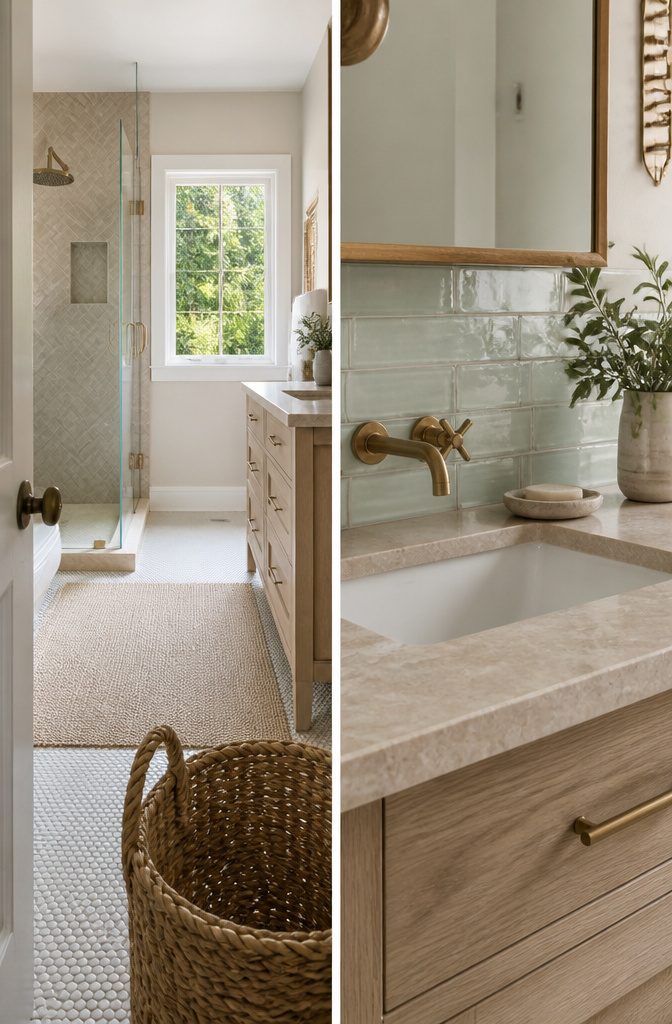
The palette creates the mood, but finishes and textures do the work of making a bathroom feel coastal without bringing in a single shell or anchor.
Wood vanities, woven baskets, rattan details, and beige stone all introduce warmth and texture that soften the crispness of white tile or blue walls.
A sea-glass backsplash or light wood vanity reads as beachy in a way that feels grown-up. Brass fixtures add another layer of warmth, especially against blue glass or white subway tile.
Weathered finishes and vintage pieces give a room character that polished coastal design can miss.
A marble-look countertop in quartzite stays durable and classic. White penny tile with gray grout works as a modern standard for floors, and a herringbone pattern in the shower adds texture without competing for attention.
The materials tell the story when the palette and finish are chosen with the coast in mind, not a gift shop.
Keeping a Room Light and Open
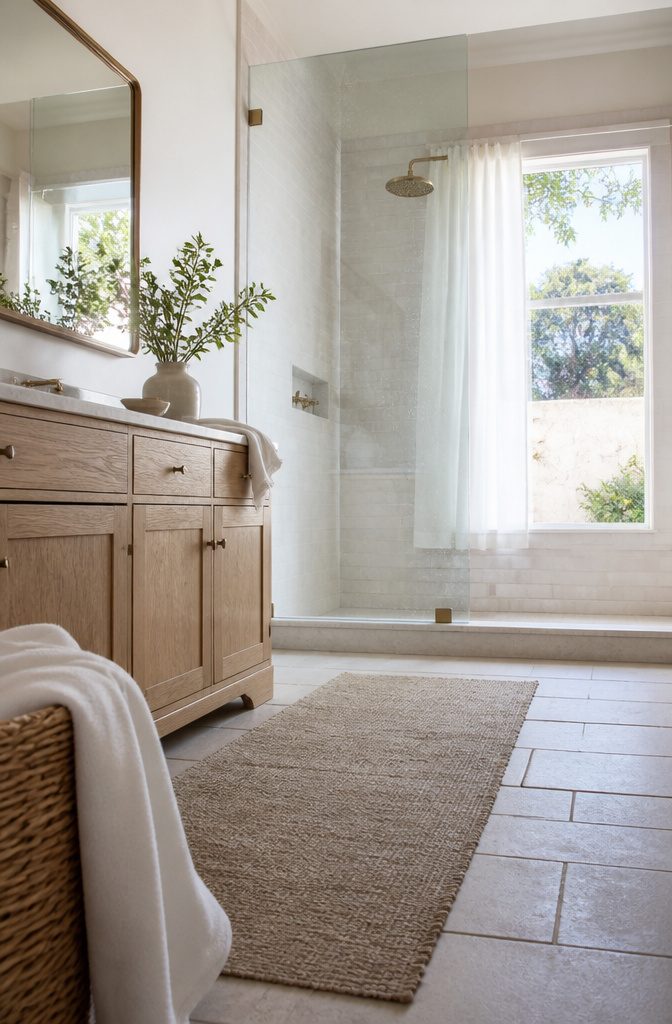
Natural light changes the whole feel of the space. If your bathroom has a window, keep it unobstructed — skip heavy curtains and blinds where privacy allows, or switch to sheer treatments that filter light without blocking it.
A frameless glass shower door or screen keeps the sight line open instead of breaking the room into smaller visual pieces the way a curtain does.
Mirrors amplify whatever daylight you have, and a skylight is worth the cost if the layout makes it possible.
Wired lighting still has a job, but when you lean on the sun for most of the work, the room reads closer to coastal than to farmhouse-only — and that balance is the point.
Frequently Asked Questions
What colors work best for a coastal farmhouse bathroom?
Blue and white are classic, but sea-glass green, muted teal, turquoise, sage green, opal beige, ivory, cream, and soft brown all work.
BM Boothbay Gray reads as a muted blue-gray and pairs well with neutral finishes. Warm tones like beige and cream feel coastal when you keep the rest of the room light with white wainscoting or open shelving.
How do you make a bathroom look coastal without nautical decor?
Use materials and finishes instead of motifs. Sea-glass tile, light wood vanities, woven baskets, rattan mirrors, beige stone, and brass fixtures all read coastal without shells or anchors.
The palette and texture tell the story when you choose finishes that reference the beach rather than decorate with it.
What tile works best in a coastal farmhouse bathroom?
Glass tile in watery blues and greens brings color with reflective depth, while white penny tile with gray grout or white marble chevron reads farmhouse.
Herringbone and chevron layouts add movement without losing proportion. Green glass metal hexagon tile and opal beige hand-cut mosaics layer in texture, and fish-scale patterns work well in showers or as backsplash.
Can a coastal bathroom use colors other than blue?
Yes. Warm palettes with opal beige, ivory, cream, and soft brown feel coastal when paired with light walls and open shelving.
Sea-glass green and muted teal work especially well in glass tile. Neutral palettes hold up if you add texture through tile or wood accents, and they pair cleanly with aged brass or chrome.
How can I make a coastal bathroom look modern?
Keep coastal references subtle: one blue or green tile, simple shapes, a limited palette, and clean-lined fixtures.
Use a floating vanity, frameless shower glass, and avoid overt beach motifs. Materials like sea-glass backsplash tile and light wood read coastal without feeling themed.
What materials add warmth to a blue and white coastal bathroom?
Wood vanities, rattan mirrors, wicker baskets, woven pendant lights, and beige stone tile all introduce warmth.
Brass fixtures work especially well against blue glass tile or white subway. The texture itself does half the work: a jute-framed mirror or woven planter softens stark tile in a way flat materials cannot.
Are green tiles suitable for coastal bathrooms?
Yes. Sea-glass green, turquoise, and muted teal feel just as coastal as ocean blue, especially in glass tile where the reflective surface adds depth.
Pair green tile with white, cream, or light wood for a fresh coastal look that avoids the obvious blue palette.