
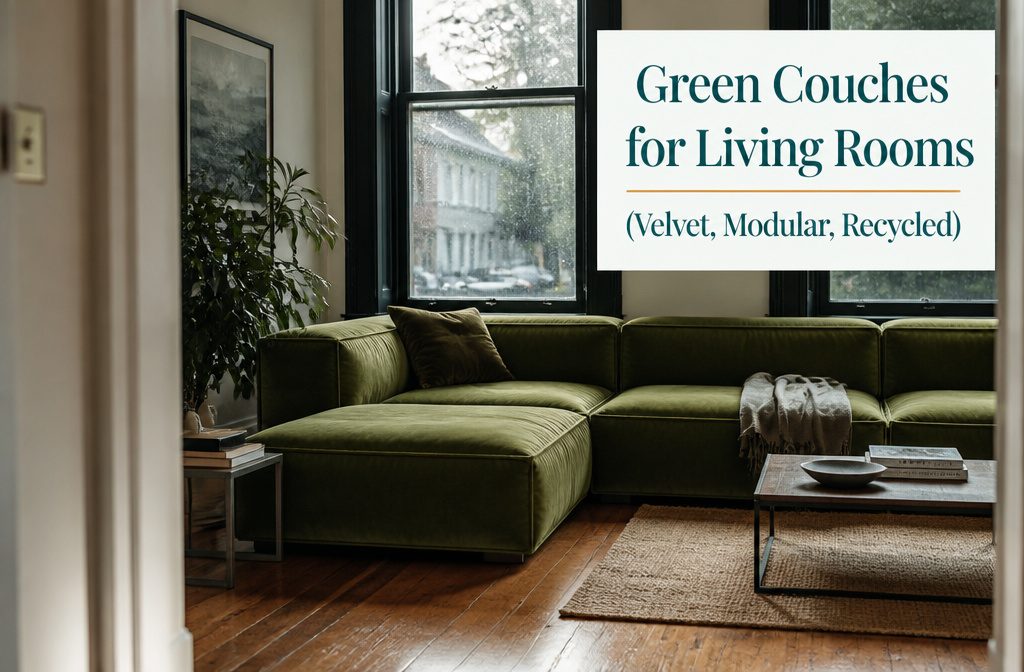
Green velvet sofas run $745 to $10,000 depending on whether you want recycled fabric, modular pieces that ship flat, or contract-grade upholstery built for hotels.
The price gap widens fast once you add certifications that confirm the foam skips flame retardants or the velvet itself washes without PFAS treatments.
Sabai’s moss velvet sectional costs $745 as a loveseat and scales to $5,795 for a seven-seat corner configuration, all made from recycled material with frames cut from FSC-certified wood.
1. Sabai — Recycled and Upcycled Sofas
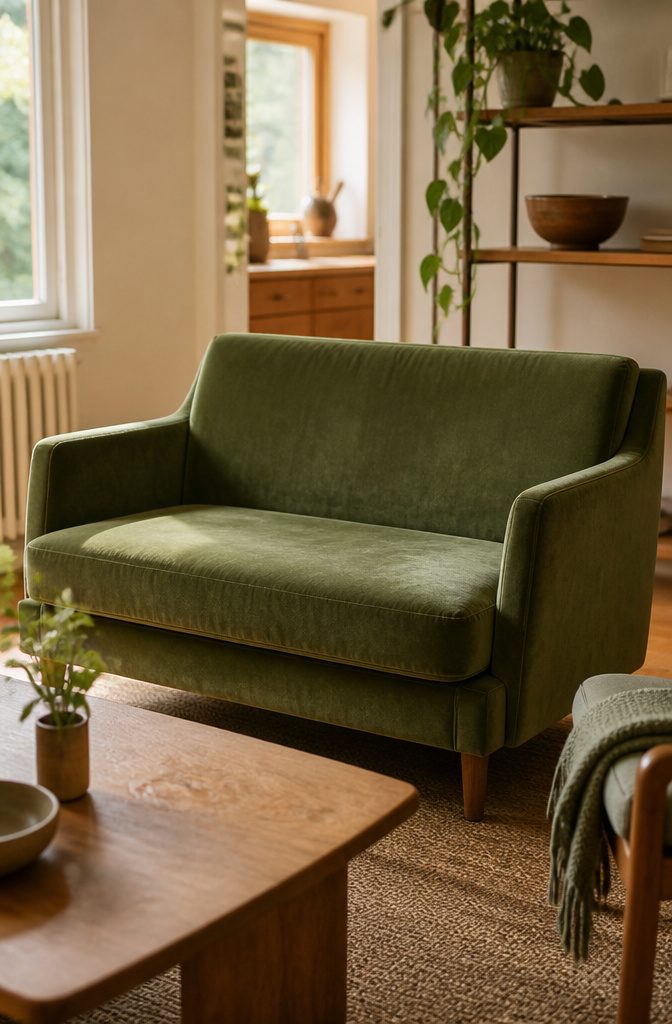
Sabai makes their Essential Sofa from recycled velvet in moss or seafoam, and you can order it as a loveseat, a chair, or stretch it into a five-, six-, or seven-seat corner sectional.
The frame uses FSC-certified wood, and the whole thing ships flat so you can carry it up narrow stairs without hiring help. Prices run $745 to $5,795 depending on size and configuration.
The Repair Don’t Replace program sends parts if something breaks instead of asking you to buy new, and the Sabai Revive resale line lets you sell your sofa when you move instead of dragging it to the curb.
The no-flame-retardant velvet washes when a glass of wine tips, which matters more than certification when you’re the one scrubbing it.
2. 7th Avenue — Water- and Stain-Resistant Couches
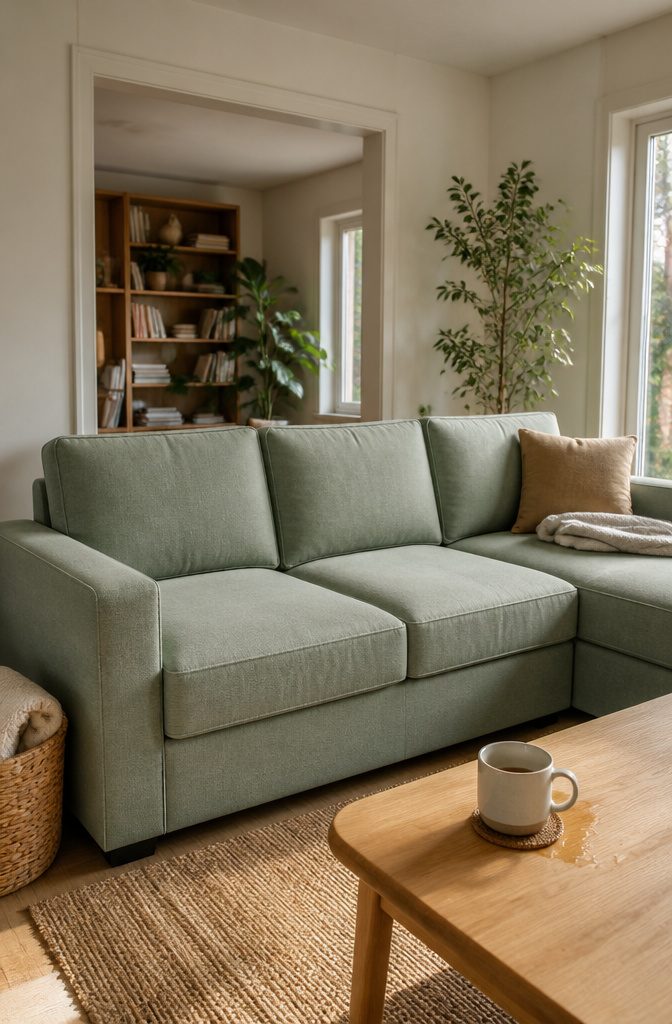
7th Avenue builds sofas with removable, machine-washable covers treated with FAS-free DWR coating, so spills bead off instead of soaking in.
The water repellency holds up through normal cleaning cycles, which matters if you’re facing kids, pets, or just coffee near a light-colored couch. Covers pull off completely when deeper cleaning is due.
The frames use FSC-certified wood with steel-reinforced legs, and the company rates them for over a decade of use. Cushions are a memory foam blend with adjustable firmness and hypoallergenic down-alternative fill.
Pricing runs $1,730 to $3,940 depending on configuration—modular pieces let you start small and add sections later without replacing the whole thing. Fabric is OEKO-TEX certified, and the sofas skip flame retardants and PFAS treatments entirely.
3. Quince — Contract-Grade Performance Velvet
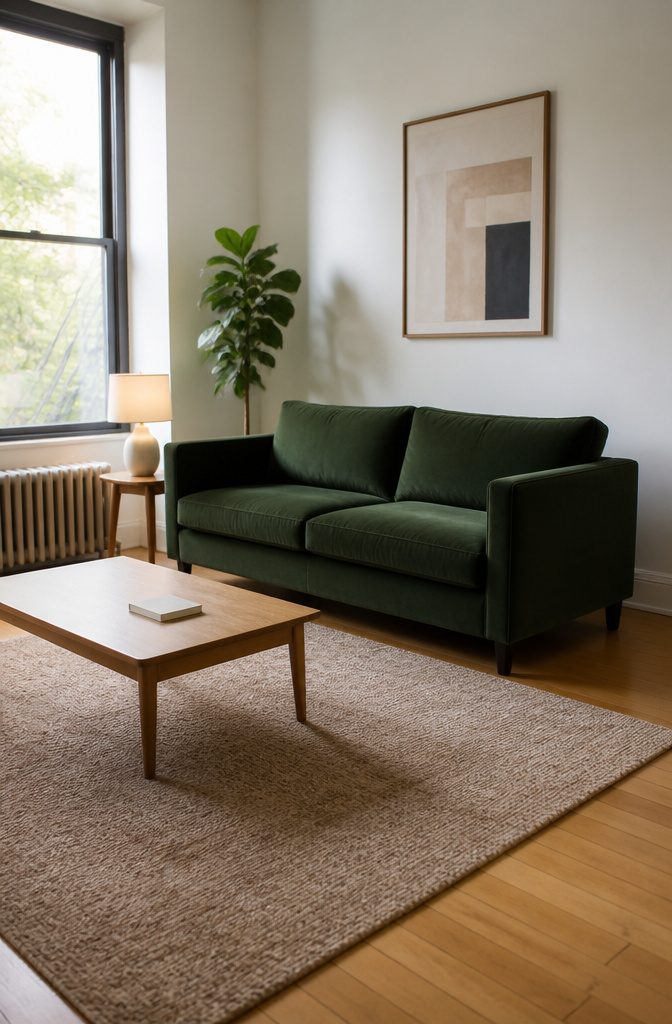
Quince upholsters its Sierra Performance Velvet Sofa in contract-grade performance velvet, the same fabric spec used in hotels and lobbies where a couch takes daily abuse.
The frames are solid and kiln-dried engineered wood with corner blocking, and the cushions mix foam, recycled fiber, feather and down so you’re not refluffing them every evening.
Prices run $825 to $3,600 depending on which of the three lengths you pick: 7 feet, 8 feet, or 9 feet. White glove delivery is included, meaning the crew brings it in, unwraps it, and sets it up without an extra charge.
One buyer noted delivery took about four weeks from order to arrival, and the scheduling link let her pick the day that worked.
The sofa showed up looking more expensive than its price, she said, and fit her small apartment without overwhelming the room.
4. Inside Weather — Customizable Modular Sofas
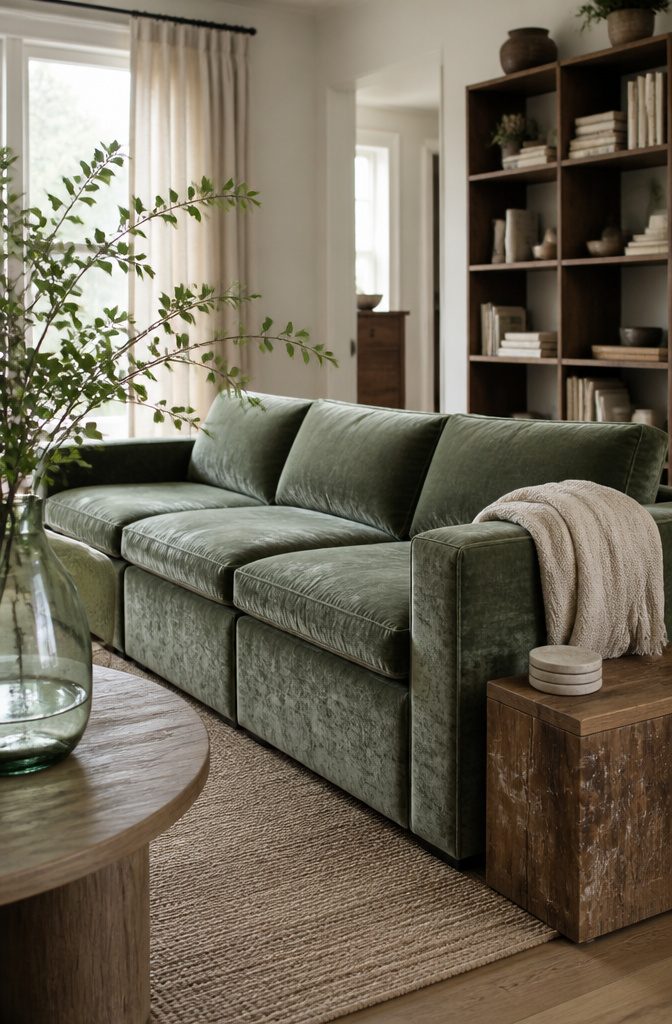
Inside Weather builds each sofa to order in California, which means you can adjust dimensions most brands leave fixed — arm height included.
The Modular Bondi Collection uses a kiln-dried solid ash wood frame and offers green upholstery in rosemary or jade luxury upcycled velvet, both with removable covers that go straight into the wash.
Pricing runs $2,454 to $5,891 depending on configuration and foam choice: deluxe memory foam for a sink-in feel, classic plush blend for slightly firmer support.
The company plants at least two trees per order and packs each piece in foam made from recycled bottles — one sofa diverts about 200 bottles from landfills.
You get a full year to try it at home, and if the fabric holds up the way one customer described after five months with a dog, the upcycled velvet proves durable enough for daily use without showing wear.
5. Sundays — Quilted Sofas with Removable Toppers
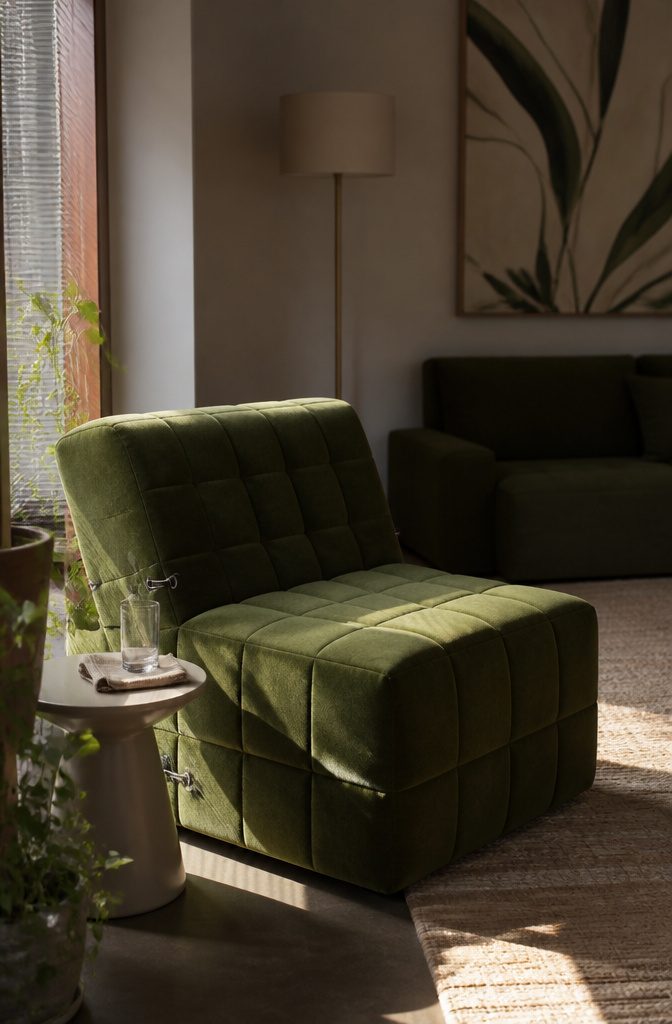
Sundays makes box-stitched toppers that button onto the sofa frame and pull off when you need to wash them.
The quilted look comes from the stitching pattern — squares run across the surface — and the whole topper lifts away instead of making you work a slipcover on and off.
Alligator clips hold the seat and back sections together, so the modular pieces stay put but you can still break them apart to move or reconfigure.
The fabric is LiveLife Performance, which sheds stains and dries fast without PFAS treatments. I like that the removable design makes spills less stressful — you unbutton the topper, toss it in the wash, and snap it back on.
The Quilt Collection Modular Chair in green velvet starts at $1,350 and ships to the contiguous U.S. and Canada.
6. Albany Park — Apartment-Friendly and Affordable Sofas
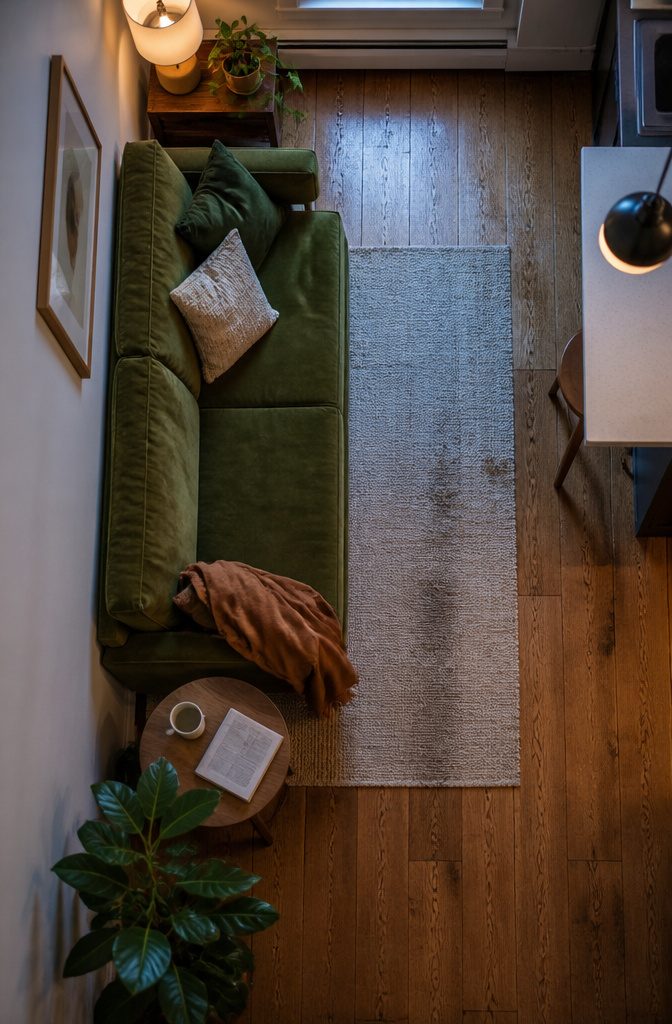
Albany Park ships sofas in boxes small enough for apartment stairwells and promises assembly in 15 minutes or less—no waiting on a delivery crew, no blocking the lobby.
One customer reported setting up their piece in under 5 minutes without tools, which lines up with what I’ve read about the brand’s leg-and-slot system.
The Barton Sofa comes in PFAS-free olive velvet with deep cushions and a profile that works in tight rooms, while the Kova Grand U-Shape is their modular option if you want a sectional you can reconfigure.
All fabrics are OEKO-TEX certified and free of flame retardants, and the frames are handmade in North America.
Pricing runs $984 to $8,320 depending on size and fabric, which puts them below most of the other sustainable brands on this list without cutting the certifications.
They offer 30-day returns, so the risk is lower if you’re ordering velvet without seeing it in person first.
7. West Elm — Three Velvet Fabrics for Different Uses
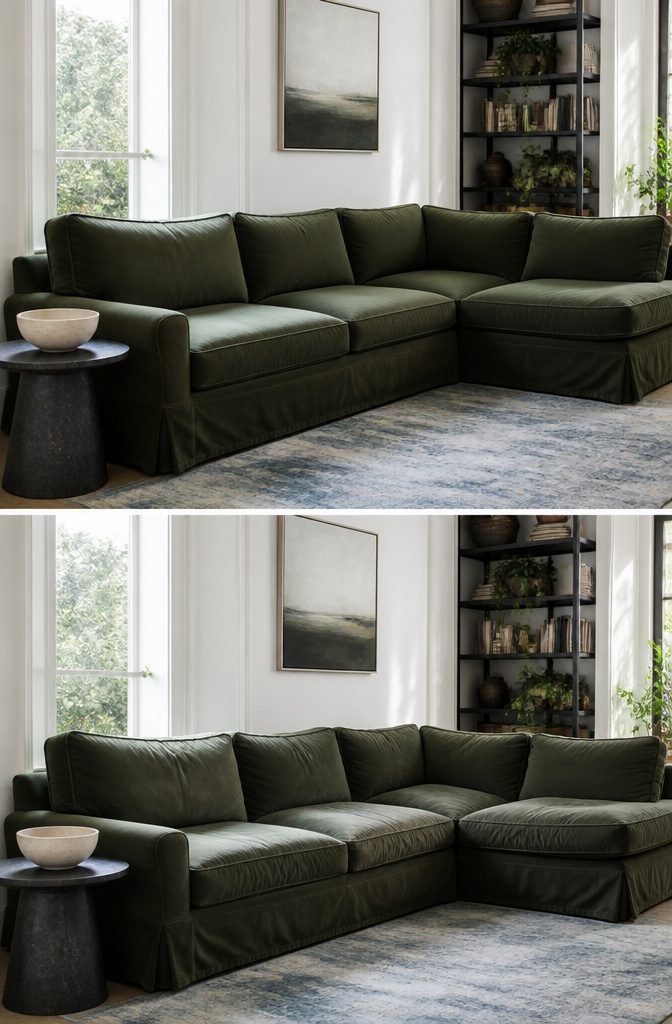
West Elm offers three velvet fabrics across its green sofas, and the difference comes down to how much wear the material can handle.
Performance velvet is rated for 100,000 double rubs, which puts it in high-traffic territory — fine for a family room where people actually sit every day.
Distressed velvet sits in the middle with a softer hand and a slightly worn-in look from the start, while deluxe velvet is the low-traffic choice: it looks the most refined, but it won’t hold up to daily use the way performance does.
The Harris Skirted Slipcover sectional comes in all three velvet options, and West Elm offers three green shades — evergreen, tarragon, and dark olive — so you’re not locked into a single tone.
Prices run $599 to $5,995 depending on the sofa size and fabric grade. I’d put performance velvet in any room that sees regular use and save deluxe for a formal living room that mostly gets looked at.
8. Joybird — Pet-Friendly Sofas with Color Swatches
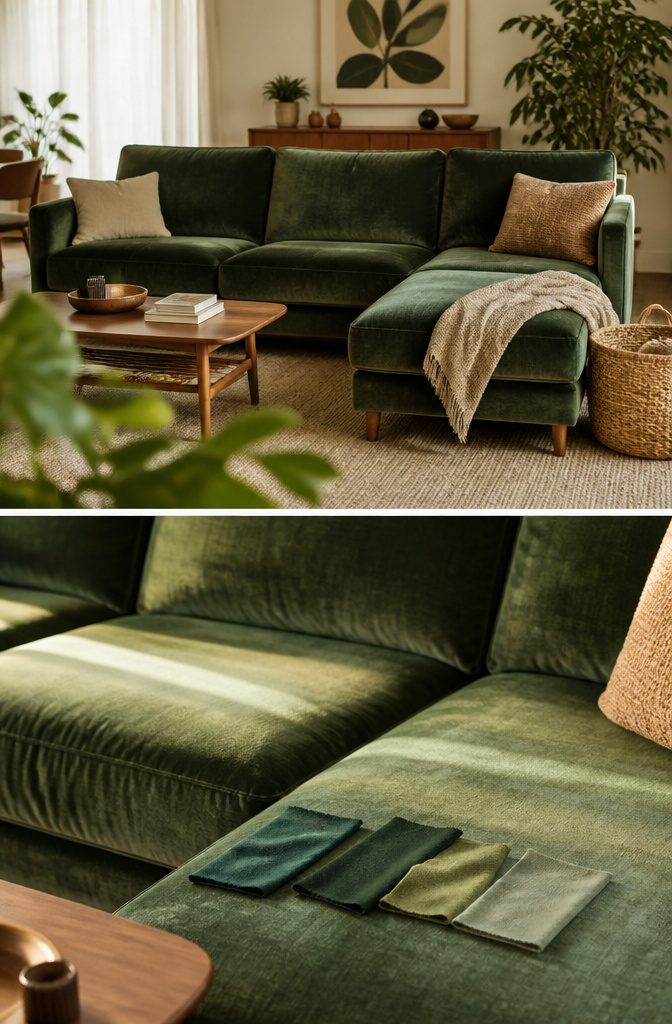
Joybird will send you free fabric swatch samples before you buy, which matters when you’re choosing between evergreen, forest, apple, and sage velvet — four greens that look different enough in natural light that you want the actual fabric in your hand.
The company was founded in California in 2014 and keeps production close: headquarters in Los Angeles, warehouse in San Diego, manufacturing in Tijuana.
Prices run $875 to $10,000 depending on size and configuration. The midcentury modern baseline shows up in most of the catalog, but the customization options go wide enough that you can pull off other styles.
GREENGUARD Gold certified options available, and the velvet itself uses low-VOC stains. The Preston Reversible Sectional works if you want vintage lines without fuss, and the Rondell Sofa delivers diamond tufting and rolled arms if you’re after something more formal.
9. Rove Concepts — High-End Luxury Sofas
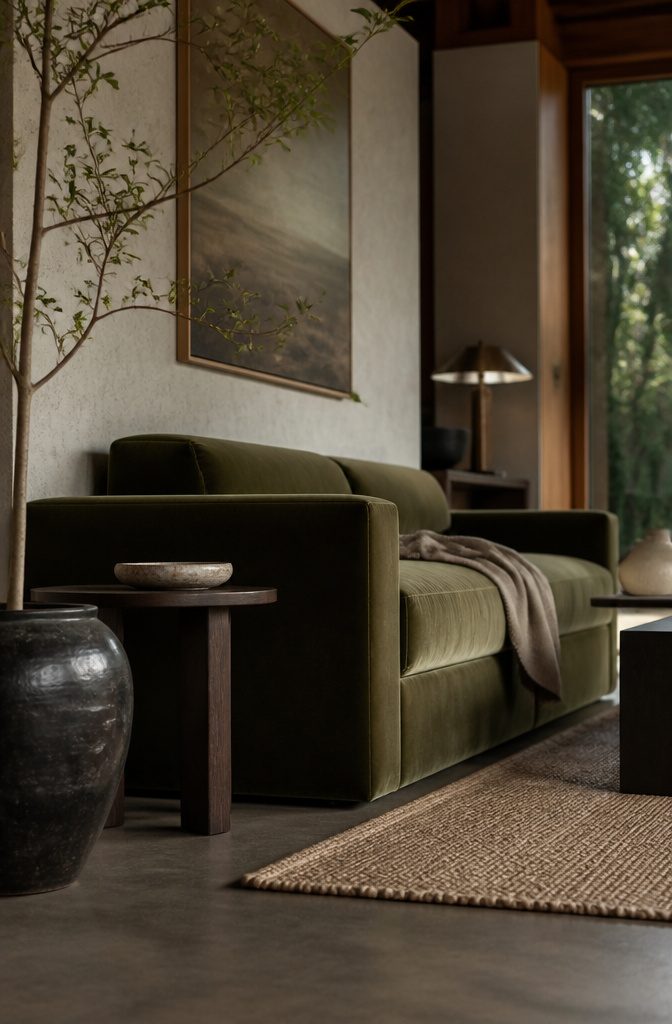
Rove Concepts started in the Pacific Northwest in 2011 and positions itself as an eco-design house bringing luxury pieces to a wider audience.
The Maria Sofa comes in olive-green velvet with a subtle shimmer — a clean-lined silhouette influenced by Japanese architecture that Maria Sharapova designed.
The Milo Sleeper Sofa, one of the brand’s most-reviewed pieces, is available in sage vegan suede if you want another muted green option that skips animal products. Prices run $1,479 to over $7,705, putting these firmly in the high-end range.
The company uses FSC-certified wood where possible and plants trees as part of its sourcing approach, though you are paying primarily for the design and the hand of the materials rather than sustainability credentials alone.
How I Pair Green with Other Colors
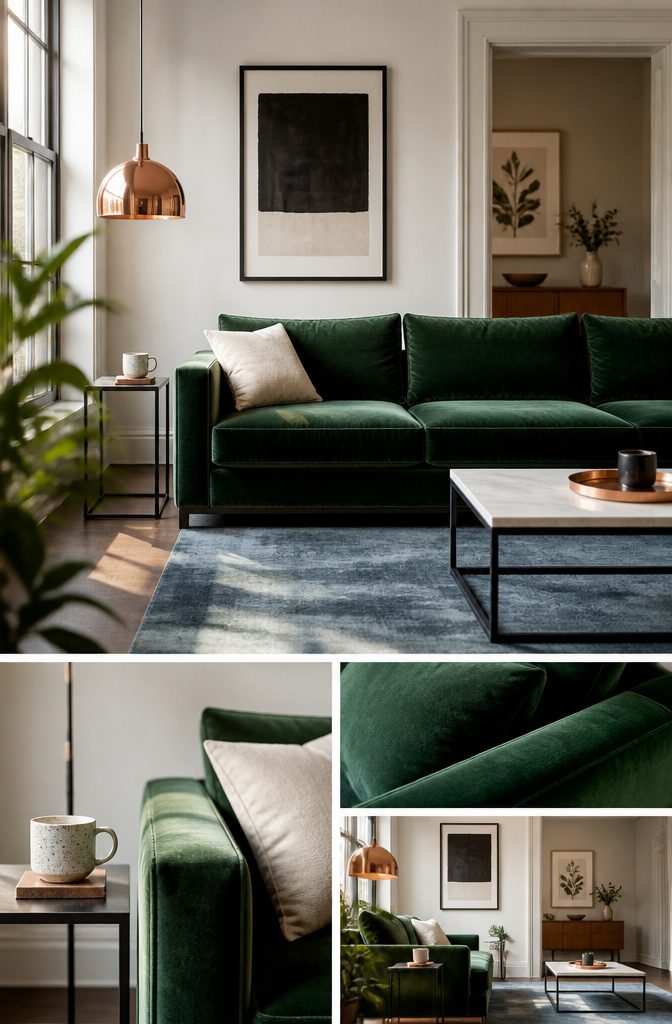
I reach for green when I want a living room that feels anchored but not heavy.
The color sits between warm and cool depending on the shade — moss leans softer and more relaxed, sage reads refined, and deeper hunter tones carry weight without going as stark as navy or charcoal.
Pairing green with black and white gives the cleanest contrast.
A dark green velvet sofa against white walls keeps the room from feeling too serious, and black metal side tables or picture frames pull the look together without competing. Cream softens the edges if pure white feels too clinical.
Gray-blue works when I want something quieter. The two colors share enough coolness that they sit next to each other without friction, and the combination reads calmer than green with bright blue or teal.
Copper-toned lighting or hardware adds warmth back in — pendant fixtures, cabinet pulls, or a round mirror frame in brushed copper all lift the palette without requiring a full furniture swap.
Why Sustainable Velvet Production Matters
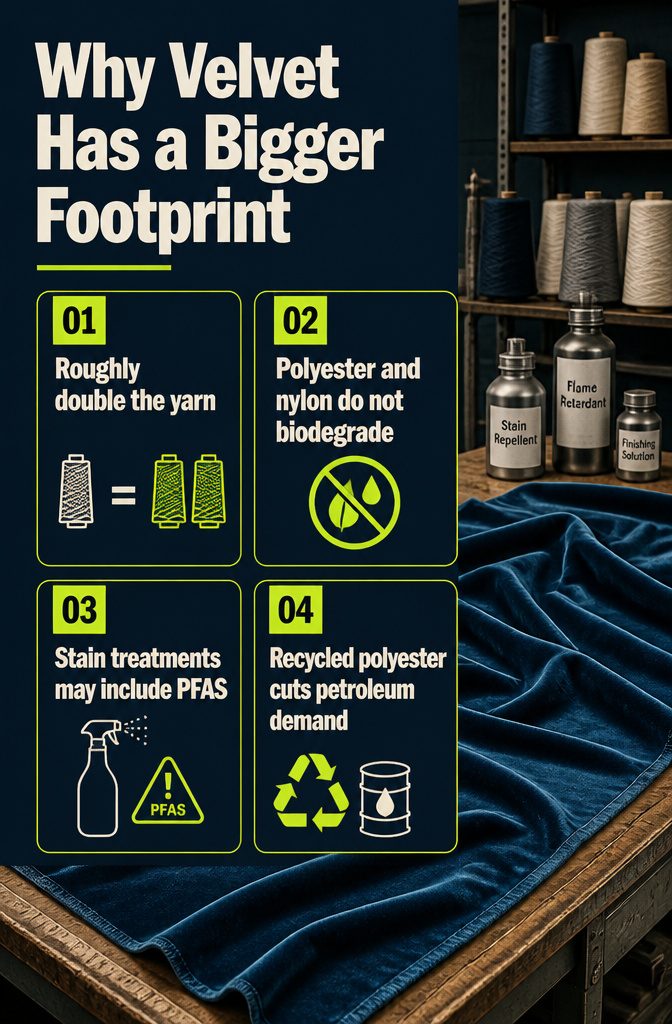
Velvet pulls more resources than most upholstery fabrics because it needs multiple production steps and roughly double the yarn. Most velvet today is woven from polyester or nylon — both plastic-based and neither one biodegrades.
The synthetic base alone would be enough to flag, but manufacturers often add stain repellents on top, which brings a second environmental problem: chemical treatments that can include PFAS and flame retardants.
Recycled polyester cuts the petroleum demand without solving the microplastic issue, but it still beats virgin synthetic on overall footprint.
I look for velvet made from recycled content first, then check for third-party certifications that confirm the fabric is free from the chemical treatments that make disposal and indoor air quality worse.
A couch that skips both recycled materials and independent testing is one I pass on, no matter how good the weave looks.
Four Certifications That Take the Guesswork Out
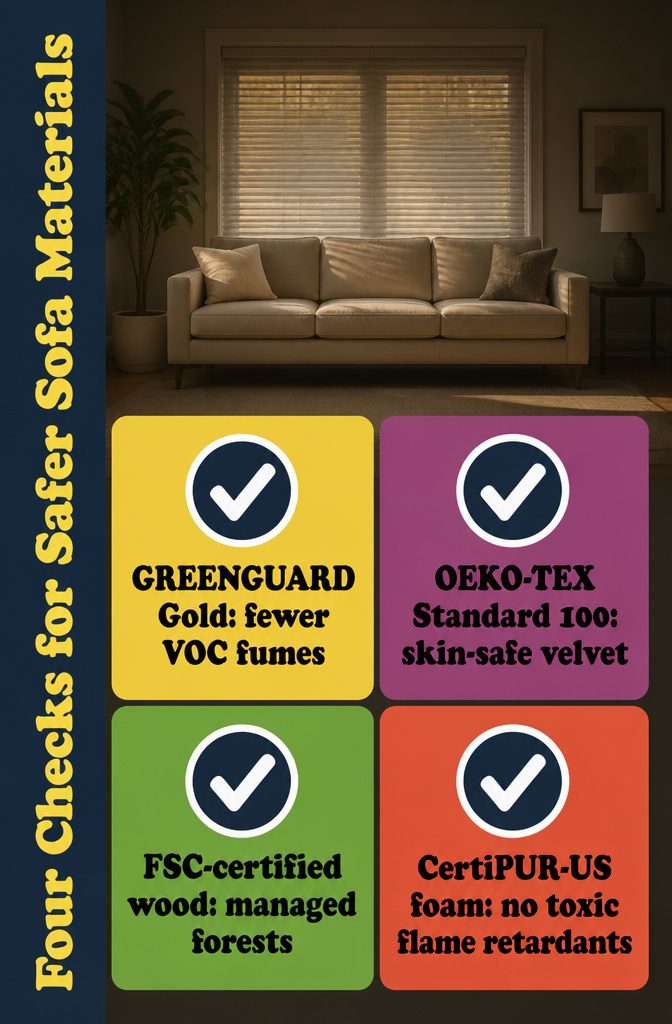
GREENGUARD Gold keeps VOC emissions low, so the air in your living room stays cleaner after the couch moves in.
OEKO-TEX Standard 100 means the velvet itself passed testing for harmful chemicals and won’t irritate skin during contact. Look for those two first.
- GREENGUARD Gold — fewer harmful fumes like VOCs, which matters most in closed rooms where a new sofa off-gasses for weeks
- OEKO-TEX Standard 100 — the velvet fabric tested free of harmful chemicals and safe for direct skin contact
- FSC-certified wood — the frame came from responsibly managed forests rather than clear-cut timber
- CertiPUR-US foam — cushions made without toxic flame retardants or heavy metals
Any one of these cuts the guesswork. All four together and you can stop second-guessing the purchase.
Frequently Asked Questions
What color goes with a green couch?
Black and white give the sharpest contrast, keeping a dark green velvet sofa from feeling too serious against white walls.
Gray-blue sits next to green without friction for a calmer palette, and copper-toned lighting or hardware adds warmth back in. Cream softens pure white if it feels too clinical.
Are green couches in style in 2026?
Green sofas anchor a living room without going as heavy as navy or charcoal, and the color reads refined in sage, relaxed in moss, or substantial in hunter tones.
The shade sits between warm and cool depending on which green you pick, so it adapts to different styles rather than locking you into one look.
Is a green couch a good idea?
A green couch works when you want a room that feels grounded but not stark. The color pairs easily with neutrals, sits well next to gray-blue, and holds up across different design approaches depending on the shade you choose.
Why consider sustainable velvet for your couch?
Velvet uses roughly double the yarn of most upholstery fabrics and is usually woven from polyester or nylon, neither of which biodegrades.
Manufacturers often add stain repellents on top, which can include PFAS and flame retardants. Recycled polyester cuts petroleum demand without solving microplastics, but it still beats virgin synthetic on overall footprint.
What certifications should I look for in a green velvet sofa?
GREENGUARD Gold keeps VOC emissions low so the air stays cleaner after the couch moves in.
OEKO-TEX Standard 100 confirms the velvet tested free of harmful chemicals and is safe for direct skin contact. FSC-certified wood means the frame came from responsibly managed forests, and CertiPUR-US foam skips toxic flame retardants and heavy metals.