
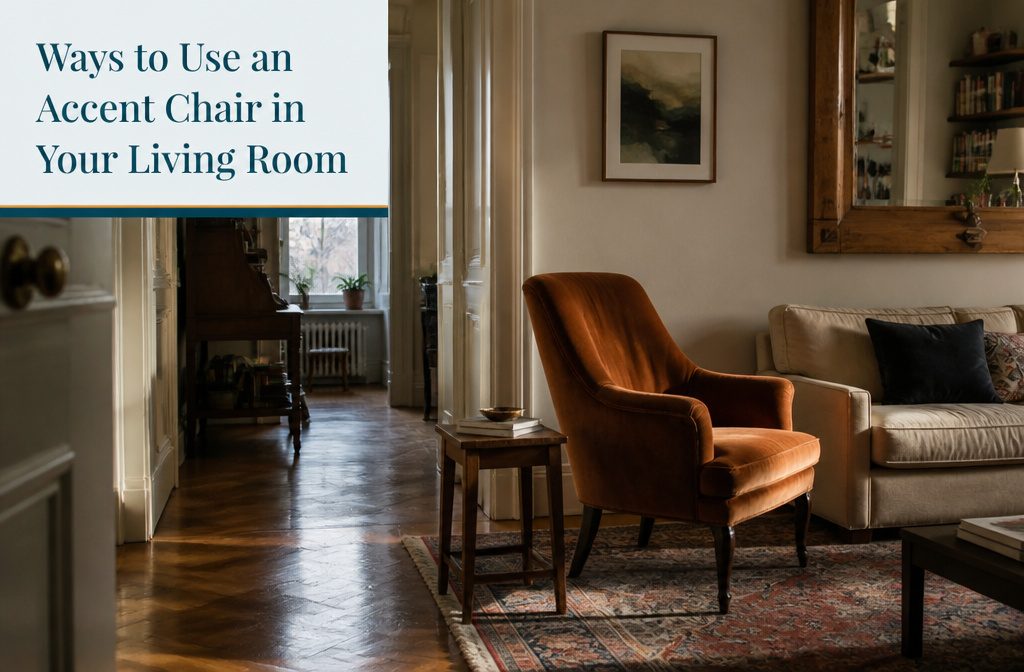
An accent chair pulls a room together when it either commands attention or fills a functional gap, but the setup fails the moment it blocks the path between your door and your sofa.
The difference comes down to clearance: 45–60 cm in the main routes, tighter in the corners nobody walks through twice an hour.
A velvet armchair angled toward your seating or a club chair floated opposite the sofa both work if you measure the gaps first and live with the layout for a few days before deciding it belongs where it is.
1. Use the Chair as a Focal Point
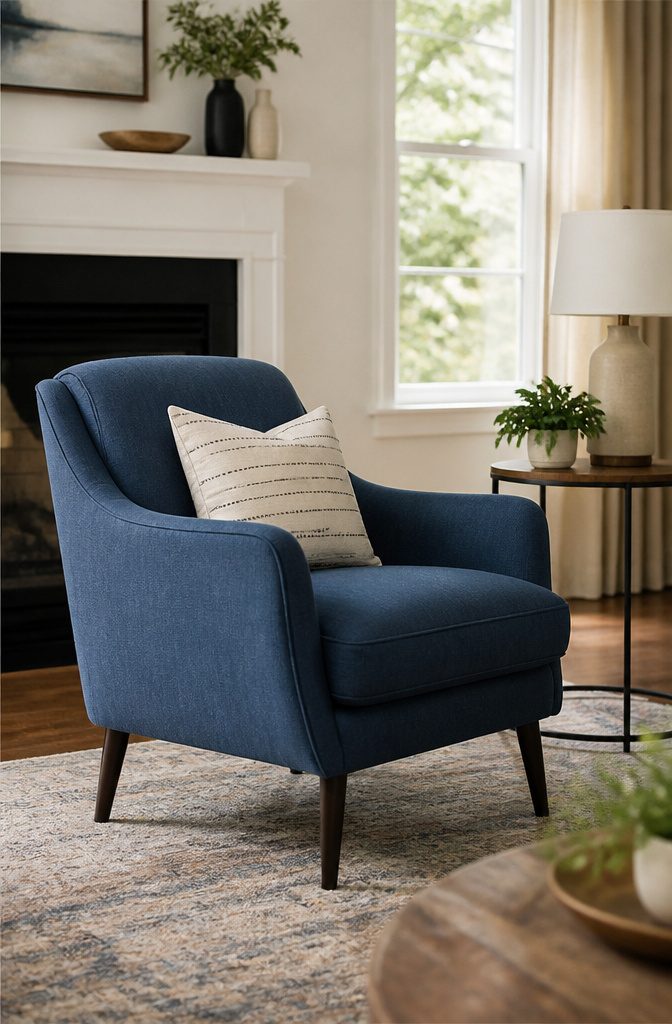
A chair in saturated teal velvet or a bold geometric print stops the eye the moment someone walks in.
That pull gives the room a center, especially when the rest of the seating stays neutral. The Luxe Velvet Armchair works this way—deep fabric against pale walls makes it the thing you notice first.
Shape does the same work as color.
The Egg Chair by Arne Jacobsen (43"H × 34"W × 31"D, $11,499) was designed in 1958 with a sculptural shell that wraps around the sitter. The winged profile stands out in a room full of straight-backed sofas.
The Knoll Willo Perron Bun Chair takes a different route: pillow-soft upholstery on a chrome base, 45 inches wide, big enough for two people and impossible to ignore when you walk past it.
The Mid-Century Modern Chair and The Classic Leather Club Chair both anchor a corner through material contrast—wood legs and tight upholstery against plush sectionals.
Let the chair sit alone or add one throw, but skip heavy layering. The chair itself is the feature, not what you pile on top of it.
Recommended Products
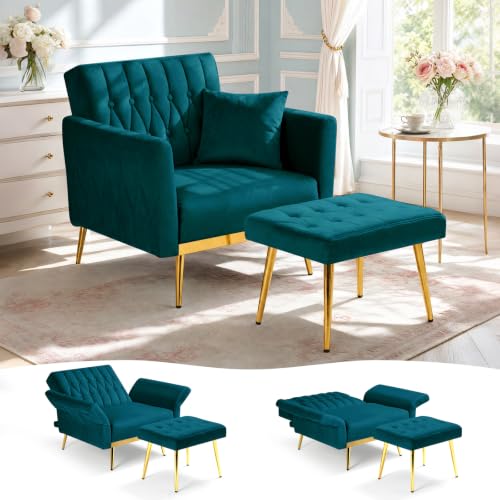
ADJUSTABLE ARMREST & BACKREST: This chair have three adjustable angles for the backrests and armrests: 90°,120°,180° It can be easily adjusted. This velvet armchair can convert into single bed for sleeping. Multi-functional sofa is perfectly for your home

Premium Skin-friendly Velvet - The surface is covered with selected velvet, which is very soft and skin friendly. What's more, this velvet fabric is soft and not easy to fade or pilling, so it will not become old easily even after long-term use.

ICONIC DESIGN: Elevate your space with this mid-century arm chair, featuring a W28.3" x D30" x H38.2" frame, drawing on timeless silhouettes for a touch of elegance.
2. Build a Conversation Area
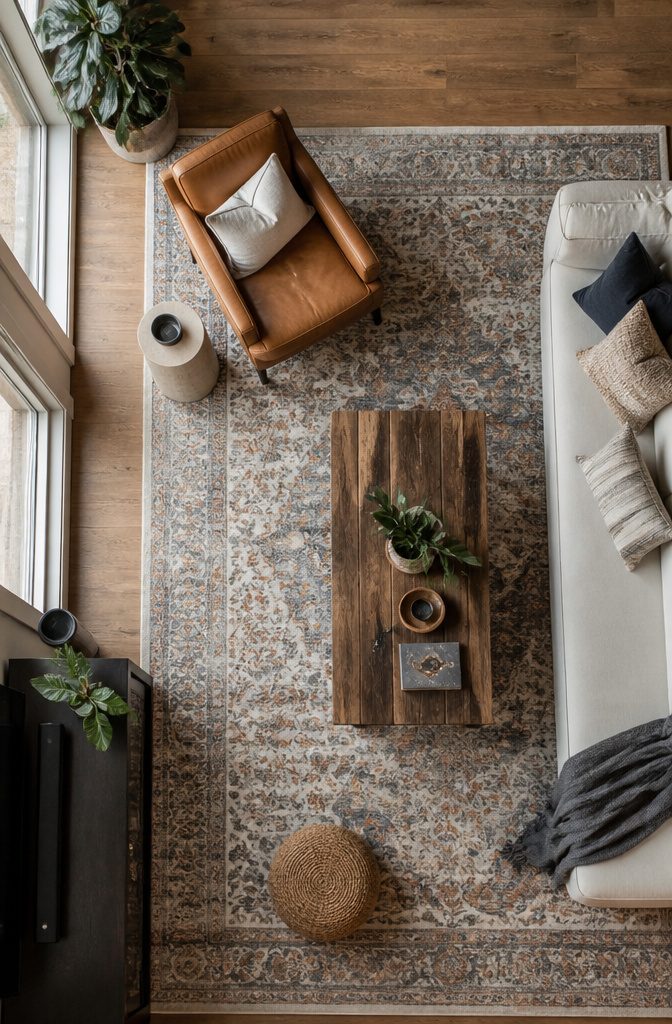
An accent chair angled toward the sofa gives people somewhere to turn when they talk. The U-shape works best: sofa on one wall, two chairs facing it across a coffee table, everyone looking inward.
If you have the length for it, swap one chair for a loveseat and flank it with a pair of chairs so the layout stays symmetrical.
In a smaller room or an open plan, one chair pulled at an angle to a sectional is enough to define the conversation zone without boxing it in.
Keep about 3 to 4 feet between the sofa and the chair—close enough that you don’t have to raise your voice, far enough that someone can walk through without turning sideways.
Tighter than 18 inches and the room feels cramped; wider than 4 feet and the layout stops reading as a group.
If the chair sits perpendicular to the sofa instead of facing it, you can cheat the distance down a little, because the angle brings people’s sightlines closer than the furniture itself.
Recommended Products

NAILHEAD DETAILING: Every detail is meticulously considered, including the tasteful nailhead accents that adorn the edges of this chair. Each nailhead is hand-applied for a bespoke touch.

Modern Accent Chair Size: Overall Size 25”W×19”D×38” H; Detail Size: Back size- 25.5”W×19.5”H; Seat cushion size- 25”W×19”L; Leg Length: 13”H; Seat Sponge Thickness: 5.5 " Furnimart living room chairs will be a perfect place for you to relax and study.

Modern Accent Chair Size: Overall Size 25”W×19”D×38” H; Detail Size: Back size- 25.5”W×19.5”H; Seat cushion size- 25”W×19”L; Leg Length: 13”H; Seat Sponge Thickness: 5.5 " Furnimart living room chairs will be a perfect place for you to relax and study.
3. Create a Reading Nook or Cozy Corner
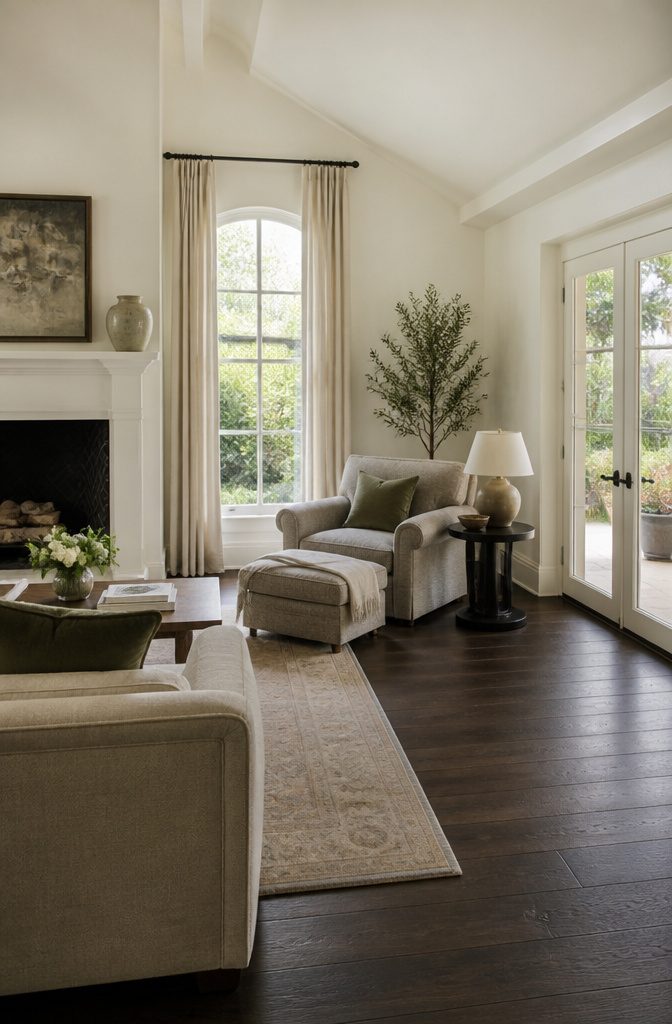
A corner near a window turns a single chair into a retreat. Natural light matters for afternoon reading, and a quiet spot away from the main seating keeps the area from feeling like overflow furniture.
I’ve pulled chairs out of polite rows along the wall more times than I can count—pushing one into a corner with a side table beside it immediately reads as intentional rather than leftover.
The side table only needs to be large enough for a mug and two or three books.
A floor lamp or a wall-mounted fixture keeps the light usable after dark. A soft blanket or a pillow signals that the spot is meant for settling in, not for guests waiting their turn on the sofa.
If the room is tight, a chair with a minimalist frame and clean lines claims less visual space than an overstuffed club chair.
Mid-century shapes with curved backs and tapered wooden legs fit neatly without reading as bulky. The whole setup—chair, table, lamp—can sit in 4 feet of floor space and still feel like a separate zone.
Recommended Products

【Ultra-Plush Filling 】 Experience the ultimate "sink-in" feeling with our premium, high-density memory foam filling. Unlike standard cotton-filled chairs, this cloud lounge accent chair contours perfectly to your body, providing superior pressure relief and cloud-like support

Ultra-Spacious & Cozy Design: Sink into luxury with our Oversized Leisure Round Chair, featuring an expansive 55" W x 45" D seat and wide 10" square arms for effortless lounging. Perfect for curling up with a book, napping, or enjoying lazy weekends in style.

Adjustable Backrest: The accent chair is equipped with an adjustable backrest that adapts to your different seating positions, allowing you to find the perfect angle for reading, reclining, or napping
4. Add Seating Without Overwhelming the Room
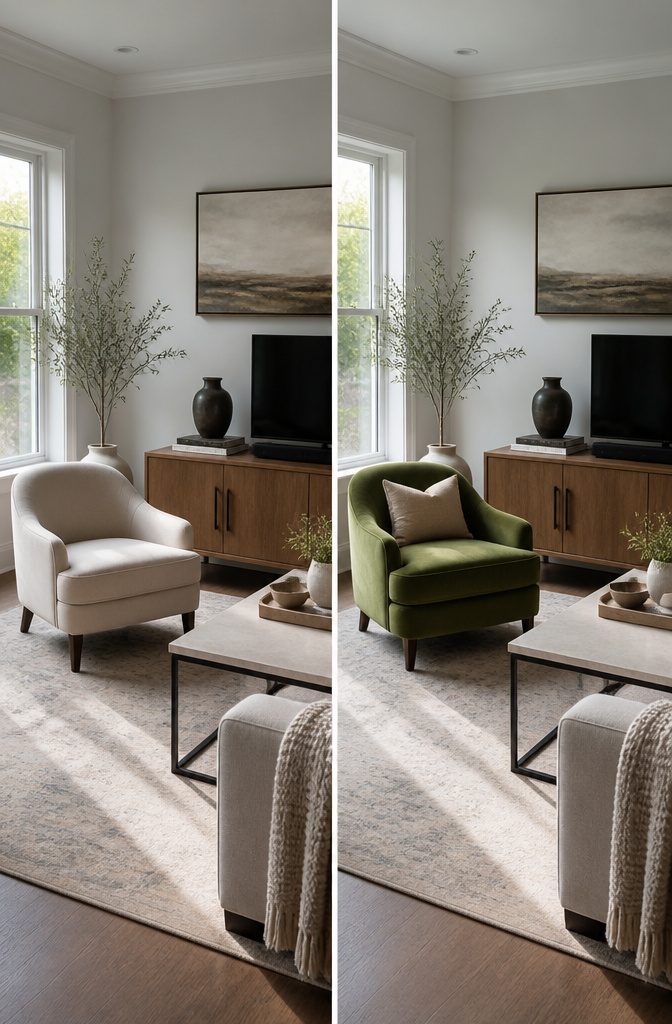
A single accent chair fills a gap without taking over the room, and a pair flanking the sofa works when you measure first.
In a compact 12-square-meter living area, three chairs with distinct personalities can fit if you treat them as a cohesive group rather than a lineup—two usually sit better than three.
Profiles around 60–75 cm wide and elevated legs keep the visual weight light in tight quarters, and measuring doorways before you order saves the trouble of returns.
If the room runs small, armless designs or chairs with open arms take less floor space than full upholstered pieces.
Larger rooms tolerate oversized lounge chairs that double as sprawl-out seating, but the same chair in a studio crowds the walkway and fights the sofa for attention.
5. Coordinate or Contrast Colors, Patterns, and Textures
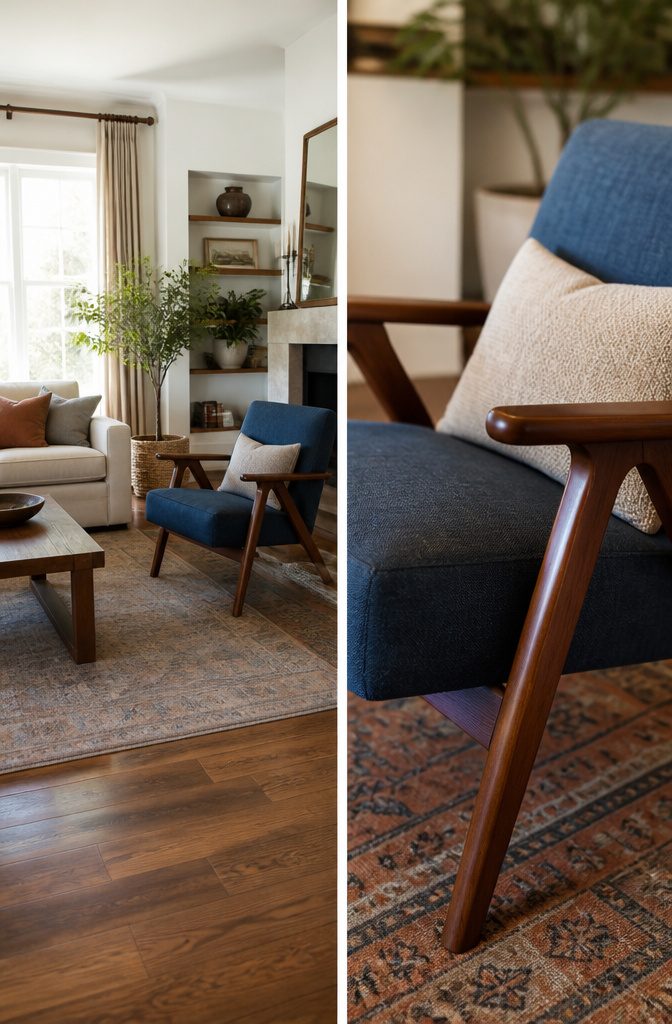
An accent chair does not need to match your sofa. If the room runs neutral, a bold chair in a single striking color pulls focus without needing a twin elsewhere.
When the chair does contrast—a velvet seat in a room of linen, a geometric print against solid upholstery—repeat that color or material in at least one other place, even if it is just a cushion or a small sculpture on the side table.
That repetition keeps the scheme from reading as random.
Pattern works the same way. A striped chair and a floral rug can sit together if they share a color; without that link, the patterns compete.
If the chair itself carries a particularly bold print, let it be the only pattern in view and keep the rest of the upholstery plain.
Leather, velvet, and linen each bring a different weight to the room, and that difference is useful—it adds depth.
Just make sure the chair’s finish has something to echo, whether that is a wooden frame that matches the side table or a textile that picks up the tone of the curtains.
6. Use a Chair to Define a Zone in an Open-Plan Room
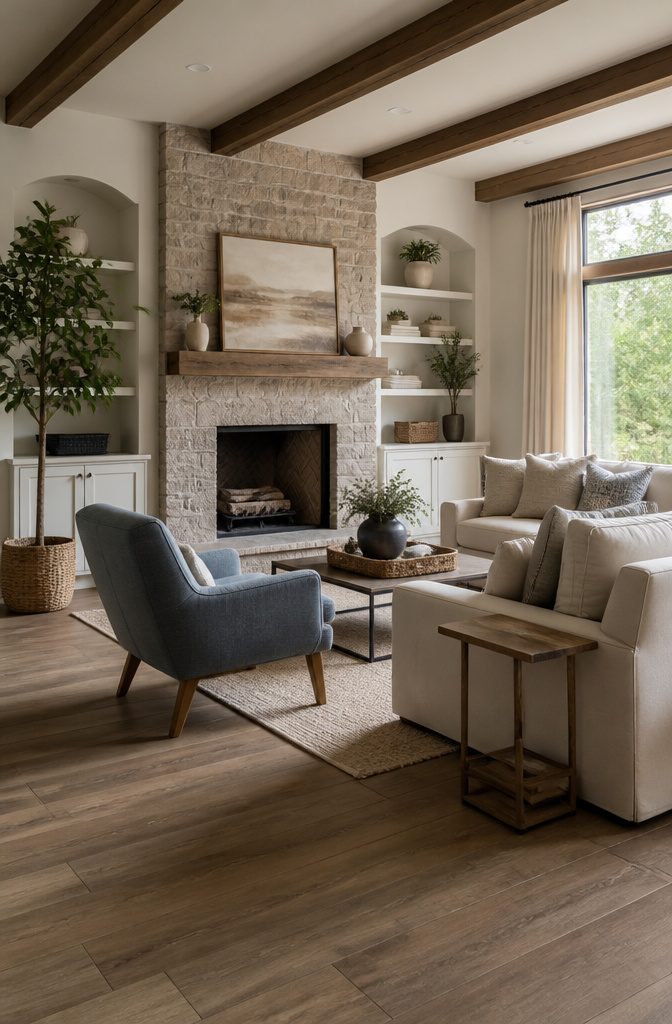
An accent chair set a few feet into the room — rather than shoved against a wall — can mark where the living area ends and the rest of an open floor plan begins.
Float the chair opposite or perpendicular to the sofa, and anchor both pieces with a rug that stops short of the dining zone.
The chair acts as a soft boundary without blocking sight lines or making the space feel carved up.
Placing a pair of chairs back-to-back with the sofa works the same way: the row of furniture reads as a divider, but you keep the airiness that makes an open plan worth having in the first place.
If you need storage and the floating layout pulls furniture away from the walls, a narrow console table behind the seating holds what would otherwise pile up on the floor.
You lose wall space for shelving, so measure what you actually need before committing to the arrangement.
7. Experiment with Placement and Furniture Combinations
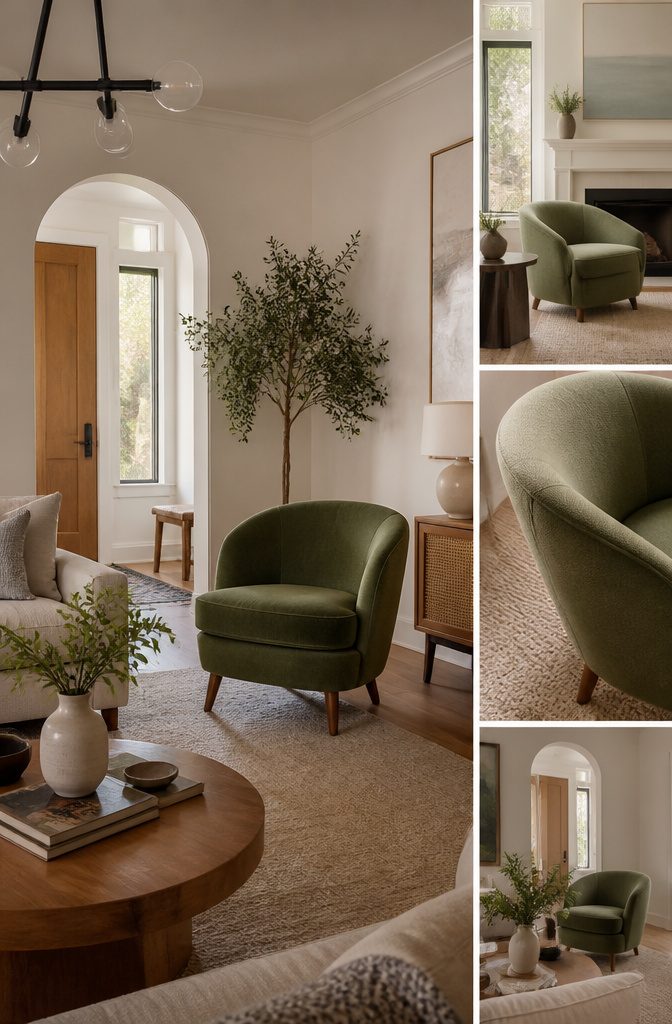
I move the chair around the room for a few days before deciding it belongs where it is.
The configuration that looks balanced in the morning might block your path to the kitchen by evening, and you won’t know until you’ve walked past it a dozen times.
Try the chair angled toward the sofa first, then facing the window, then pulled closer to a side table. Live with each setup long enough to see whether it works with how you actually use the room.
Pair the chair with things you wouldn’t expect to sit together. A small upholstered footstool next to a velvet armchair, or a narrow side table you’d normally put beside a sofa.
Add a lamp and a potted plant to layer in texture, and suddenly the chair reads as a thought-out corner instead of leftover seating.
If your room has a fireplace or a big window, orient the chair to face it. That draws attention to what’s already working in the space and makes the whole arrangement feel intentional.
8. Choose a Chair for a Distinct Function Beyond Living-Room Seating
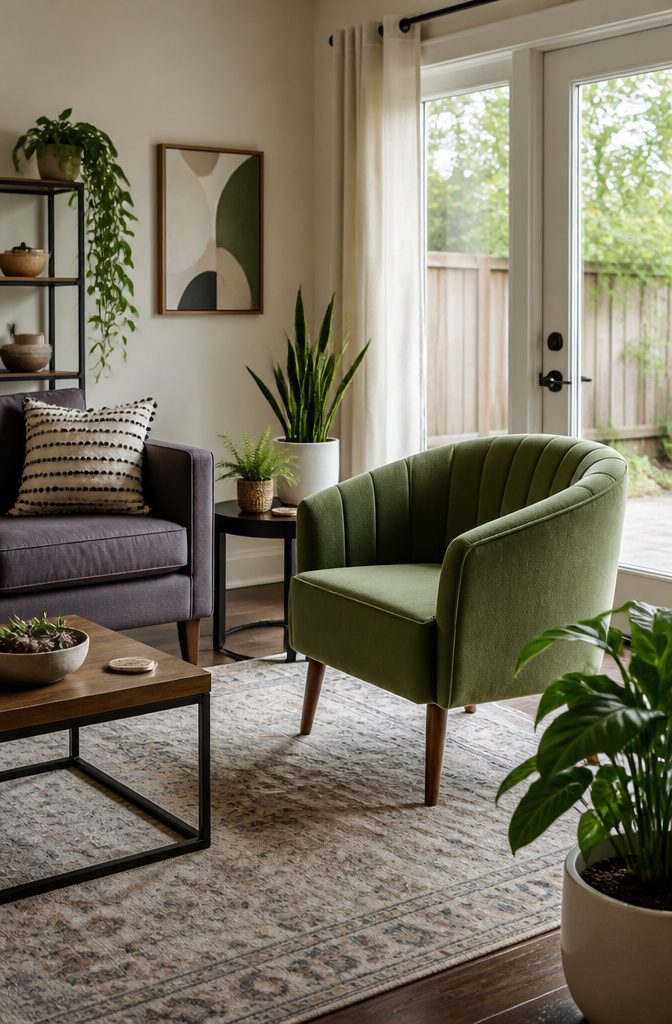
An accent chair serves rooms beyond the living room just as well.
A bedroom gains a place to sit while dressing or to toss tomorrow’s outfit instead of using the bed; an entryway gets a spot to pull on shoes without leaning on the wall.
Home offices benefit from a second seat for quick conversations that keep the desk clear, and dining rooms use an accent chair at the head of the table when the set came with six and the table seats eight.
In a child’s room, a chair scaled to adult height gives you a place to read aloud or fold laundry while the kid plays on the floor.
The same piece that would add a third seat in your living room might solve a standing problem in another part of the house, and moving it between rooms as needs shift costs nothing.
Style and Visual Coordination
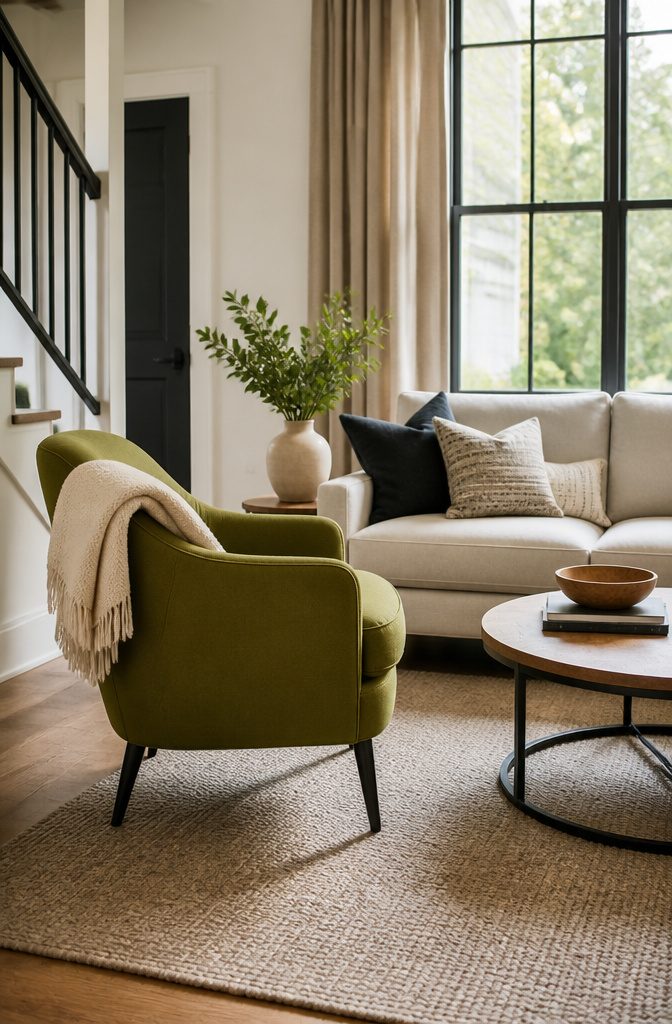
An accent chair can either pick up a detail from your sofa or stand apart from it — both work if you know which thread connects them.
If your room runs neutral, a bold chair in rust or deep teal acts as the punctuation mark the space needs.
If the walls and sofa already carry color, a linen or leather chair in cream or gray gives the eye somewhere to rest.
An accent chair… often makes a statement and contrasts with your sofa or other living room furniture; they’re slightly more sculptural or upright than reading chairs or lounge-ready seating.
That contrast can come from color, but shape and material matter just as much.
A velvet chair beside a linen sofa adds texture even when the tones match. A sculptural frame draws attention in a room full of straight lines.
I look for one shared element — a metal leg finish, a warm undertone, a repeated angle — so the chair feels like it belongs even when it refuses to blend in.
Fit and Scale Matter
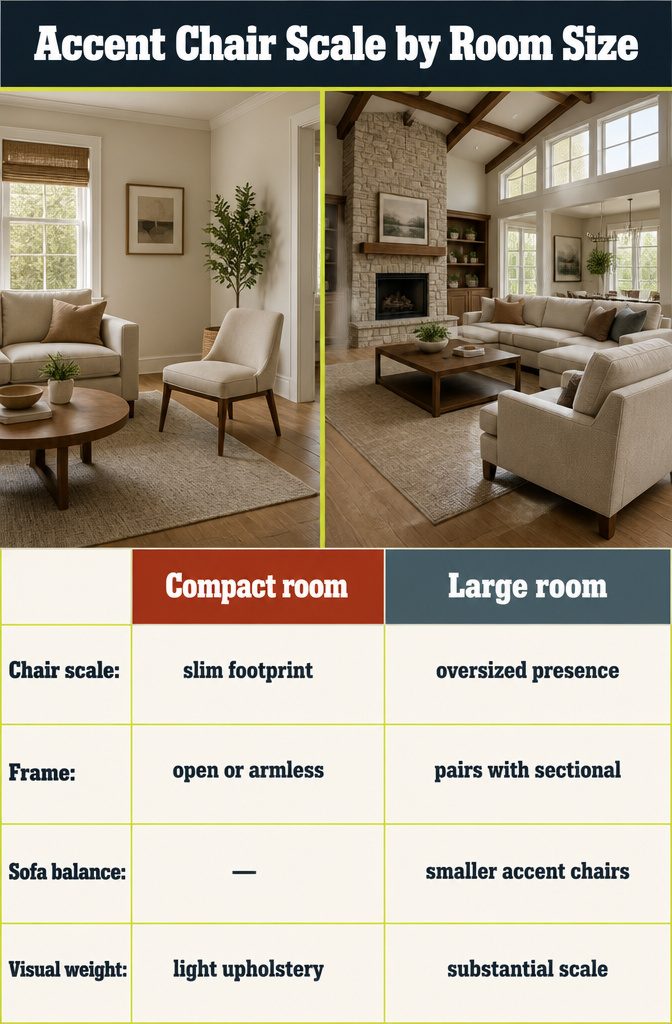
A chair that overpowers a small room or disappears in a large one throws off the whole setup. Measure your available space first — you need 45–60 cm of clearance around seating so people can move without squeezing past.
In compact rooms, armless chairs or designs with open frames and slim legs keep the footprint small without sacrificing a seat. Light colors help, too; they take up less visual weight than dark upholstery.
For larger spaces, an oversized chair reads as intentional rather than lost, especially when paired with a sectional. You want balance: if your sofa is big, smaller accent chairs keep the scale from tipping.
If you’re working with a loveseat or a narrow room, go the other direction and choose something with presence but not bulk — a chair with legs instead of a skirted base, or one that sits higher off the floor so you see through to the wall behind it.
Traffic Flow and Clearance
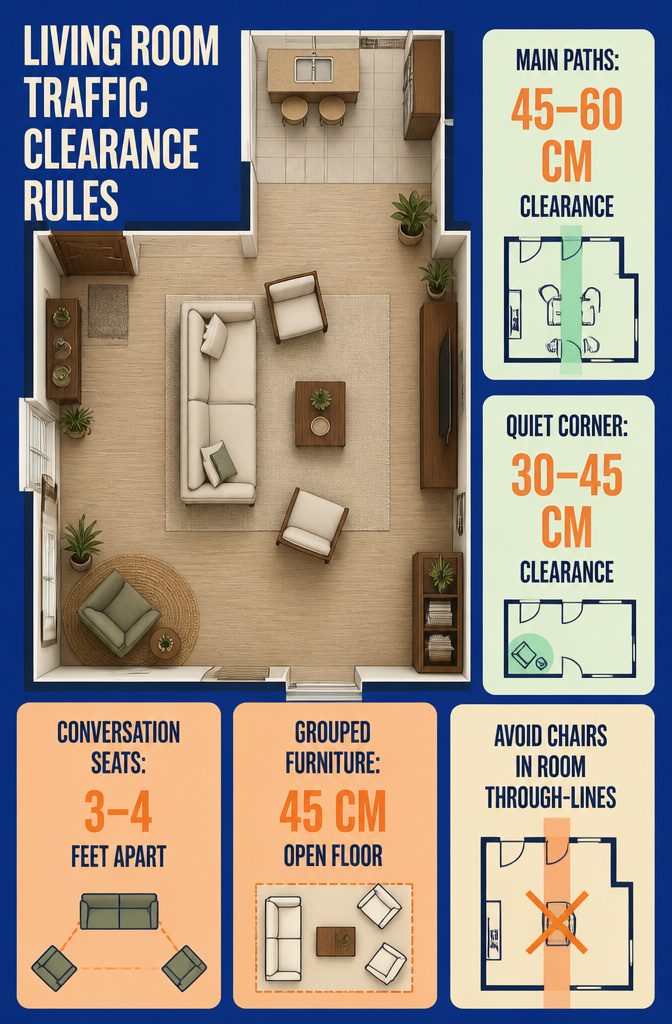
I use 45–60 cm of clearance in the main paths through the room — the line from the door to the sofa, the route to the kitchen in an open plan.
Seating pulled into a conversation triangle looks deliberate until someone has to squeeze past a chair back every time they cross the room.
Secondary zones can sit tighter. A chair tucked between the sofa arm and a window works with 30–45 cm on the quiet side, because nobody walks through that corner twice an hour.
For the conversation zone itself:
- Keep seats 3–4 feet apart — close enough to talk without leaning, far enough that the layout does not feel packed.
- Leave at least 45 cm of open floor around grouped furniture so the arrangement does not turn into an obstacle course.
- A low side table can bridge the gap between a sofa and chair without blocking the path the way a tall plant or stacked books would.
The U-shape and L-shape both put people at an angle to each other, which reads as inviting rather than formal, but both layouts fail if the chair lands in the through-line between two rooms.
Frequently Asked Questions
What are accent chairs used for?
Accent chairs add extra seating, define zones in open plans, create reading nooks, and serve specific functions like a spot to dress in the bedroom or pull on shoes in the entryway.
They also act as focal points or fill visual gaps without taking over a room.
Is it okay to have just one accent chair?
Yes.
A single accent chair fills a seating gap, anchors a corner, or creates a conversation area when angled toward the sofa. One chair works better than cramming in multiples that crowd the space.
Should your accent chairs match your couch?
No.
An accent chair can contrast in color, texture, or shape as long as it shares one element with the room, like a metal finish, a warm undertone, or a repeated angle. Matching is optional; connection is not.
What is the 4 in rule for seating?
Keep 3 to 4 feet between the sofa and accent chair so people can talk without raising their voices but still walk through without turning sideways. Tighter than 18 inches feels cramped; wider than 4 feet breaks the conversation zone.
What size accent chair is optimal for a compact living room?
Profiles around 60–75 cm wide with elevated legs keep visual weight light in tight quarters. Armless designs or chairs with open arms take less floor space than full upholstered pieces, and measuring doorways before ordering saves returns.
Is it feasible to place two accent chairs in a small living room?
Yes, if they are scaled right and arranged to support flow, like flanking the sofa or sitting in a conversation triangle. Two chairs work better than three in compact rooms.
How much space should be left around an accent chair?
Leave 45–60 cm of clearance in main pathways so people can move without squeezing past. Secondary zones like a corner between the sofa arm and a window can sit tighter at 30–45 cm.