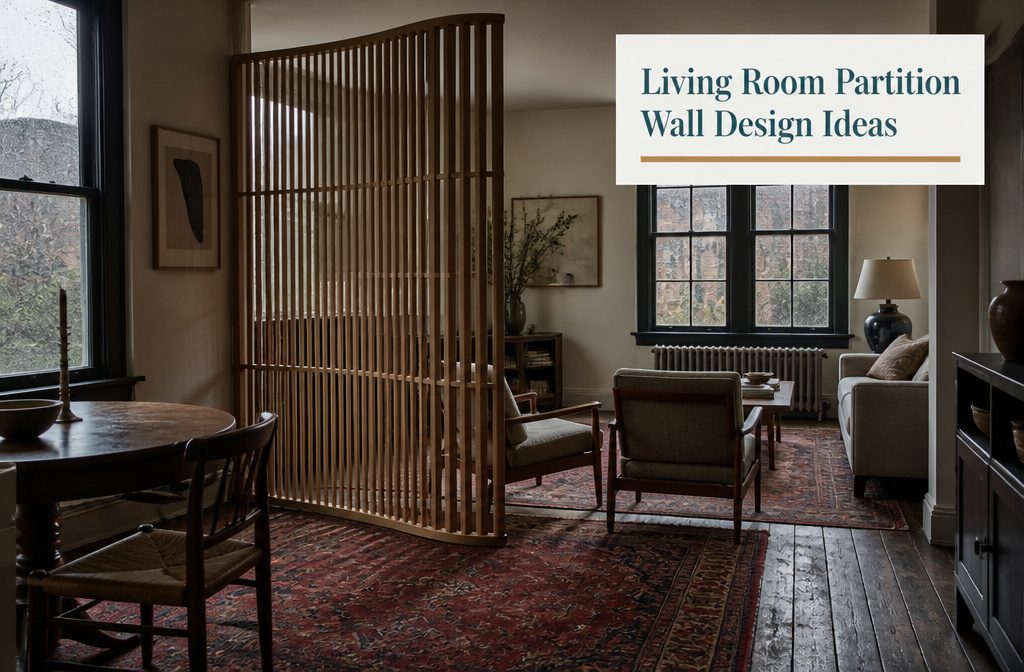
A partition between your living room and another zone can cost anywhere from $108 for a folding rice paper screen to $4,195 for a floor-mounted slatted divider, and what you pick depends on whether the partition moves when you rearrange or stays put.
Glass blocks need mortar and read as permanent architecture; a rattan screen folds flat and stores in a closet. The Artek Screen 100 weighs enough to curve in place but rolls up on webbing when you’re done with it.
1. Bookshelf or Open-Shelf Partition
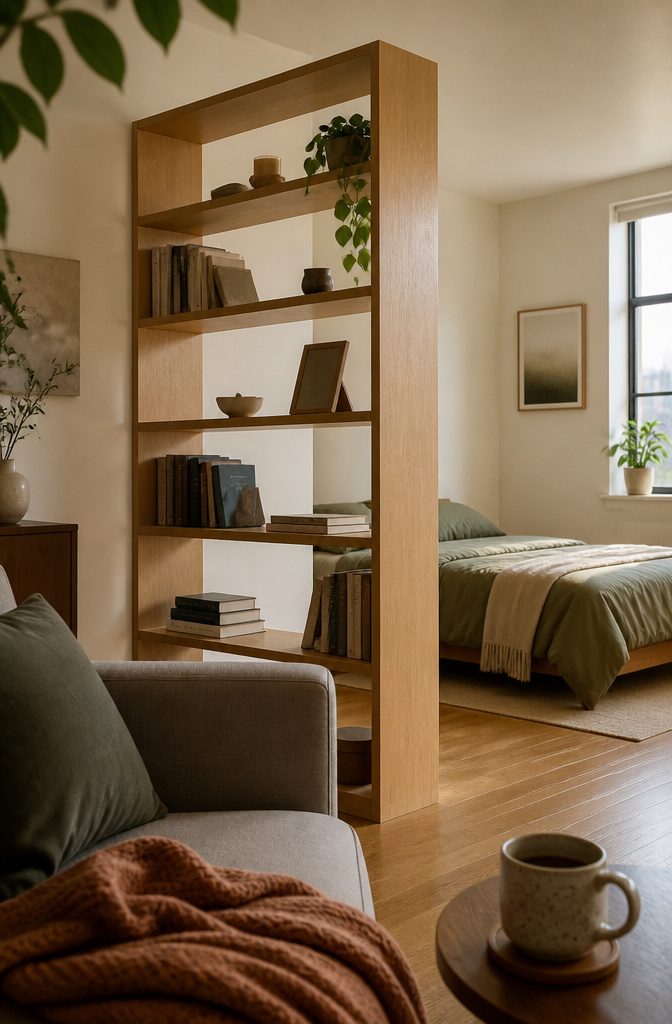
An open bookshelf splits the room without blocking sightlines or chopping off natural light.
The shelves themselves create the boundary—stack books on a few, drop in plants or photo frames on others, and the division feels intentional without feeling closed off.
Air moves through, you can see across to the other side, and you’ve gained storage in the process.
The setup works especially well in studio apartments where every piece of furniture needs to pull double duty.
Instead of a dead wall, you get display space for the things you actually want to look at: a row of hardcovers, a few candles, maybe a trailing pothos that softens the grid.
The bookshelf announces that this side is the living zone and that side is something else, all while keeping the room from feeling cut in half.
Choose a unit tall enough to read as a divider from across the room but open enough that it doesn’t block conversation.
Five or six shelves usually lands in the right range, and if the back is finished, the piece looks deliberate from both sides.
Recommended Products

Ample Storage: Measuring 47.2" W x 11.8" D x 70.9" H, this room divider wall features open shelves for books, plants, framed pictures, or daily essentials. This blend of storage and display functionality keeps your home tidy and stylish

Simply Modern, Seamless Fit: The CUSTOS Collection features crisp right-angled lines that fits effortlessly into your home. Complete your space with matching storage furniture for a cohesive look

【Versatile Storage & Display】With 11 open shelves, this bookshelf gives you the ideal space to organize books, collectibles, plants, photos, and home decor. More than just a bookshelf, it adds a stylish display area to your living room, kitchen, bedroom, home office, or any corner of your home
2. Storage Unit, Cabinet, or Niche Partition
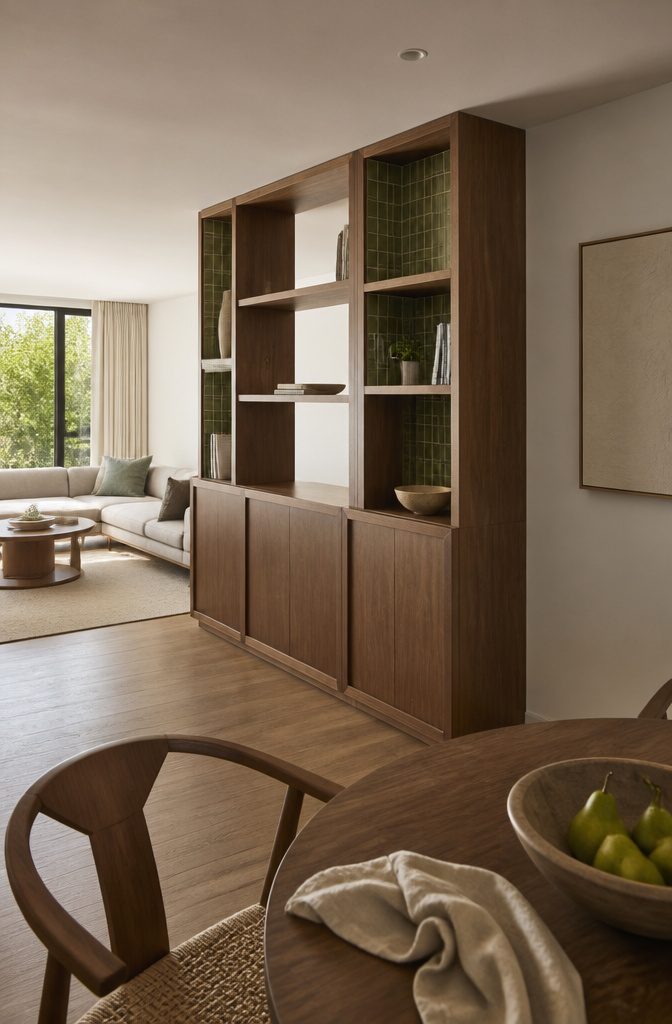
Cabinets and built-in niches screen more thoroughly than open shelves while keeping clutter out of sight.
A custom bookshelf or cabinet partition divides a studio-style bedroom or small living room while storing books, office supplies, or everyday essentials without sacrificing floor space.
The Crate & Barrel Steppe bookcase, 86 inches tall by 68 inches wide, combines sculptural open shelving on top with two enclosed cabinets below, accessible from either side—useful if both zones need concealed storage.
Entryway storage cabinets work especially well as dividers when they hide the kitchen or dining area from view.
A POP partition wall with built-in tiled niches adds color and depth while offering practical display or storage slots; niches lined with quality tiles bring architectural interest without the bulk of a full cabinet.
Wooden partitions in natural walnut or another warm finish give the division texture, and superior-quality plywood holds up better than particleboard when the piece doubles as load-bearing storage.
Recommended Products

Effortless Room Separation: Create a sense of separation without closing off your space. This 71-inch room divider helps define living areas, create a cozy corner, or add structure to open-concept interiors while keeping the room feeling open and connected.
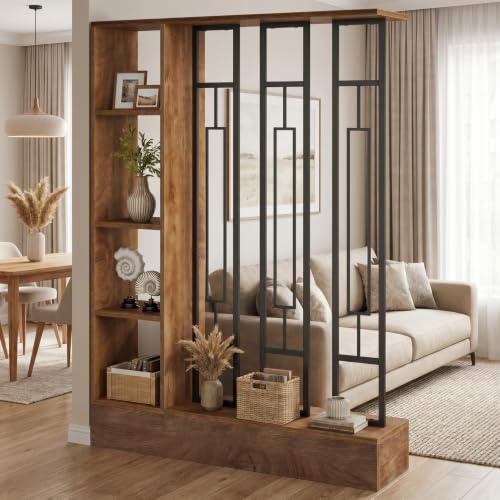
Ample Storage: Measuring 47.2" W x 11.8" D x 70.9" H, this room divider wall features open shelves for books, plants, framed pictures, or daily essentials. This ideal blend of storage and display functionality keeps your home tidy and stylish

Unparalleled Modern Design - This partition showcases exquisite, stylish, and eye-catching design, adding a unique touch of modern style to your space. Whether used in a home or office setting, it becomes a stunning decorative piece, enhancing the charm of your environment.
3. Magazine Rack Divider
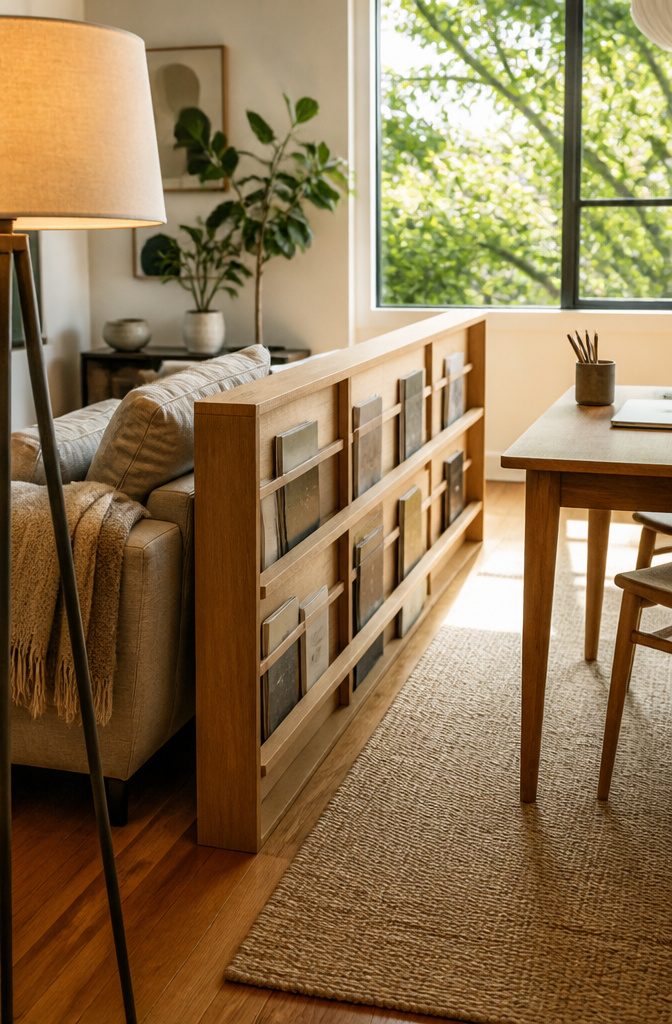
A magazine rack works as a partition when you need both storage and a line between zones.
In a studio or an open living room with limited closet space, a rack placed between the sofa and a workspace holds reading material while marking where one area ends and another begins.
The storage is accessible from both sides, so you get function without blocking sightlines completely.
The height keeps the room feeling open—most racks sit around 36 to 48 inches, tall enough to define space without cutting off conversation or light. It suits tight layouts where a floor-to-ceiling wall would make the room feel smaller.
Recommended Products

Ready-to-Use & Space-Saving Dimensions: This 3 panel rattan room divider screen unfolds to 67" H x 47.2" W total coverage, with each panel measuring 15.75" W. It arrives fully assembled and freestanding - no tools, no installation. When not in use, it folds flat for easy storage behind a sofa or closet.

Ready-to-Use & Dimensions - Fully expanded, measures 47.2 inches tall by 47.2 inches wide (3.9 FT x 3.9 FT) | Each panel width: 15.75"W. Freestanding, no-assembly design allows for immediate placement and instant enhancement of compact areas.

Ready-to-Use & Dimensions - Fully expanded, measures 47.2 inches tall by 63 inches wide (3.9 FT x 5.3 FT) | Each panel width: 15.75"W. Freestanding, no-assembly design allows for immediate placement and instant enhancement of compact areas.
4. Translucent, Frosted, Fluted, or Textured Glass
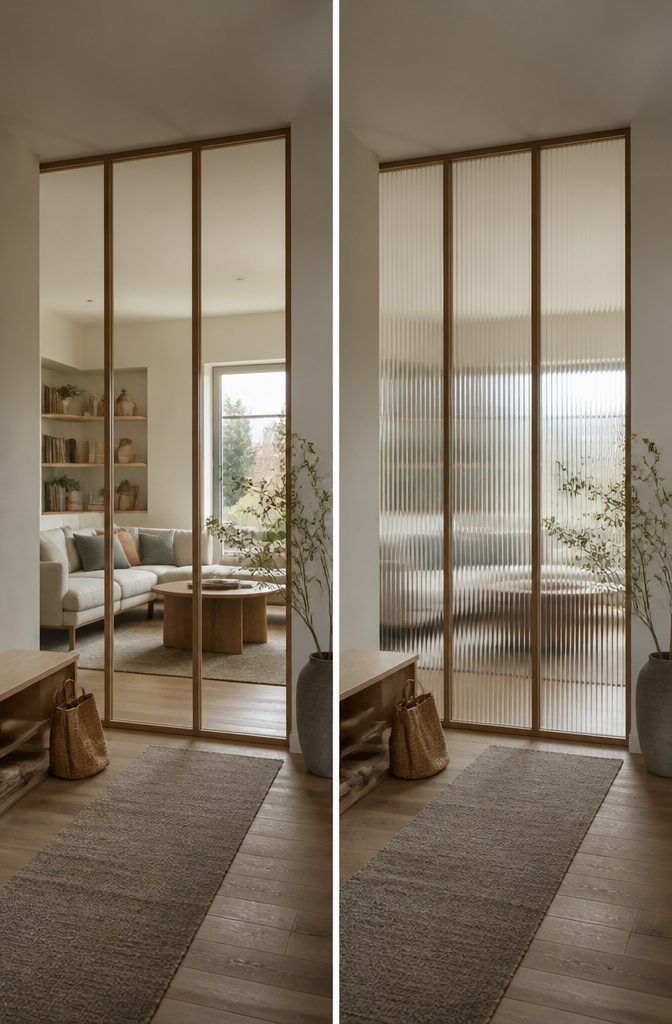
Frosted glass lets light pass but blurs what sits behind it, so you get brightness without putting every detail of the sofa or shelves on display from the entryway.
Fluted glass takes that further: vertical ridges catch the light and break up sightlines more completely than a flat frosted pane, which matters when the partition sits close to a front door.
Textured glass—patterned, ribbed, or blocked—does the same work with different looks, from subtle ripples to bold geometry.
I’d pick fluted glass for a partition that runs floor to ceiling near the entrance. The grooves add structure without weight, and the vertical lines read clean against a feature wall or a TV console.
Frosted works better in a partial divider tucked into a corner, where you need just enough screening to separate a reading nook or a workspace but still want the room to feel connected.
Pair either finish with a wooden frame if the rest of the space leans warm; leave it frameless for a sharper, more minimal line.
Recommended Products

Dual-Door Convenience for Easy Storage: This bathroom wall cabinet boasts a dual-door cabinet with a 3-height adjustable shelf, providing ample space for daily essentials like toiletries. Smooth opening and closing make accessing items a breeze

[2 Makeup Mirror] A large 42.5" full length mirror (a real glass mirror) is convenient for trying your clothes and checking your outlook, clear and real imaging, no distortion; built-in mirror with 3-color LED Strip Lights (Powered by 3 AAA batteries, not included), switch between warm, white and blue light for makeup, skincare and jewelry selection

Crystal Clear Vision: The bathroom cabinet features a spacious 17.7" L* 23.6'' W mirror that captures every detail with stunning clarity. Whether for morning routines or evening skincare, it's your high-definition assistant, always by your side
5. Glass Panels with Metal Framing or Tile Details
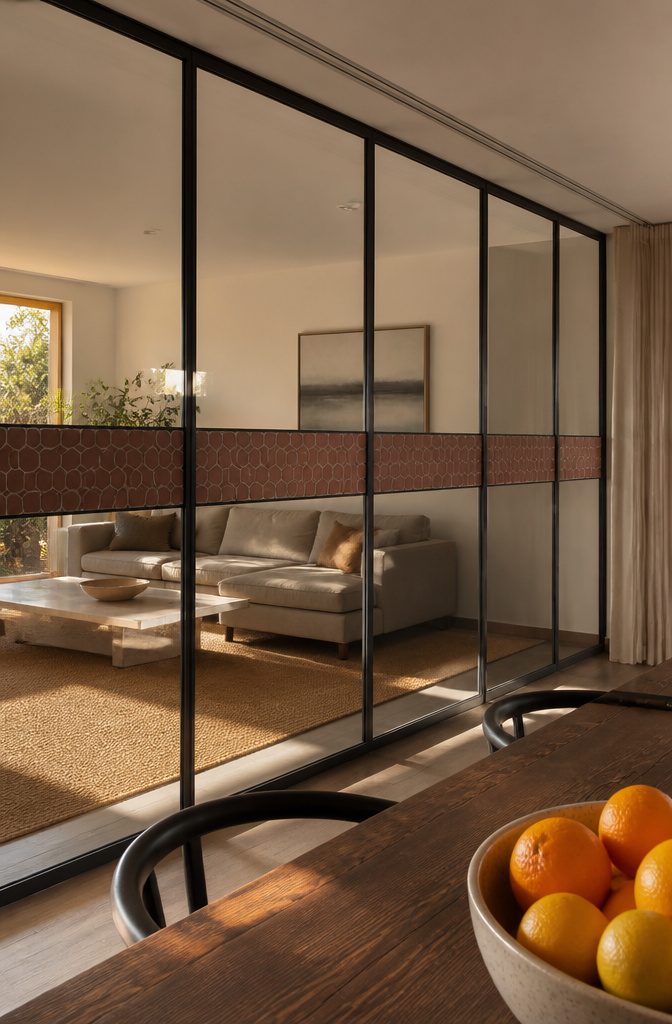
Glass paired with metal framing brings industrial sharpness to a room divider without blocking light.
Black-framed panels work particularly well between a living room and dining area or in a studio where you need to mark off a bedroom or home office but still want the space to read as one continuous volume.
The frame adds enough visual weight that the partition registers as a boundary even when the glass itself nearly disappears.
Tile inserts change the balance. Horizontal strips of decorative tile interrupt the glass at waist or chest height, giving the eye something to land on and cutting the see-through effect just enough to suggest separation without requiring frosted glass.
Hexagon or diamond tiles set into a metal grid turn the divider into a geometric feature wall—more art than barrier—and the patterning adds depth when you look at it from an angle.
The downside is heat. Glass facing a south or west window can radiate warmth back into the room, so plan for a curtain track if sun exposure runs heavy.
Metal framing also makes the partition permanent enough that it reads as architecture rather than furniture, which works when you own the place and less so when the landlord might object to anything anchored to the floor.
Recommended Products
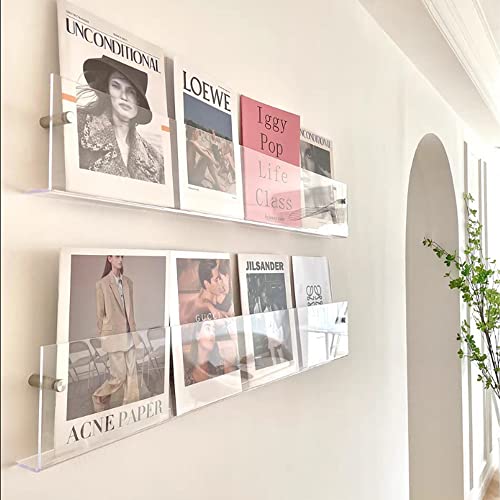
【Sturdy and Durable】 The acrylic magazine holder is made of 4mm thick acrylic, lightweight yet sturdy. One-piece craftsmanship production, strengthen the load-bearing, stably hang on the wall without wobbling. The metal hardwares are stainless and long-lasting.
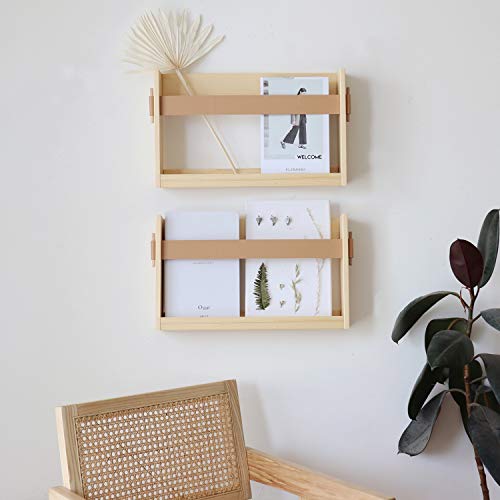
MATERIALS:Pine varnished board with PU leather strap design complements a variety of home and office decors
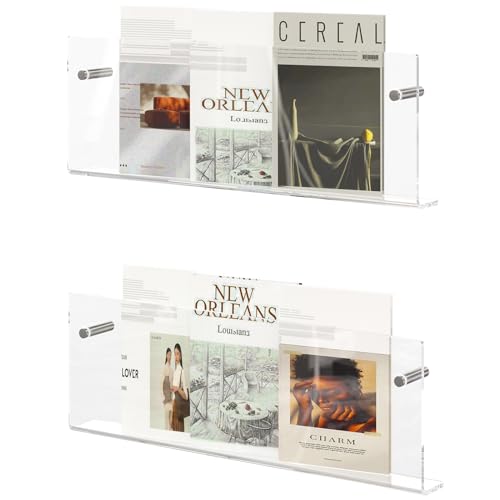
【Premium Acrylic】 Made of premium acrylic, the magazine holder features light weight, long service life, and easy cleaning. With an appearance similar to glass, the product is not fragile. The acrylic magazine rack is a choice for safer purposes.
6. Glass Blocks
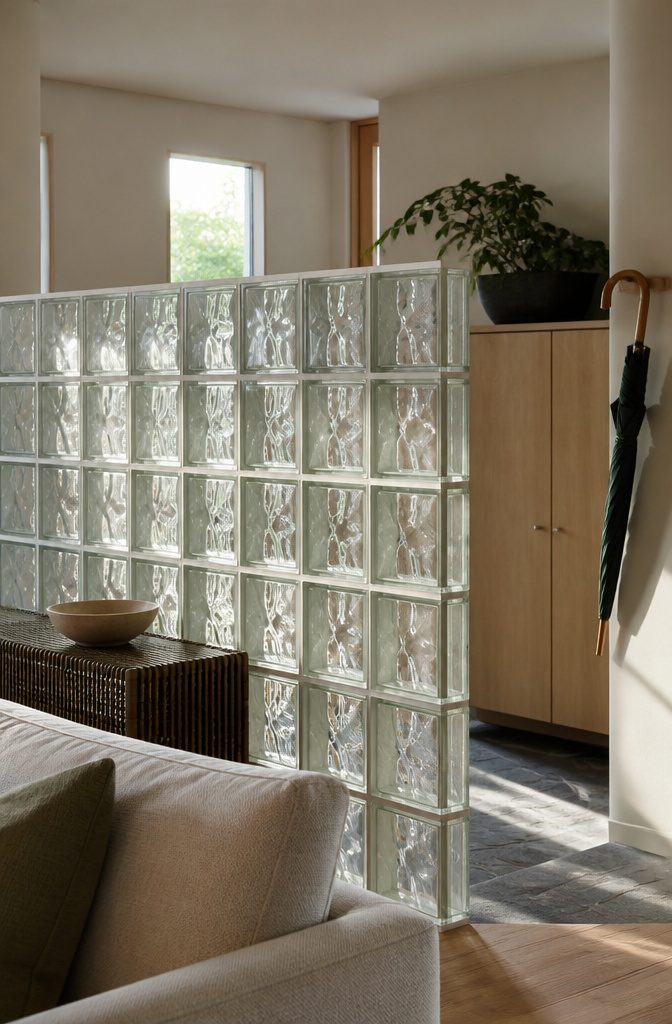
Glass blocks stack into a translucent wall that holds a pattern—each block carries texture on its surface, so the partition reads as sculptural even when you’re looking straight through it.
The material splits a room without closing it off: you see light and movement on the other side, but faces and furniture blur into soft shapes rather than sharp outlines.
That partial screening works well between a living area and an entryway, or anywhere you want separation that still feels open.
The blocks themselves are mortared in place like masonry, so this is a permanent divider rather than something you move when the layout changes.
Installation takes more than a weekend, and most rentals won’t allow it. But if you own the space and want a partition that doubles as a textured feature wall, glass block delivers both jobs at once.
Recommended Products

[Unique S-Shaped Design]: S-shaped design makes this black small bookshelf a work of art, while provides large storage space, satisfies various daily needs. Each of the 6 shelves is divided into 2 compartments, perfect for organizing books, magazines, plants and other items in a neat and orderly manner

[6-Tier Geometric Bookshelf]: Unique s-shaped design with 6 tiers of staggered cubes, adding a modern touch to your space. Our SILKYDRY s shaped bookshelf can be used as a room divider, display shelf, storage shelving, and decorative accent for a chic look.

Optimal Space Utilization: With a 70.9'' tall design and staggered open shelves, this partition bookcase smartly separates rooms while maintaining visual openness. It increases space utilization by up to 30%
7. Shoji or Japanese Screens
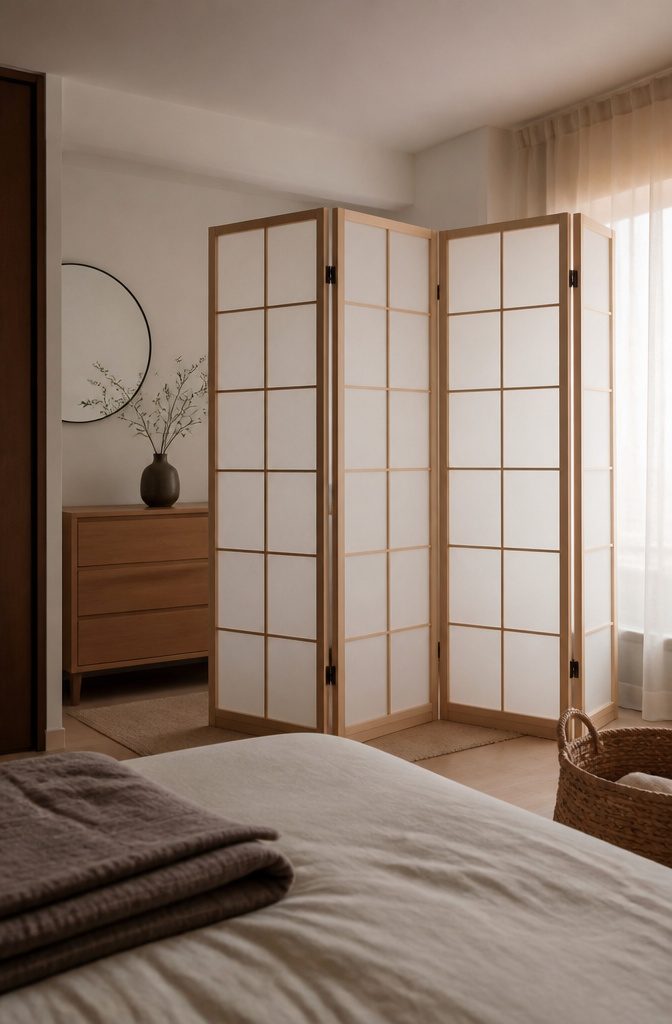
Paneled screens let light pass through while still marking off a zone.
The Red Barrel Studio Niemann Shoji Room Divider sits four panels wide and 70.5 inches tall, enough height to section off a dressing corner or separate a shared bedroom without mounting anything to the ceiling.
The frame is Scandinavian spruce around fiber-reinforced rice paper, a construction that goes back to eighth-century Japan. What it does well is soften daylight rather than block it, so the divided side of the room stays bright.
At 12 pounds, it is the lightest divider on this list, and the accordion fold collapses flat when you need the room open again. A three-panel version works for tighter layouts.
The rice paper will not survive a pet or a toddler leaning into it, but for a rental or a room where the partition stays put most of the time, $108 gets you a working wall that stores in a closet.
8. Sliding Doors or Panels
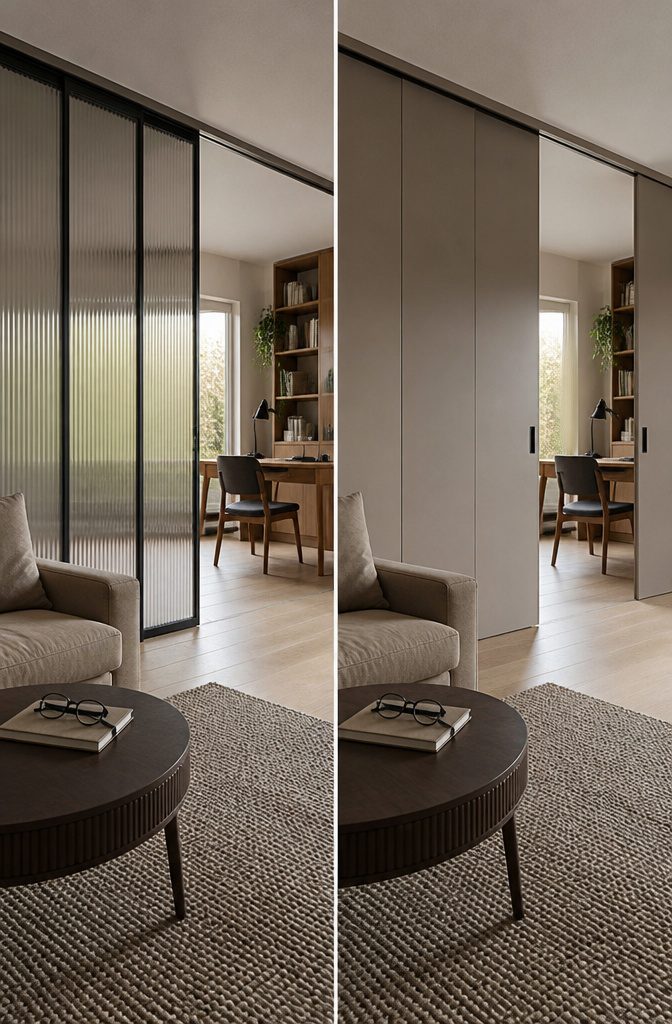
Sliding panels let you decide in the moment whether two zones stay connected or close off completely.
Push them open when you want the room to feel large and unified, pull them shut when you need privacy or want to contain cooking smells drifting from the kitchen.
The shift takes seconds and leaves no hardware in the way when the partition is tucked back.
Glass versions keep light moving through both sides even when closed, so a workspace behind the divider still feels part of the room rather than cut off in a dark corner.
Frosted or matte-finish tiles soften the view without blocking it entirely, which works well in studio layouts where you want separation without losing the sense of openness.
Plywood and laminate options offer durability and a sleeker profile than hinged doors, and they sit flush when not in use instead of swinging into either zone.
Recommended Products

Ready-to-Use & Dimensions - Fully expanded, measures 47.2 inches tall by 94.5 inches wide (3.9 FT x 7.9 FT) | Each panel width: 15.75"W. Freestanding, no-assembly design allows for immediate placement and instant enhancement of compact areas.

Compact & Ready in Seconds: Perfectly scaled for modern living, this 4 panel light brown short divider screen expands to 47.2" H x 63" W to define spaces without overwhelming them (Each Panel: 15.75" wide). Comes fully assembled - just unfold it out of the box and let it stand freestanding instantly. No tools, no hassle.

Ready-to-Use & Space-Saving Dimensions: This 3 panel rattan room divider screen unfolds to 67" H x 47.2" W total coverage, with each panel measuring 15.75" W. It arrives fully assembled and freestanding - no tools, no installation. When not in use, it folds flat for easy storage behind a sofa or closet.
9. Folding, Bi-Fold, or Collapsible Partitions
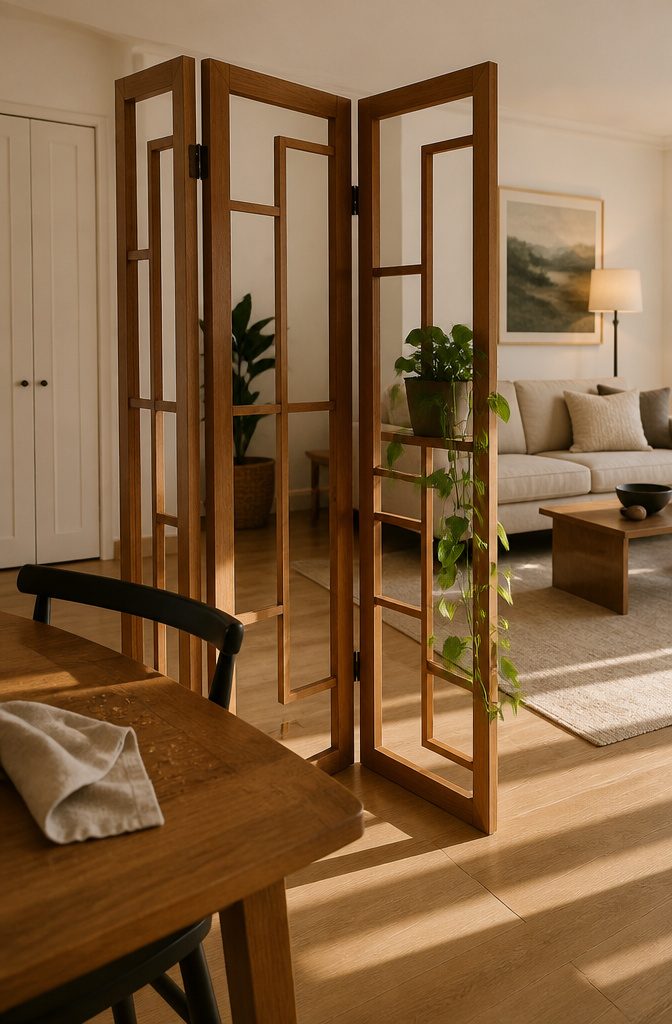
Accordion-style hinges let these screens collapse into a single narrow panel that fits behind a door or slides into a closet when the room needs to work as one open space.
Linen stretched over rubberwood gives a coastal, airy look at around $529, light enough that you can fold and move it without help.
The three-panel version from the passages measures 63.39 inches high by 59.84 inches wide, enough to block sightlines between a dining table and a sofa without anchoring anything to the floor.
Wide-spaced wooden frames with patterns fold the same way and double as plant hangers if you need the partition to do more than mark a boundary.
Both types hinge cleanly enough that setting them up or putting them away takes under a minute, which matters more than it sounds like it would when you host once a month and want the square footage back the rest of the time.
Recommended Products

▶ Quality is very good: the surface of the wooden wall board uses non-painted stickers, smooth and delicate, easy to clean and maintain. The classic white surface suits your different rooms. The inner board of the cabinet is thick, the structure of the cabinet is strong and durable,, and it has certain flame retardant and good wear resistance and anti-fouling.
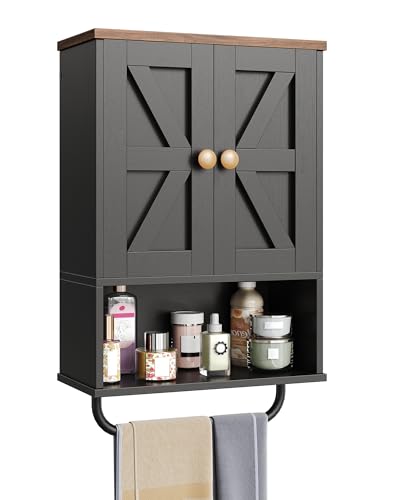
Dual-Door Convenience for Easy Storage: This bathroom wall cabinet boasts a dual-door cabinet with a 3-height adjustable shelf, providing ample space for daily essentials like toiletries. Smooth opening and closing make accessing items a breeze

Ample Storage Space: This cabinet boasts a roomy interior with adjustable shelves, you can customize the storage layout to fit your needs. Whether it's toiletries in the bathroom, spices in the kitchen, or cleaning supplies in the laundry room, it provides plenty of room to keep your items organized.
10. Freestanding Folding Screens
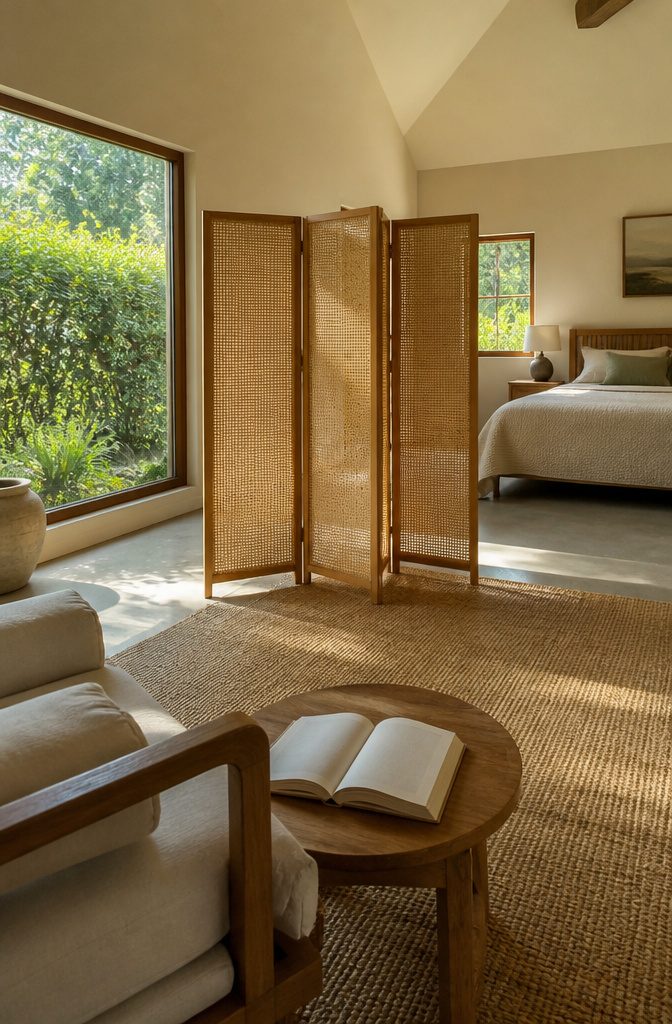
A folding screen moves wherever you need it and folds flat when you don’t. The West Elm Zeze Room Divider runs $399 for three rattan panels that stand 69 inches tall and span just over 39 inches wide when open.
At 16 pounds, one person can carry it from the living room to a bedroom or tuck it behind a sofa. The woven rattan lets light through, so you keep the window glow even after the screen goes up.
The Four Hands Duane Room Divider costs $1,199 and weighs 110 pounds — heavy enough that you’ll want to pick a spot and leave it there. Three chenille-covered panels stretch 73 inches high and 72 inches wide, with brass hardware and a solid wood frame.
The fabric blocks the view completely, which makes it better for privacy than the rattan option but means you lose the light that comes with it.
Recommended Products

Stylish and Simple: The Metal Magazine Rack instantly adds style to your home, apartment, dorm or office. Its front is horizontally hollowed out, helping you see what is stashed inside; It measures 11.02" long x 4.72" wide x 9.05" high, sturdy and compact.

Chic Elegant Storage: The magazine rack features a U-shaped modern design that enhances the aesthetic while allowing for easy file access. It creates a neat workspace and serves as farmhouse wall decor in your home or office
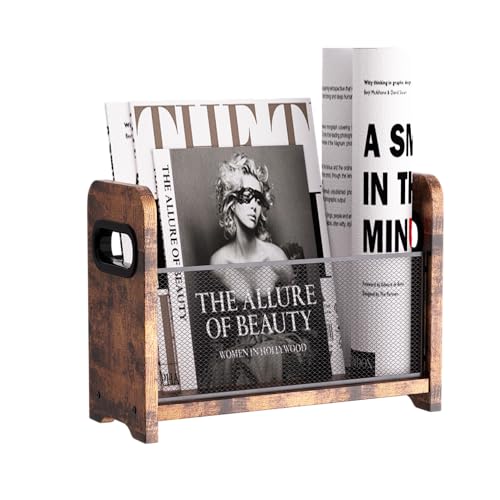
Portable& Stable Deisgn: Side handles enable effortless relocation of this magazine rack floor organizer. The reinforced base prevents tipping for tall magazines, while a non-slip mat safeguards hardwood floors and eliminates sliding. Securely store books, catalogs, or heavy files with confidence.
11. Curtains, Canopies, or Bead Curtains
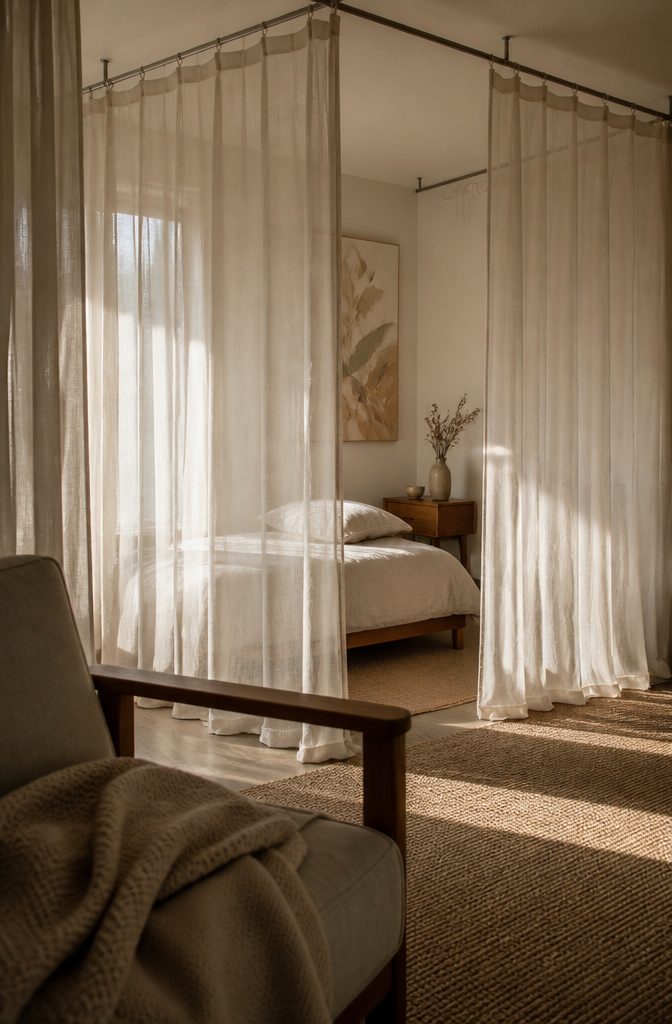
Fabric dividers let you close off a space when you need it and pull them back when you don’t.
Sheer curtains hung from two ceiling-mounted rods form a canopy over a sleeping zone or reading corner, softening the boundary without blocking all the light.
The fabric filters what passes through rather than stopping it cold, so the room still feels connected.
Bead curtains — strings of crystal, wood, or plastic beads hanging from a rod — add texture and movement while letting air and light through.
They mark the division without sealing it, which works when you want a visual break but not full privacy.
Macrame curtains do the same thing with a woven look instead of beads. Both options feel more decorative than practical, so they suit spaces where the partition is more about style than function.
12. Transparent or Patterned Portable Screen
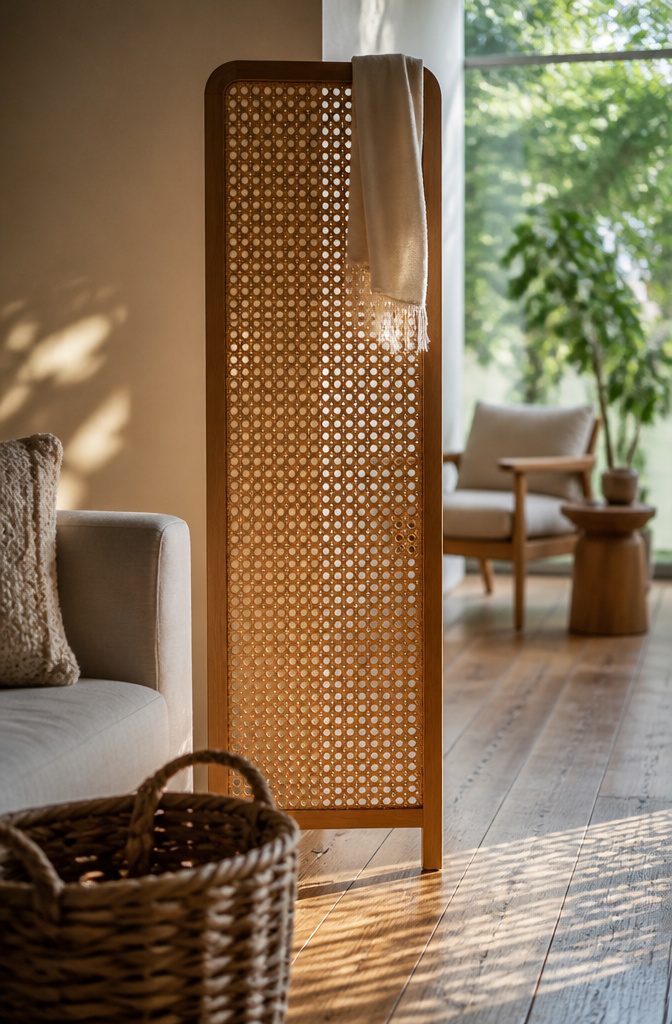
A portable screen gives you a partition you can fold up and carry to another room when the layout changes.
Transparent rattan or perforated panels let daylight pass through while still marking the boundary between zones, so the room stays brighter than it would behind a solid divider.
A single-panel screen weighing around 40 pounds moves easily enough for one person but stands stable once positioned, and the frame holds without anchoring to the floor.
Rattan screens fit both modern and traditional rooms because the woven texture reads as neutral rather than tied to one style.
A patterned screen adds detail without requiring paint or permanent installation, and you can drape a coat or bag over the top edge when you need a temporary hook.
A screen 71 inches tall and 24 inches wide blocks sightlines in one direction but leaves the sides open, so it works better for visual separation than for full privacy.
13. Slatted Wood or Wooden Frames
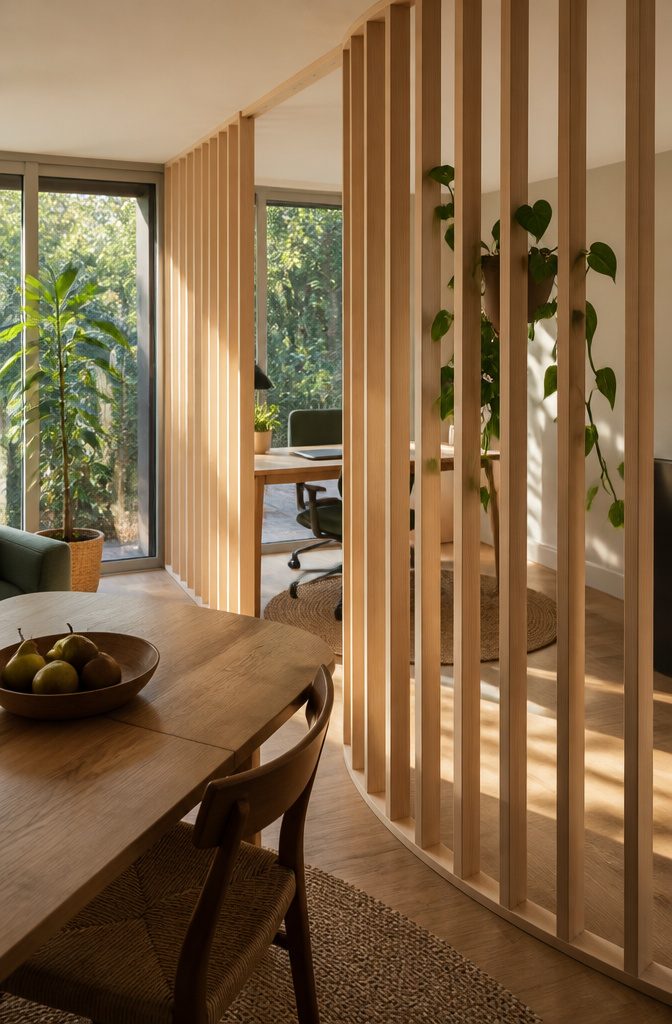
Wood slats let you mark off a dining area or a home office corner without turning the room into separate boxes.
The gaps between slats keep sightlines open and let daylight reach both sides, so neither zone feels cut off. Vertical slats in pine or plywood give you warmth and grain without the weight of a solid wall.
The Artek Screen 100 Room Divider, designed by Alvar Aalto ninety years ago, uses vertical pine slats linked by webbing. It stands just under five feet tall, spans close to seventy-nine inches wide, and curves to fit the space.
You can roll it up and stow it when you need the full room back. It costs $4,195 at Design Within Reach.
CenturyPly plywood works well for fixed slat walls if you’re building rather than buying.
Space the slats wide enough to see through but close enough to suggest a boundary. Air moves freely, and you can hang a trailing pothos between the slats if you want something green without blocking the light.
Frames with wider gaps and staggered heights fold flat when you’re done with them, which matters if you’re renting or expect to rearrange next year.
14. Solid or Closely Spaced Wooden Panels
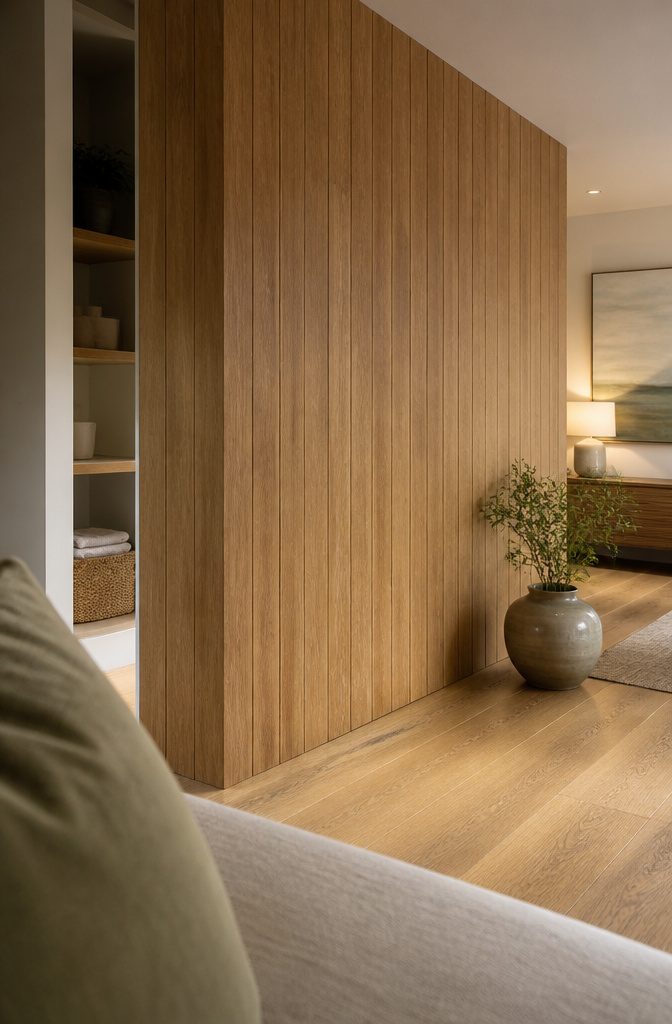
Wooden panels placed close together or built as solid slabs deliver full visual separation without introducing drywall or masonry. The tight spacing blocks sightlines between rooms while keeping the warmth and grain of natural wood visible on both sides.
You can run them floor to ceiling for a built-in look or stop them short of the ceiling to preserve airflow and a sense of connection overhead.
Texture and finish matter here more than they do with open slats. A matte stain shows the grain without glare, while painted panels in a neutral tone blend into trim and cabinetry.
Vertical planks read cleaner in most rooms; horizontal boards can make a low ceiling feel lower unless the room runs wide.
The solid construction also works for service yards or utility corners where you want to hide clutter—just leave ventilation gaps near the floor or ceiling if you’re drying laundry or storing anything that needs air movement.
15. Wood Paired with Glass
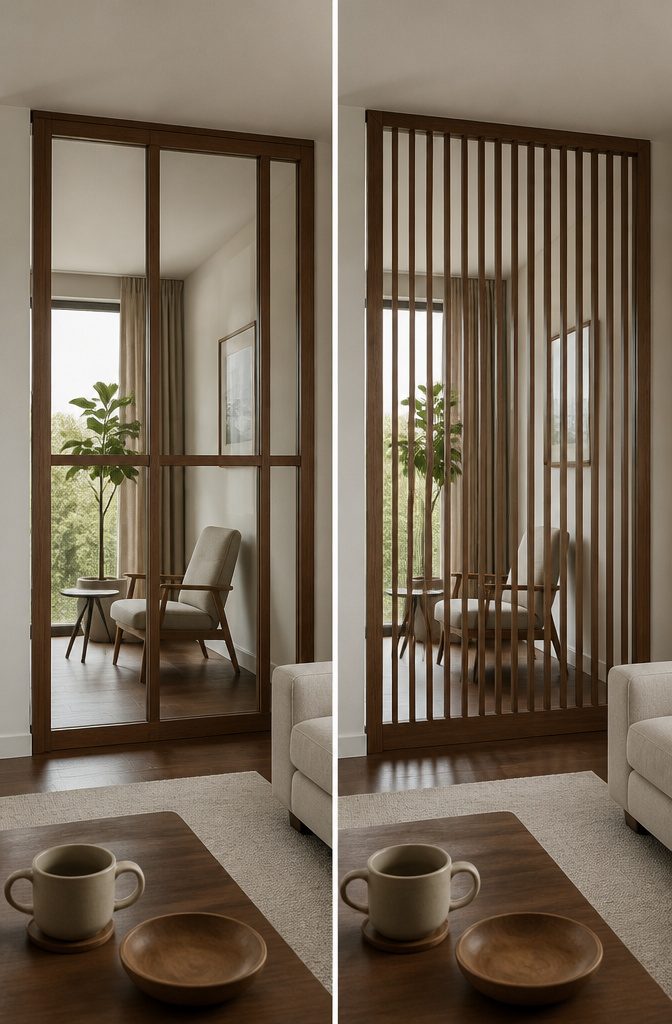
Wood framing around clear glass keeps a room open without giving up all the structure.
The frame—usually in walnut, oak, or a lighter veneer—outlines the panel and reads as furniture rather than construction, so the partition settles into the room instead of closing it off.
Glass lets light move both directions, which matters most when one side of the divider sits farther from a window.
A wood-and-glass divider works where you need the space to stay visually connected but still want a hint that one zone ends and another begins.
The combination suits a modern interior that still wants some warmth.
An all-glass partition can feel clinical; wood grounds it. You get the openness without the cold edge, and the frame gives you a place to anchor the design to the rest of the room’s finishes.
Match the wood tone to your flooring or trim, and the divider reads as intentional rather than added on.
Frequently Asked Questions
Which material is best for living room partition walls?
Wood works best for living rooms because it adds warmth and texture while offering flexibility in how much you block off.
Glass keeps spaces bright and open, metal framing gives an industrial edge, and plywood delivers durability at a lower cost. The right choice depends on whether you need full privacy, partial screening, or just a visual boundary between zones.
What is the cheapest partition option?
Gypsum board and plywood cost less than most alternatives while still delivering a sturdy divider.
Curtains and folding screens also come in at lower price points, particularly fabric or bead curtains hung from a ceiling rod. A basic three-panel folding screen can run around $100, while built-in glass or custom cabinetry climbs well past $1,000.
Can I install a partition without losing natural light?
Glass panels, open shelving, and slatted wood all let daylight pass through while still dividing the room.
Frosted or fluted glass softens the view without blocking brightness, and sliding panels can open completely when you want maximum light. Sheer curtains and rattan screens also filter rather than stop sunlight.
Which divider idea should I go with if I want more storage space?
Built-in cabinets and open bookshelves add storage while splitting the room. A tall bookshelf offers display space for books and plants without closing off sightlines, while a cabinet partition hides clutter behind doors.
Magazine racks positioned between zones hold reading material on both sides and take up less floor space than full shelving units.
Are partitions ideal for other parts of the house as well?
Partitions work in bedrooms to separate sleeping areas from dressing corners, in kitchens to screen prep zones from dining spaces, and in bathrooms to create privacy around a tub or shower.
Studio apartments use them to divide sleeping and living zones, and home offices benefit from a divider that blocks distractions without cutting off the room completely.
How does partition design benefit a living room?
A partition carves out distinct zones for different activities without building permanent walls.
It can hide an entryway from view, separate a dining table from a sofa, or create a quiet corner for reading or working. Storage-based dividers like cabinets or shelving also reduce clutter while defining the space.
Which partition designs have less maintenance?
MDF and wooden partitions need only occasional dusting and wipe-downs to stay clean. Painted or sealed finishes resist wear better than raw wood, and smooth surfaces collect less dust than carved or heavily textured options.
Glass requires regular cleaning to avoid smudges, while fabric curtains and woven screens may need periodic washing or vacuuming.
What are the different types of wall partitions?
Common types include open bookshelves, storage cabinets, glass panels with or without frames, slatted wood, sliding doors, folding screens, and curtains.
Glass blocks and shoji screens offer translucent options, while solid wooden panels provide full privacy. Each type balances light, airflow, and separation differently depending on how open or enclosed you want the divided zones to feel.
How can I build my own room divider?
A simple DIY divider can be built by mounting vertical wood slats to a top and bottom rail, spacing them wide enough to let light through but close enough to mark a boundary.
You can also hinge together 3 or 4 framed panels filled with fabric, rattan, or lattice for a foldable screen. Pre-made bookshelf units and curtain rods with fabric or beads offer faster, no-build alternatives.
What is the typical thickness of a partition wall?
A non-load-bearing interior partition built with wood or metal studs and drywall typically measures 3.5 to 4.5 inches thick. Glass panels in metal frames run thinner, often 1 to 2 inches depending on the glass thickness and frame profile.
Freestanding dividers like folding screens or bookshelf units vary widely, from under an inch for fabric panels to 12 inches or more for deep shelving.