A window over the sink costs you 24 to 36 inches of upper cabinet storage, and that trade only works if the daylight and view you gain are worth more than the dishes and glasses you will have to store elsewhere.
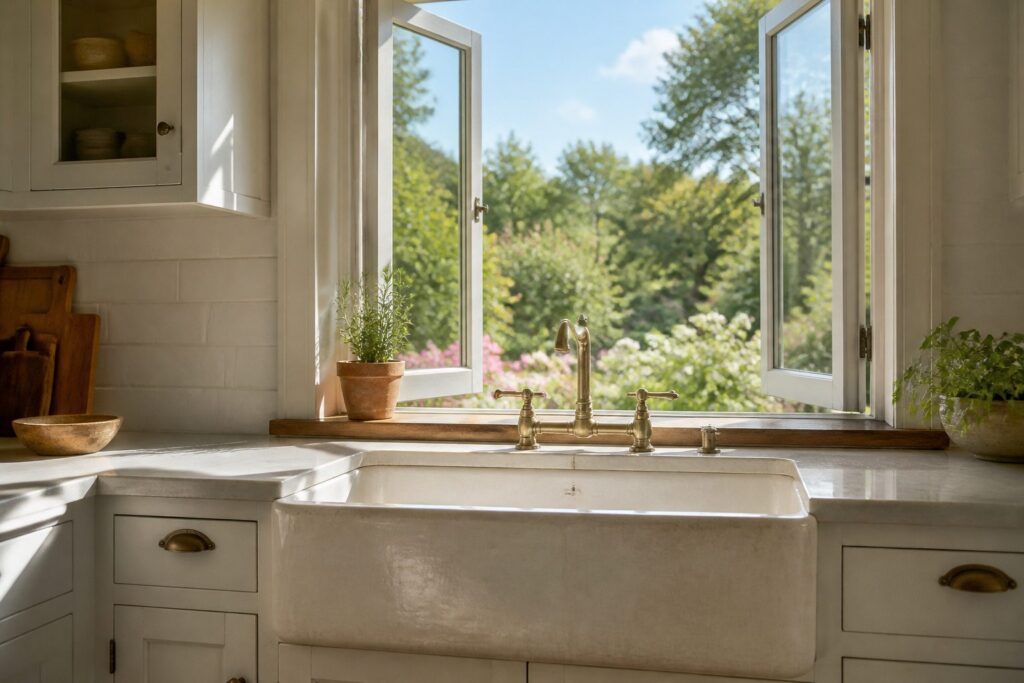
The casement window gives you the cleanest view, with no middle sash cutting the glass in half, but its outward swing needs exterior clearance measured in feet, not inches.
Where space is tight, the horizontal slide of a two-sash window keeps your walkway clear and your ledge free for herbs or a drying rack.
1. Casement Windows
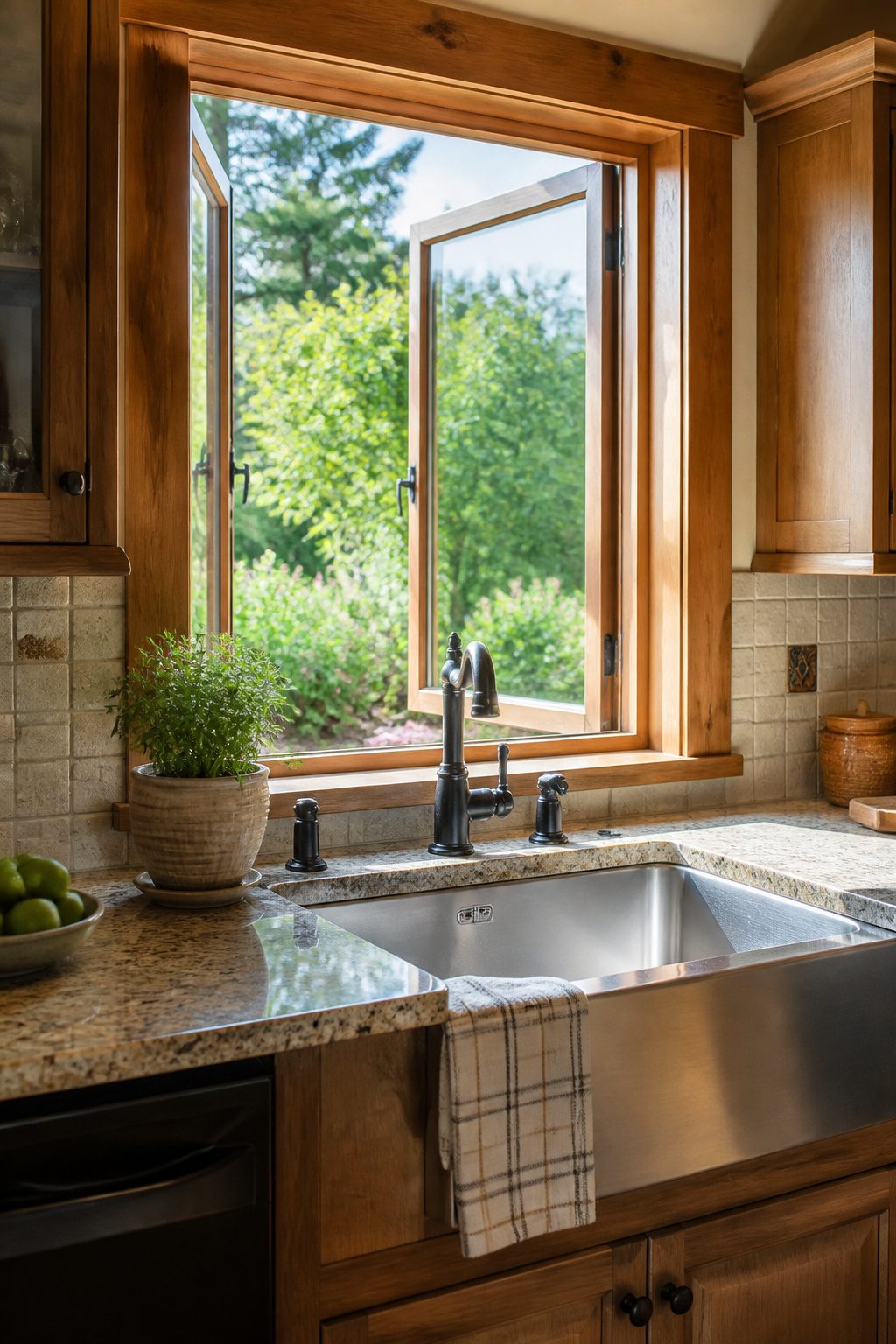
A casement window over the sink gives you unobstructed glass with no middle sash, so your view runs clean from edge to edge.
You stand at a deep farmhouse sink and look straight out at the yard or the fence line without a horizontal rail breaking the scene in half.
The hand crank sits low on the frame.
That placement matters when your sink is deep or your counter space is tight. You can reach the mechanism from below without leaning across wet dishes or granite that ends in four inches of ledge.
A few turns open the sash outward on a hinge, and you control the angle; crack it a few inches or swing it fully open depending on whether you need a whisper of air or a cross-breeze strong enough to clear cooking steam.
The outward swing also means the glass itself never intrudes into the kitchen.
In a narrow galley or a sink wall that sits close to a cabinet run, that saved inch or two of interior space makes the difference between brushing your shoulder and working comfortably.
Paired casements multiply the effect. Two units side by side drop the center mullion low and give you one continuous horizontal view plus improved air circulation through the gap when both stand open.
2. Awning Windows
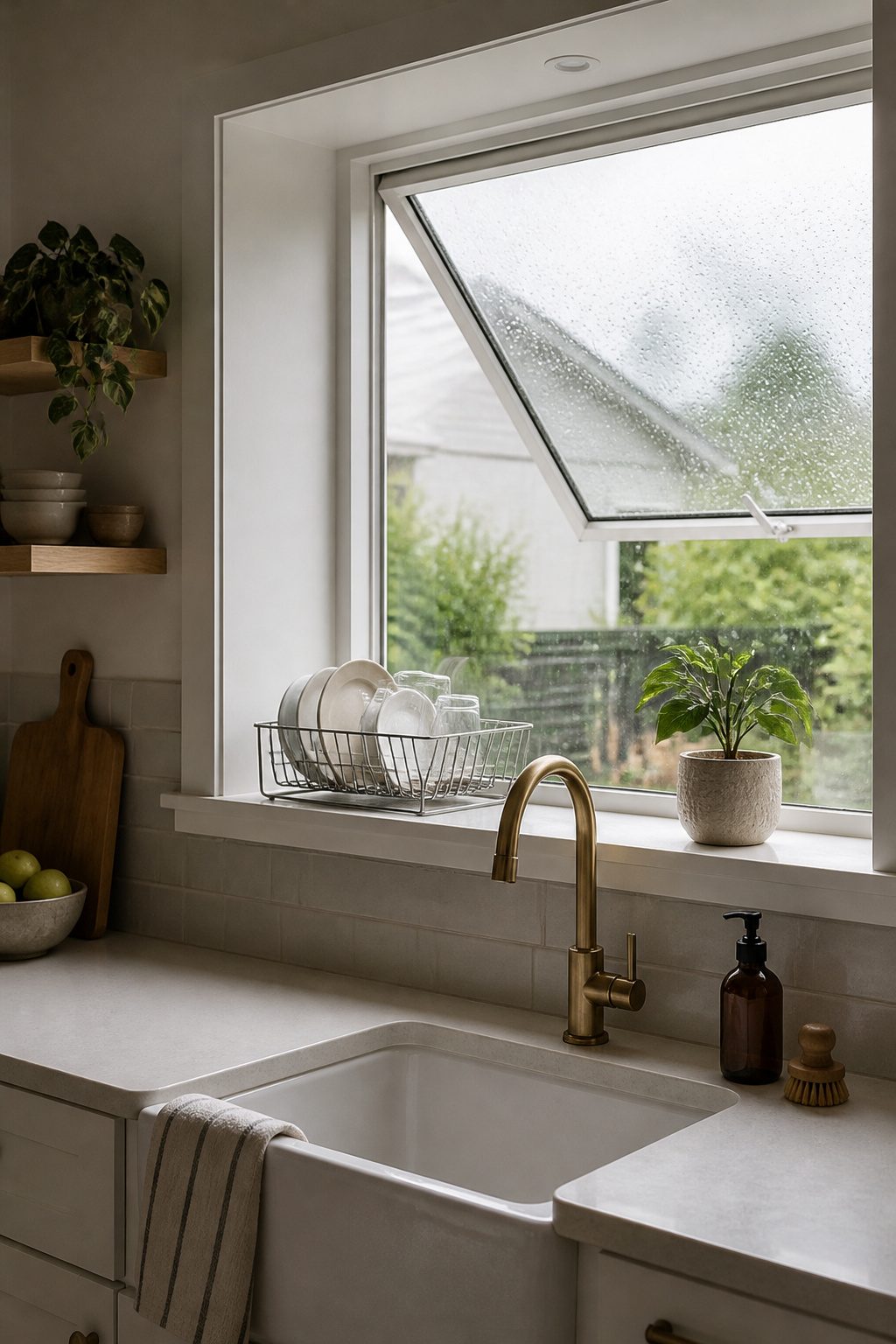
Awning windows hinge at the top and crank outward from the bottom, holding a fixed angle that creates a shelled opening even in light rain.
For a kitchen with window over sink placement, that hinge placement matters because the glass itself becomes the umbrella: water runs down the sloped pane instead of dripping onto the counter or your hands mid-dishwashing.
I see them as the practical choice for wet zones in climates where summer storms blow in fast, like the Carolinas or Georgia.
The outward swing limits how far you can reach through the opening to clean the exterior from inside, and the hardware sits low enough that splatter from the sink can find it over time.
Casement windows move more air when you need it, but they throw water inward if you forget to close them. The awning wins if you want ventilation you can actually leave open.
Recommended Products

Design with Gutter: The front of the door awning has a separate drainage gutter, the aluminum gutter can lead the rainwater to both sides, which can drain the rainwater...
3. Picture Windows
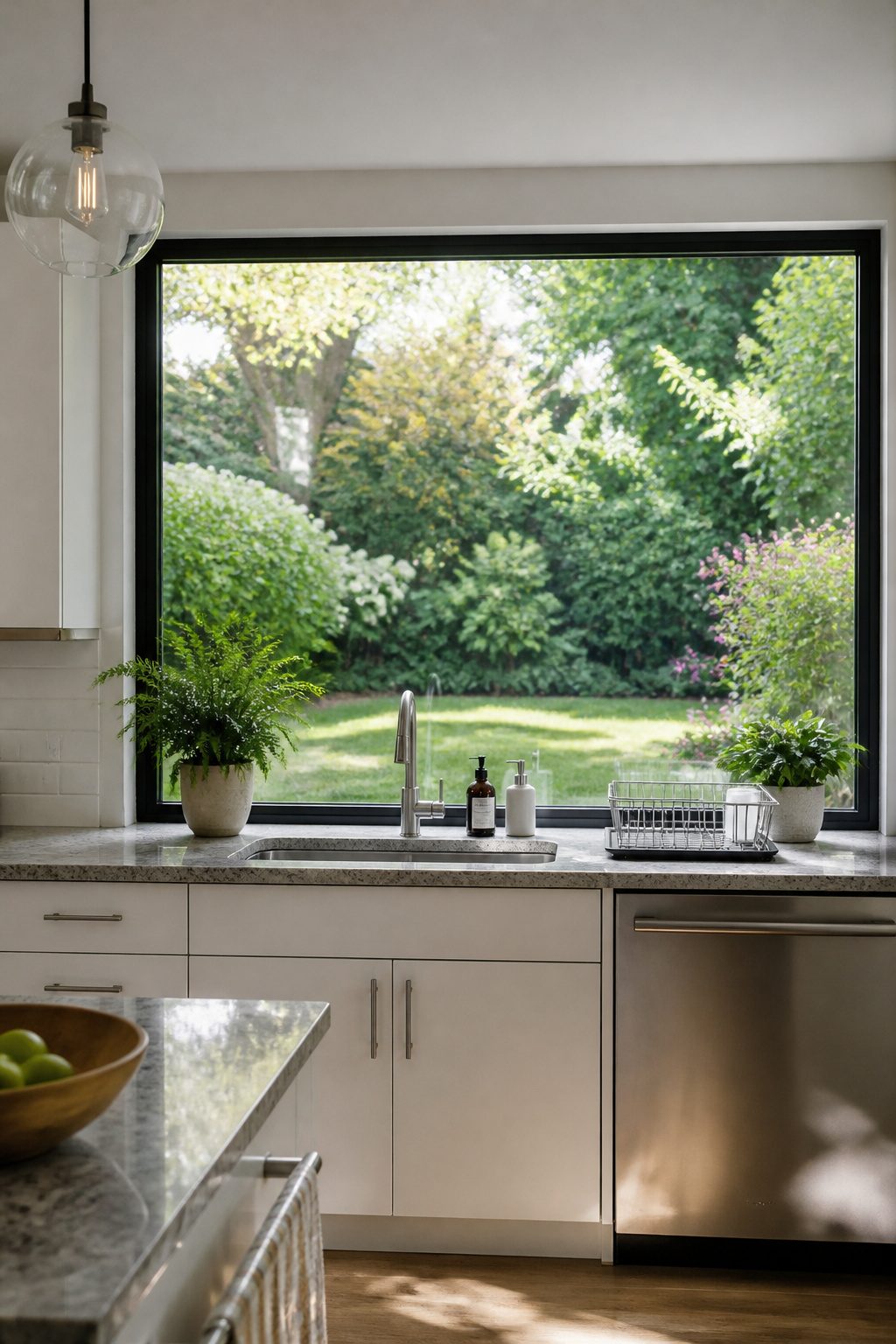
A picture window over the sink trades every moving part for glass. No sash, no crank, no track, just a fixed pane that lets the view do the work instead of the hardware.
That simplicity matters in a kitchen where the backyard drops off to a garden or a ridgeline, and where you will already open a door or a casement across the room when you need air.
The frame choice shapes the effect more than most people expect.
Slim black frames against natural wood cabinetry give the glass a deliberate, modern edge, almost like hanging a photograph. Fiberglass or aluminum frames run thinner than vinyl, so the border stays quiet and the light comes through unobstructed.
I tend to steer toward black framing when the kitchen already carries black hardware or fixtures; otherwise the window reads as an afterthought rather than a decision.
Where this falls short is obvious: no breeze on a hot evening, no quick clear of steam after a boil.
I would skip a picture window if the sink sits on a wall that faces a neighbor’s fence or a garage, because the whole point is what you gain, not what you block.
But for a wall with something worth framing, the fixed pane is the one that makes the kitchen feel larger than its footprint.
Recommended Products

Refresh the Kitchen: Use the long soap holder to collect the small items, such as sponges, dish brushes, scrubbers, liquid soap dispensers, dishwashing accessories and kitchen sink accessories

Refresh the Kitchen: Use the long soap holder to collect the small items, such as sponges, dish brushes, scrubbers, liquid soap dispensers, dishwashing accessories and kitchen sink accessories

The information below is per-pack only
4. Bay Windows
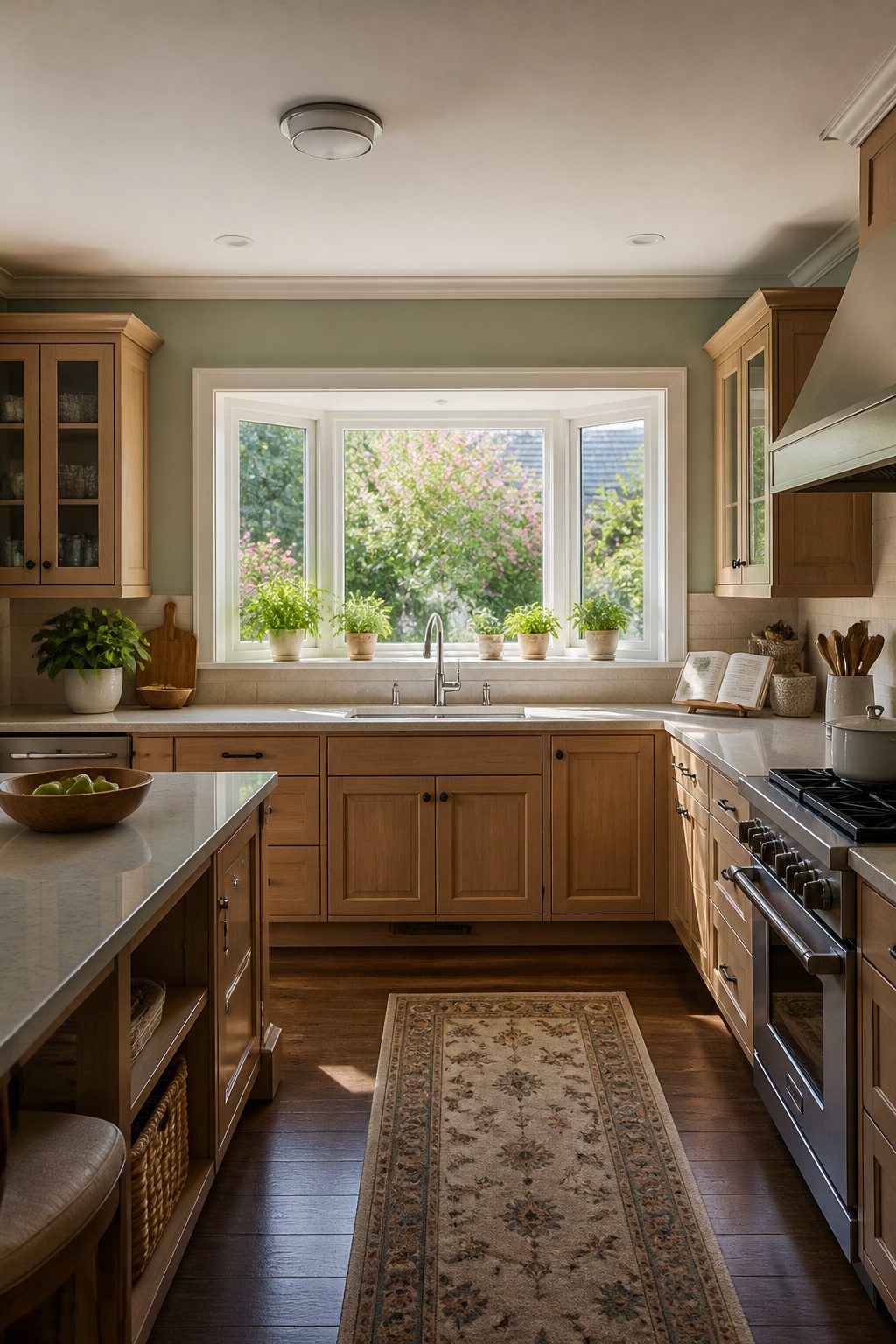
Bay windows come in 30- or 45-degree angles, and that angle decides how far the projection reaches into the kitchen.
A 30-degree bay adds about eighteen inches of shelf, which is enough for a small row of potted herbs or a couple of succulents.
The 45-degree version pushes further, closer to two feet, but you pay for that depth in counter space the window box consumes.
The ledge itself is less counter than it looks. It sits at window height, not work height, so you are not chopping vegetables on it.
Still, it is a real surface for plants, a cookbook stand, or morning light on a mug. All three windows of the assembly can open, which matters more than the projection itself if you cook with steam.
I would not put a bay in a kitchen under ten feet of counter run. The gain in character costs you the stretch where you would otherwise prep.
For a wall with room to spare, though, the trade is fair: you lose some flat counter and gain living space for small things that like the sun.
Recommended Products

High-Performance Cooling: Powerful 9" Dual-Blade System for Bedroom & Kitchen Ventilation. Stay cool effortlessly with 3 adjustable speeds (Low/Medium/High). Unlike single fans, this twin window fan maximizes air circulation, effectively drawing in cool night breezes or exhausting hot cooking odors for stuffy rooms

[360° Rotatable Ventilation] : Enjoy superior airflow and light control with our rectangle metal window. The window 360° rotatable design rotates fully 360° up and down, pausing at any angle for customizable ventilation, ensuring fresh air and natural light flood into any room while maintaining privacy
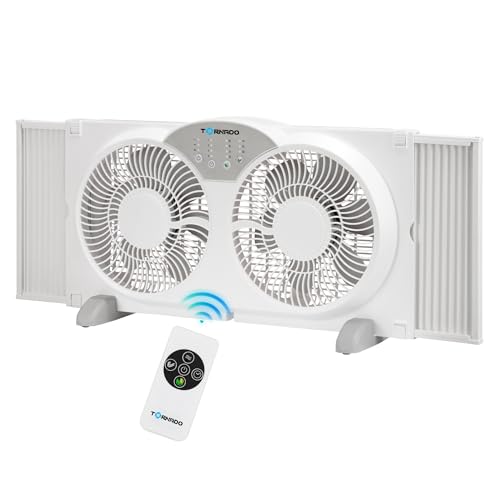
High Airflow & Quiet Operation: This remote control window fan delivers an impressive 1350 CFM airflow for optimal room cooling. Operating at 1378/1265/1132 RPM and maintaining a quiet 49dB noise level, the fan ensures powerful yet silent performance, making it perfect for bedrooms or living rooms where noise control is essential.
5. Bow Windows
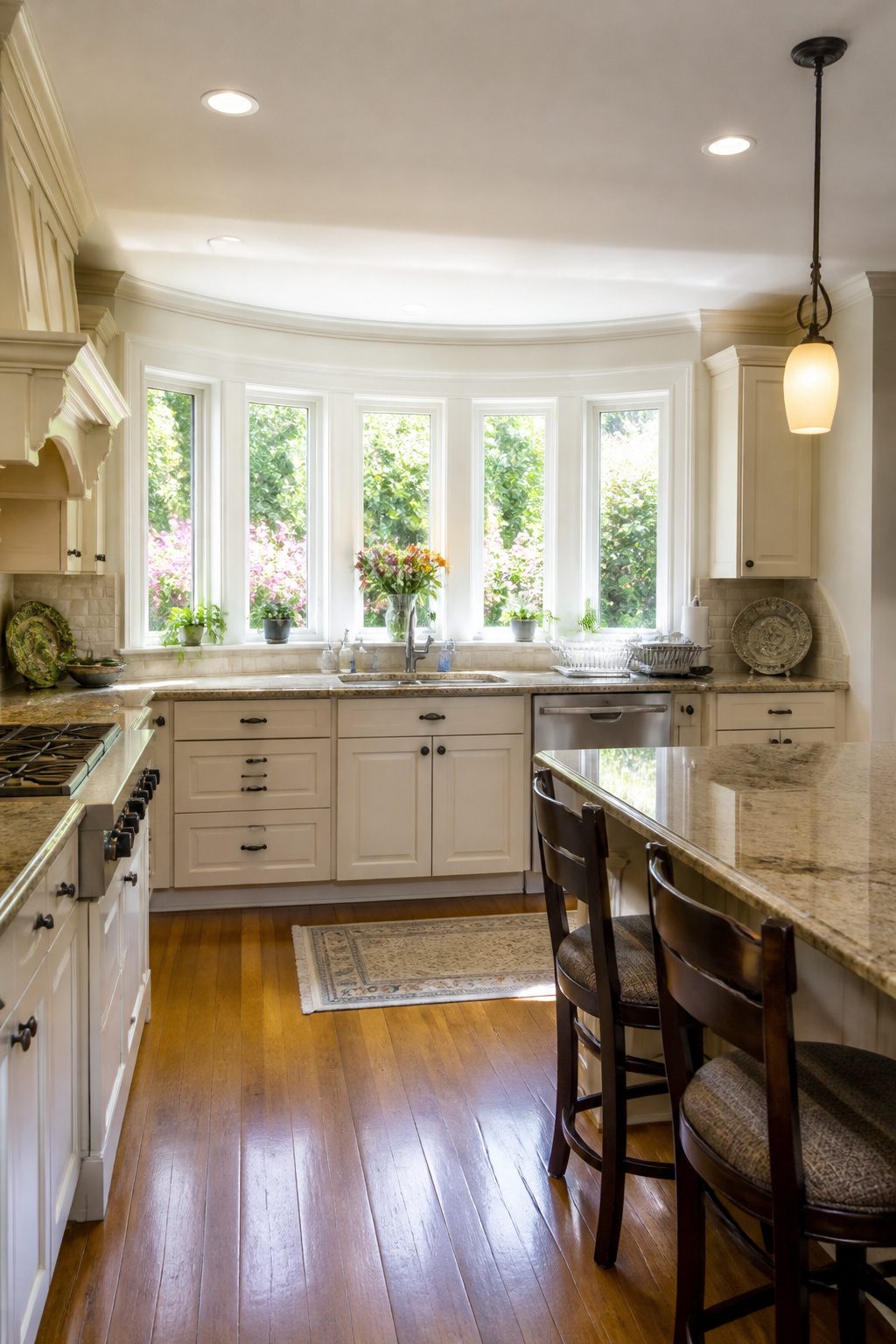
A bow window arcs outward in a soft curve of four to six casements rather than the three flat panels of a bay.
The gentle radius brings in light from more angles and opens a wider slice of view, which is the real draw over a sink that faces a side yard or a narrow lot line.
The real issue is the glass itself: each casement must be cut to a custom wedge shape, and the curved header and sill need a carpenter who has worked with radius work before.
That extra labor and specialty glass push the installed price well past what a standard bay runs, usually by several hundred dollars if not more.
For a kitchen with window over the sink where you want to feel less boxed in, the bow earns its keep. In a tight remodel budget, the bay delivers most of the same floor space without the premium.
The judgment call comes down to whether that wider sight line justifies the jump in cost, and from what I have seen, owners who spend the extra rarely regret it on a sink wall where they stand twice a day.
Recommended Products

Premium Voile Fabric: Crafted from 100% premium polyester voile, this lightweight, smooth fabric drapes gracefully. It softly diffuses harsh sunlight to keep rooms bright and...
6. Sliding Windows
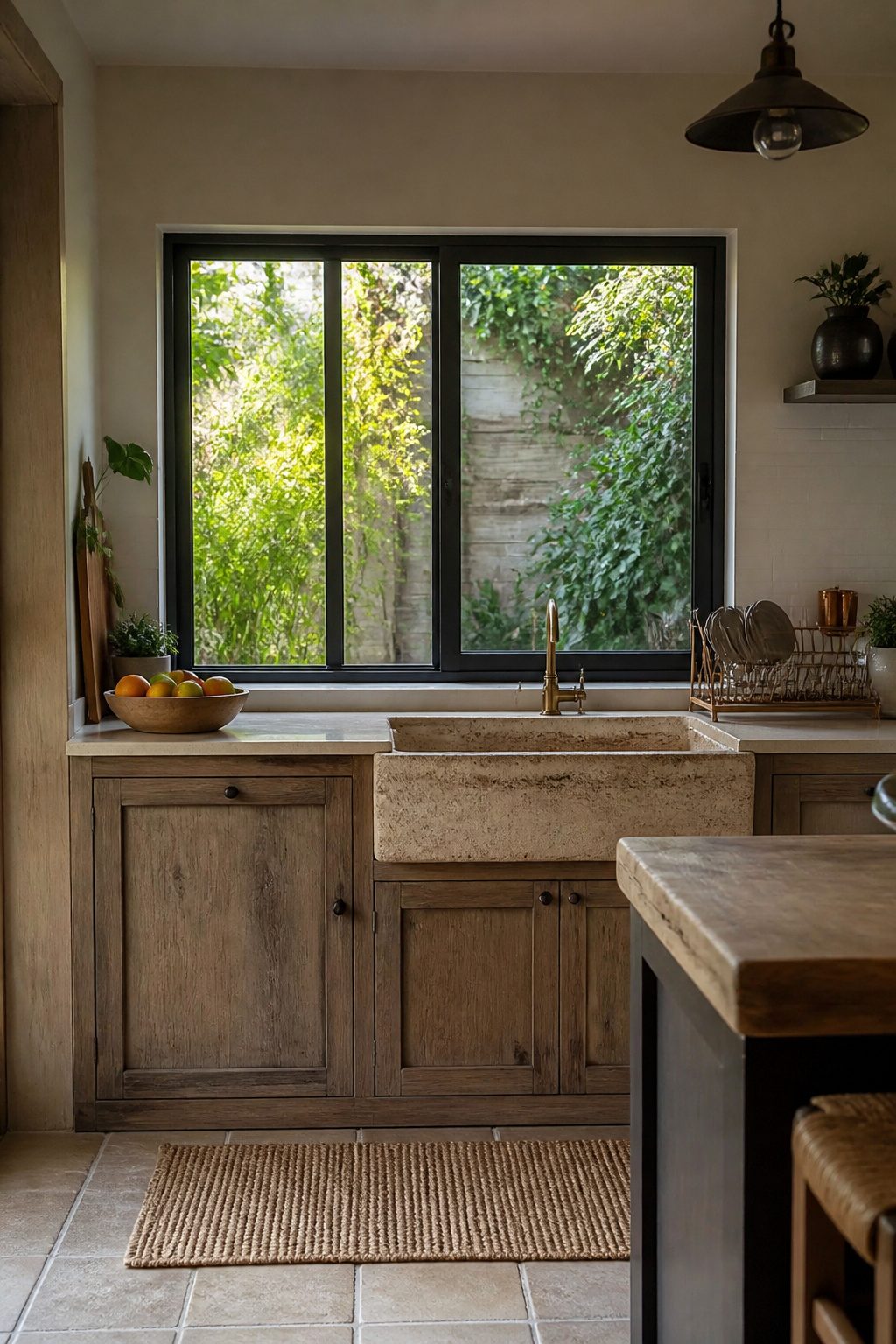
Sliding windows open side to side, not outward, which makes them the practical choice when your sink sits near a walkway, patio, or any tight outdoor space where a casement’s crank-out arc would hit something.
The track system sits in the frame itself, so the window slides on a horizontal rail rather than hinging on a vertical edge.
That leaves the sill free for plants or a drying rack, and you can open or close it one-handed even when you’re leaning over a full sink.
Half the glass is always blocked by the other sash, which cuts your clear view and your ventilation area by roughly fifty percent compared to a fully open casement.
For me, that trade-off is worth accepting in galley kitchens or anywhere the exterior clearance is measured in inches rather than feet.
Where you have room to swing a window outward, a crank or push style gives more airflow and an unobstructed pane. Where you do not, the horizontal slide wins cleanly.
7. Grid-Style Windows
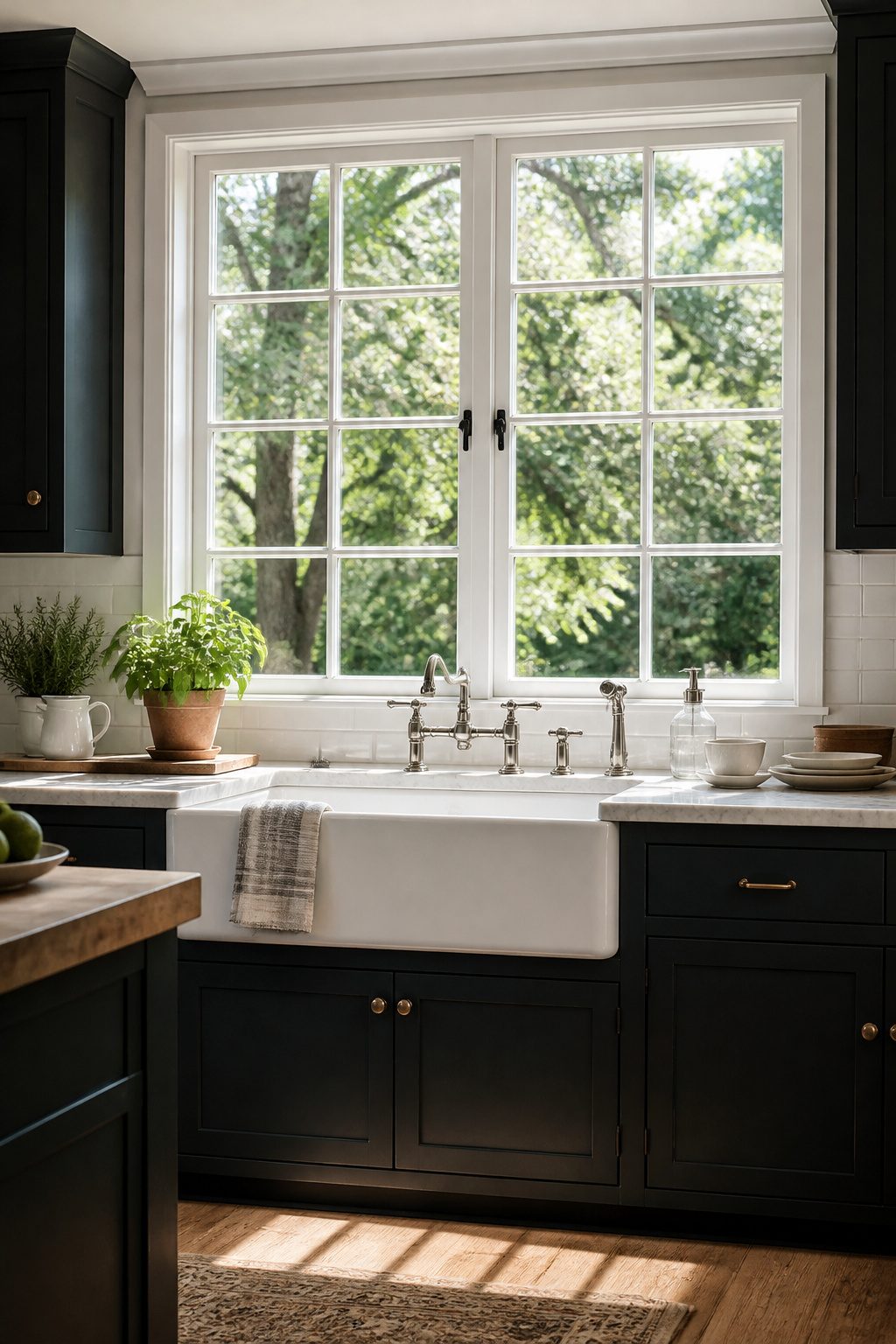
The grid pattern on a kitchen with window over the sink is what separates a builder-basic look from something with intention.
Divided-light windows come in two builds: grids sealed between the glass panes, which stay flat and wipe clean, or applied grids on the exterior surface, which cast slight shadows and read more authentic from the sidewalk.
Between the panes wins for anyone who scrubs splatter daily; applied grids win if the view out to a garden or fence matters more than the wipe-down.
Vinyl, fiberglass, and aluminum frames all take colonial grid patterns now.
Vinyl runs lower maintenance and better energy efficiency than aluminum at the same grille profile, so I would not pay the metal premium unless the house already has aluminum windows to match.
The symmetry of a six-over-six or four-over-four grid pairs naturally with shaker cabinets and neutral paint, but the pattern does cut the glass into smaller sightlines.
A wide backyard view turns busier; a close-in hedge or brick wall becomes texture instead of obstacle.
8. Foldable Windows
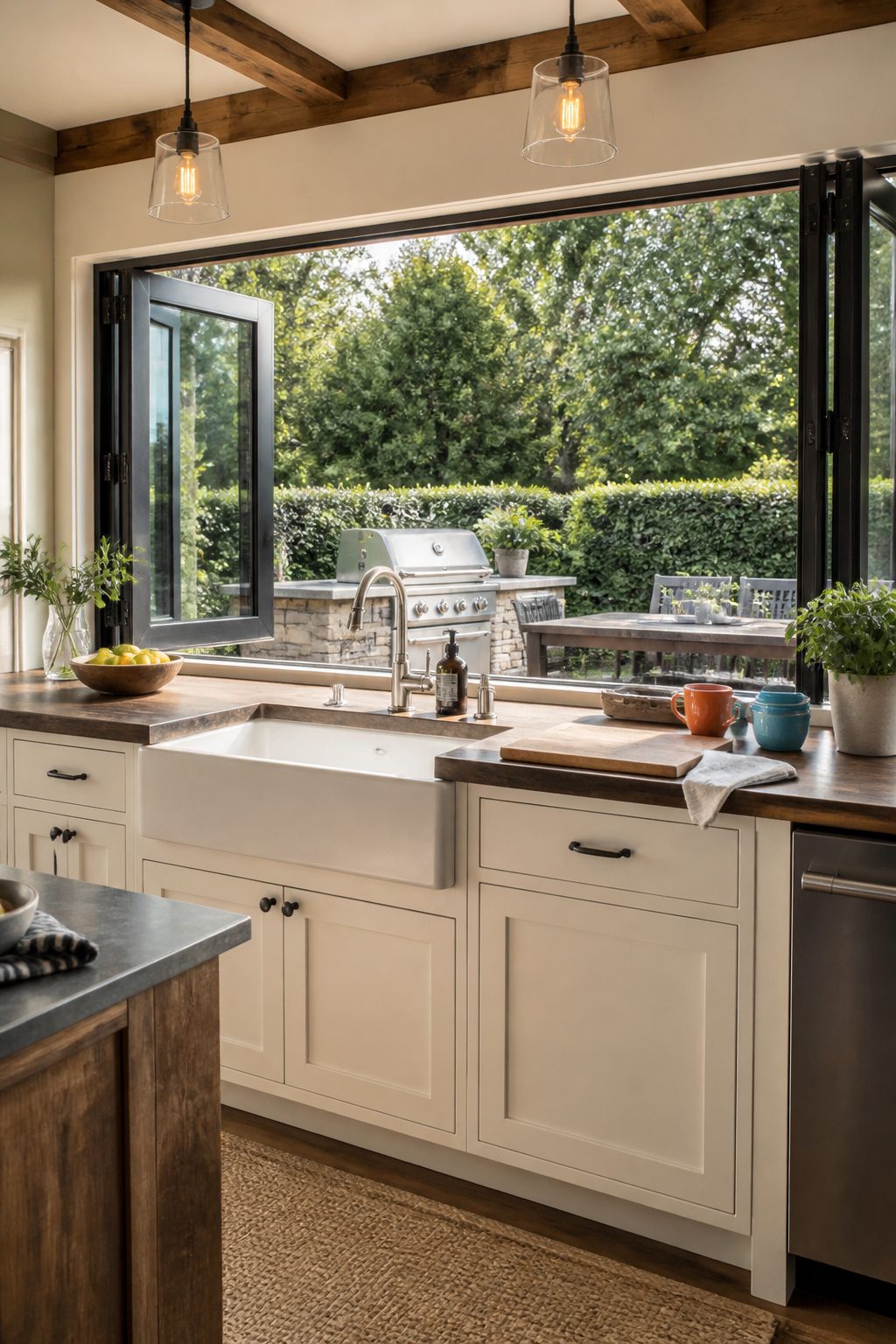
Bi-fold windows fold accordion-style along a top and bottom track, stacking the glass panels to one side so the entire wall opens.
That track hardware sits proud of the frame by about an inch, which matters when you are standing at a sink: you will notice it brushing your forearms as you wash dishes, so order the low-profile track option if the manufacturer offers one.
The real question is whether your sink belongs on that wall at all.
In a U-shaped or L-shaped kitchen, the sink already anchors the work triangle, and a foldable window behind it turns the counter into a pass-through for burgers and drinks.
In a galley kitchen, you lose the upper cabinets that normally flank the window, and storage shrinks fast.
I would only put the sink here if the opposite wall carries the range and leaves you enough base cabinet space for pots and dish racks.
The panels stack to the left or right, not into the wall, so plan for that block of folded glass clearing your faucet and any pendant light.
Recommended Products

【Plug and Play】DIY ventilation for gpu mining rig , router, receiver, av cabinet , chassis, workstation, pc case, greenhouse, mushroom growing or as exhaust fan for freeze dryer , crawl space, basement, garage, attic, rv refrigerator, X-box, ps4 , amplifier, kitchen, humidifier, sound system, etc
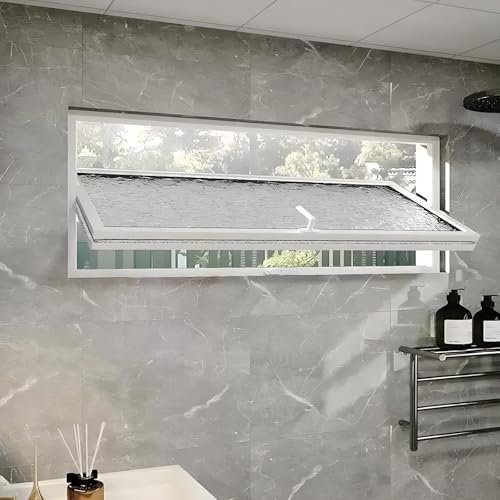
Windows in Custom Sizes : Can't find the right fit? No problem! We offer customization services to tailor the window size to your specifications (Accurate to 0.1 inch). Just provide us with the width and height of your window opening, and we'll take care of the rest
What a Window Over the Sink Changes
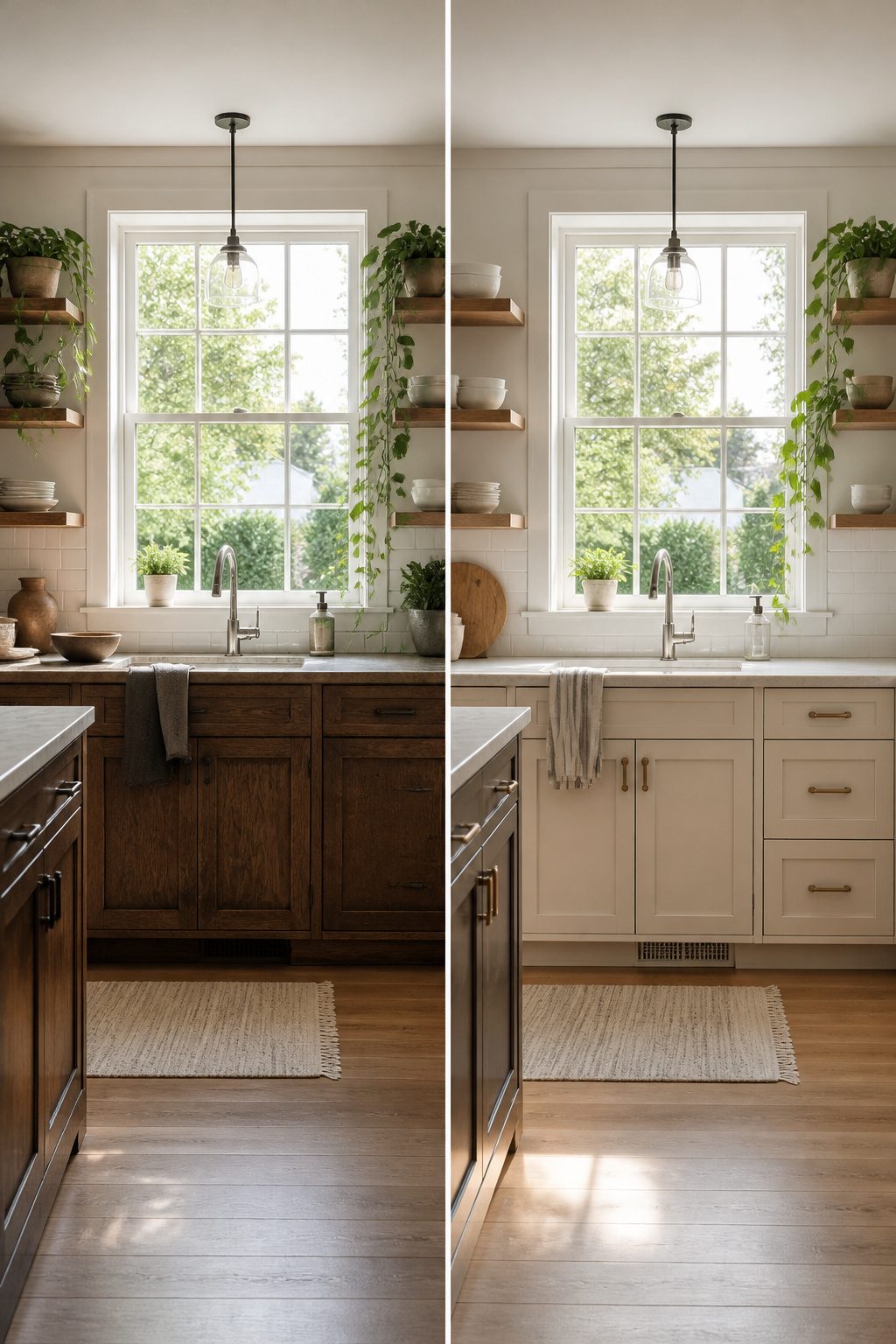
A kitchen with window over sink trades roughly 24 to 36 inches of upper cabinet storage for daylight, passive ventilation, and something to look at while you rinse plates.
Natural light makes the room feel larger without adding a fixture, and a window that opens lets cooking odors and humidity escape at the source. The view, even if it is just the neighbor’s fence, beats staring at tile.
The loss of cabinet space is real. You will need to work harder with what remains: taller pantry units, storage inserts in lower cabinets, or shorter uppers flanking the window to keep some symmetry.
If the sink and window do not align vertically, offsetting the sink slightly still reads as balanced.
Water splashes reach the frame regularly, so the surrounding wall needs waterproofing and the window itself needs water-resistant material like Fibrex.
Tiling around the frame costs more than a standard backsplash run. Plumbing and electrical locations in an existing wall may make the move prohibitively expensive unless you are already gutting.
"Put simply, where there is a window there isn’t storage."
That storage loss is the trade-off every other decision in this layout has to solve.
Sizing a Window for the Space
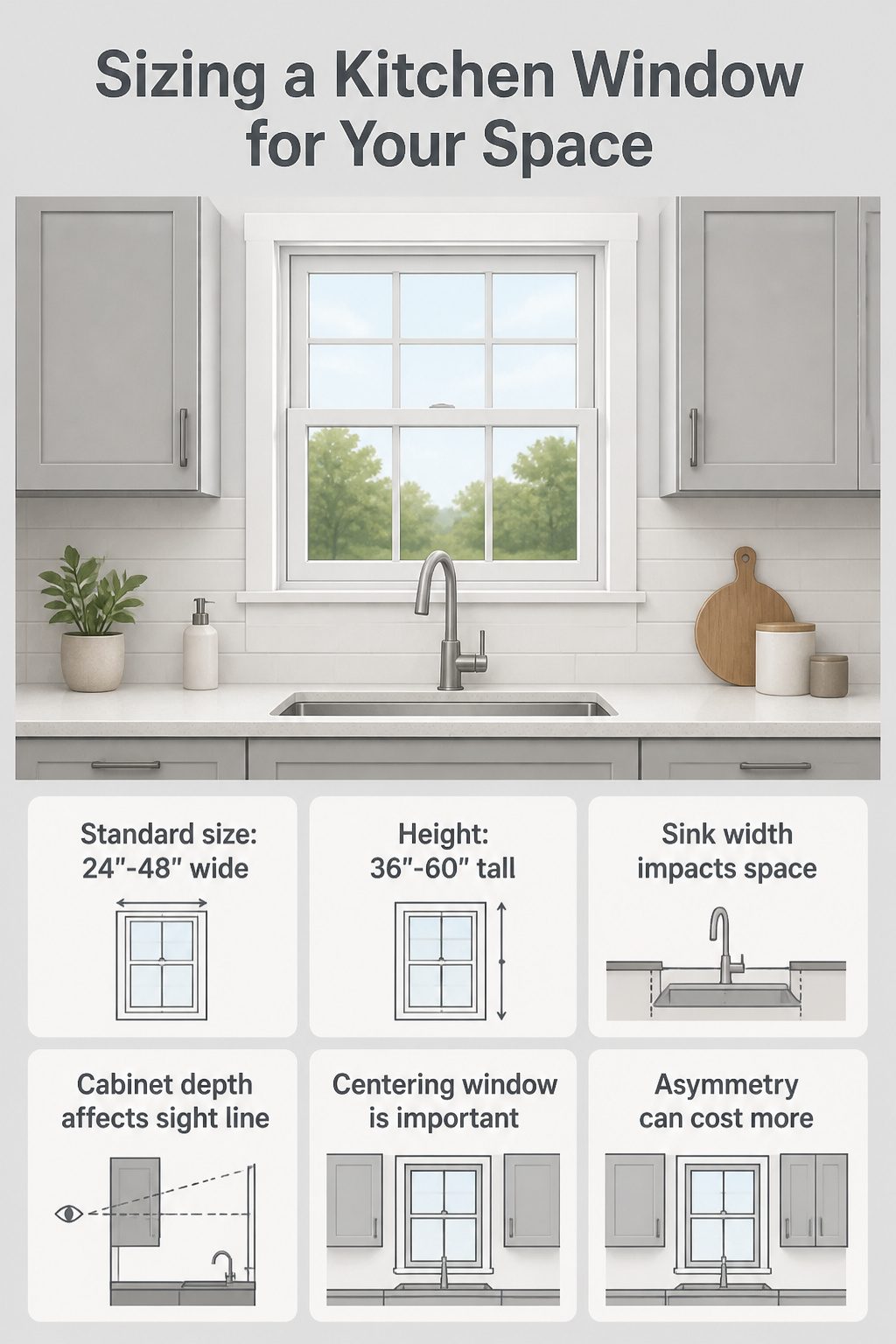
Standard windows over the sink run 24" to 48" wide and 36" to 60" tall, but the number that actually matters is the space between your upper cabinets.
A 36-inch window centered over a 30-inch sink reads balanced on a plan, yet once the cabinetry goes in, the remaining flanks can pinch down to four-inch fillers that look like afterthoughts.
I have seen layouts where the window looked generous in isolation but sat too low for the faucet height, or too high to reach the latch without leaning across a running sink.
The sink width and the counter run set the real frame. A 33-inch sink on a six-foot run leaves roughly 18 inches of counter on each side if the window takes the middle third.
That is workable until you add in the upper cabinet depth, typically 12 to 15 inches, which crowds the sight line from the side.
In a U-shaped kitchen, the sink window becomes the focal point by default, so the proportion needs to hold from the entry point as well as straight on.
If the window must sit off-center to dodge a stud or a vent stack, the asymmetry costs more than it looks. Upper cabinets on one side end longer than the other, and the eye catches the imbalance every morning.
Shorter cabinets or open shelving beside the window can even the rhythm, but that trades storage for the look. Measure twice against the cabinet boxes, not the drywall, and live with the tape lines for a day before ordering glass.
Privacy Without Losing the Light
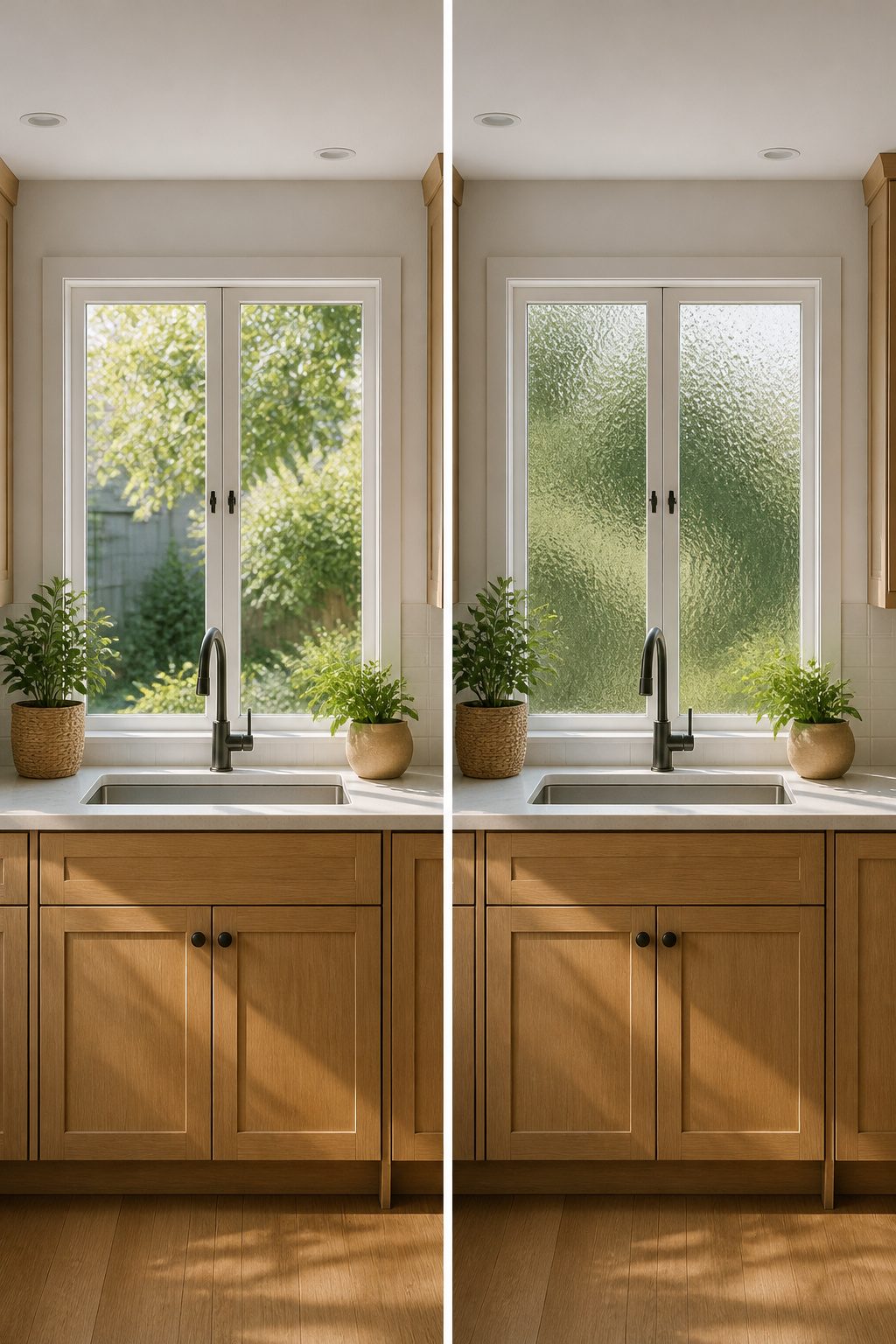
Frosted and textured glass are the usual answers when a kitchen with a window over sink faces the street or sits close enough to a neighbor that you feel watched doing dishes.
Both let daylight through while breaking up the view from outside into something unreadable.
Textured glass does more than frost; rain, reed, or bubble patterns turn the outside world into colored movement without shapes, which some people find easier to live with than the flat white glow of standard frosting.
I still prefer clear glass with a shade I can move.
Privacy glass is permanent. Pull it down on a gray Tuesday in January and the kitchen stays dim; you cannot open it for a brighter afternoon.
A vinyl roller shade or a Roman shade on a motor solves the problem only when it needs solving, and keeps the option of full daylight and full view for the other hours.
The moisture above a sink means fabric curtains are a mistake, and wood shutters will swell.
Vinyl, faux wood, or polyvinyl shutters survive the wet zone and wipe clean. The small hassle of raising and lowering is worth the flexibility to me.
Treatments That Survive a Wet Zone
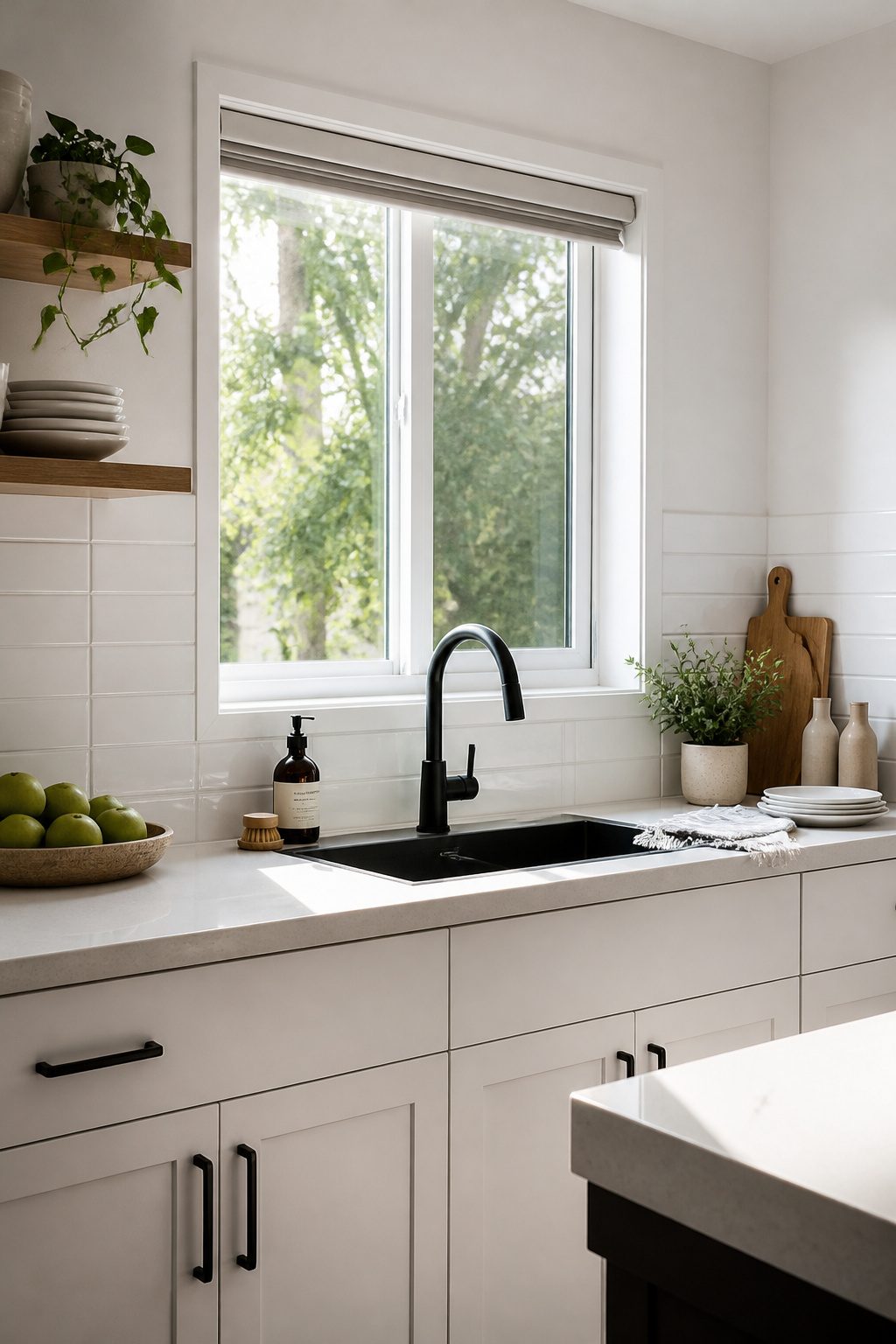
Vinyl blinds or roller shades are the only window treatments I would hang above a sink. Fabric curtains absorb every splash of dishwater and steam, and in a kitchen with window over sink placement they mildew within a season.
I learned that the hard way with a set I thought I could wipe down. Faux wood looks convincing on the shelf, but the steam from a running faucet warps the slats over a year or two.
I have replaced faux wood blinds twice in that spot. Aluminum or polyvinyl hold their shape, wipe clean with a sponge, and cost about the same as the warping alternatives.
If you want the warmth of wood, waterproof polyvinyl shutters exist, though they run higher. For a weekend project on a few hundred dollars, a simple vinyl roller shade is the treatment that survives the wet zone.
Frequently Asked Questions
What type of window is best over a kitchen sink?
Casement and awning windows are the most popular choices.
Casements give you unobstructed glass with no middle sash and move more air when you need it, while awnings hinge at the top and let you keep ventilation open even in light rain because water runs down the sloped pane.
The right pick depends on your climate and how much clearance you have outside for the swing.
Why is there always a window over the kitchen sink?
A window above the sink brings natural light, lets cooking odors and humidity escape at the source, and gives you something to look at while you rinse plates.
The trade is roughly 24 to 36 inches of upper cabinet storage for that daylight and view.
What size window goes over a kitchen sink?
Standard windows run 24 to 48 inches wide and 36 to 60 inches tall, but the number that actually matters is the space between your upper cabinets.
A 36-inch window centered over a 30-inch sink reads balanced on paper, yet the remaining cabinet flanks can pinch down to four-inch fillers that look like afterthoughts once installed.
Can I replace my existing kitchen window without a full remodel?
Yes.
Window replacement can be done without changing cabinets or countertops, especially with retrofit framing. Plumbing and electrical locations in an existing wall may complicate things, but a straight swap of the unit itself does not require gutting the room.
What is a window over a kitchen sink called?
There is no special architectural term; it is simply a kitchen window placed over the sink.
Builders and designers often treat it as a standard feature rather than a distinct category, though the placement drives specific choices about crank height, swing direction, and water resistance.
What to do with a window above the kitchen sink?
Choose a style that fits your ventilation needs and outdoor clearance, size it against your cabinet layout rather than the drywall, and pick treatments that survive the wet zone.
Vinyl blinds or roller shades hold up; fabric curtains mildew and faux wood warps from steam.