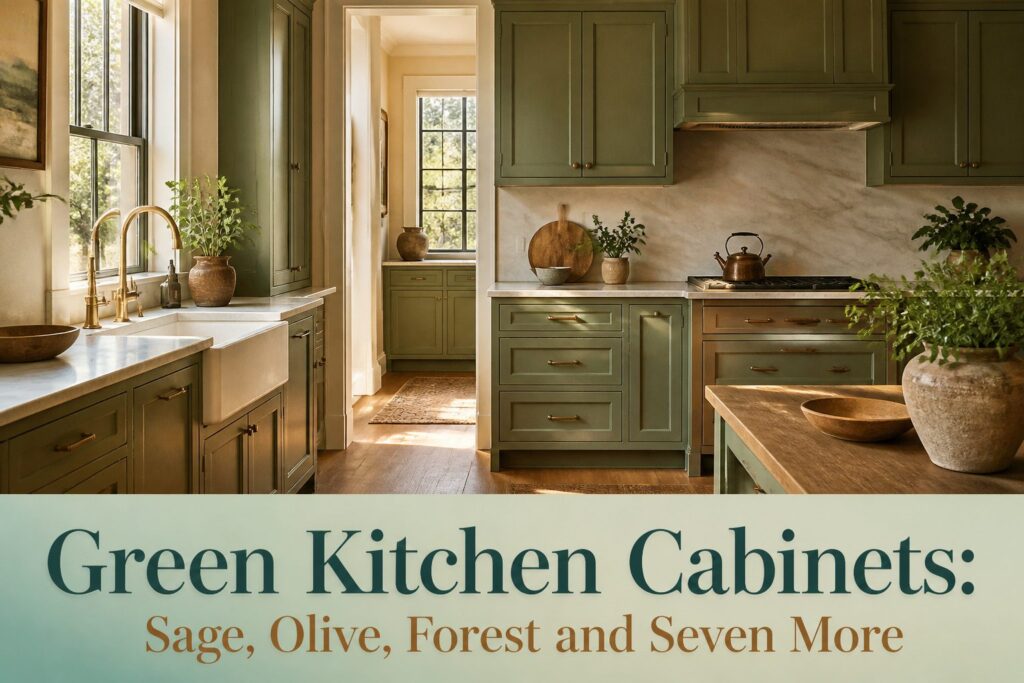
Green kitchen cabinets are painted cabinetry in muted sage, olive, forest, and deeper tones that function as new neutrals in place of the long-dominant all-white kitchen.
The shift only works if the green is grayed down enough to recede; saturated emeralds and mints already look dated in homes where they went in three years ago.
Zillow’s June 2025 survey of 4,200 buyers found an olive green kitchen commands a $1,597 premium, not because it is trendy, but because buyers expect to live with it.
Why Green Kitchen Cabinets Moved Past the All-White Kitchen
The all-white kitchen has held sway for nearly two decades, but the shift away from it is not toward another single color.
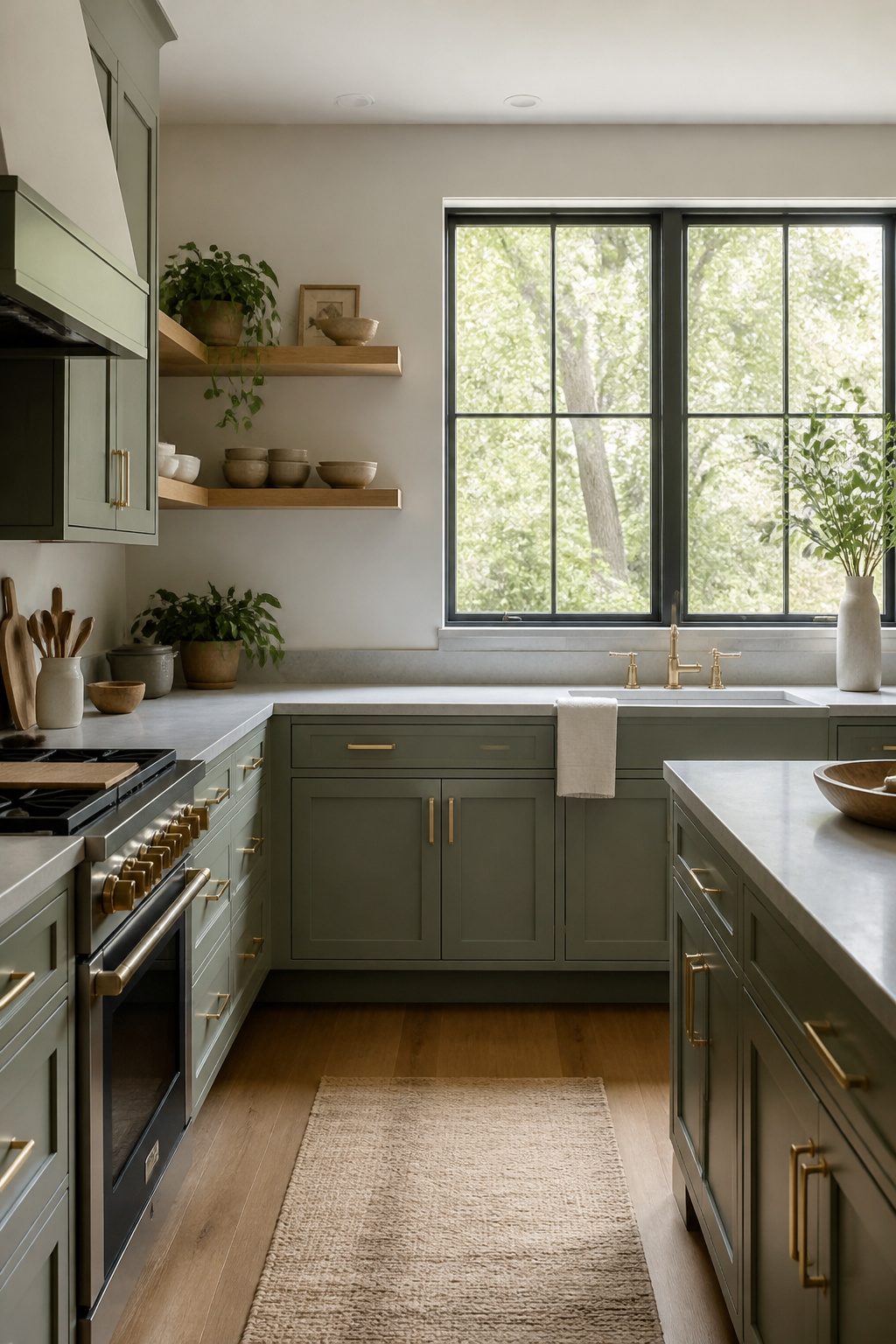
What changed is how people think about permanence. White read as safe because it receded; the new move is toward green that behaves the same way.
Muted sage and olive tones function as new neutrals, anchoring a kitchen without shouting for attention the way a saturated emerald or mint would. Those brighter greens already look dated in houses where they went in three years ago.
The Zillow data from June 2025 puts a number on this.
Buyers surveyed across 4,200 responses said they would pay about $1,597 more for a home with an olive green kitchen. That is not celebrity-endorsed trend money; that is the premium people assign to a color they expect to live with.
Sage greens with gray undertones, like Benjamin Moore October Mist at roughly LRV 46.5, or the deeper Sherwin-Williams Pewter Green at LRV 12, age the way white used to.
They hide the wear of actual cooking and still let brass or matte black hardware sit cleanly against them.
Recommended Products

GENEROUS STORAGE: Featuring one large drawer and six door cabinets with shelves, this kitchen pantry cabinet offers tons of space and multiple options for your storage needs while transforming your chaotic space into something completely tidy and organized

End Storage Woes: Featuring 6 generous cabinets with adjustable shelves for kitchen overflows, 3 deep drawers to organize small items and a spacious 55" wide countertop for frequently used appliances, this large kitchen pantry cabinet is definitely a storage Master!

Spacious Vertical Storage: Keep your bathroom or kitchen organized with 6-door design and multiple compartments that maximize vertical storage without taking up much floor space
Sage Green
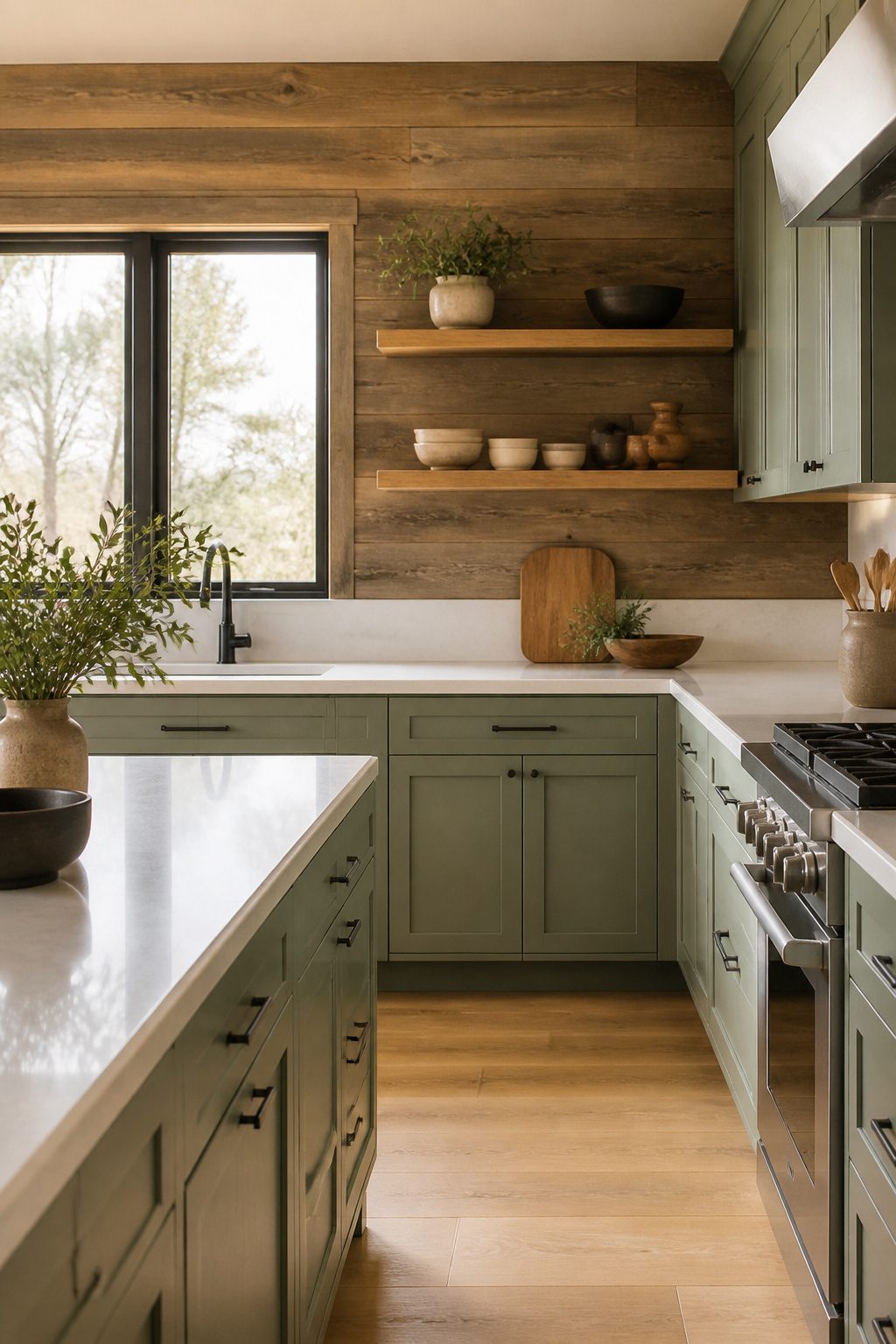
Sage green sits closer to gray than to grass, and that muted quality is exactly why it has become the default green for kitchen cabinets.
An LRV in the mid-30s to mid-40s range keeps it reading as a neutral rather than a color statement, which matters when you are choosing paint for something as permanent as cabinetry.
Benjamin Moore Saybrook Sage, Benjamin Moore October Mist at roughly LRV 46.5, and Sherwin-Williams Evergreen Fog at LRV 30 are the three names that come up consistently.
The difference between October Mist and Evergreen Fog is about sixteen points of light reflectance, meaning October Mist holds its own in a dim kitchen while Evergreen Fog needs decent natural light or it can go flat and heavy.
I would start with Saybrook Sage or October Mist if the kitchen opens into living space and the cabinets need to cooperate with whatever is already there.
Evergreen Fog works better when the kitchen is its own room and you want the cabinets to feel like a deliberate choice without shouting.
Both stop reading as trendy within about a year, which is more than I can say for brighter greens that photograph well and live loudly.
Olive Green
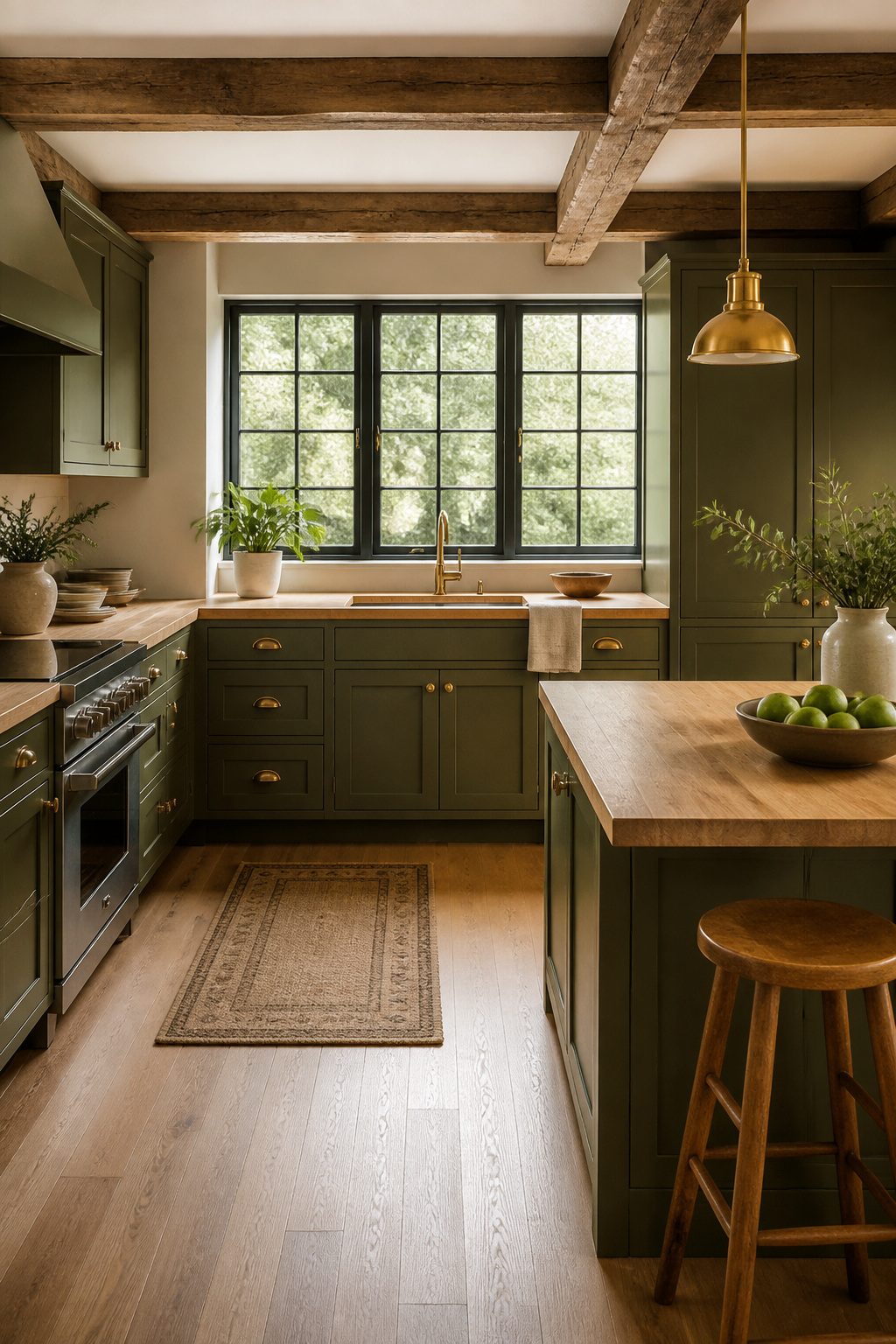
Olive green carries a warmth that sage sometimes loses under yellow indoor bulbs.
Its yellow-green undertone reads earthy rather than cool, which makes it the safer choice if your floors are walnut or oak with any red in them. Sage can turn mossy against warm wood; olive settles in and looks intentional.
For a deeper take, Sherwin-Williams Pewter Green (SW 6208, LRV 12) sits at the smoky end of the olive family.
That low LRV means it drinks light, so it pairs better with pale countertops than with dark stone. The gray in it hides fingerprints better than black, which matters on a cabinet you open fifteen times a day.
Olive bridges old and new without trying hard.
In a farmhouse space with reclaimed beams and honed stone, a rustic olive cabinet reads settled. In a cleaner build, the same color with flat-panel doors and matte black hardware reads modern.
The through-line is the natural material next to it: unlacquered brass, terracotta, linen. Without that, olive can look like a color that wandered in alone.
The market notices.
Zillow found that buyers paid a premium for this range of green in recent years. Not a fortune, but enough to justify the gallon of paint against a weekend of brushing and rolling.
Recommended Products

⭐【Clutter-to-Calm in Seconds】With 2 spacious drawers to stash away odds and ends, wide tabletop and 2 open shelves for showcasing your decor, and roomy bottom cabinet for larger items, this bathroom cabinet meet to your various storage needs. You can absolutely end the chaos with this tall cabinet and enjoy a clutter-free home

4-Pack Matching Dark Green Cabinet Bow Set Package includes 4 identical matte dark green burlap decorative bows with unified standard size, perfectly fit all regular kitchen cabinet doors, drawer pulls and cupboard knobs. Enough quantity to decorate full upper & lower cabinet rows for cohesive forest-toned holiday kitchen styling.

All-surface uniquely formulated paint solution: Easily refinish furniture, cabinets, countertops, doors, trim, floors and more
Forest Green
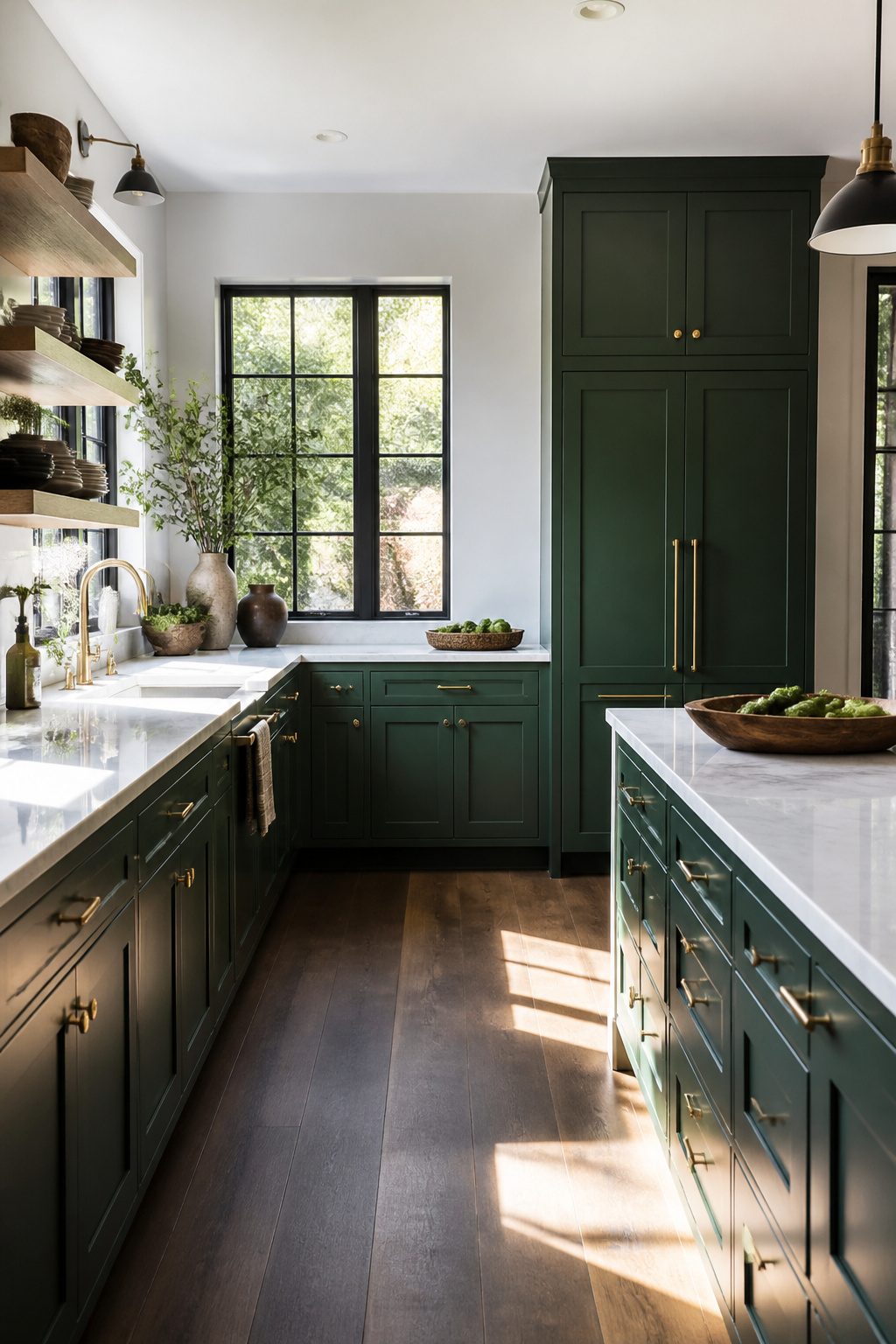
Forest green sits at the deep end of green kitchen cabinets, bluer and cooler than hunter green and closer to a shade like Benjamin Moore’s Forest Green 2047-10.
It carries enough saturation to feel dramatic without tipping into near-black territory the way some dark greens can.
This is a color that needs real light, either a big window or genuinely good overhead lighting, or the kitchen will close in on itself.
In a larger kitchen with generous natural light, forest green reads as intentional and expensive rather than trendy. The architectural detail in older homes especially benefits from it; the cabinetry acts like a rich frame for moldings and built-ins.
The safer play for most renters and first-home owners is using forest green on the lower cabinets only, with bright white or open shelving above.
That combination gives you the drama without the weight. Pair it with unlacquered brass hardware and warm-tone quartz countertops.
Stark whites clash here and cheapen the whole room, so skip them. If the budget allows, inset door construction reads more intentional on a dark cabinet than overlay, which can look flat.
Recommended Products

【Strong Grip & Non-Slip】Tryougxa kitchen drawer liners feature a non-slip design. The raised particles grip shelves, drawers, and cabinets firmly. They prevent tableware from sliding and keep fragile items from falling – Keeping your dishes stay safe.

Green CONTACT PAPER: This wallpaper features a matte emrald green , peel-and-stick design with a solid finish. Its back is gridded for easy measuring and cutting.

【Important Notes Before Purchase】To ensure the product fits your space, please carefully review the size information in the product images. We hope you purchase a suitable product
Mint Green
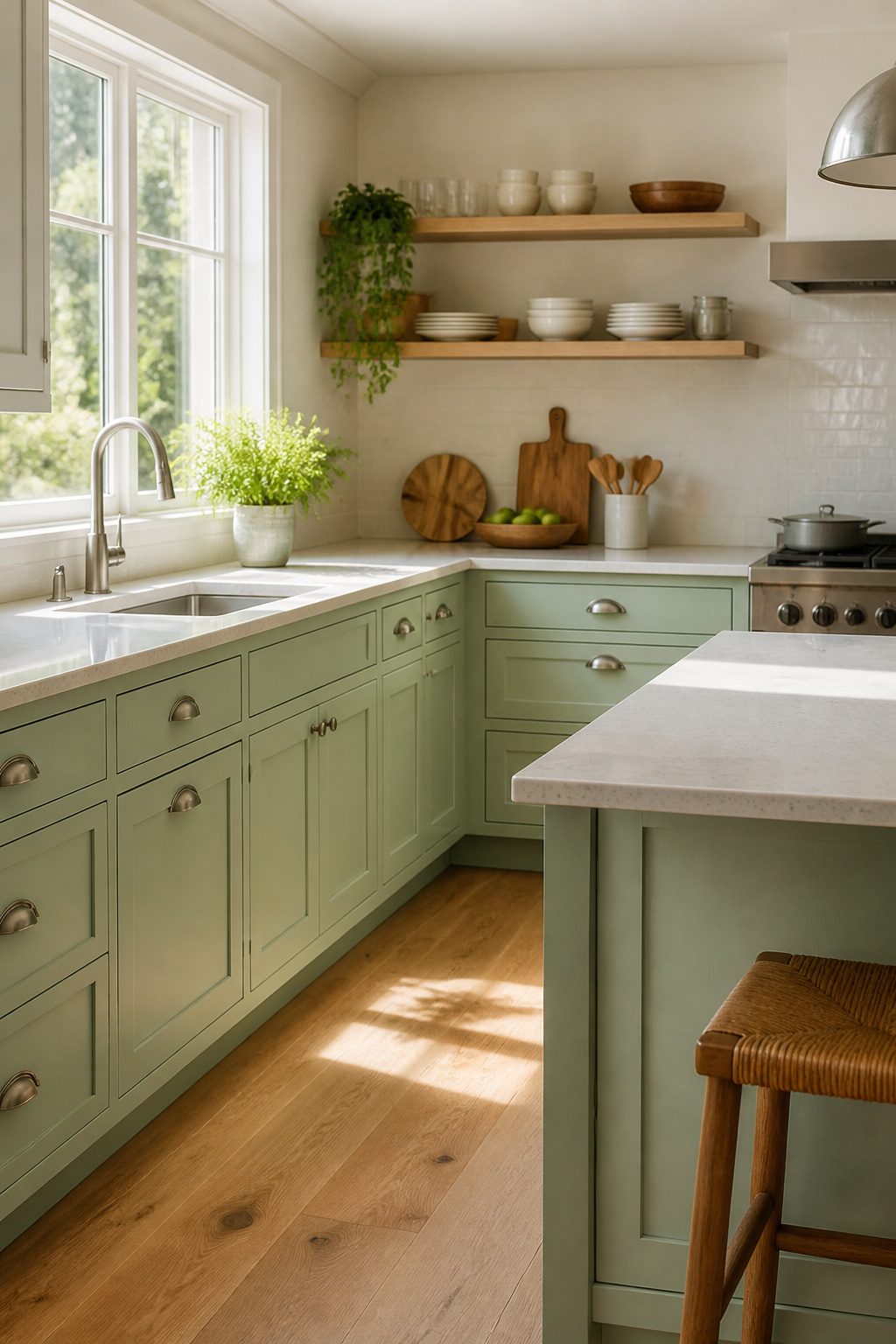
Mint green carries a lighter, cooler temperature than the muted greens most people settle on, and that freshness comes with a specific risk.
In a small kitchen or breakfast nook, the pastel brightness opens the space up and reads almost like a neutral under natural light. The retro undertone also lands well if your cabinets already lean vintage, cottage, or coastal.
Where it slips is scale and pairing.
In an open-concept layout, mint can feel infantile fast. The same playfulness that saves a cramped galley kitchen becomes cloying stretched across thirty linear feet.
Pair it with warm whites, not cool ones, and keep countertops to butcher block or wood tones with simple brushed nickel hardware. That warmth anchors the color and keeps it out of nursery territory.
Saturation is the real danger with mint, not the hue itself. A bright pastel reads as a moment in time in a way gray-tempered greens do not.
If the chip excites you under store fluorescents, imagine it dimming toward charcoal on a north-facing wall. Sample boards taped to actual doors for a few days beat any showroom decision.
Recommended Products

ALL-IN-ONE Paint - NO Sanding, NO Priming, NO Top Coat Required, Low Luster, Velvet Sheen Finish


Ideal for use on all interior wood projects: furniture, cabinets, doors, trim and paneling
Hunter Green
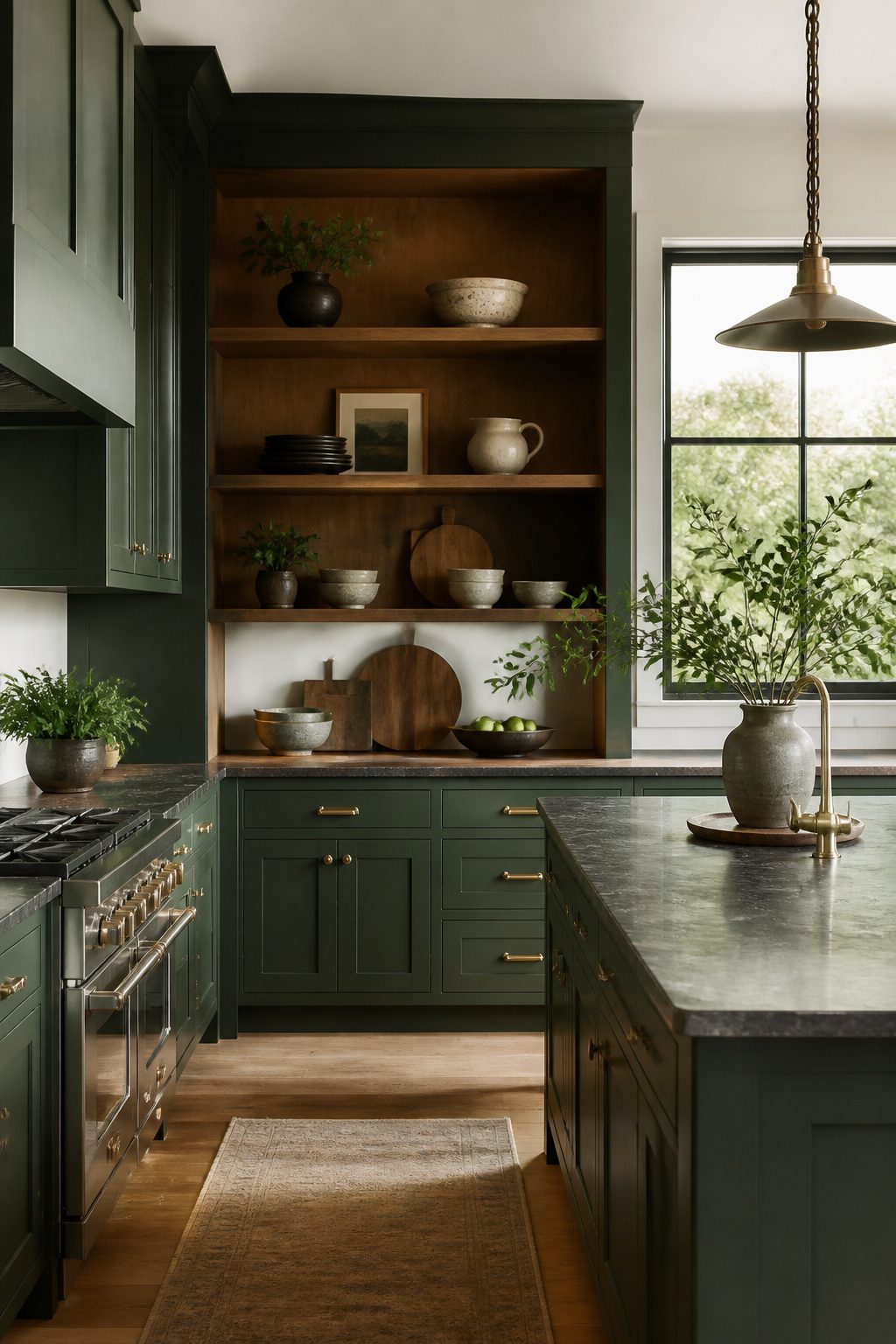
Hunter green sits closer to emerald than forest in saturation, with less of the blue shift that makes forest feel cool.
It reads formal, almost British racing green, which is why I think it belongs in kitchens with real architectural weight: crown molding, inset-panel doors, maybe a range hood with some geometry to it.
The warmth in hunter green pairs naturally with brass hardware, not the brushed nickel that would look right on a sage cabinet. Unlacquered brass ages to a soft patina that keeps the combination from feeling showroom-stiff.
I would avoid stark white countertops with it; they tend to cheapen the depth rather than set it off. Honed stone or a marble with movement works better, letting the cabinets read as the rich frame the room builds around.
Natural light matters here. Both forest and hunter greens flatten under recessed cans alone, so if your kitchen relies on overhead lighting, this is the shade to skip.
Recommended Products

MINIMALIST STYLISH DESIGN: Combining paneled design with modern functionality, minimalist style with enormous capacity, this freestanding kitchen pantry features classic details and timeless eleglance, which seamlessly complements any contemporary aesthetic, making it a versatile choice for your home
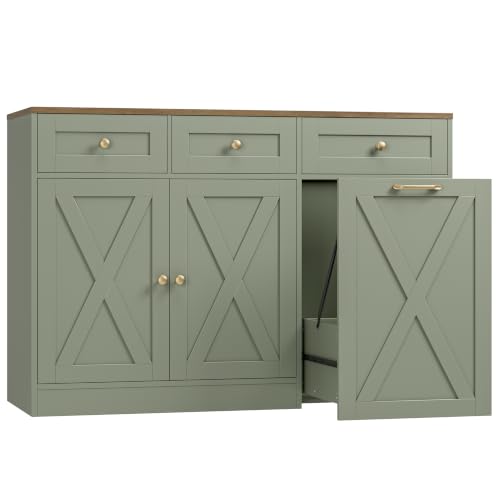
Tuck-Away Trash: Designed to tuck trash out of sight, sealing in odors and stopping pets from rummaging, this hidden trash can cabinet fits a 13 gallon trash bin and is a perfect pick for small kitchens, dining nooks, and entryways

Ample Storage: Revamp your kitchen with this kitchen pantry, designed for all kinds of storage. Upper featuring 4 glass doors, curved wine racks, mug hooks, and stemware racks to keep items within easy reach, it also has a spacious countertop, two deep drawers, and a 4-door cabinet that integrates all in one to supply copious storage solutions
Emerald Green
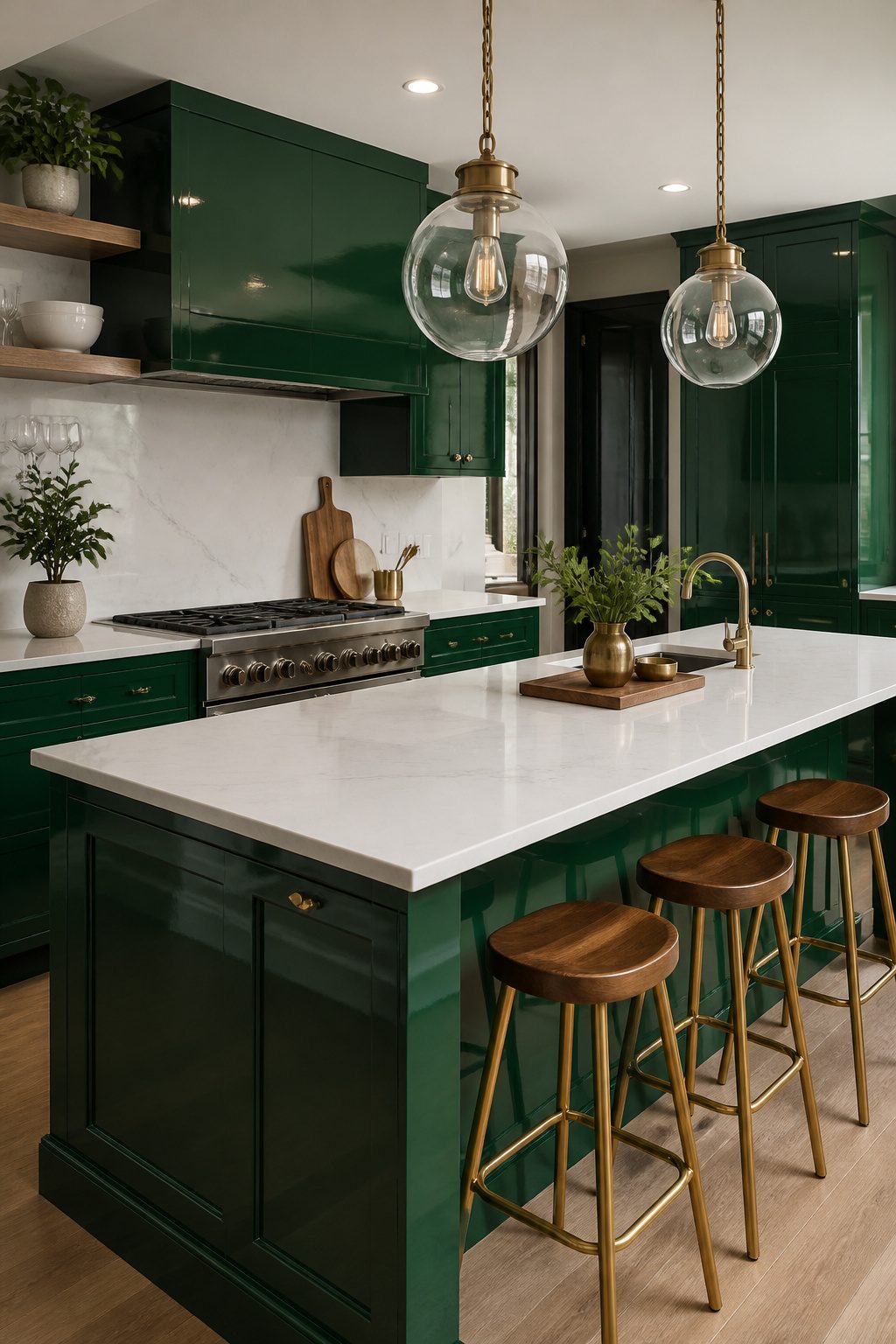
Emerald green sits at the blue edge of the green spectrum, a jewel tone with saturation high enough to swallow light rather than reflect it.
I treat it as one color short of a commitment: the kitchen has to earn it, and most do not. The cabinets become the single focal point or the whole thing fails, because emerald does not share space politely.
Marble with white or gray veining, or a quartz that mimics that same movement, gives the eye somewhere to rest.
The pairing reads as deliberate luxury, not accident. Unlacquered brass or polished nickel handles hold their own against that depth without looking apologetic.
What limits emerald in practice is the architecture itself. A ceiling under nine feet or a window on one wall turns the saturation into weight; the room shrinks.
I would not paint upper cabinets this color at all in a galley kitchen, and in an open plan I would want the sight line to resolve to something else before the color repeats fifteen feet away.
The cost of missing is the full redo, not a touch-up.
Recommended Products
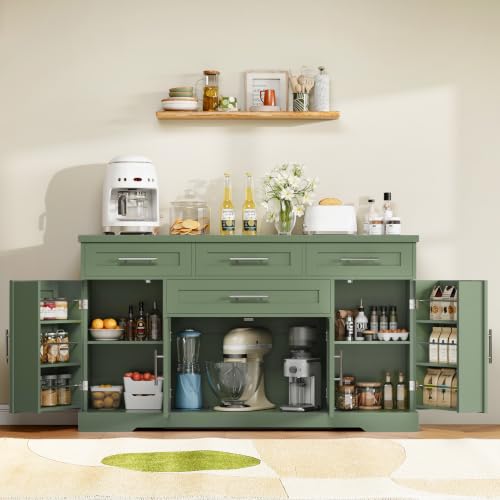
Large Storage Space: With upgraded drawers, spacious cabinets, and open shelves, this kitchen sideboard provides maximized storage capacity for all your essentials — from dinnerware and pantry items to small appliances like rice cookers. Say goodbye to cluttered countertops and enjoy a clean, organized kitchen with everything neatly in place

[Huge Storage Capacity] Boasting 2 large cabinets, a big slide-out drawer, and 6 door shelves, this spacious pantry fits everything from your food and dinnerware to kitchen appliances, tidying up wherever you set it
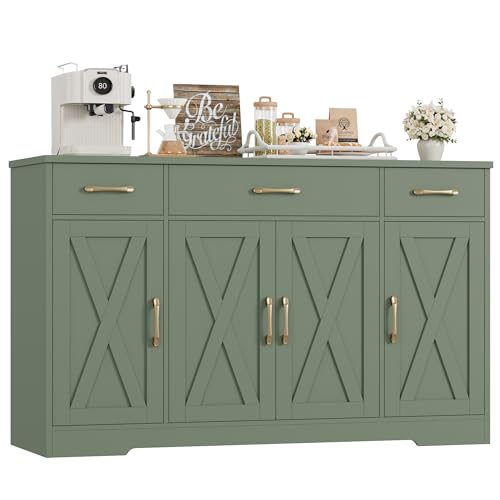
Large Storage Space: Featured four doors cabinets with one sizeable fixed shelf and two side adjustable shelves with which you can flexibly pack away various household items, and three drawers allow other kitchen overflows to stay in order, this buffet cabinet is sure an essential addition to any loft apartment
Moss Green
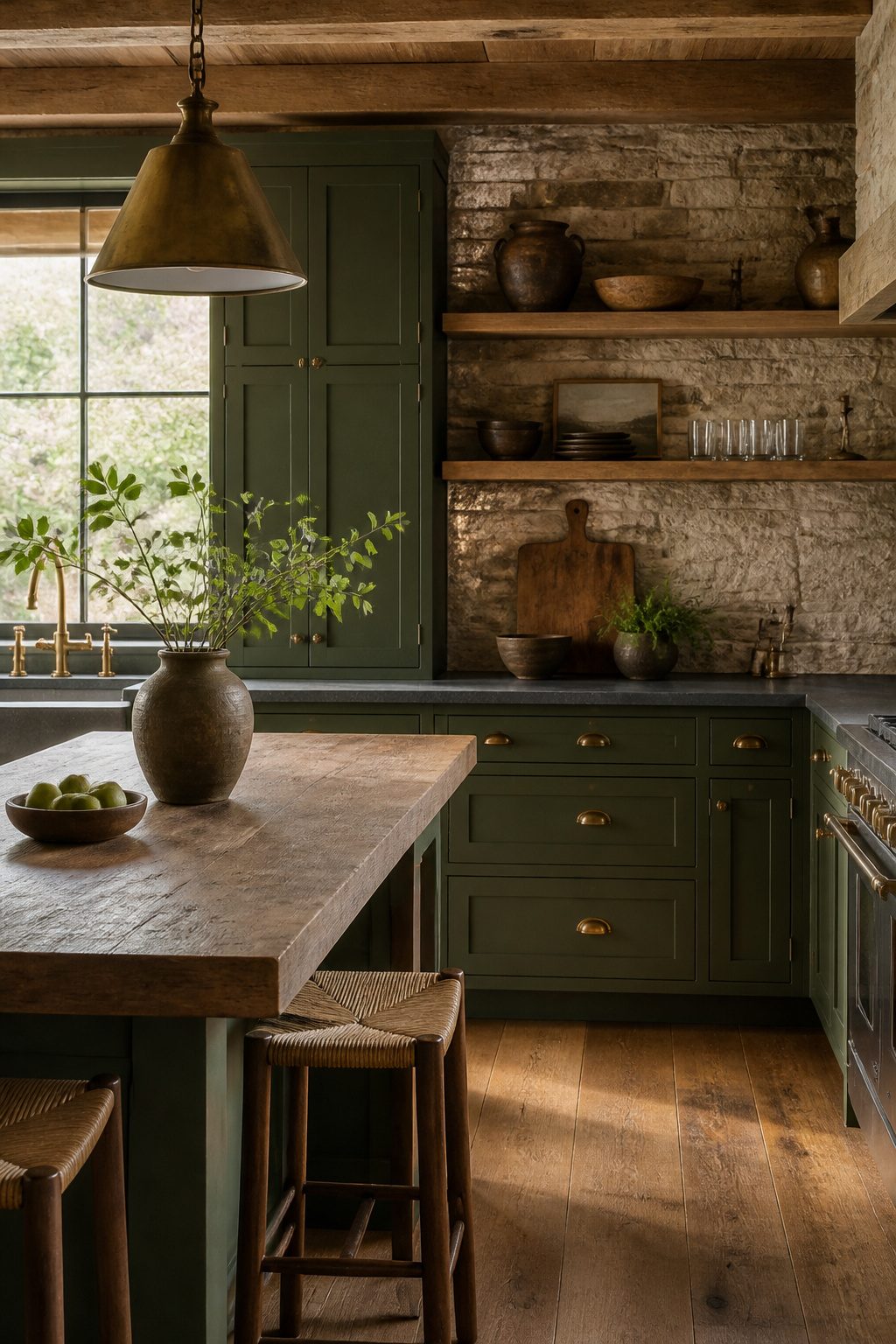
Moss green carries enough brown in its base to read as earth rather than plant, a distinction that matters when you are building a kitchen around wood and stone rather than around color itself.
It sits closer to olive than to sage, but where olive presses toward Mediterranean warmth, moss green stays cooler and quieter, the tone of river stones before they dry.
That brown undertone is what makes it work in a mountain kitchen with exposed beams or a stone backsplash.
The cabinets do not compete with the structure; they settle into it. I would pair moss green with warm brass hardware, never polished chrome, because chrome snaps the palette toward modern clinical while brass lets everything age together.
Stone with gray veining works better than stone with gold; the gold fights the brown in the moss, and the kitchen ends up arguing with itself.
The limitation is light.
Moss green absorbs more than it reflects, so a kitchen with small windows or northern exposure needs careful planning. Undercabinet lighting becomes worthwhile here, not decorative but functional, or the room can feel permanently late afternoon.
In a bright space with generous windows facing south or west, that same absorption flatters; the color deepens by degrees through the day instead of bleaching out.
Recommended Products

🏠DETAILS: Size 15.8 X 78.8 Inch , total 8.65 sq.ft(40cmX2m), Self adhesive (no extra glue needed). Made of durable vinyl, Green wood contact paper peel and stick, waterproof, oil-proof. Fully removable.

Spacious yet Space-Saving: Sized at 11.8"D x 23.6"W x 31.5"H, this storage unit occupies a small footprint while offering lots of storage. With this unit, you can make the most of your space

Maximizes Small Spaces: With 4 concealed shelves, 2 adjustable shelves and a roomy drawer, this bathroom cabinet is the perfect solution to declutter your home. Its compact design allows it to fit in narrow nooks and behind doors, giving you ample storage.
Teal and Seafoam
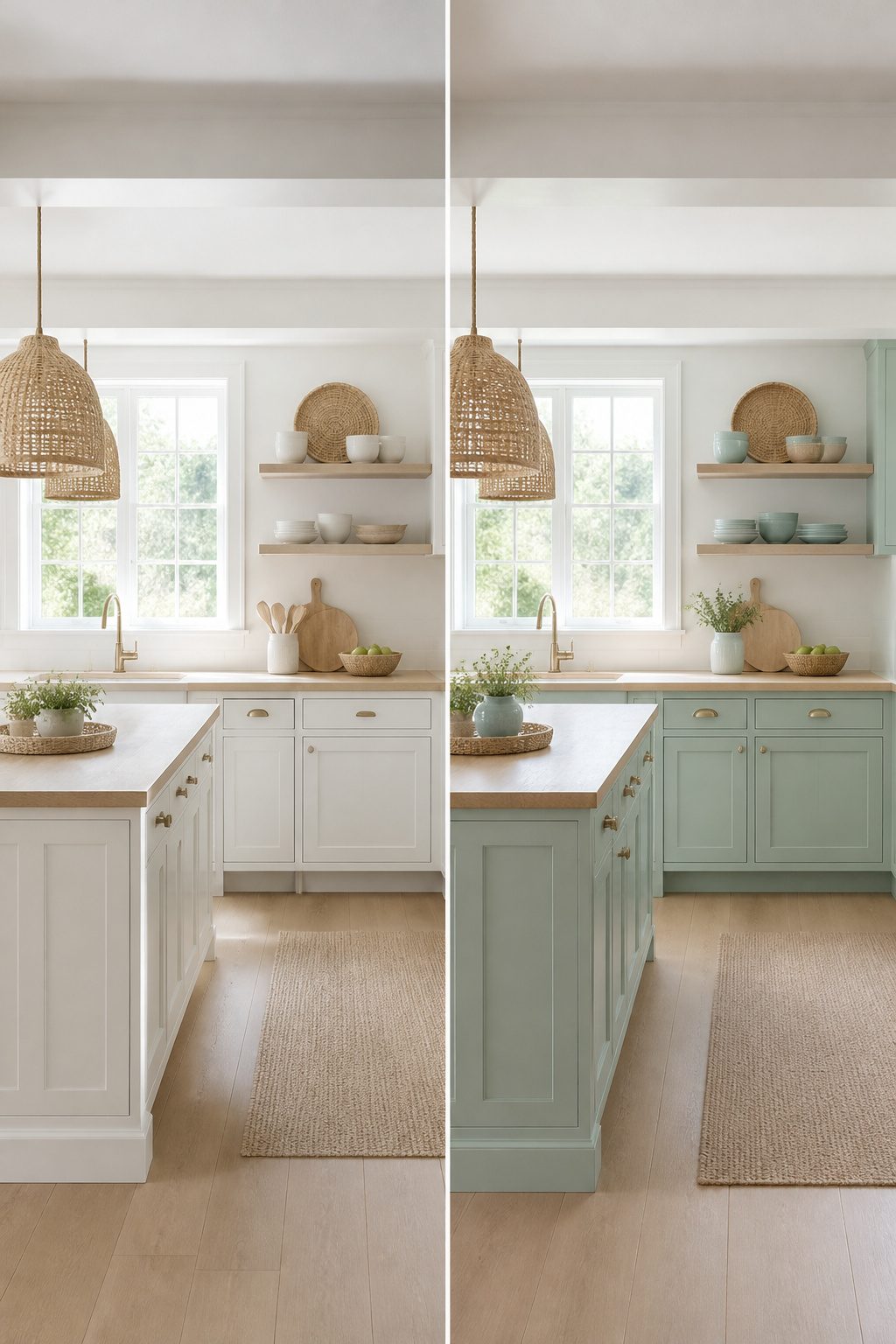
Teal and seafoam sit right where green blurs into blue, and that ambiguity is exactly what makes them tricky to use on kitchen cabinets.
Teal carries the heavier blue load; look at it beside a true green and the navy undertone announces itself immediately.
Seafoam stays lighter, frothier, closer to the gray-green of actual surf. Neither reads as a neutral the way sage can, so both become deliberate color statements in a kitchen.
Coastal kitchens suit seafoam almost by reflex. The source suggestion of layering it with light blue and white, adding woven textures and floral details, works because the palette keeps the cabinet color from floating away.
Teal lands differently. It pairs with white or gray countertops for a sharper, more modern edge, and in an eclectic space that contrast reads as intentional rather than mismatched.
I would not use either in a small kitchen with limited natural light.
Seafoam in dim conditions turns muddy; teal darkens toward navy and loses the green entirely. Both need bright spaces or very good artificial lighting to hold their character.
If your kitchen faces north and you are set on one of these, teal tolerates lower light slightly better because its blue base stays legible where seafoam’s gray tendencies take over.
For budget projects, both colors reward restraint. An island in teal against white perimeter cabinets gives the statement without the commitment of full-room coverage; seafoam reads as more playful when it appears on every door and drawer.
Recommended Products

【Spacious Buffet Storage】This small buffet cabinet features 3 smooth-gliding drawers and 2 closed cabinets, offering ample space to store kitchenware, dinner sets, or coffee essentials. Keep your space organized and clutter-free

【Ample Storage Space】The green storage cabinet features upper and lower cabinets designed with adjustable shelves, each shelf offers 5 height options. Effortlessly store towels, toiletries, cosmetics, and other items of varying sizes in bathrooms, living rooms, or kitchens

Hand Block Printed - These cafe curtains are hand block printed by local craftsmen, giving them a unique and authentic touch making these curtains a beautiful addition to your home. Available in a selection of
Dark Green
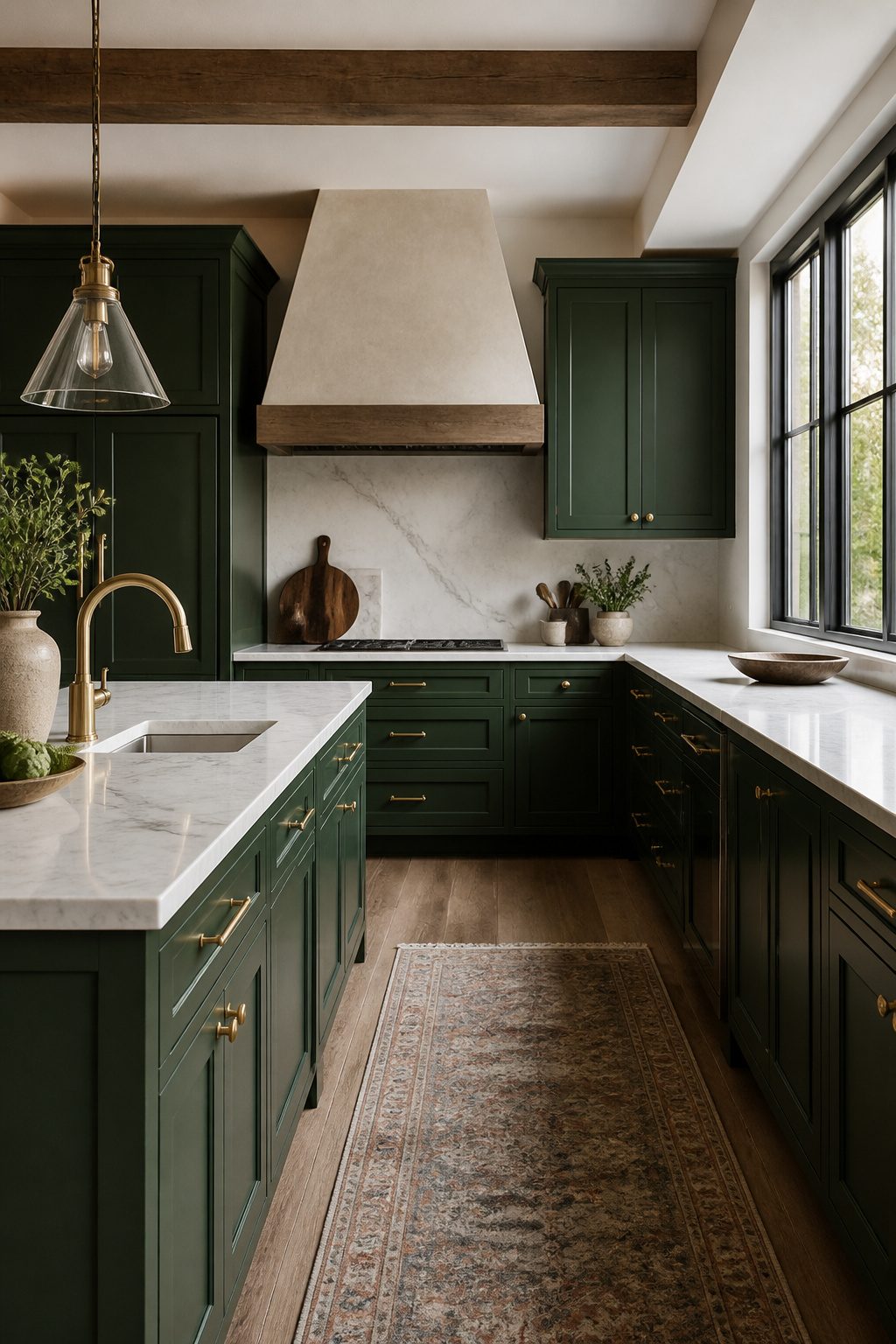
Dark green kitchen cabinets sit in the space between color and shadow, an umbrella for shades that read nearly black in low light, including Black Forest Green.
An LRV around 12 hides fingerprints and smudges far longer than lighter greens, which is worth real money on a kitchen you use every day rather than photograph.
These depths need genuine light, either a big window or overhead lighting you do not skimp on, or the room closes in.
Given that light, they create warmth white cannot touch. I think the best play is lowers only with bright white or open shelving above; it gives you drama without the weight of a fully dark kitchen.
In traditional spaces they read classic, in modern ones they read moody and intentional, especially with an inset door if the budget stretches.
Overlay construction on a dark shade looks flat to me, where inset reads like you meant it. Pair with unlacquered brass and warm-tone quartz, never stark white; the contrast should be in tone, not temperature.
Recommended Products

ALL-IN-ONE Paint - NO Sanding, NO Priming, NO Top Coat Required, Low Luster, Velvet Sheen Finish
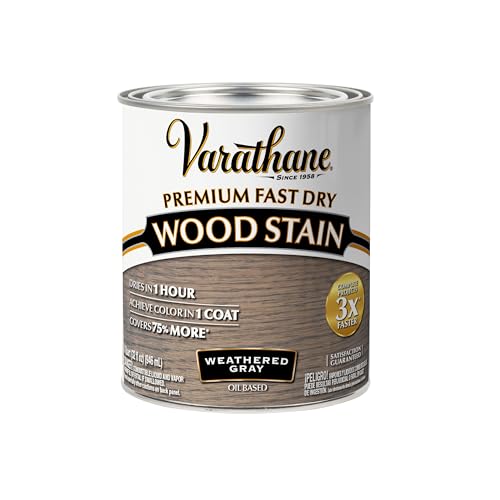
Ideal for use on all interior wood projects: furniture, cabinets, doors, trim and paneling

ALL-IN-ONE Paint - NO Sanding, NO Priming, NO Top Coat Required, Low Luster, Velvet Sheen Finish
Countertops, Hardware, and Wall Colors That Work
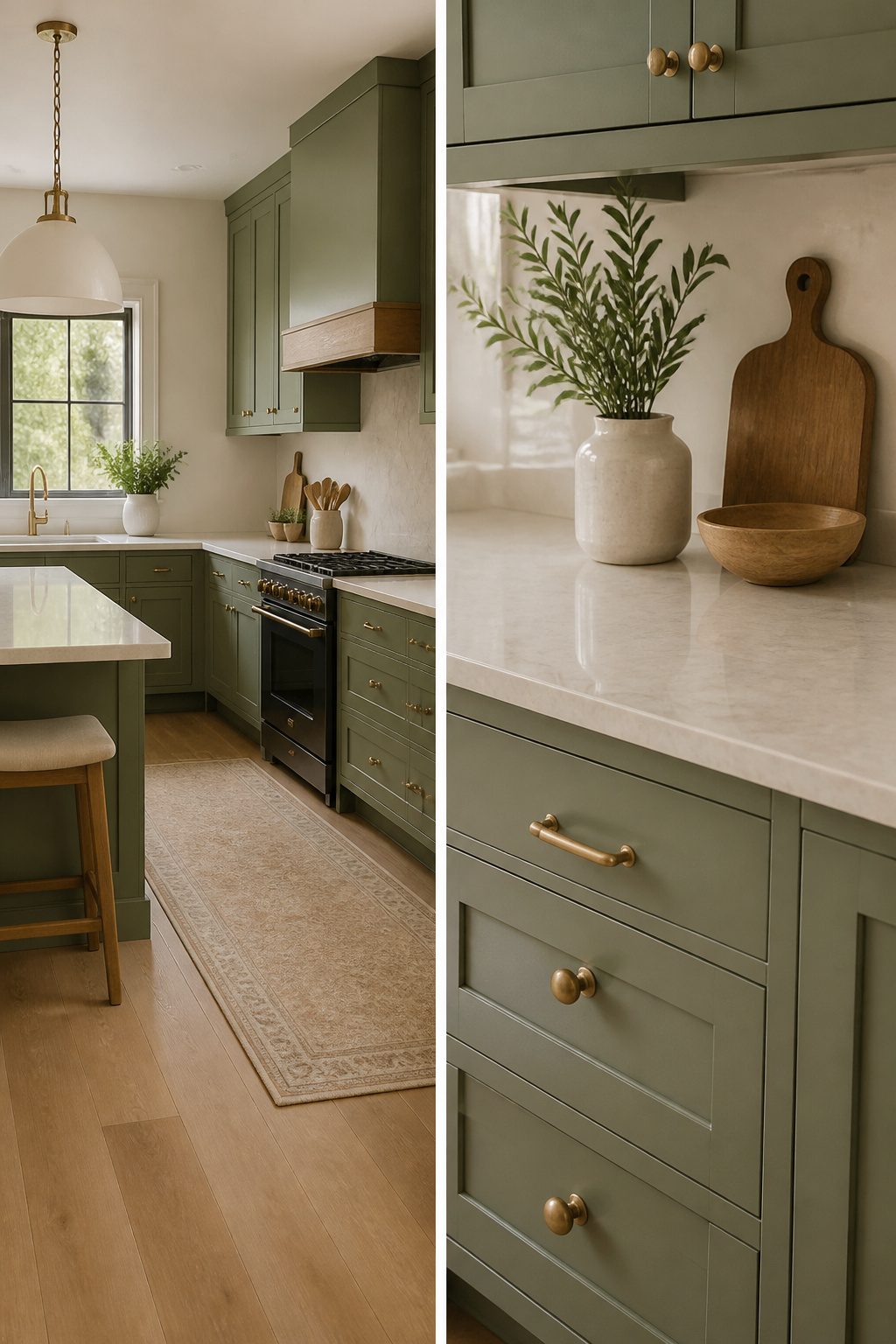
The white or cream quartz countertop is the pairing you see in nearly every well-photographed green kitchen for a reason.
It brightens the room, keeps the green readable, and does not date. Pick a warm white, not a cool blue-white; against a cold blue-white wall, green cabinets look mismatched even in morning light.
I would check whether existing white trim has ambered to a yellow-white before committing to a green that has to sit next to it.
Butcher block warms and softens sage green considerably. It is the exact combination behind most farmhouse kitchens saved to Pinterest boards, and it asks for a lower hardware price point than stone routes.
For deep olives like Pewter Green or Ripe Olive, matte black or oil-rubbed bronze hardware keeps the look grounded; aged brass shifts it toward English-kitchen territory.
Satin or unlacquered brass beside sage picks up the yellow in the paint and photographs warmly. For gray-greens like Evergreen Fog, polished nickel keeps the quiet character, though brass works if you want to skew warmer.
Matte black fixtures with dark green read minimal and modern. Honed granite or matte-finish quartz keeps black counters from turning glossy or dated.
White oak floors and pale-to-mid woods are the easy win across every green family. Orange-toned 1990s hardwoods clash with cool sages, so if that is your floor, lean warm instead.
Farmhouse, Modern, and Rustic Styles
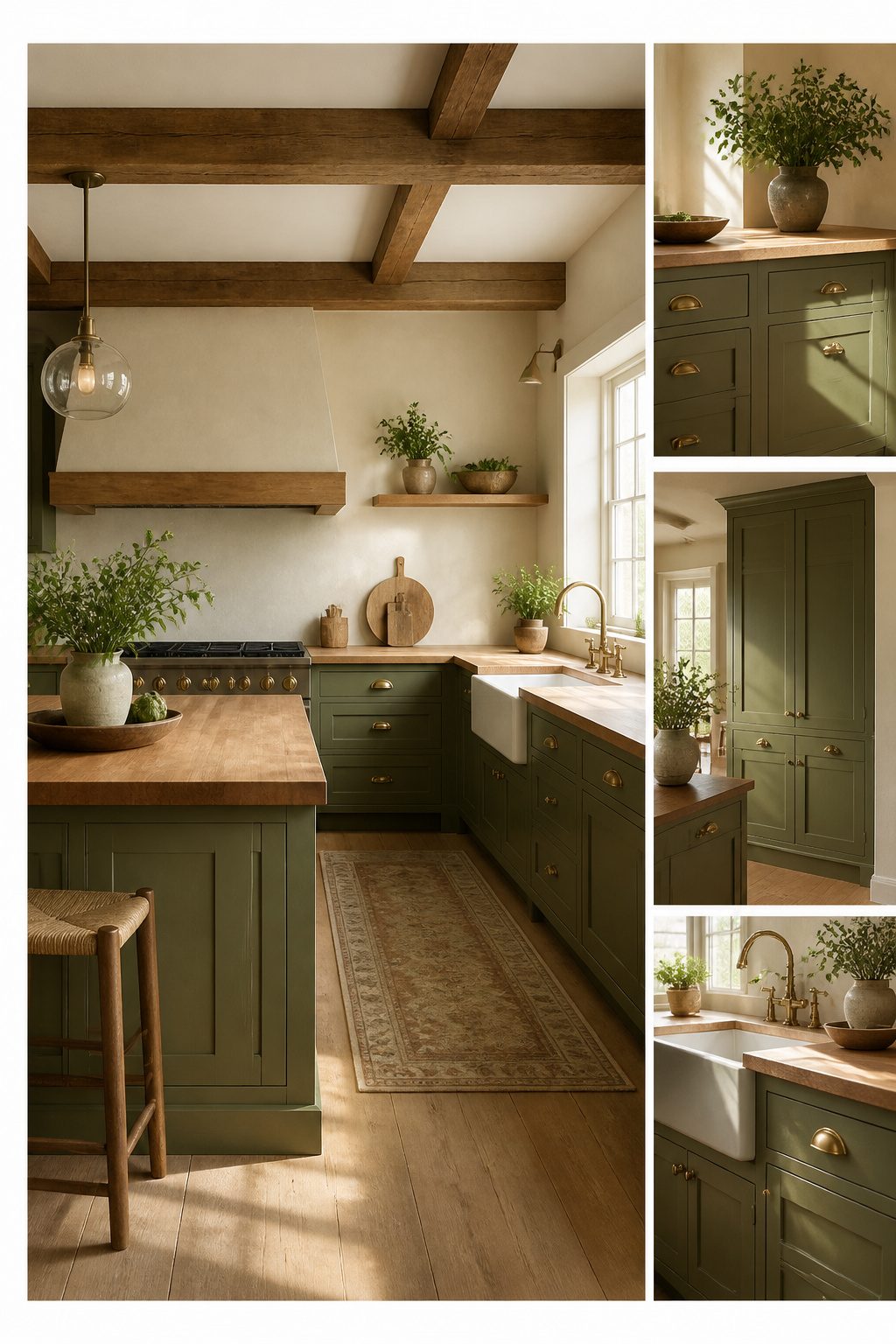
Sage and olive settle naturally into farmhouse kitchens, but the door style decides whether the look reads authentic or like a costume.
A shaker door with exposed brass hinges and an apron sink keeps sage grounded; add too much beadboard and the kitchen tips toward pastiche.
I have seen the same olive green on a slab door with integrated appliances read as almost modern, which proves the shade alone does not carry the style.
Emerald and teal belong to modern kitchens because everything around them stays quiet. Slab doors or flat-panel shaker, hidden hinges, thin quartz counters and matte hardware let the green do the work.
The same emerald on a raised-panel door with vintage brass pulls will fight itself, because the color and the hardware both demand attention.
Moss and darker greens serve rustic kitchens best with distress and honest wear.
Wire-brushed white oak accents, honed natural stone and heavier iron hardware give moss the rough texture it expects. Without that surrounding material weight, dark green cabinets can look merely dated rather than deliberately aged.
For colonial homes built around 1935, soft muted greens are a period-correct choice that reads intentional in ways bright white never can.
The shade matters less than the consistency of the whole system: door profile, hardware weight, counter thickness and appliance visibility all have to agree.
Paint, Finish, and Upkeep
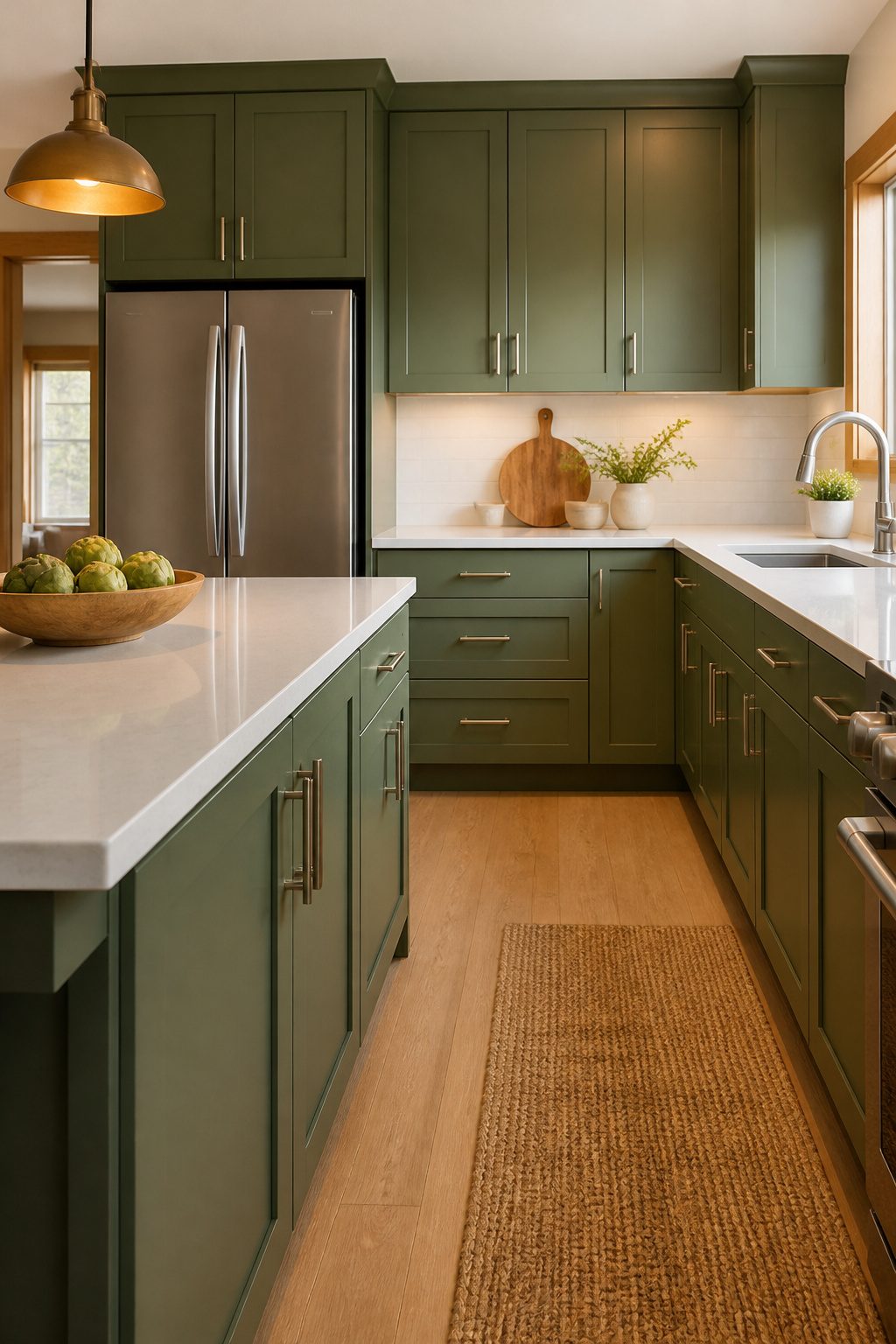
Matte green cabinets photograph beautifully the day they are installed and look chalky by Thanksgiving.
Satin with a hardening additive is the finish that actually survives a kitchen, because grease bonds to flat paint and full gloss reads as plastic under morning light.
Darker greens hide smudges far better than lighter ones; a forest or hunter green forgives the fingerprints that turn sage cabinets into a maintenance job by Wednesday.
Professional cabinet painting runs $30 to $70 per linear foot, which is not a weekend timeline and not a rolled-on shortcut. The proper process is cabinet-grade acrylic-alkyd hybrid, sprayed in a controlled environment over primed and sanded doors, then cured before rehanging.
Green pigment in particular bleeds through weak primer and shifts color within a year, so bonding primer is non-negotiable. Skip it and you will repaint sooner than you planned.
Frequently Asked Questions
What is the most popular green for kitchen cabinets?
Muted, gray-leaning sage greens lead the market, with Benjamin Moore October Mist at roughly LRV 46.5 and Sherwin-Williams Evergreen Fog at LRV 30 as the two names that come up most consistently.
These sit in the mid-30s to mid-40s light reflectance range, which keeps them reading as neutrals rather than color statements.
Deeper olives tones like Sherwin-Williams Pewter Green at LRV 12 also rank high, especially in kitchens with warm wood floors.
Are green kitchen cabinets going out of style?
Muted sage and olive greens are behaving like new neutrals rather than passing trends.
Zillow’s June 2025 survey of 4,200 buyers found shoppers would pay about $1,597 more for a home with an olive green kitchen, which signals expected longevity. The greens that actually date fastest are saturated mints and emeralds, not the gray-tempered sages and olives.
How much does it cost to have cabinets painted green?
Professional cabinet painting runs $30 to $70 per linear foot, with no price premium for green itself. The proper process uses cabinet-grade acrylic-alkyd hybrid paint sprayed in a controlled environment over primed and sanded doors, then cured before rehanging.
Bonding primer is non-negotiable for green pigment in particular, since it bleeds through weak primer and shifts color within a year.
Are green cabinets in right now?
Yes, green cabinets have moved well past niche status as the all-white kitchen finally loosens its grip.
The shift is specifically toward muted greens that function as neutrals, anchoring a kitchen without demanding attention. Buyer willingness to pay a premium for olive green kitchens confirms the demand is market-wide, not limited to design publications.
What color green did Joanna Gaines paint her cabinets?
The Zillow data cited reflects general buyer preference for olive green kitchens rather than influencer-driven trends.
What color walls complement green kitchen units?
Warm white or cream walls work best, not cool blue-whites that can make green cabinets read mismatched even in morning light.
For darker greens like forest or hunter, the cabinets often become the room’s focal point and surrounding walls should stay quiet and warm in tone.
What are some outdated kitchen colors?
Bright saturated greens like emerald and mint already look dated in homes where they went in three years ago. All-white kitchens held sway for nearly two decades but are now losing ground.