
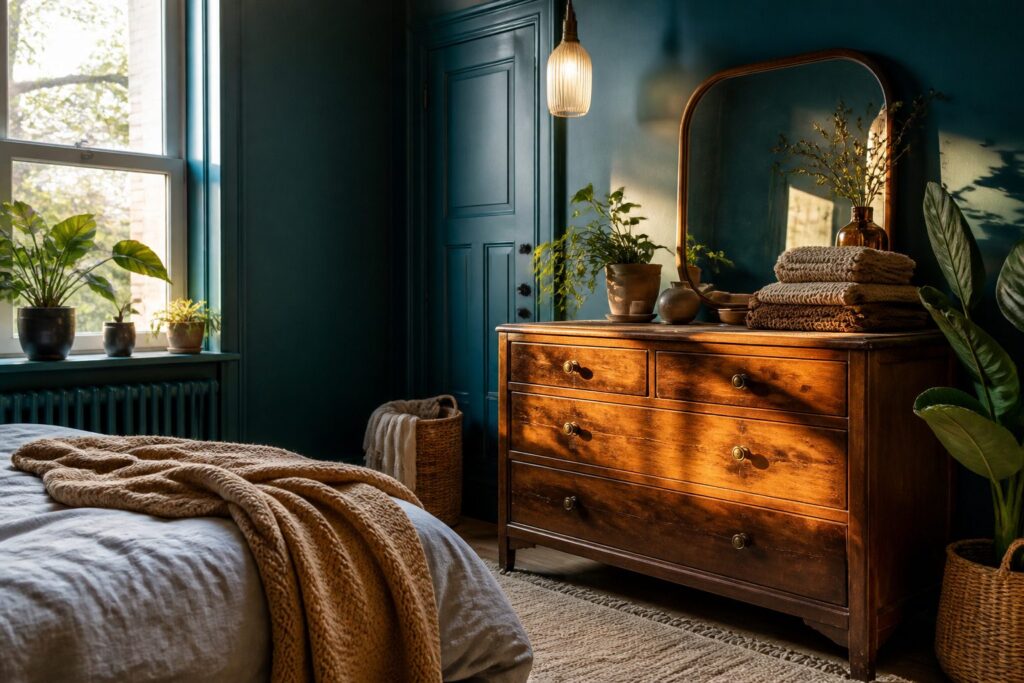
Apartment bedroom decor runs from a $15 LED strip behind the headboard to a full peel-and-stick accent wall, and the right pick depends on whether you own the bed frame or the lease.
What most renters miss: the overhead bulb that came with the unit is probably 4000K or 5000K, the temperature offices use to keep people alert, and swapping it for a 2700K–3000K warm dimmable bulb shifts the feel of the room more than paint or new bedding.
1. Layered Bedding
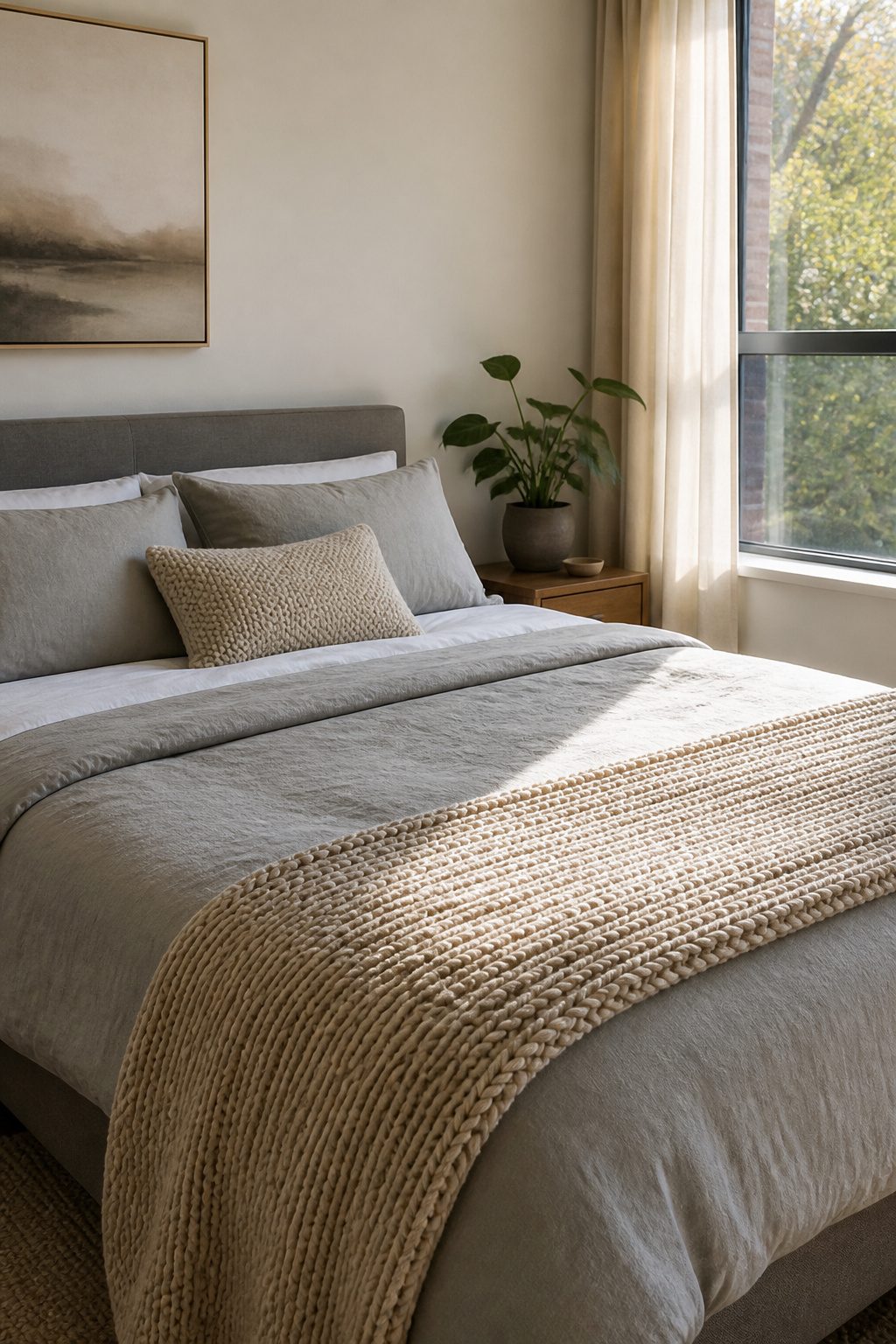
In an apartment bedroom, the bed usually takes up most of the visual real estate, so the bedding basically is the room’s decor.
Layering is how you make that single piece look intentional instead of like a mattress on a frame.
Start with a fitted sheet, add a duvet or comforter, then fold a lightweight throw across the foot of the bed. Most stylists build in at least three layers for the look to read as styled rather than store-bought.
Two sleeping pillows standing upright against the headboard, plus one smaller lumbar pillow angled forward, finish the stack without crowding a twin or full bed.
Texture variety matters more than matching colors. A smooth cotton or linen duvet with a chunky knit throw, or a matte weave against something with slight sheen, reads hotel-suite rather than dorm-room.
If you sleep hot, breathable cotton or linen layers give you the visual weight without the synthetic fill that traps heat.
The practical win for apartments is adjustability. Peel the throw off in July, swap the duvet cover in October, and the same pieces work year-round instead of buying seasonal sets.
A textured throw and one or two lumbar pillows in contrasting weaves, around $50–200 total, do more than replacing the whole bedding stack.
Recommended Products

3 LEVEL BRIGHTNESS: The button on the side of this plug in night light can adjust the brightness 30/60/100LM to meet your different brightness needs
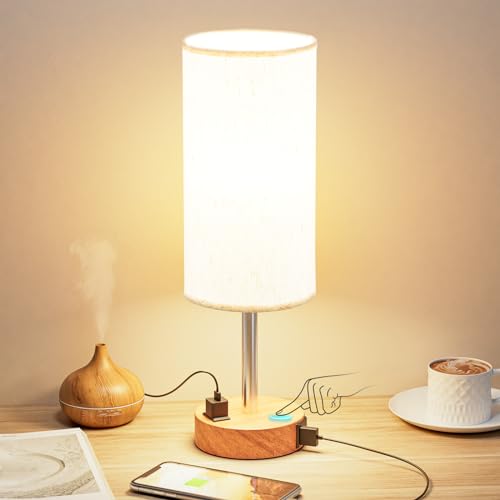
Touch Control Bedside Lamp - This smooth dimmable touch control table lamp featured with touch-sensitive sensor, to make quick changes to 3 different level brightness (Low, Medium, High), and soften the atmosphere quickly. Simply a touch or a pat on the bedside lamps' base or lamps' supporting pole when you want the nightstand lamp On/Off, brighter/dimmer. (used as a night lamp at low brightness, medium/high is enough to meet your needs for reading/working)
2. Warm Lighting in the 2700K–3000K Range
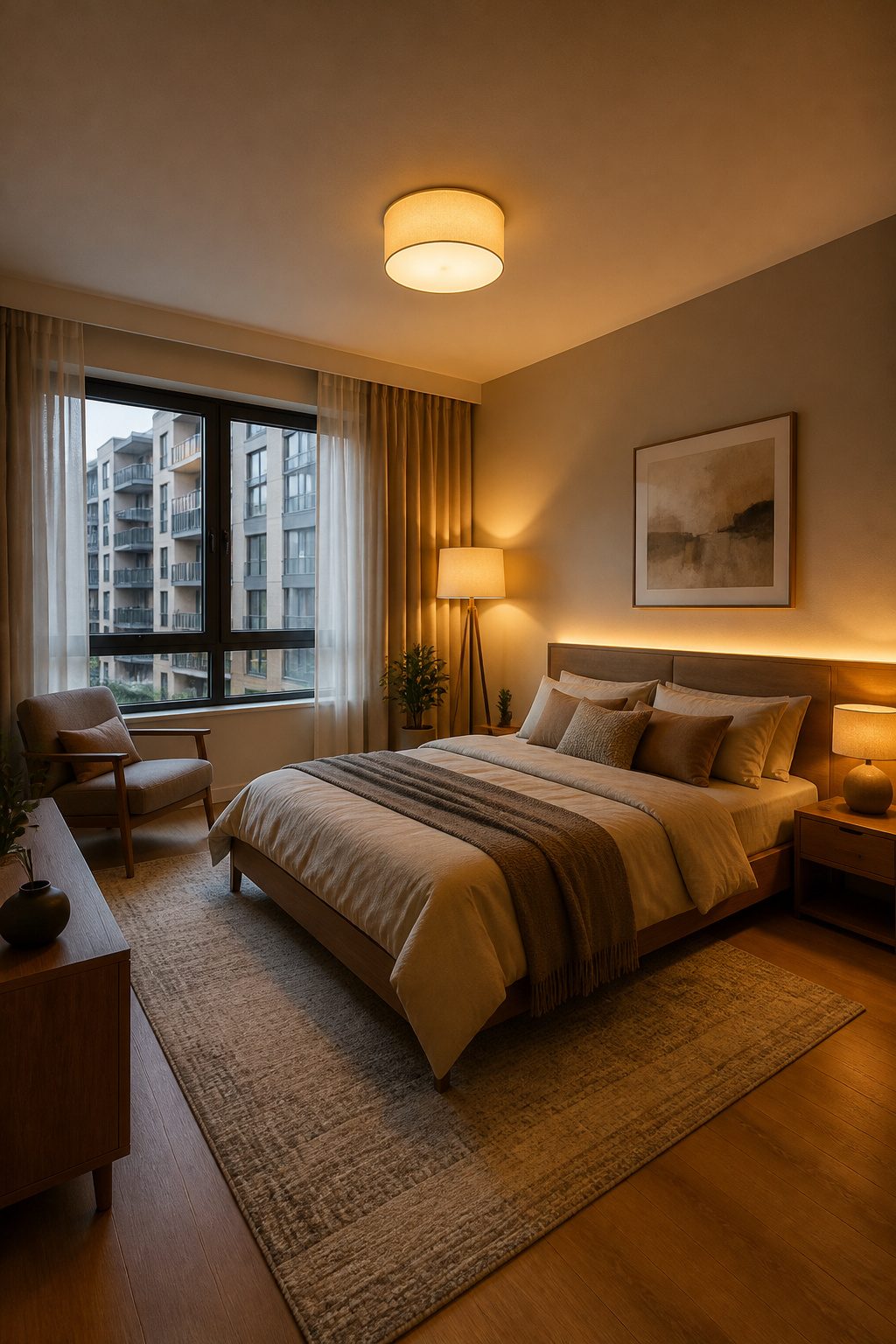
The overhead fixture in most apartments comes with a bulb that reads closer to 4000K or 5000K, the temperature offices use to keep people alert.
In a bedroom, that same light makes the walls feel flat and the room feel cold.
2700K–3000K is the range that actually works here: warm enough to look amber, soft enough to make wood grain and bedding texture look like something you want to touch.
A single overhead source at any temperature still leaves corners in shadow and creates one flat wash of light from above.
Apartments need a floor lamp in the corner opposite the bed, a table lamp on the nightstand, and ideally a third source you can dim.
LED strips hidden behind a headboard, facing the wall rather than outward, run about $15–$50 and take under an hour to install. The strip itself stays invisible; only the glow should show.
I would start with one good bedside lamp and a warm dimmable bulb before buying anything else for the room.
That single change shifts the feel of the space more than paint or new bedding, and it is the first thing I swap whenever I move somewhere new.
Anything above 3500K, I skip entirely. It does not read as cozy; it reads as waiting room.
Recommended Products

Warm White TV Backlight: Aclorol 3.28ft warm white USB COB LED strip lights have densely distributed 320 LED beads, which creates brighter spotless and ultra-even lighting glow. Ideal for lightening bright TV screens and monitors
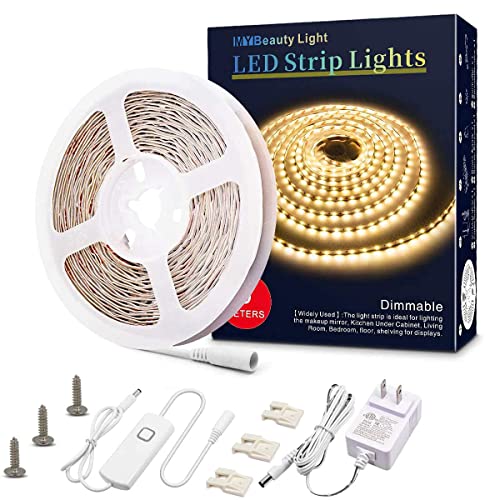
Bright and Eye Protection Warm White: 300pcs high quality leds built on FPCB board will give off super bright light to light up your whole room, bedroom, living room, kitchen, mirror, TV, under counter, wardrobe and office, and it is with high color rendering feature(Ra≥70), which will make us see goods real color to better protect eyes
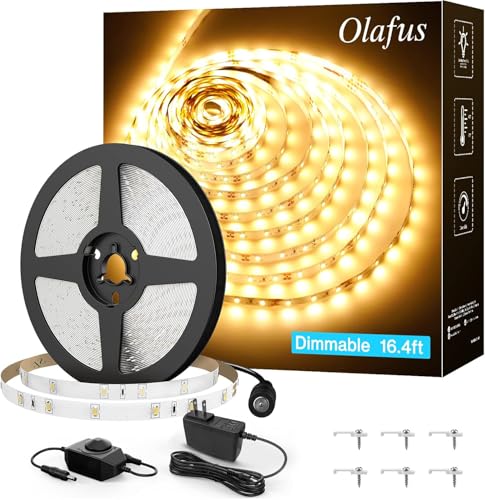
Ultra Bright and Safe to Touch: The 16.4ft/5m long led strip light includes 300 super bright warm white LEDs. 12V working voltage and low temperature
3. Area Rugs That Extend Two Feet Past the Bed
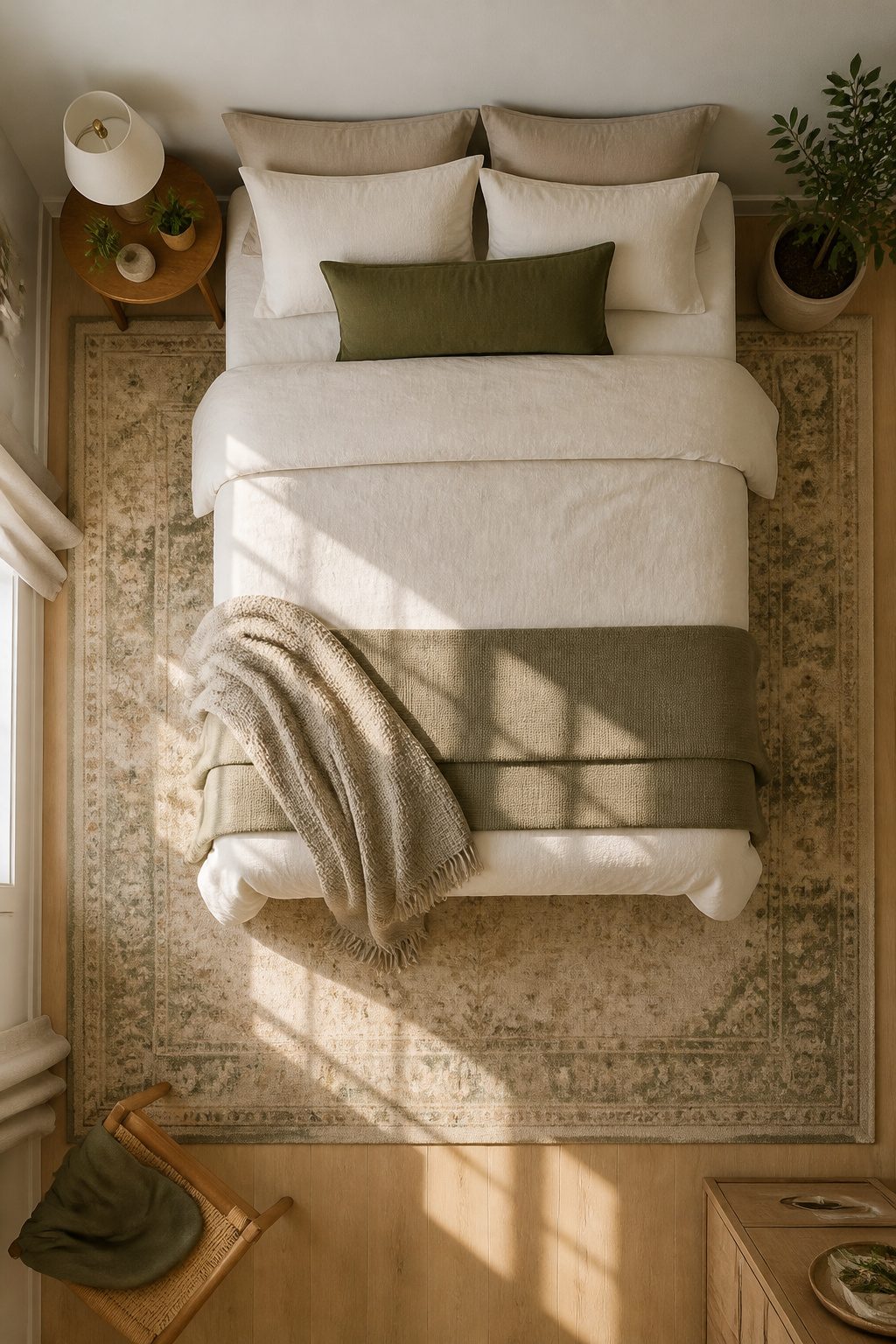
A rug that stops at the edge of the bed frame looks like a bath mat that wandered into the wrong room.
Extend it roughly two feet past each side and the foot of the bed, and the whole sleeping area suddenly has a frame around it.
For a full bed, that lands you near a 6 x 9 foot rug; for a queen, you are in 8 x 10 territory. Those are common enough sizes that you will not pay custom prices.
Hard flooring is what makes this matter most, but even wall-to-wall carpet benefits from the layer.
A low-pile or woven rug on top of builder-grade carpet adds texture and breaks up the visual flatness without fighting the existing install. I would skip anything too plush here; it reads as a tripping hazard and it shifts more.
If the budget is tight, two smaller rugs flanking the bed do nearly the same job for less money.
The first thing your feet hit on a cold morning should not be cold flooring, and with the two-foot rule, they will not be.
Recommended Products

PERSONALIZED 2-IN-1 COMFORT FOR ALL-SEASON USE: Designed to adapt to the way you sleep, this 2-in-1 comforter set pairs a soft prewashed comforter with a fluffy blanket that can be snapped together or used separately. Layer them for extra warmth, use a single layer when you want something lighter, or switch between the two to suit changing seasons and sleep preferences
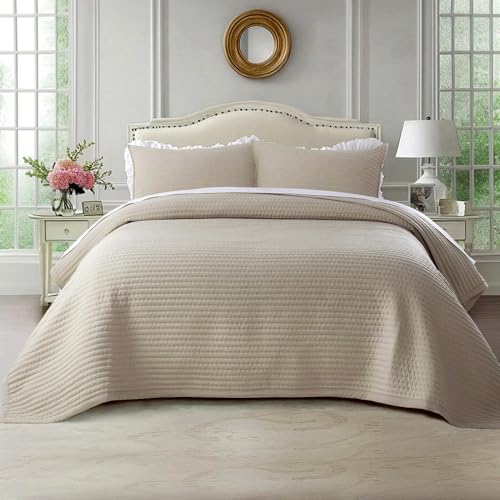
OVERSIZED QUEEN SIZE & 3-PIECE SET – Includes 1 quilt measuring 102 x 106 inches and 2 pillow shams measuring 20 x 26 inches. Place the 102-inch side across the bed and the 106-inch side from head to foot so the quilted channels run horizontally from left to right. Coverage varies by mattress height, so measure your bed and desired side drop before ordering. Pillow inserts and decorative pillows are not included.

Jacquard Design: Featuring a jacquard checker design with a faux pilling effect, this comforter set adds a touch of exquisiteness and sophistication to your sleeping space.
4. Floating Shelves Styled With Three to Five Items
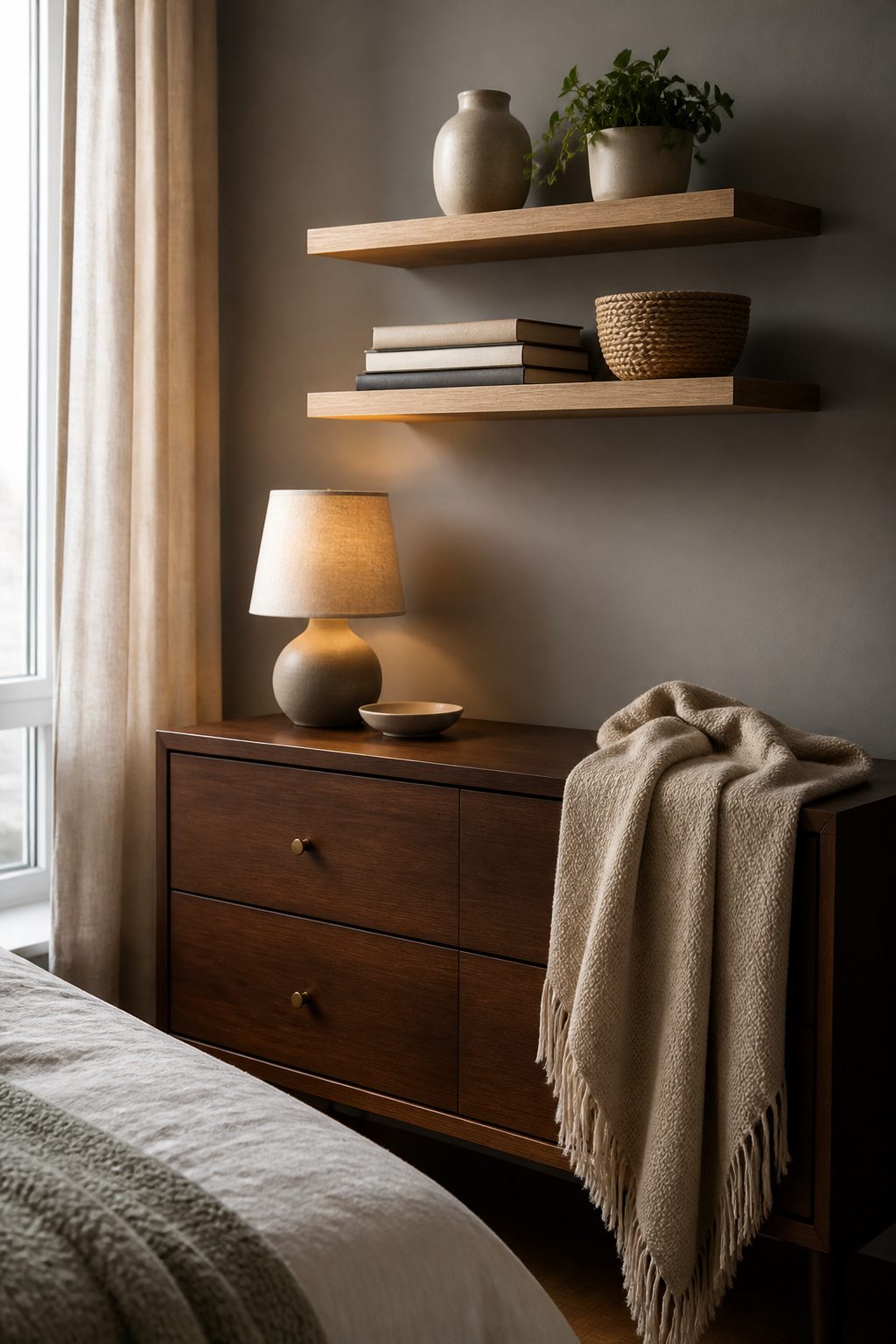
Vertical storage in a small bedroom lives or dies by the depth. 10 inches is the standard floating shelf depth, and that measurement matters more than the length you choose.
At 10 inches, a shelf clears most bed frames and dresser backs without jutting into the room; shallower and books sit precariously, deeper and you are stubbing your hip on it.
I mount mine 12 to 16 inches above the furniture below, never isolated on bare wall. That gap ties the shelf to the dresser or desk so the whole wall reads as one intentional layer rather than random floating rectangles.
Three to five items per shelf is the clean look, styled in odd-numbered groupings with visible breathing room between them.
I anchor one end with a short stack of books, add a woven basket for weight and hidden catch-all storage, and finish the other end with something trailing to break that straight horizontal line.
For rentals, two ways to hang.
Command strips work for light loads and shallow shelves, though I have watched them fail in summer humidity. Proper wall anchors rated for the shelf’s load are the safer bet; patch and repaint before move-out, which most leases require anyway.
If you stagger two shelves at slightly different heights and widths rather than stacking them evenly, the arrangement reads considered, not like a display case.
Recommended Products

Waffle Textured Decor: A sculptural 3D waffle weave adds quiet texture and depth to your space, bringing a subtle beauty that transforms your room. Ideal for both self-care and gifting, available in multiple colors to suit any style
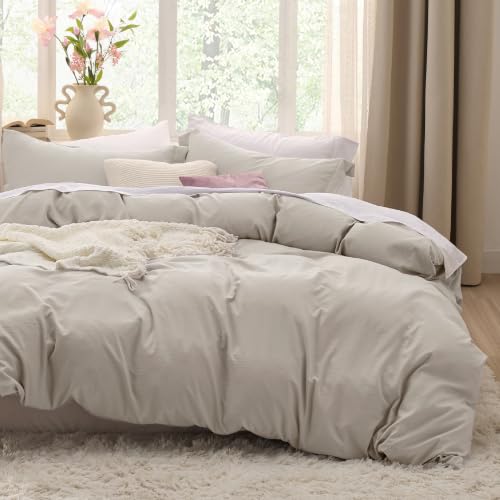
Extra Soft: Backed by the Good Housekeeping Seal, this prewashed duvet cover set is made with premium polyester microfiber for exceptional softness and trusted quality. Smooth and breathable, it offers cozy comfort for a restful night's sleep without crinkly noise.

Extra Soft: Backed by the Good Housekeeping Seal, this prewashed duvet cover set is made with premium polyester microfiber for exceptional softness and trusted quality. Smooth and breathable, it offers cozy comfort for a restful night's sleep without crinkly noise.
5. High and Wide Curtains
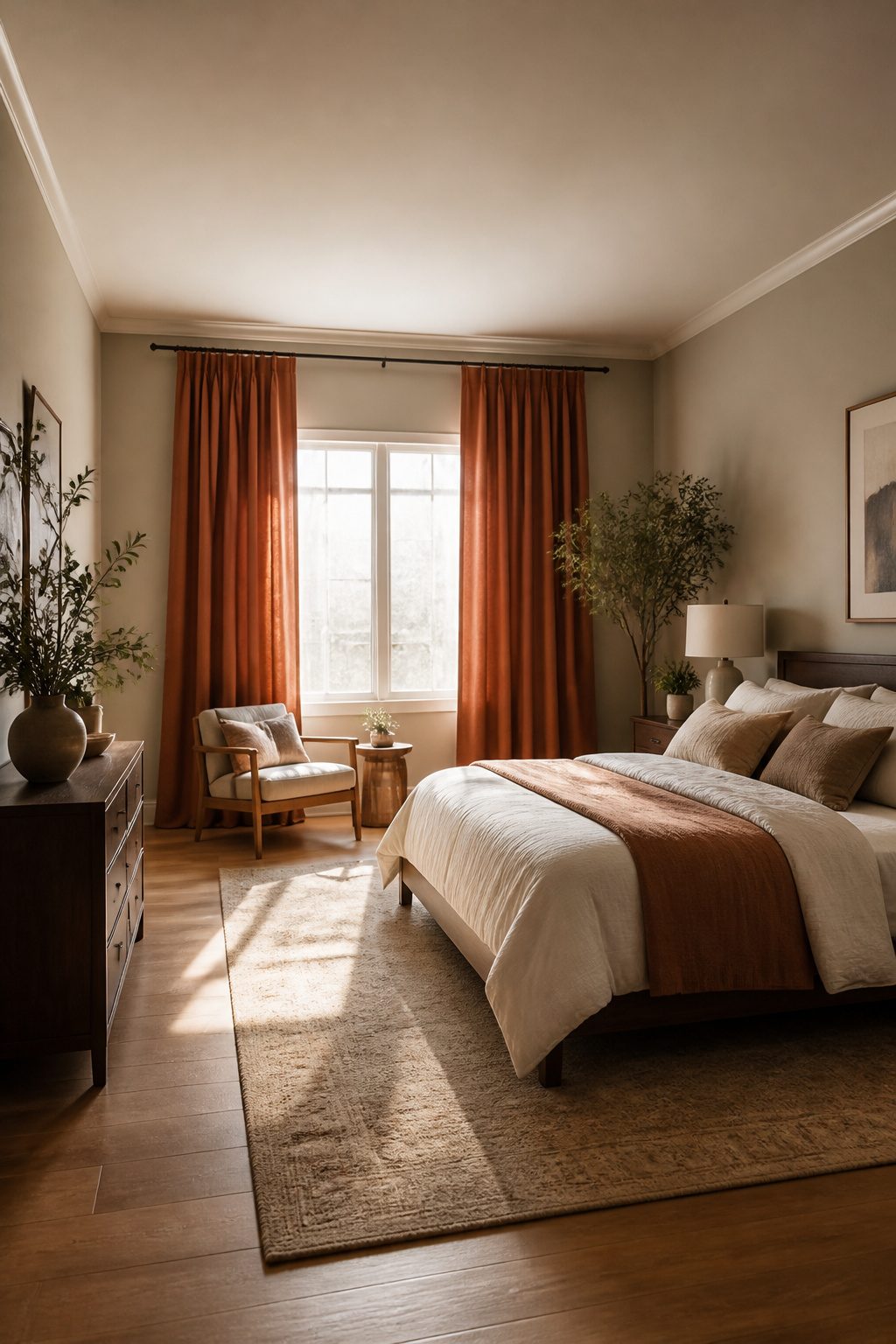
Most apartment bedrooms sit under 8-foot ceilings, and the standard curtain placement, just above the window frame, makes that height feel even lower.
Mount the rod 2 to 4 inches below the ceiling line and let the panels fall to skim the floor. The fabric draws the eye upward, and the room reads taller than it is.
Width matters just as much. Extend the rod 6 to 12 inches past the window frame on each side.
When the curtains are open, more wall shows around the glass and the window itself looks larger. Closed, the whole wall reads as one drape instead of a small window with fabric tacked beside it.
I would skip anything shorter than floor length; curtains that hover above the baseboard break the line and waste the effect.
This works even over blinds you cannot remove. The rod sits high and wide, the panels frame the whole assembly, and the landlord’s hardware stays put.
For fabric, I would pick a heavier, lined curtain in a warm tone like terracotta or sage green. It blocks streetlight and cuts noise, two things apartment sleepers actually need.
Recommended Products

Premium Quality: Filler is 360g/0.79lb 7D fiber(20% more than other) with good breathability and softness. The cover is smooth brushed fabric, comfortable, durable.

【Package Includes】Pillow Inserts are NOT Included. Includes ONE 14 x 36 inches (35 x 90 cm) pillow cover only. Hand wash or machine wash on a gentle cycle. Tumble dry low. Do not iron to keep the pillow cover in good condition

【Waterproof Protection】 The surface fabric is processed with waterproof treatment, so when coffee or other liquids accidentally spill onto the pillow, you just need a simple wipe.The pillow covers will protect the pillow insert from stains and permeation.
6. Multi-Functional Furniture
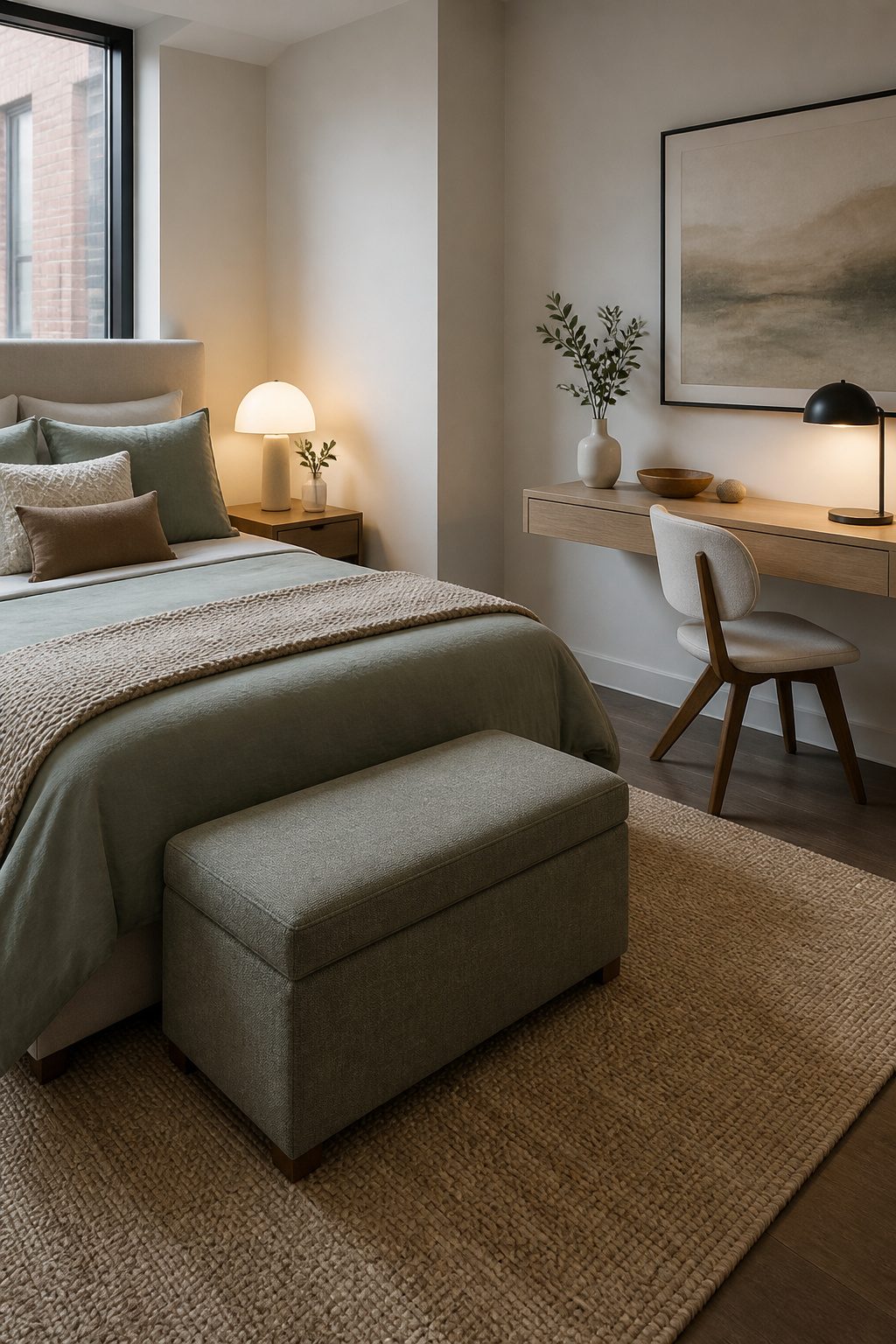
A storage ottoman at the foot of the bed is the first piece I would buy for a small apartment bedroom.
It gives you a place to sit while putting on shoes, hides extra blankets or out-of-season shoes inside, and the upholstered ones add warmth that wooden benches can’t match.
I would skip the wooden structured ones in a tight space; they read as hard edges in a room that already has too many.
For a desk that doubles as a nightstand, I would go with a wall-mounted model with a single drawer rather than a freestanding piece.
It leaves floor space open underneath for a basket or pet bed, and the floating look keeps the wall from feeling crowded. The only catch is weight capacity; you are not loading this with a monitor arm and a printer.
A nightstand with both a shelf and a small cabinet beats two matching nightstands in almost every small bedroom. One good piece on your primary side holds the true bedside necessities and leaves breathing room around the bed.
I would skip the second nightstand entirely unless your partner has medical equipment that needs to sit within arm’s reach. One nightstand with shelf and cabinet storage gives you the surface and the hide-away space in half the footprint.
Recommended Products

3-Level Touch Dimming: Tap the metal base to choose low, medium or high brightness, keeping the light control within easy reach on your nightstand.
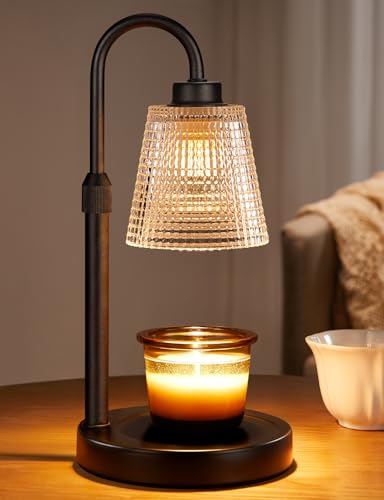
【Flame-Free & Eco-Safe Candle Warmer】Unlike traditional candles, our candle lamp warmer uses light source to melt the candle evenly. No Flame.No Smoke.No Soot. It makes candle lamps ideal for households with children and pets. Our wax warmer also extends the life of jar candles, making them both environmentally friendly and economical

Versatile RGB Touch Lamp: The table lamp create a cozy and inviting atmosphere with the gentle, flicker-free light. Adjust the small table lamp color to match your mood with the cycle RGB mod, dimmable and perfect for illuminating any space for every occasion.
7. Plants That Survive Low Light
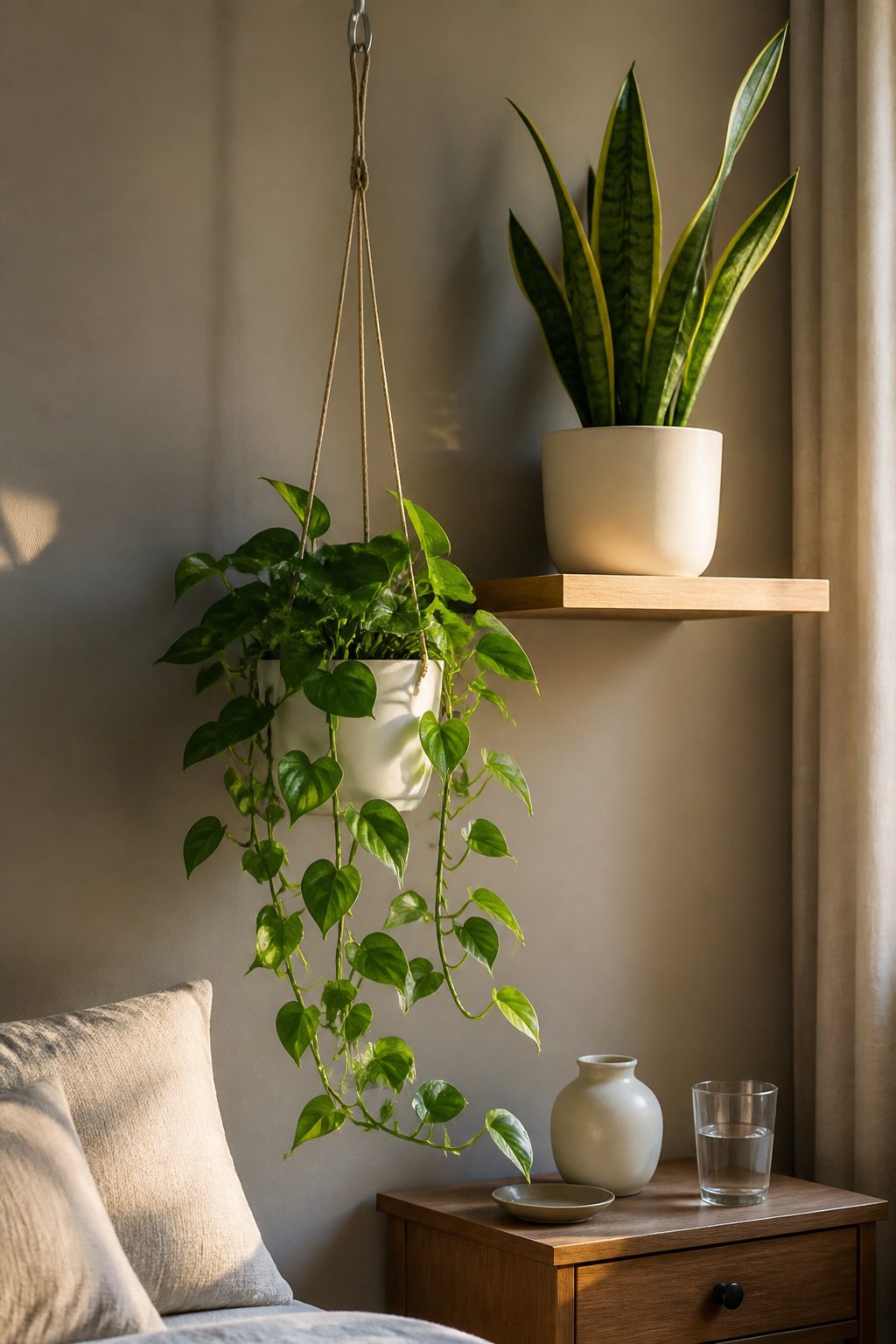
Most apartment bedrooms face another building, not open sky, so the light that reaches your sill is dim even at noon.
A snake plant, pothos, or ZZ plant will live in that light and ask for water only when you remember, which in my case is not often.
I keep mine on a floating shelf mounted above eye level, or hung from a ceiling hook or tension rod looped corner to corner so the trailing leaves sit at shoulder height or above.
That leaves the nightstand and dresser free for the things I actually use.
Two hangers at slightly different heights look styled; one looks sparse. Simple white ceramic or terracotta planters run cheap, and a pothos roots in water if you want to propagate more without spending again.
Recommended Products

Upgrade Three Light Modes - Built-in sensor, under bed led strip light up automatically when people is within the sensing range, and turn off automatically after leaving,helping you see clearly in the dark without waking anyone up. Auplf 19.68ft motion sensor led light strip has 3 lighting modes: ① motion sensor mode (auto on when sensed), ② light sensor mode (auto on when detected in dark environment), ③ constant on mode (keep 24 hours on)

【6-Roll 12V Black PCB LED Strip in Parallel】: 6-in-1 COB LED strips installed in parallel, controlled by a single sensor. Black PCB board with 320 LEDs/M, featuring efficient heat dissipation, high flexibility, uniform light distribution, enhanced luminous efficacy, and exceptional color rendering index (CRI>90). Eliminates dark spots entirely. Creates brighter, more even, and softer lighting effects. Ideal for interior applications including acoustic panel lighting, display cabinet illumination, cabinet lighting, kitchen lighting, shelf lighting, and TV backdrop wall decoration.
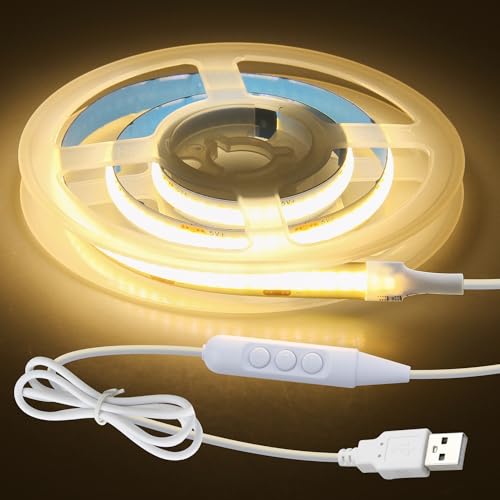
LED TV Backlights: Aclorol 1.64ft/0.5m warm white COB USB LED strip lights have densely distributed 160 LED beads(320leds/m), which creates brighter spotless and ultra-even lighting glow. Ideal for lightening bright TV screens and monitors
8. Personal Art and Decor
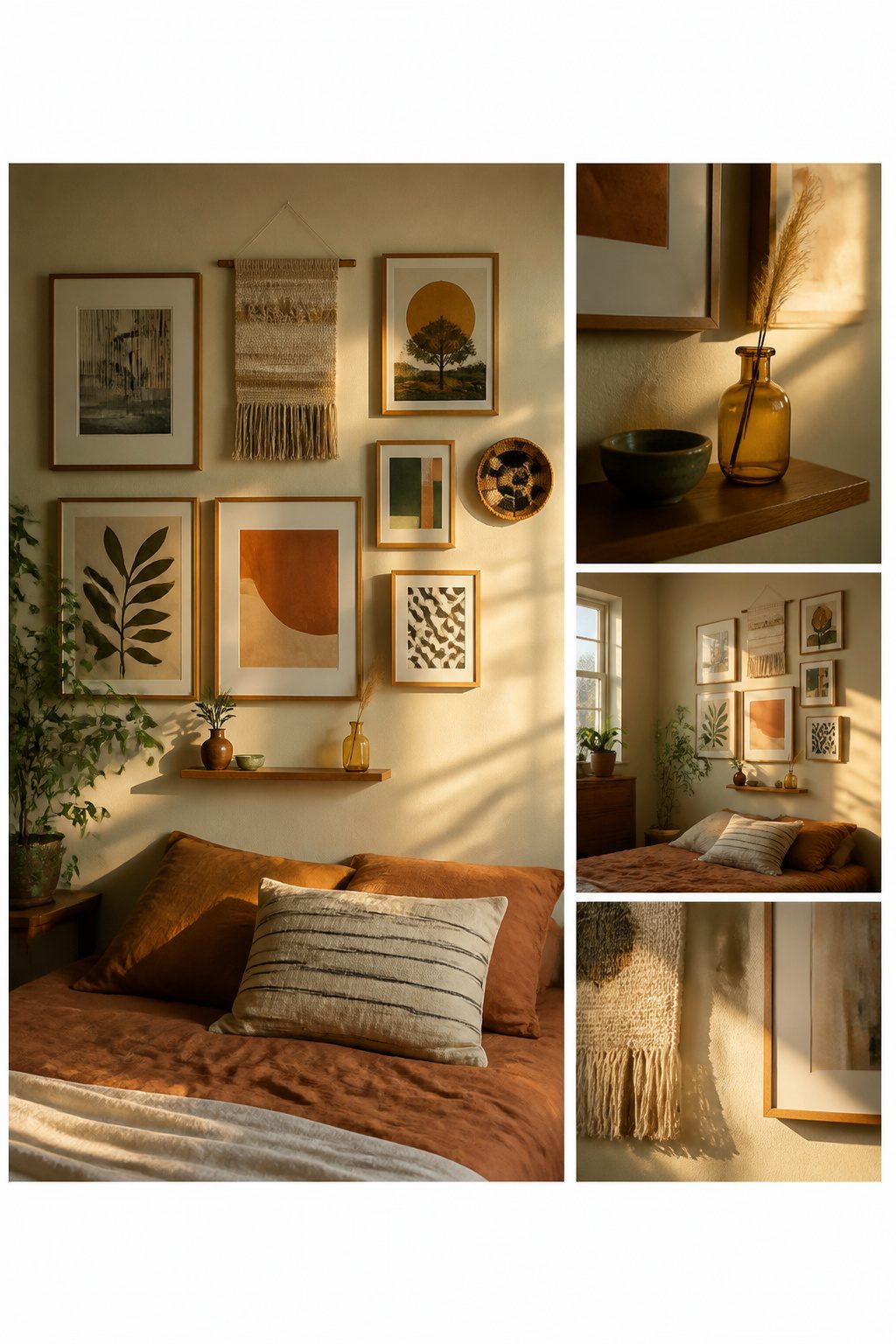
A gallery wall is where an apartment bedroom stops looking like a rental and starts reading as yours.
The paper-template method keeps you from botching it: trace each frame onto kraft paper or newspaper, tape the cutouts to the wall with 2–3 inches between them, and live with the layout for a day before a single hook goes in.
Walk past it morning and evening; light changes, and what looked balanced at noon can feel crowded by lamplight.
For renters, Command strips or washi tape beat nails every time. Leaning framed pieces on a shallow shelf gives the same collected look with zero wall damage, and swapping a piece out takes thirty seconds.
I would skip the uniform grid of identical black frames; two or three finishes mixed together looks intentional, while one finish repeated ten times looks like a stock photo.
Salon-style clustering with mixed sizes forgives imperfect spacing better, which matters if this is your first attempt.
If you want texture a flat print cannot give, a woven wall hanging or vintage textile needs only a single adhesive hook, no glass to crack when you move.
That said, I would still build around at least one piece that means something specific to you: a photograph, a flea-market find, a print from a trip.
Filtered photos in matching tones work, but the room warms up faster with one piece that has a story behind it.
Recommended Products
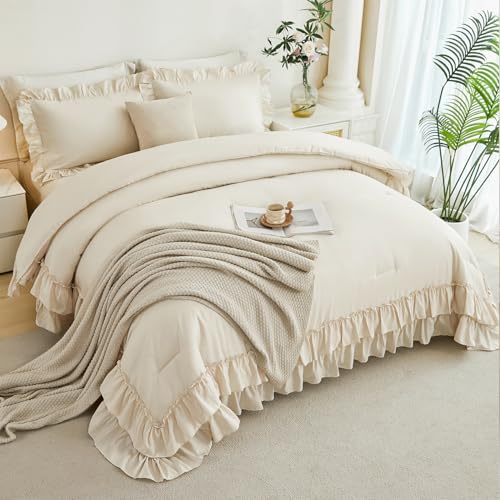
[Soft and Cozy Fabric]: This double-layer ruffled bed in a bag is made of 100% polyester fiber. The soft and breathable fabric provides you with a comfortable sleeping environment, is easy to care for and suitable for all year round, which adds to its convenience and practicality in daily use.

PERSONALIZED 2-IN-1 COMFORT FOR ALL-SEASON USE: Designed to adapt to the way you sleep, this 2-in-1 comforter set pairs a soft prewashed comforter with a fluffy blanket that can be snapped together or used separately. Layer them for extra warmth, use a single layer when you want something lighter, or switch between the two to suit changing seasons and sleep preferences

CLOUD-SOFT 240 GSM DOWN ALTERNATIVE FILLING: Filled with 240 GSM premium down-alternative fiber, the comforter feels light and cloud-like yet cozy - ideal for warm sleepers and spring/summer/fall. Brushed 100% microfiber cover is breathable and gentle on skin. Prefer extra warmth in deep winter? Simply layer a blanket - this all-season weight won't overheat you like a heavy down comforter
9. Accent Walls With Removable Wallpaper or Paint
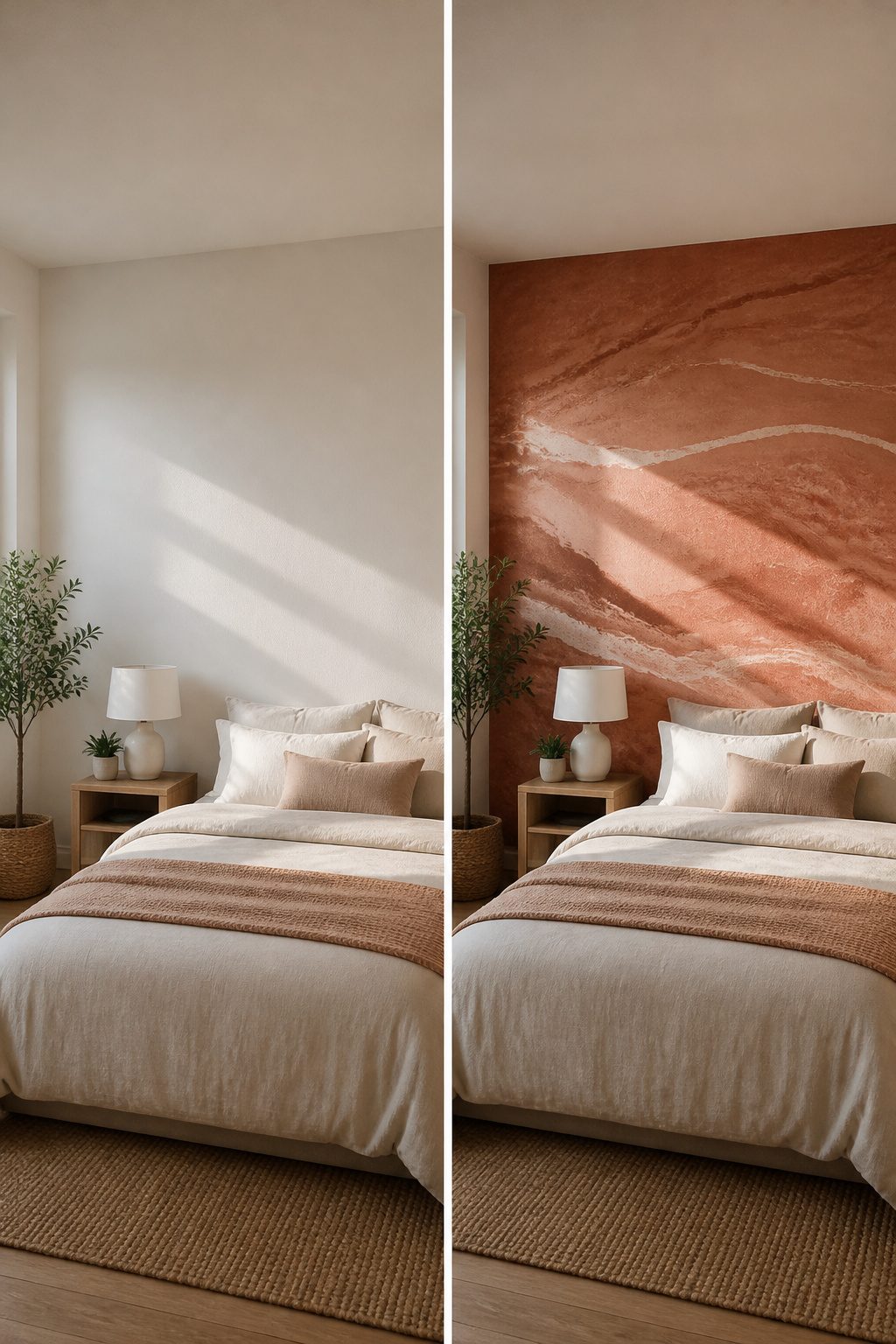
Peel-and-stick wallpaper and temporary paint brands like Tempaint are the two renter-safe routes that actually hold up when you need to pull them down later.
I would pick one wall and stop there; wrapping the whole room turns a bedroom into a box, and in a small apartment that box shrinks fast.
A single wall behind the bed works, but the wall you see first walking in carries more weight than most people expect.
For mountain-inspired pattern, I skip the literal pine trees and reach instead for abstracted textures that read like stone, weathered wood, or layered earth tones.
A framed panel on Masonite or a color-drenched nook behind the headboard keeps the commitment low and the impact high.
Budget lands around $50–200, and the install is a single weekend. Deep terracotta or forest green in that contained zone reads intentional; across four walls the same shade would feel like a cave.
Recommended Products

Classic Colors: Featuring a classic solid color, offering a simple yet elegant look ideal for any space seeking a neutral vibe

100% GOTS Organic Cotton for Sensitive Skin: Named Best Overall Duvet Cover Set by Sleep Foundation. This ivory duvet cover queen is crafted from 100% certified organic Turkish cotton—pure, GMO-free, and chemical-free. GOTS (GOTS-BVUS0552) and OEKO-TEX certified, this duvet cover queen size cotton set is breathable and ideal for sensitive skin—safe enough to sleep bare-skinned

Superior Material: Made of 100% washed cotton, like your favorite, soft comfy, well-worn cotton shirt, breathable to keep you cool in the summer and dry and warm in the winter.
10. Cozy Seating at the Bed’s Foot
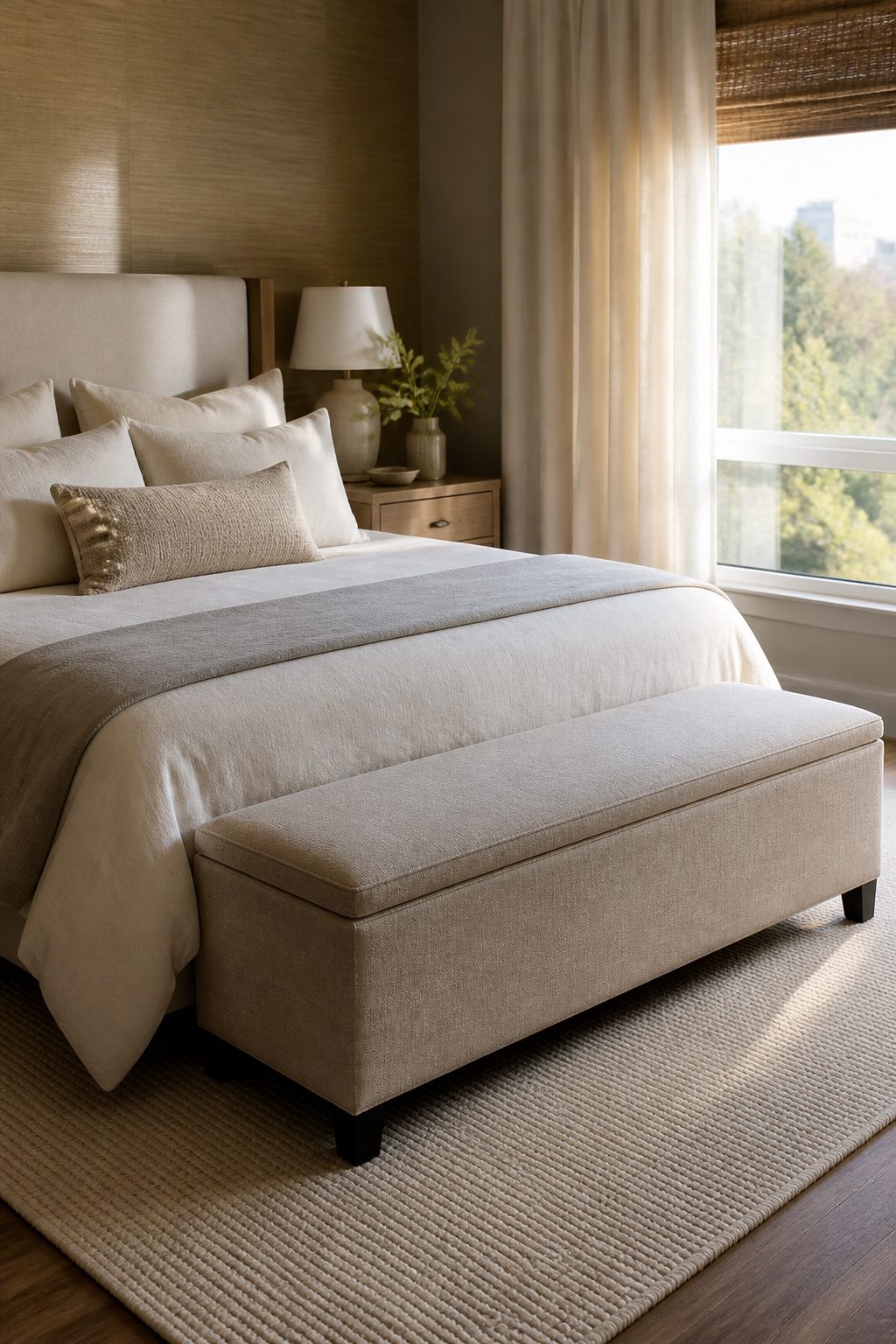
A bench at the foot of the bed sounds romantic until you actually try to read there. The light is wrong, your back has no support, and you end up sliding sideways onto the mattress anyway.
What that piece actually does is catch your purse, hold tomorrow’s outfit, and give you a place to tie your shoes without sitting on the floor.
In an apartment bedroom, the dimensions matter more than the style.
14–16 inches deep is the workable range; anything deeper blocks the walkway and the door swing. Keep the width at or under the bed’s width so the piece doesn’t read as a wall you have to walk around.
Upholstered benches add softness, but a wooden or metal frame with a slim cushion wipes clean and survives the way people actually use it.
If you find one with a hinged lid, you gain storage for spare bedding or out-of-season shoes.
I would skip the tufted velvet dream bench and pick the plainest option that fits the depth limit. The fantasy of a reading nook dies fast; the convenience of a drop zone pays out every morning.
Recommended Products
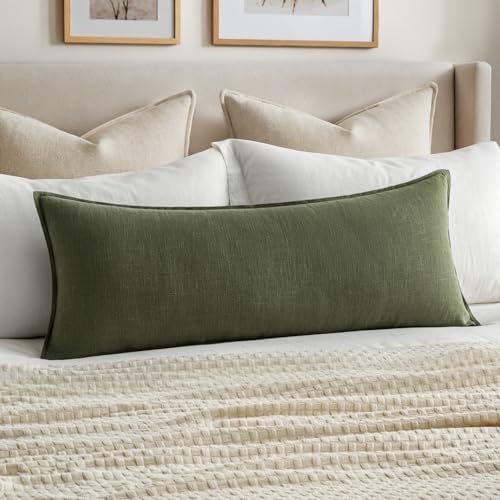
【Natural Linen Fabric】 Made of grade natural ramie linen blend. Natural linen fabric makes it soft, comfortable, and breathable—good workmanship, tightly sewn. Color may be different in different light or on different screen.

Soft Chenille Fabric: Made from premium polyester chenille for a plush, velvety feel that lasts.

Long-lasting Durability: 100% Virgin Filling and 110 GSM Brushed Fabric combining aesthetics and practicality for long-lasting use. 12x20 pillow insert is filled with 360g/0.8lb filling (20% more than other).
Budget-Friendly Tips for Real Projects
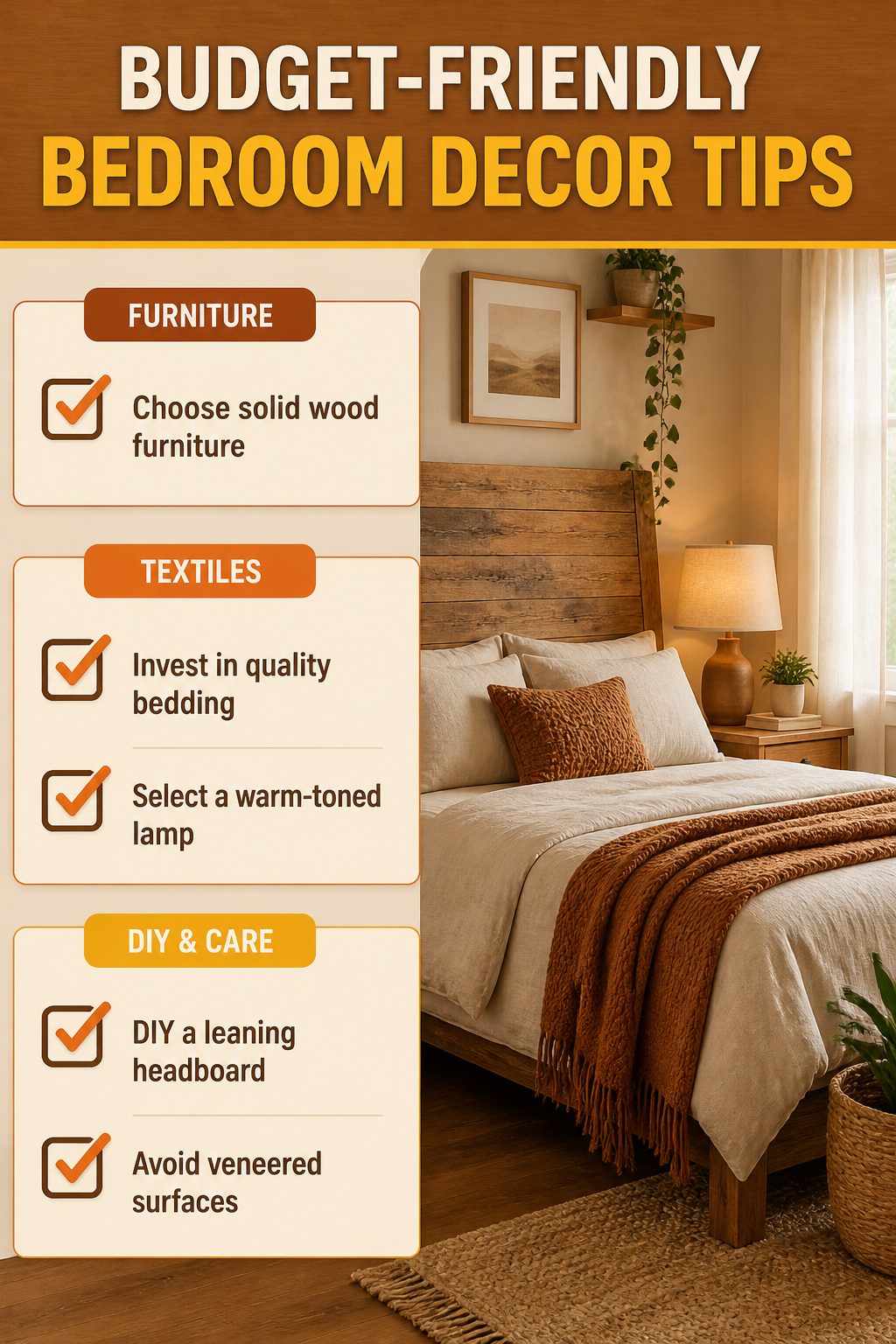
Solid wood furniture frames are where I would put my thrift-store energy every time.
A $60–$250 leaning headboard built from reclaimed wood reads as intentional when it runs a few inches wider than the mattress, and the same logic applies to secondhand doors or old shutters pressed into service.
The frame carries the visual weight; the finish is what you control later.
What touches skin is where I buy new. Mattress, bedding, the lamp you reach for at 11 p.m. — these are not places to accept someone else’s history.
The $150–$300 refresh that actually changes how a room feels goes toward a warm-toned lamp, a throw blanket, and a small rug, in that order. Lighting first, textiles second, accessories last if money remains.
For the DIY column, a leaning headboard is a weekend project that needs no permanent mounting; anchor anything over 4 feet with furniture straps or a non-slip pad so it stays renter-friendly.
What you give up is time for character. You will not get the same history from a flat-pack frame, but you will also not spend Saturday sanding someone else’s finish off.
I would sand, but I would skip anything veneered — once that surface chips, the piece is done, and solid wood forgives decades longer.
Storage Solutions for Small Bedrooms
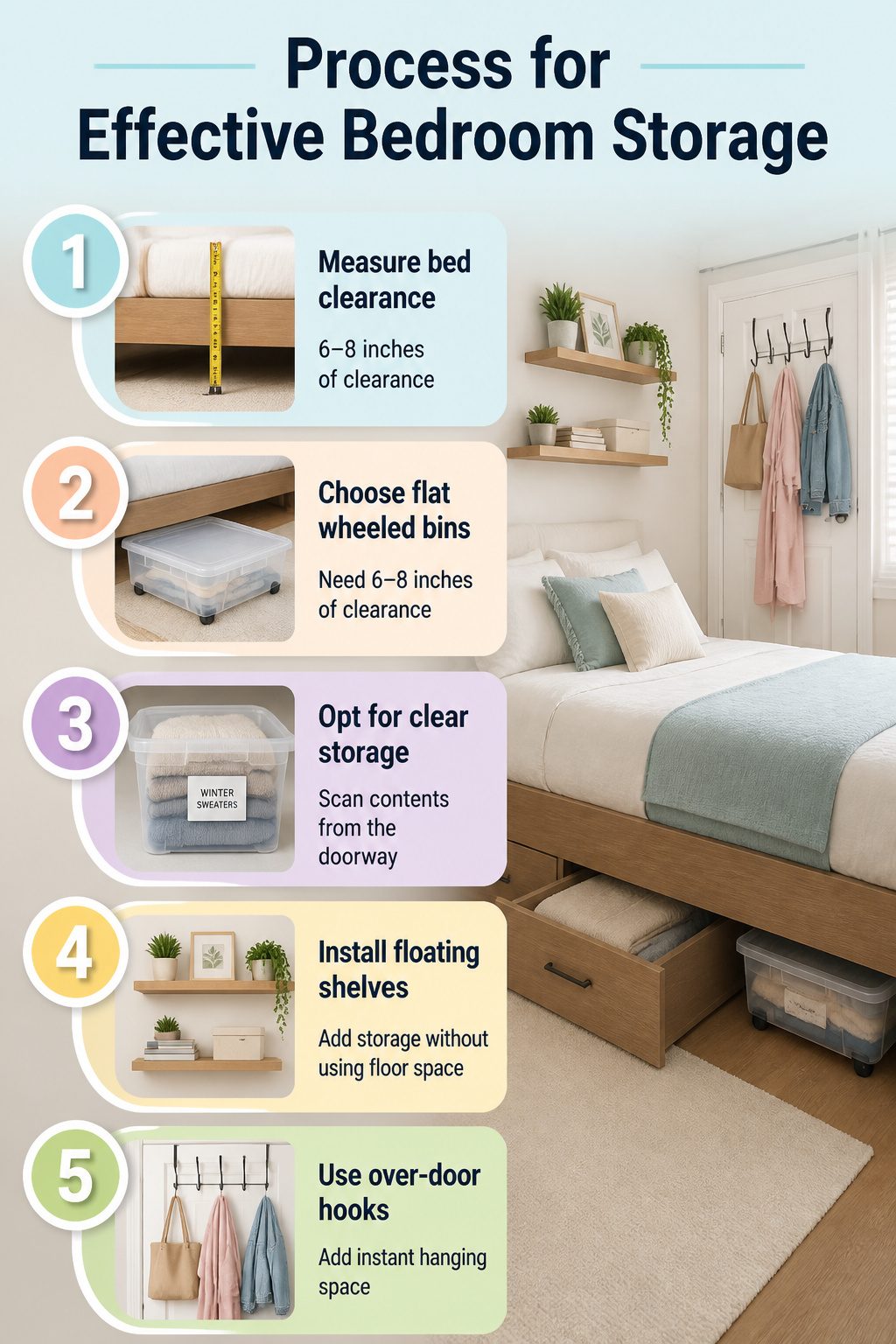
The single largest block of unused square footage in most bedrooms sits right under the bed, often more usable space than an entire closet shelf.
Before buying any container, measure your actual bed clearance. Most flat, wheeled bins need 6–8 inches of clearance to slide in and out cleanly, and a bin an inch too tall simply won’t fit.
If you’re already shopping for a new frame anyway, one with built-in drawers effectively adds a small dresser’s worth of storage without eating floor space.
I prefer clear bins over woven baskets for one reason: I forget what I stored.
A labeled basket still requires pulling it out to confirm, but clear sides let me scan contents from the doorway. Reserve this space for seasonal or rarely used items, not weekly rotation clothes.
For the spots the list already hit, floating shelves and multi-functional furniture carry their weight elsewhere in the room. What those don’t cover is the back of the closet door and the bedroom door itself.
Over-door hooks cost little and add instant hanging space for bags, robes, or tomorrow’s outfit. The closet door back is even better, since it’s hidden from the main room view.
Color and Texture for Warmth
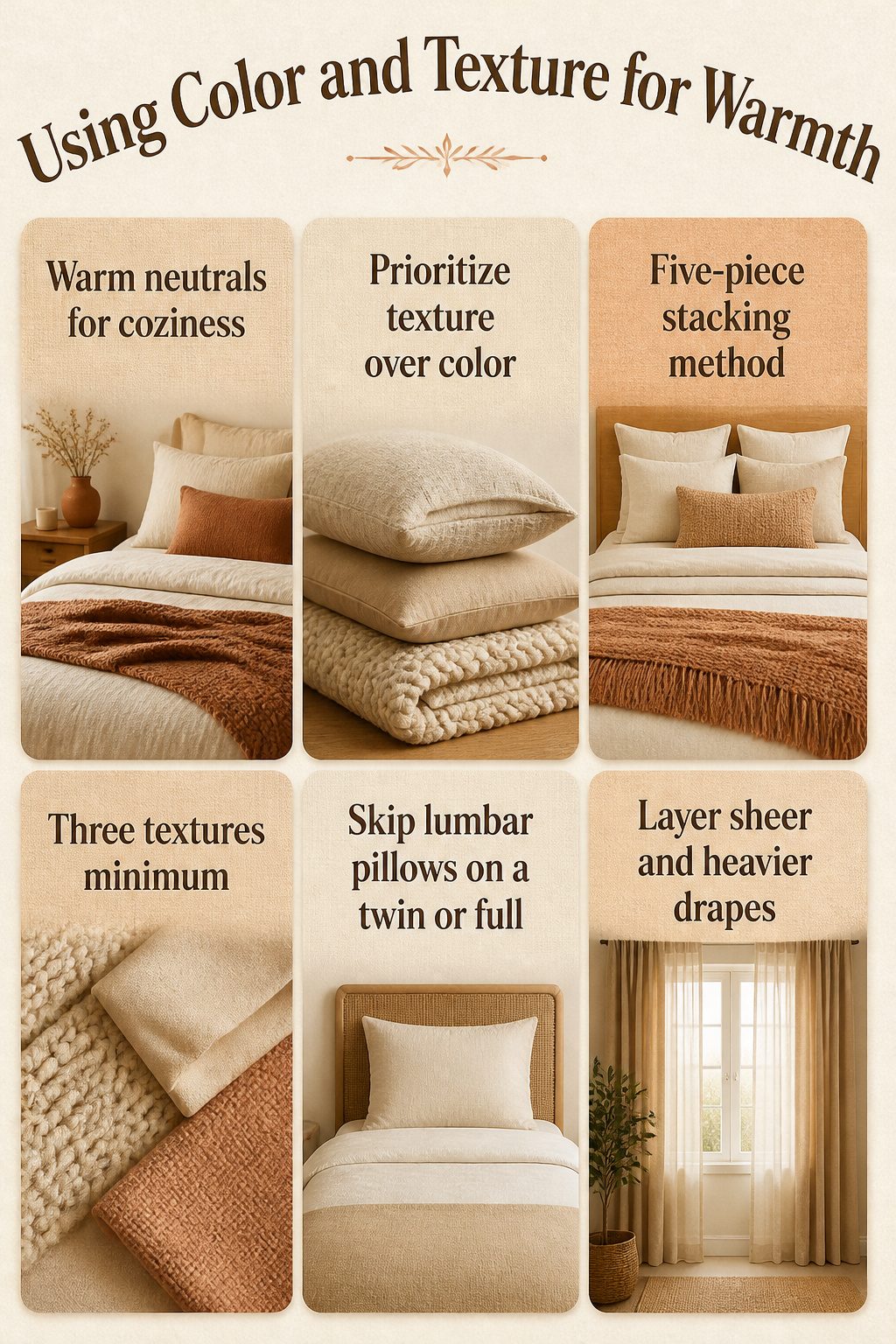
Warm neutrals do the heavy lifting in a small apartment bedroom where you cannot knock down a wall or expose a beam.
Cream, beige, and terracotta read as shelter rather than statement, and they layer without fighting each other the way a bold accent wall might in a room you cannot escape.
What changes the feel is texture, not a second color. Linen against cotton, wool against smooth wood, a chunky knit throw against a matte weave.
I build these pairings because apartment walls give you nothing; no crown molding, no wainscoting, no hearth to break up the flatness. A house carries its own architecture, but a rental box needs you to build the interest by hand.
The five-piece stacking method starts with a fitted sheet and flat sheet, folds the duvet back to expose the flat sheet underneath, stands two sleeping pillows upright, angles one or two lumbar pillows forward, and drapes a throw across the foot so it falls with movement, not folded flat.
Three textures minimum, smooth cotton and chunky knit and linen, break up the store-bought look of a matching set. Skip the lumbar pillows on a twin or full; the proportions will overwhelm the bed instead of styling it.
For windows, sheer curtains layered with heavier drapes add the same depth while giving you light control.
A textured throw and one or two lumbar pillows in a contrasting weave will do more than replacing the whole bedding set, and most of what you need you likely already own.
Lighting Techniques Beyond the Basics
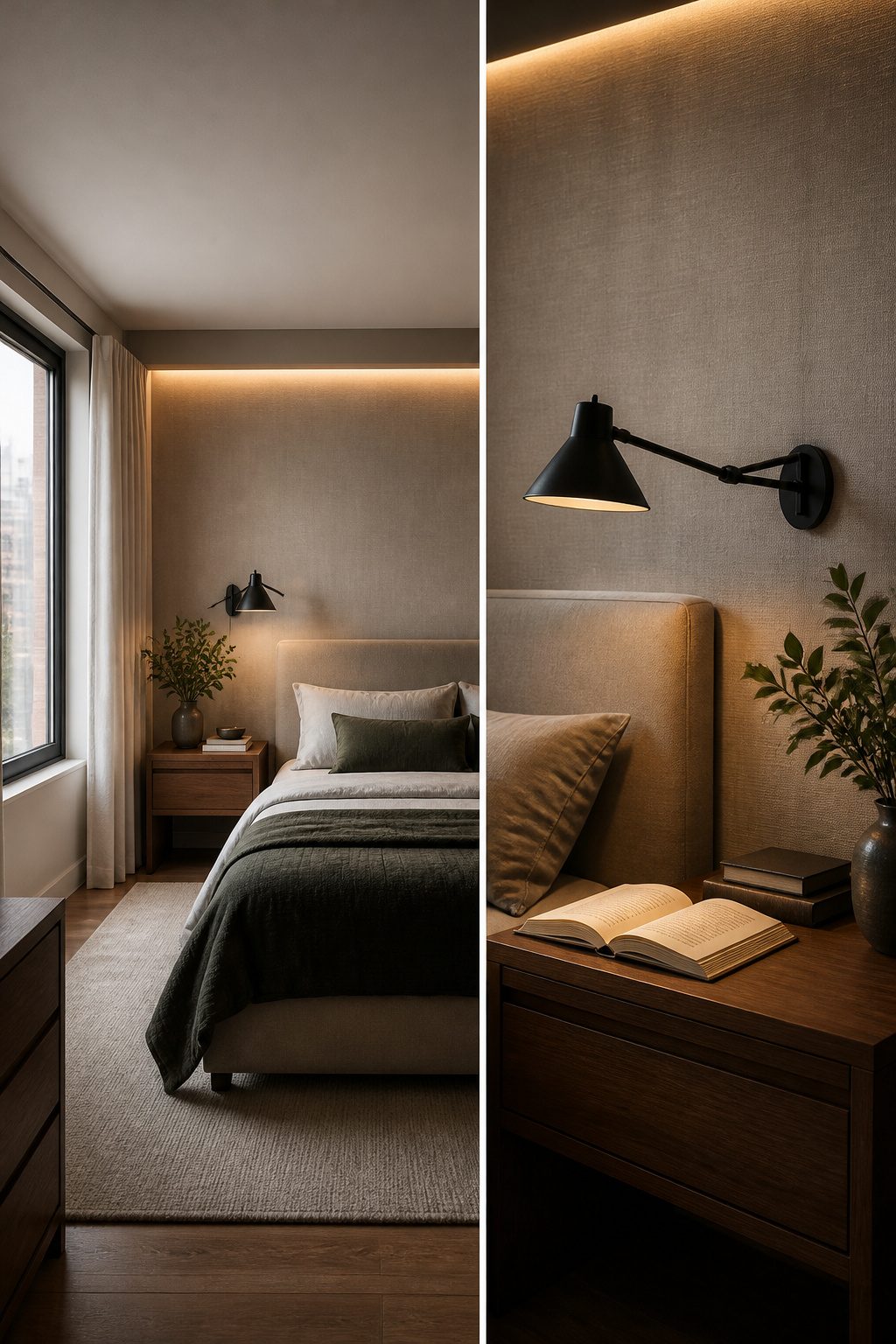
The LED strip behind the headboard is the move that separates intentional apartment bedroom decor from the accidental dorm-room look.
Run it along the top back edge, facing the wall so light washes down rather than outward, and the strip itself disappears while the glow reads as built-in architecture.
For renters, battery-operated strips eliminate the outlet hunt entirely, though plug-in versions with a dimmer remote give you more control over mood.
Sconces mounted on the wall free up nightstand surface in a way that matters more than people expect.
A table lamp is usually the largest object on a small nightstand; remove it, and you suddenly have room to actually use the surface.
Plug-in sconces need no electrician, and a cord channel running down to the outlet keeps the line flat against the wall rather than dangling loose.
Some come with fabric-wrapped cords treated as a design feature, though I would rather hide the cord entirely and let the fixture read clean.
A swing-arm sconce wins here because it angles directly over a book without demanding a separate reading lamp.
In a small room where every surface has to multitask, that matters. The bulb should stay warm and slightly dim, supporting the room’s mood rather than trying to replace the main overhead.
Frequently Asked Questions
How do I make my apartment bedroom feel cozier?
Swap overhead bulbs for warm 2700K–3000K options, add a bedside lamp, and layer your bed with at least three textures like a duvet, throw, and lumbar pillows.
These two changes, lighting and bedding, shift the feel of the room faster than paint or new furniture, and both pay off immediately the same evening you install them.
What colors work best for a cozy apartment bedroom?
Warm neutrals like cream, beige, and terracotta do the heavy lifting in small apartment bedrooms, reading as shelter rather than statement.
Deeper tones like forest green or rust can also work when contained to one accent wall and balanced with warm lighting; wrapping the whole room in a bold shade makes the space shrink fast.
What’s the easiest way to add storage to a small bedroom?
Use the 6–8 inches of clearance under most beds with flat, wheeled bins for seasonal items, or choose a frame with built-in drawers to add a small dresser’s worth of storage without eating floor space.
Clear bins beat woven baskets because you can scan contents from the doorway without pulling anything out.
How can I personalize my apartment bedroom?
Build a gallery wall using the paper-template method to test layouts for a day before committing, and mix two or three frame finishes rather than repeating one uniform style.
Anchor the display with at least one piece that carries personal meaning, a photograph, flea-market find, or trip souvenir, so the room reads as yours rather than a stock photo.